Lecture · Game Overview, Pillars & Loops

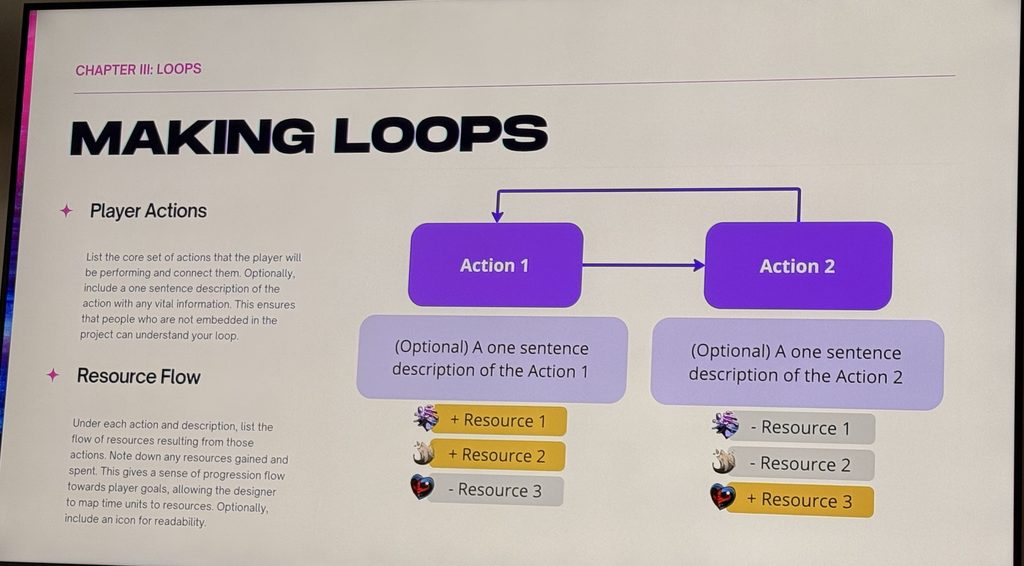
This week’s lecture focused on three main topics: Game Overview, Game Design Pillars, and Game Loops.
I learned that a good game overview should be short, clear, and focused on what players actually do. It should explain the main idea of the game in around 30 seconds.
We also discussed how game design pillars help maintain a clear direction throughout development. Every feature should support the game’s core vision rather than simply adding more content.
For my own game, I want to make sure that investigating guests, preparing dishes, and discovering new stories are connected. Each cooking experience should reveal something new and encourage players to continue exploring the mystery behind the restaurant.
My game idea till now:
The game is a cooking experience with a surreal, unsettling atmosphere inspired by Rusty Lake. Players take on the role of the head chef at an elegant, mysterious restaurant, serving distinguished guests with animal heads and human bodies. The visual style is bizarre and absurd, combining refined surroundings with uncanny details.
Each day, guests arrive with unusual requests. Instead of ordering specific dishes, they describe a feeling, a memory, or a desire—for example, “I’d like something that reminds me of my childhood.” Players must interpret the clues in these requests to decide what to prepare.
To learn more, players can examine the guests’ belongings and ask questions about them. These conversations reveal short stories and personal details, providing additional clues about the food each guest is seeking.
As the game progresses, the guests and their requests become increasingly strange. Players must purchase ingredients that grow more expensive and more unusual: a loaf of bread, for instance, might release seawater and seaweed when sliced open. Through these encounters and discoveries, the restaurant’s secrets gradually unfold.
The narrative features bizarre tales with elements of uncanny folklore and psychological horror. Yet the guests recount these events casually, and everyone around them treats the stories as perfectly ordinary. Players are left feeling as though they are the only ones who notice something is wrong. This tension between unease and curiosity drives them to keep cooking, meet new guests, and uncover the truth behind the restaurant.
Game Design Pillars
- Understand your customers.
- Feels mysterious and unusual.
- Cook the Uncanny
Game Loop
- Interpret the Customer (The player understand customers through clues, objects and stories.)
- Cook the Stange (The player choose ingredients and turn your interpretation into a dish.)
- Uncover the Mysteries or Stories from the Guests (The player uncover the strange stories and hidden secrets of the restaurant.)
Core Gameplay
The core gameplay of the game revolves around “observing guests, interpreting needs, making dishes, and exploring secrets”. Players play the role of the chef of a mysterious restaurant, collecting clues from the guests’ vague orders, belongings and conversation stories to deduce the food they really want, and then choose the ingredients and cooking methods to complete the dish. Guests’ dining feedback helps players verify their judgments and gradually reveal their stories. As the game progresses, players need to purchase increasingly expensive and exotic ingredients, deal with more complex requirements, and gradually uncover the secrets of the restaurant through daily reception and cooking.
Documentation · One-to-One with Jordan
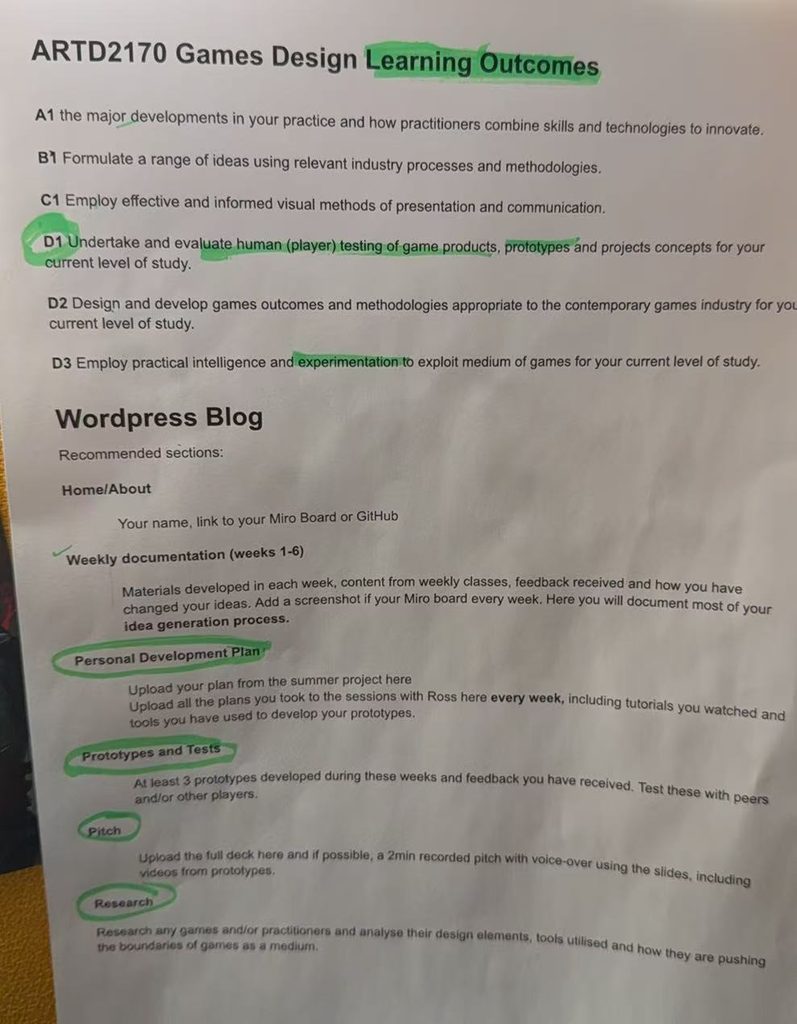
During a one-on-one discussion, I learned that my current documentation is in good order, and Jordan encouraged me to keep it up. Additionally, given the large volume of material I record each week, Jordan suggested creating separate links on WordPress for different areas—such as a dedicated link for research—to make it easier for both others and myself to track and review my weekly activities. I find this suggestion very useful.
So, I set up a few sections on WordPress.

For subsequent records, I will follow the approach outlined in this paper.
Prototype Presentation
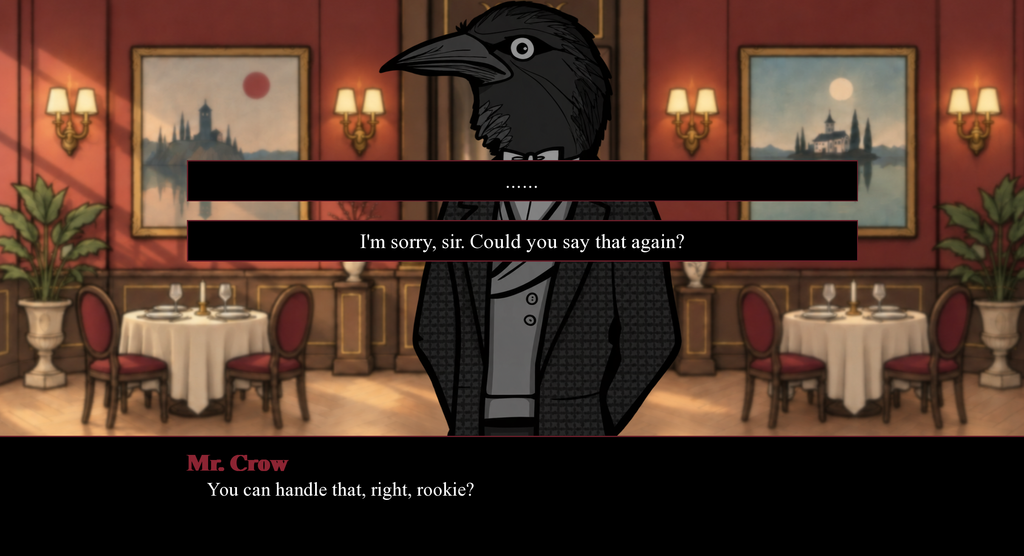
This week, I showed my demo to my classmates and teachers.
Classmate Feedback
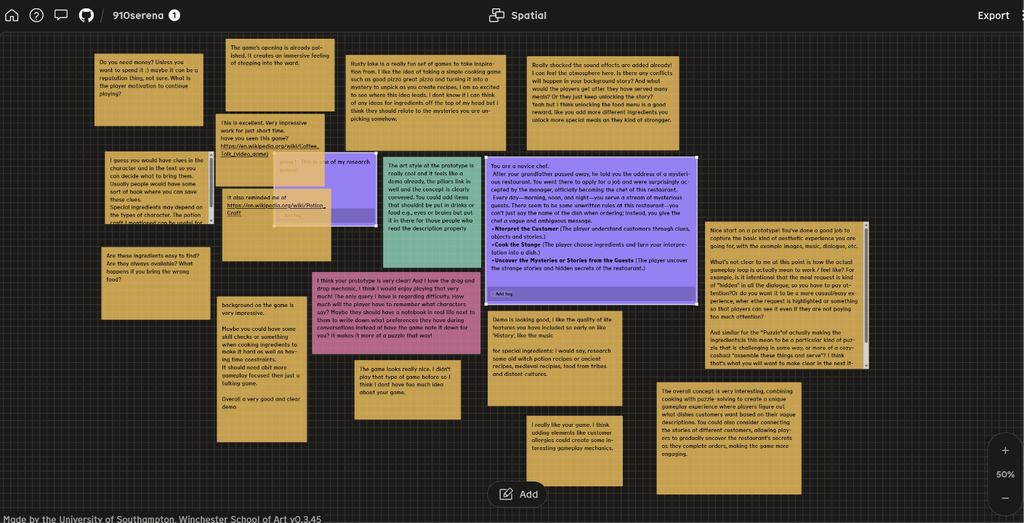
Feedback Summary
1. Visual Style & Atmosphere: Players liked the surreal art style, mysterious atmosphere, sound effects, and overall game concept.
2. More Interactive Gameplay: The game currently relies too much on dialogue. Players suggested adding object investigation, clue collection, and more interactive puzzles.
3. Clearer Cooking Mechanics: Players wanted to understand how ingredients are selected, combined, and prepared. Some suggested making cooking itself a puzzle.
4. Stronger Player Motivation: Players suggested adding rewards, unlocking new recipes, or revealing more stories to encourage continued gameplay.
5. More Variety & Story Development: Players wanted more unusual ingredients, different guests, and interconnected stories that gradually reveal the restaurant’s secrets.
This has been extremely helpful! You can check my Development Log for the specific optimizations and improvements.
AI & Translation Tools
Google Translate and Youdao Translate were used to support translation.