Communicating the Rules of My Gameworld
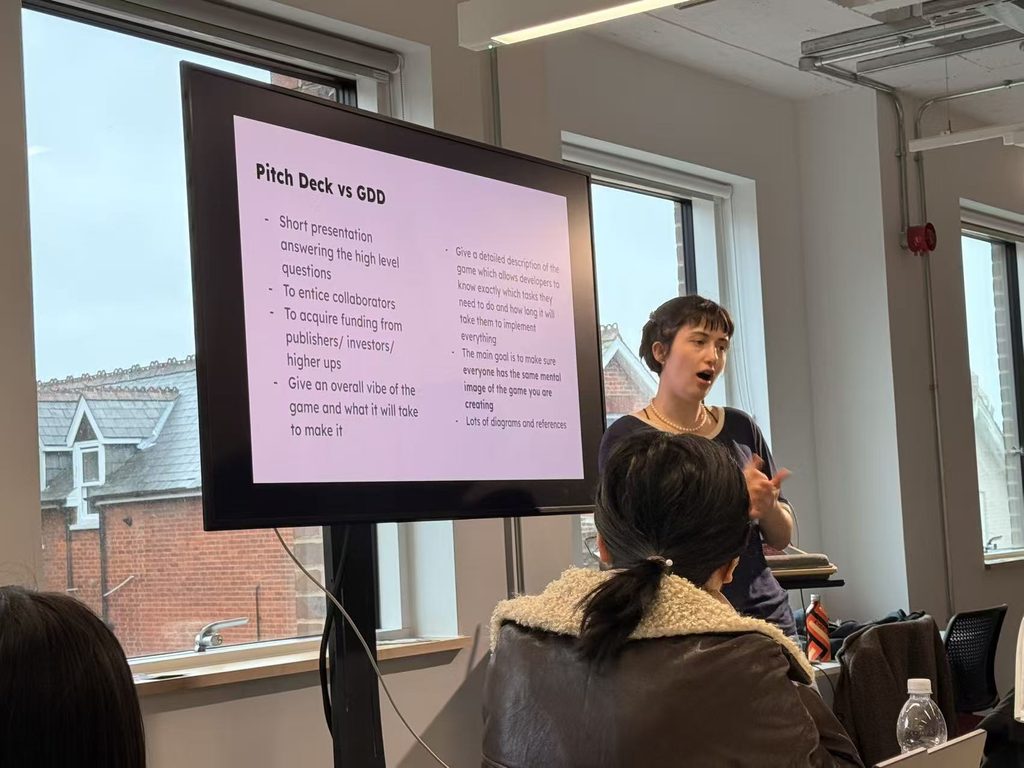
In this week’s lecture, we learned that a good game idea should not only be interesting, but also easy to explain, realistic to develop, and achievable within the given time.
I learned that a pitch deck should clearly communicate what makes a game interesting, while a GDD needs to explain how the game actually works and how it can be developed.
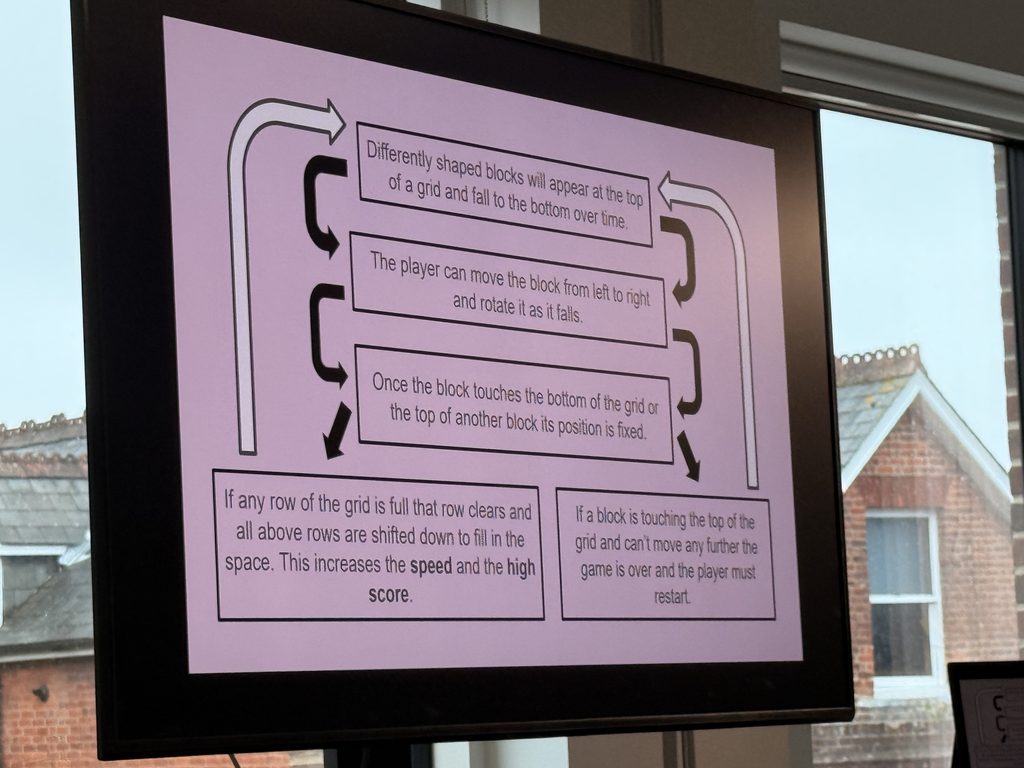
One of the most useful parts of the lecture was learning how to break down a gameplay loop into clear steps. It helped me understand that I need to think not only about what players do, but also about how their actions connect and what motivates them to continue playing.
The lecture also discussed the importance of keeping a game’s scope manageable. I realised that it is better to focus on a small number of well-developed mechanics rather than trying to include too many features.
Class Exercise · Hide and Seek
Our instructor assigned our group (Maggie, Echo) the game “Hide and Seek” and asked us to create a game loop for it.
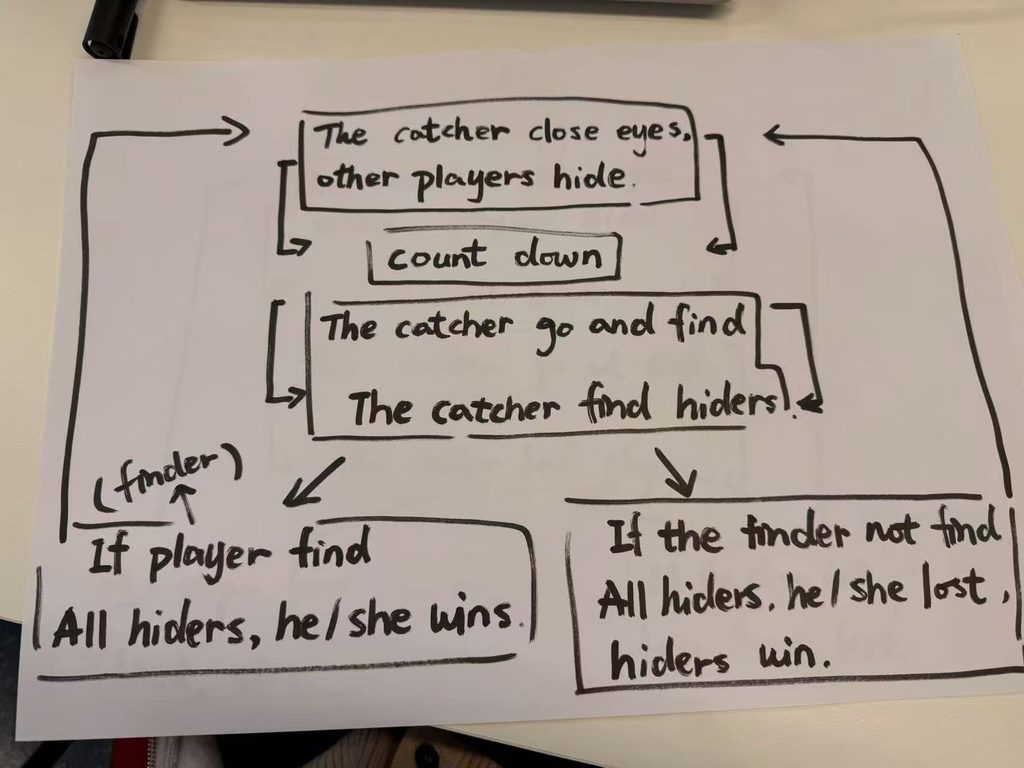
So, we created this game loop, short and clear.
Applying the Lecture to My Game
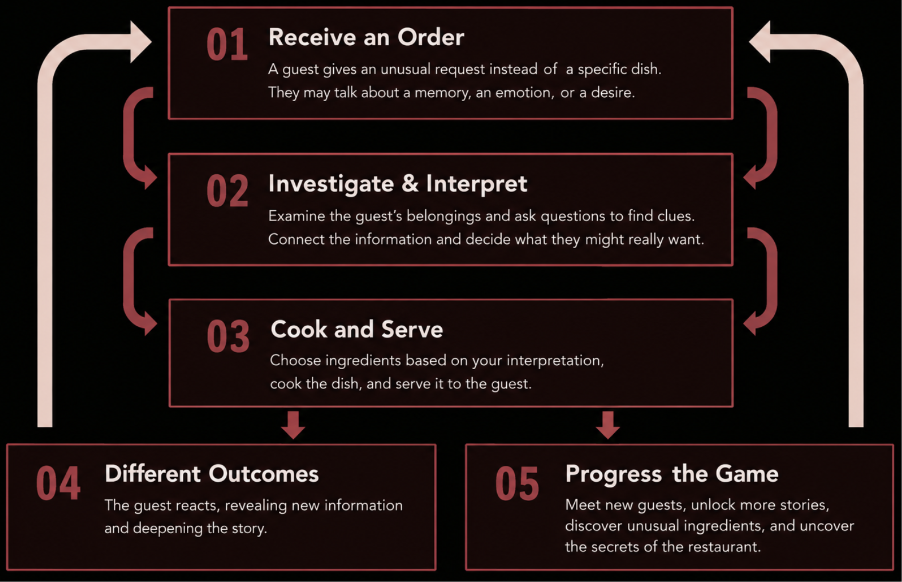
I had only given some rough thought to game loops previously. However, in light of what we covered in class today, I’ve reconsidered the concept.
This is the game loop for my game, developed after attending the lecture:
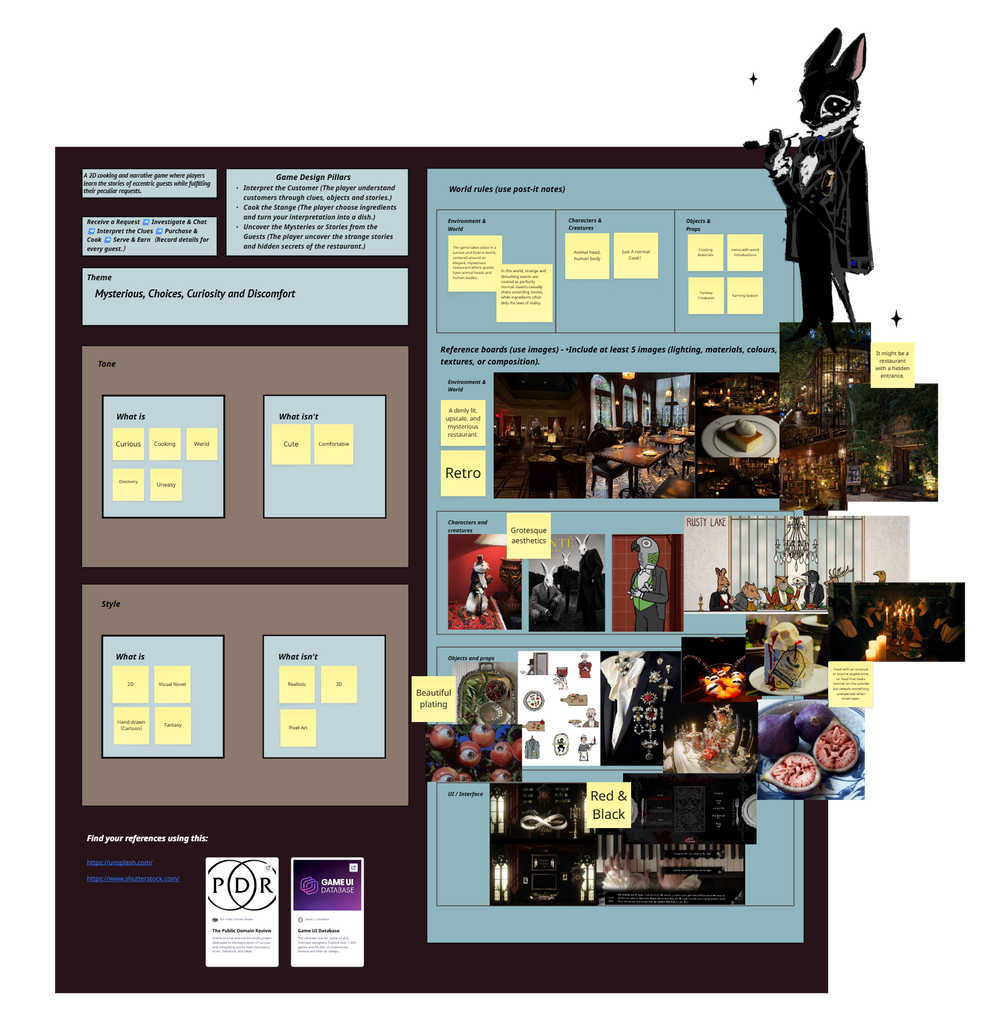
Game World · Miro Board
Year 2 – World Game Design Canvas – Miro
At the end of this week, we created a miro board for our game to clarify my thinking: what kind of game tone I wanted, what elements I wanted to give the game, and what I hoped players would benefit from it.
My Miro Board below:
AI & Translation Tools
Google Translate and Youdao Translate were used to support translation.