

The first of May was the date set for our final playtest where members of the public could come in and play the games that we’ve spent the semester creating.
I took the initiative to create the poster for the playtest event itself and for our game. Below is the first event poster. I made it in Affinity in just under two hours. I asked Marie and some of my peers for feedback.
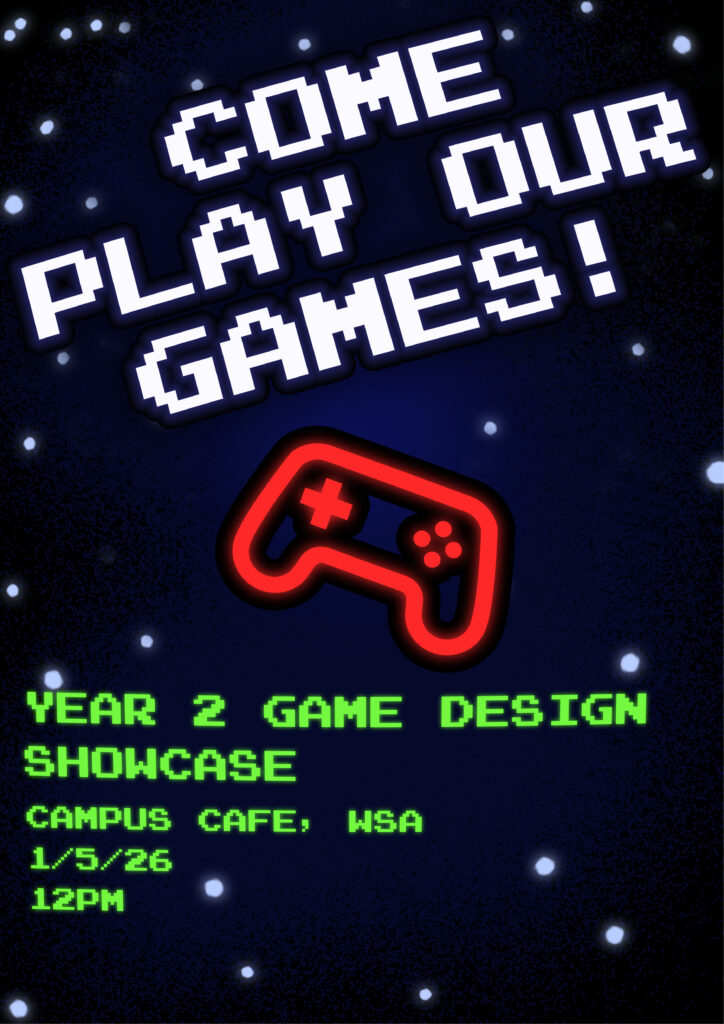
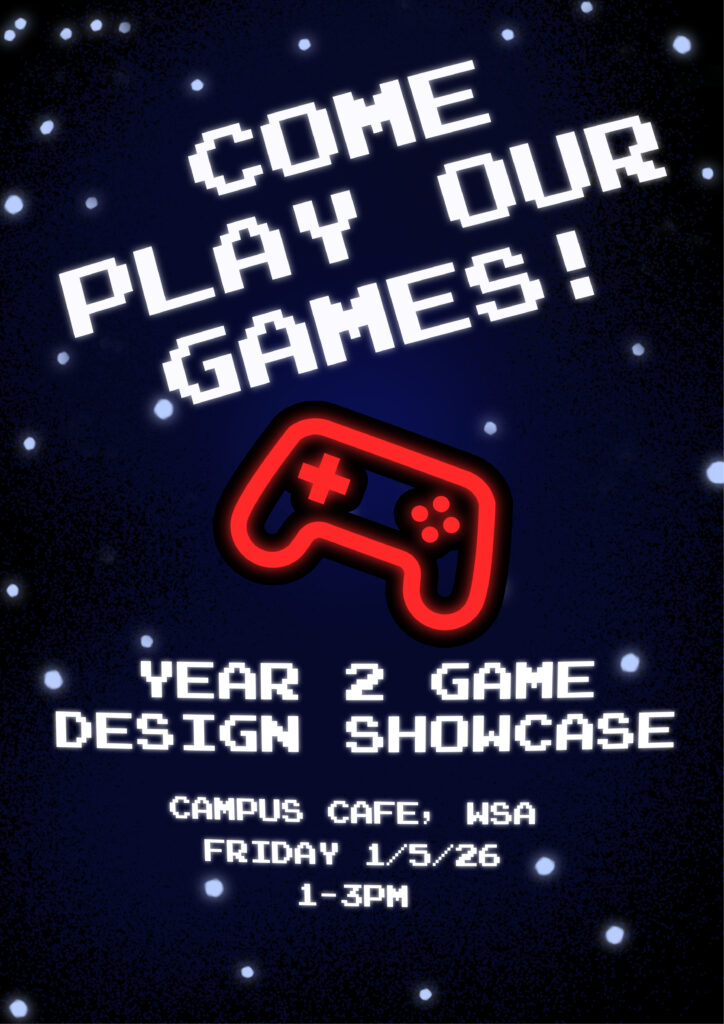
Even though I tried to make it reminscient of a computer terminal, I was told to centre the text and make it white. As well as this, larger margins would make it more cohesive. It looked a lot better after implementing the feedback, as you can see below.
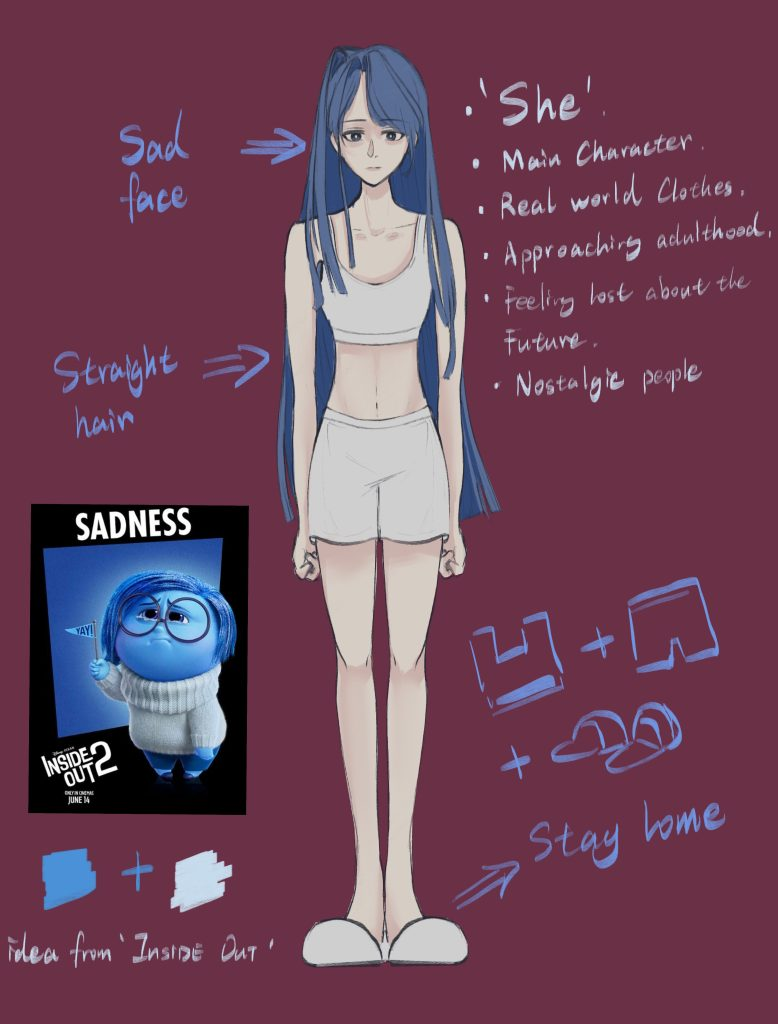
After this I created the poster for our project. I wanted it to be pink and purple and features butterflies as a motif. For the subject, I chose the girl that CIndy had designed in the original GDD as she was the intended protagonist.
I didn’t have a lot of time to work on it so I made it in less than a day. The only issue is that it doesn’t really represent the current state of our game for reasons I’ll elaborate on shortly. I sketched a few thumbnails in class then settled on a composition I especially liked before moving onto the illustration on my tablet. For the typography, I switched to Affinity on my laptop.
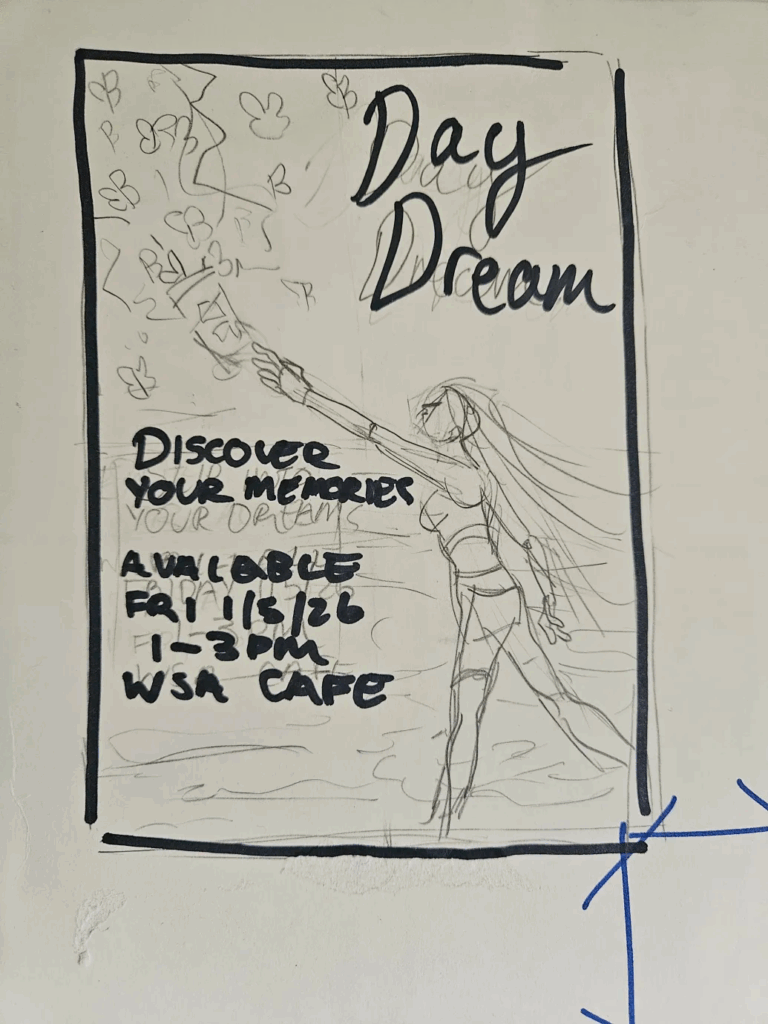
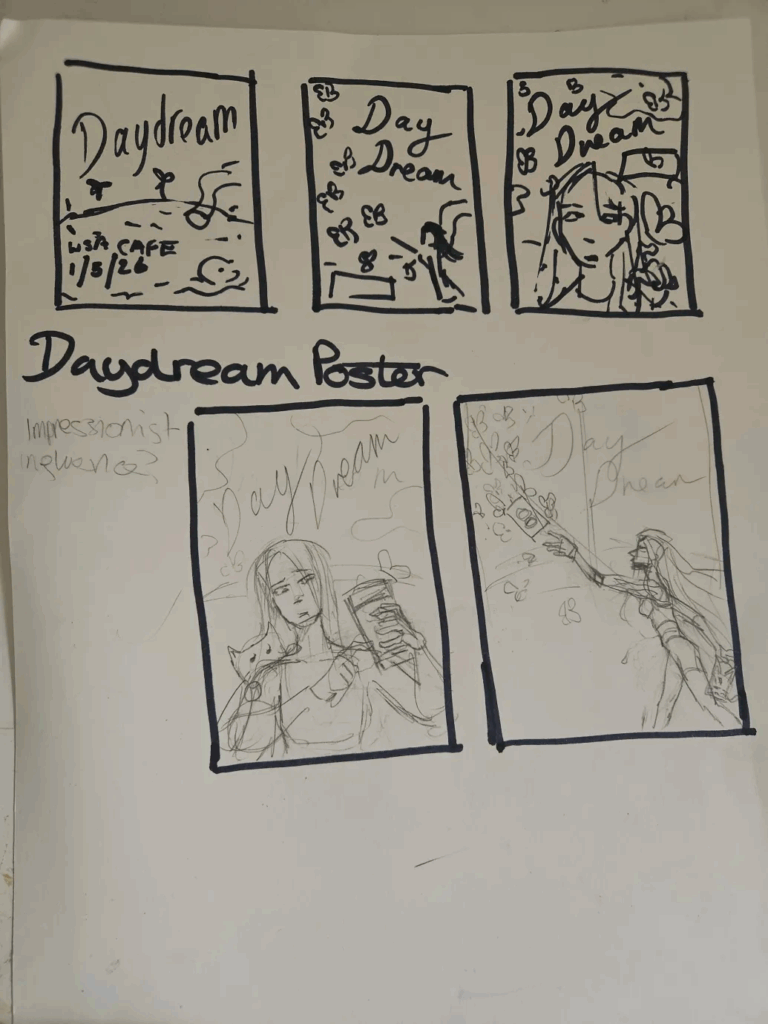
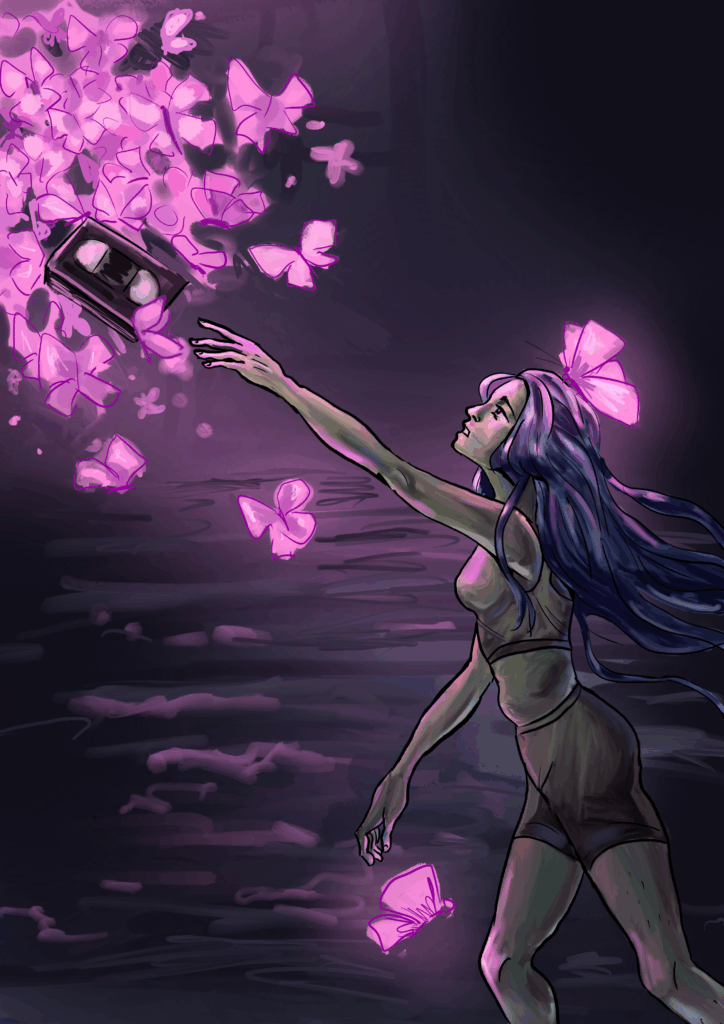
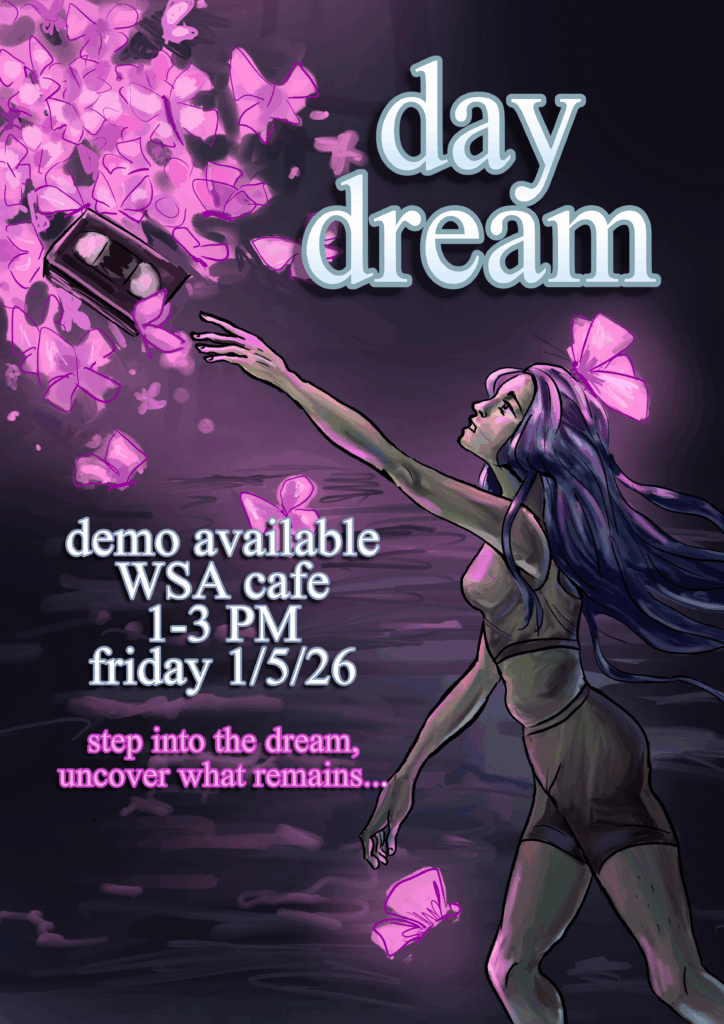
Taking the experience I learnt from making the event poster allowed me to create an effective looking advertisement for our game. I like the illustration though, my recent studies into light and colour as I described in my research phase has allowed me to take advantage of different lights and the way it effects form.
Moving onto the playtest itself. Our main issue we had with the game was that we were unable to create a proper level as the 3D assets were improperly implemented. This was because the 3D assets were finished the final two days before the playtest, meaning we didn’t have adequate time to put together a level. The level that we were left with was almost the same as our one from the March playtest, except I didn’t have the time to reinsert the sounds or particle effects.
So we had two levels:
- Kamilla’s intended vision, which looked extremely good but had gamebreaking bugs.
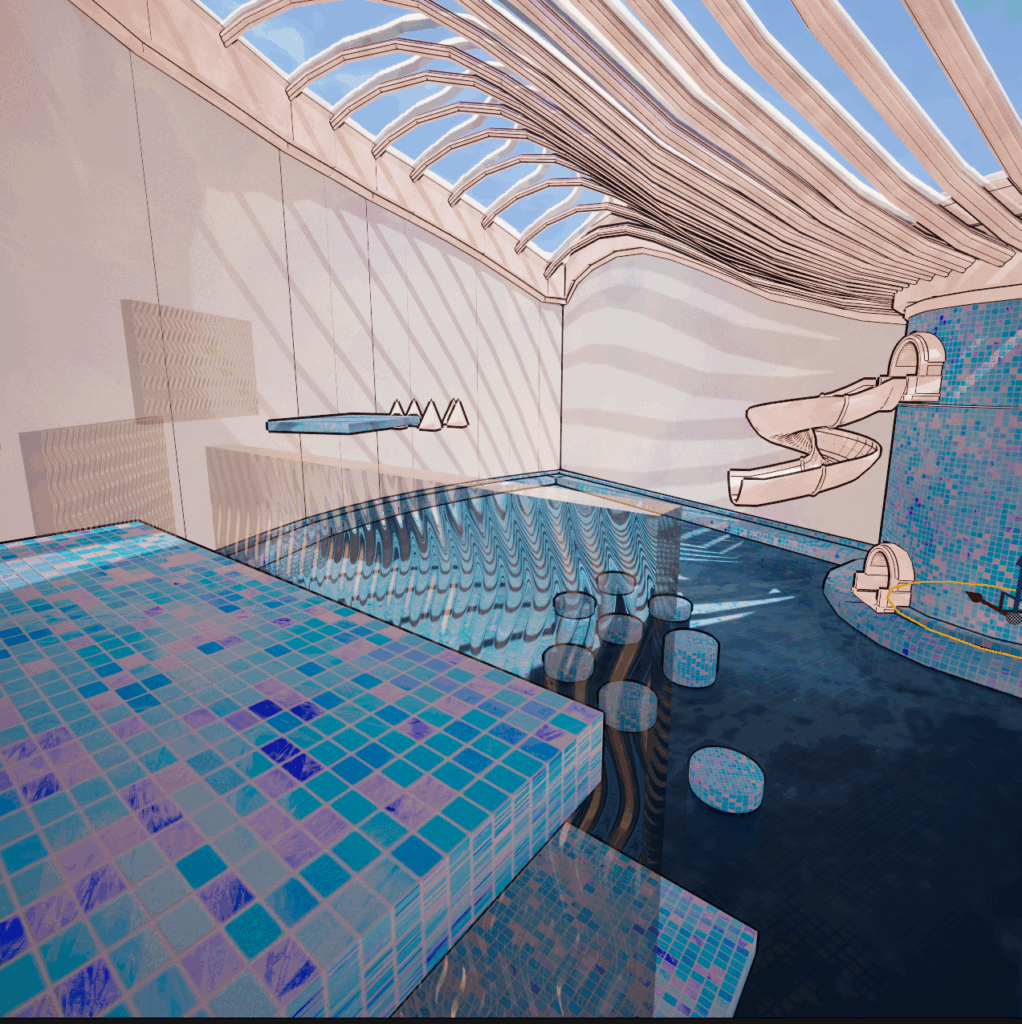
- Jeremy’s level, that was playable but the visuals weren’t properly implemented and thus lacked the visual narrative I had worked on.
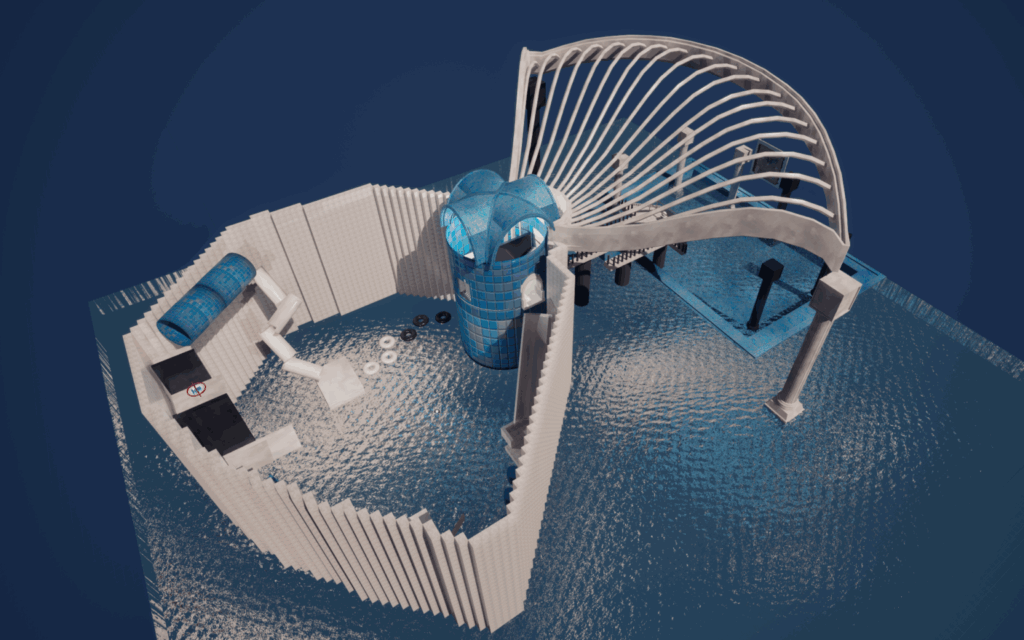
We ultimately decided on the latter as we needed something we could play.
REFLECTION AND PLAYTEST
The playtest was disappointing to be completely honest, the feedback we received could be boiled down to a few points that I had already anticipated. The itch link below contains the final environments.
My contributions of sound and particles I put in the game had been removed by my teammates with the new levels and I didn’t have time to put them back in. At the time, I wasn’t bothered but looking back at it, I realised that they sort of erased that hard work without considering the time I had put in it. I even made a bubble.png in Affinity to redo the particles, but when I tried to add them back into the new levels, the particles weren’t appearing so I promptly gave up. I should’ve been more tenacious there.

https://lklrb114514.itch.io/daydreamenvironment
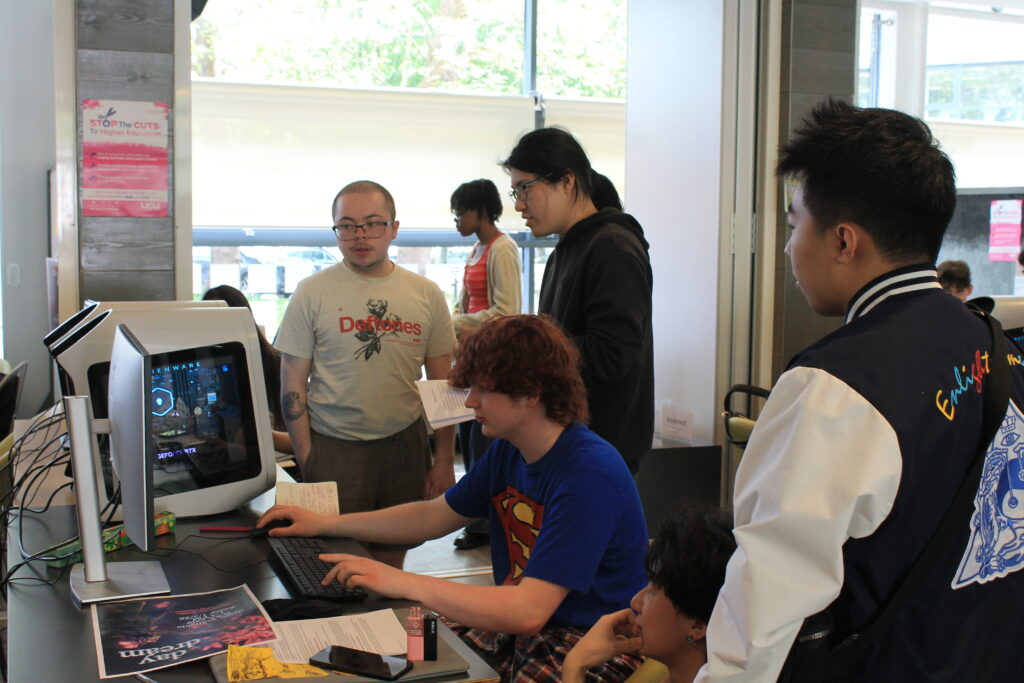
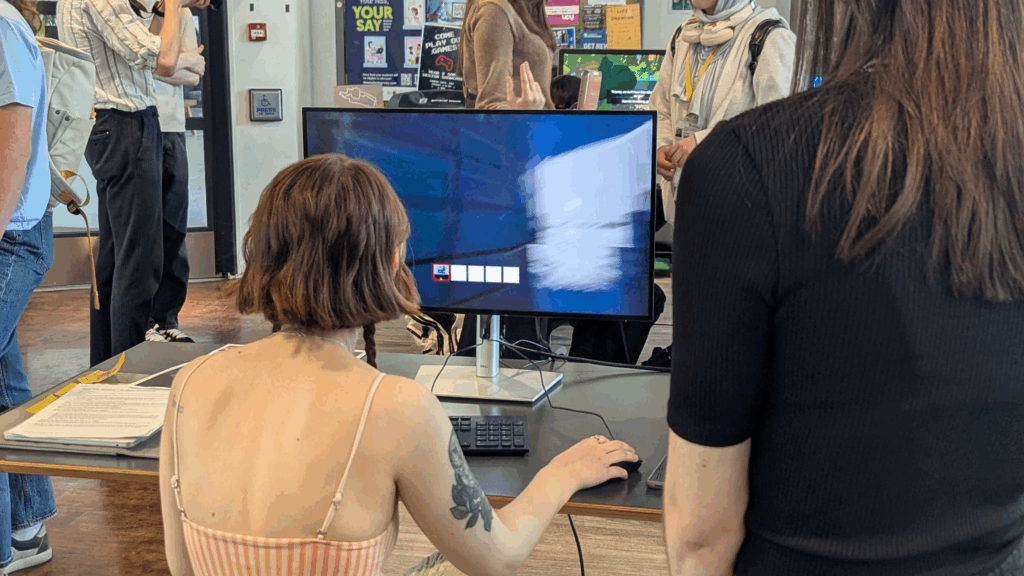
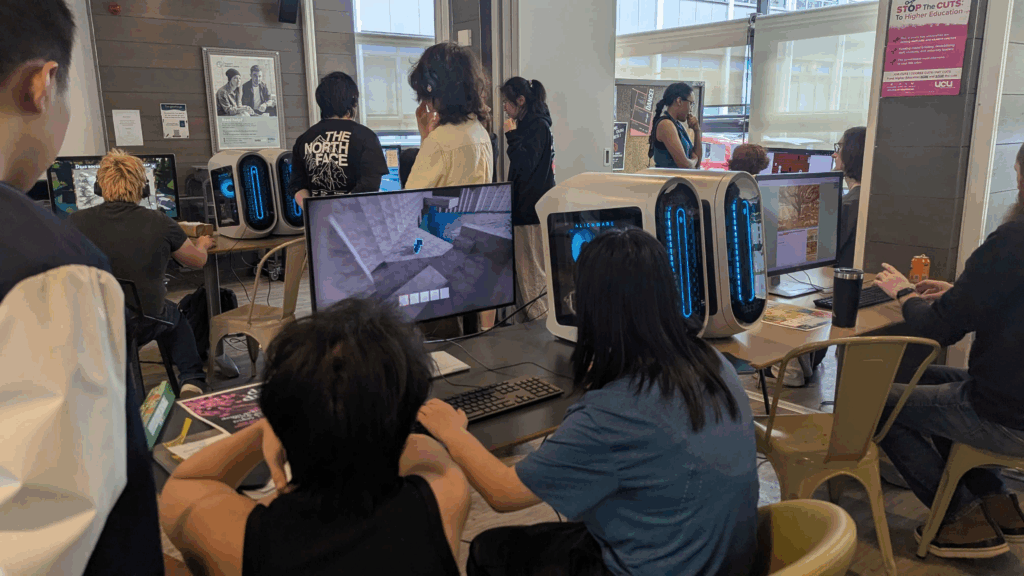
1- Narrative. Players did not understand the story, which wasn’t surprising as nothing communicated the story. So the gameplay was confusing and felt directionless. Even some brief context would’ve been a lot better but by the time we had a finalised level I was focusing on the main menu and didn’t have the time to create an initial storyboard to introduce the narrative to the player.
This is mainly my fault, I should have been more proactive about it sooner as no-one else would’ve done it and I underestimated how long even simple things in engine would’ve taken.
2- Game mechanics. Our mechanics . However, playtesters reported how difficult that scaling walls were in a way that broke the flow of gameplay. If there were more time we would focus on adjusting it.
3. Visuals. It was also disappointing that the key atmospheric details that were very important in communicating the Vaporwave and dreamlike style were missing. Especially as I had worked on these and saw how much they added to the game’s experience in the March playtest.
Jeremy hadn’t implemented the assets remotely close to the intended concept art and appeared to not even have registered the importance of the roof in the concept art I created so the visual style was a failure. However, as I said earlier, he had about a day to implement the assets so even basic mistakes are likely under an intense time pressure.
What have I learnt?
To start off with soft skills, this project has been an important lesson in teamwork and communication, especially as our workflows were tied to eachother’s work. Due to the frustrating experiences in week 5 with the playtest, it was an example of what poor communication would result in with a project as complex as Daydream.
I developed my art massively in the period from January to May as I learnt important theory in light and colour which allows me understand lighting in many different contexts and specifically how it effects colour (Mainly from the book James Gurney Colour and Light) . It has definitely made art more fun to experiment with.
Experimentation in sound design also strengthened my ability to use Reaper and apply that to other DAWs. It’s another medium that can communicate narrative. My favourite thing about it is how inherently abstract it is without vocals or even music, just communicating something with pure sound.
Reading An Architectural Guide to Level Design made me appreciate the similiarities in different types of spatial design. I think in future projects this will allow me to approach it with more depth and draw more parallels between the different fields as well as player centric design.
What should I do in the future?
Be more proactive! I have definitely tried to be more organised in this project than previous ones but progress isn’t linear and I always have more room for improvement. For example, I could’ve added the narrative to the game before the couple of days leading up to the play test.
Be less afraid to go in engine. This project was a bit of an icebreaker for me with unreal. I’ve also been passively using Godot so it has made me more confident in using engines, even if I’m not knowledgeable in programming.
Communicate more and assume less. Assuming things, while convenient in the moment, can lead to issues further down the line if everyone is not on the same page.
Final thoughts
While Daydream was not the dazzling success we had conceived it to be, and it fell short of the mark in many places, it was still a valuable experience and will prepare me as I enter Year 3. I am definitely a different game designer than what I was when I entered this course. This was only achieved through engaging with our work and having that direct experience. I want to continue putting all of my effort into Year 3. The game industry is competitive and volatile. It isn’t enough to be average, I need to stand out. That is something that can only be achieved through hard work and constant accountability and self analysis.
[x]
Leave a Reply