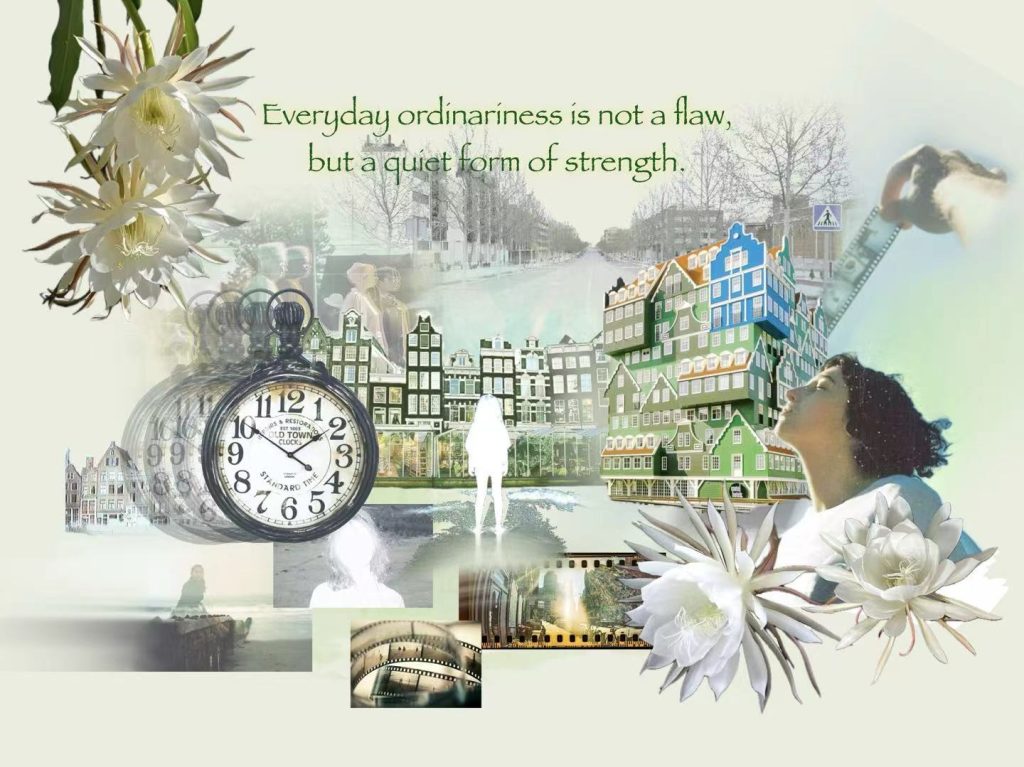
Over this semester, my design approach transitioned from an idea-first visual focus to an experience-driven practice. Early in the project, I was exploring atmosphere and symbol, but through iterative research I learned to design around how players feel — not just what they see.
This shift was strongly shaped by my sound research and solo travel reflections: I began to think in terms of sensory rhythm, pacing, and presence — especially in slow-paced, reflective exploration. Design became less about creating objects and more about crafting perceptual space.
Peer Feedback & Response
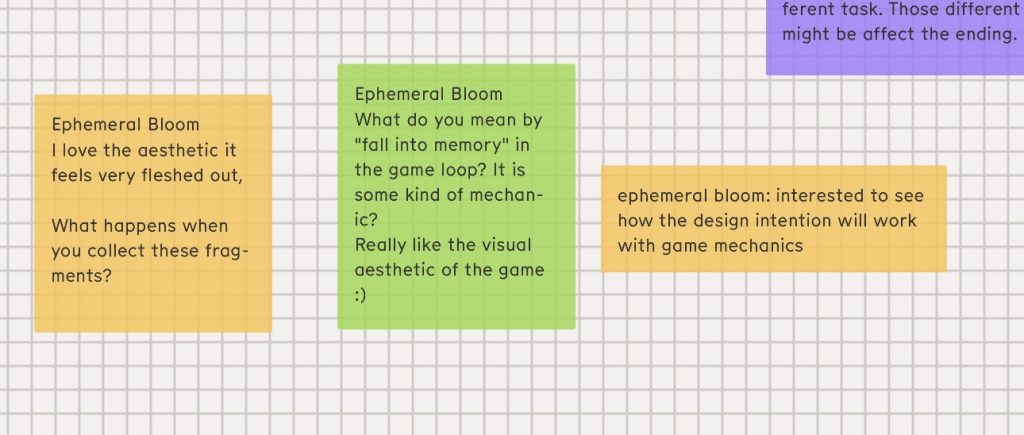
During in-class presentations, I collected peer feedback focused on the clarity of my core mechanics and their relationship to the design intention. Instead of treating this feedback as criticism, I used it as a diagnostic tool. It revealed that while the visual language and atmosphere were communicating effectively, the system logic behind memory interaction needed clearer articulation.
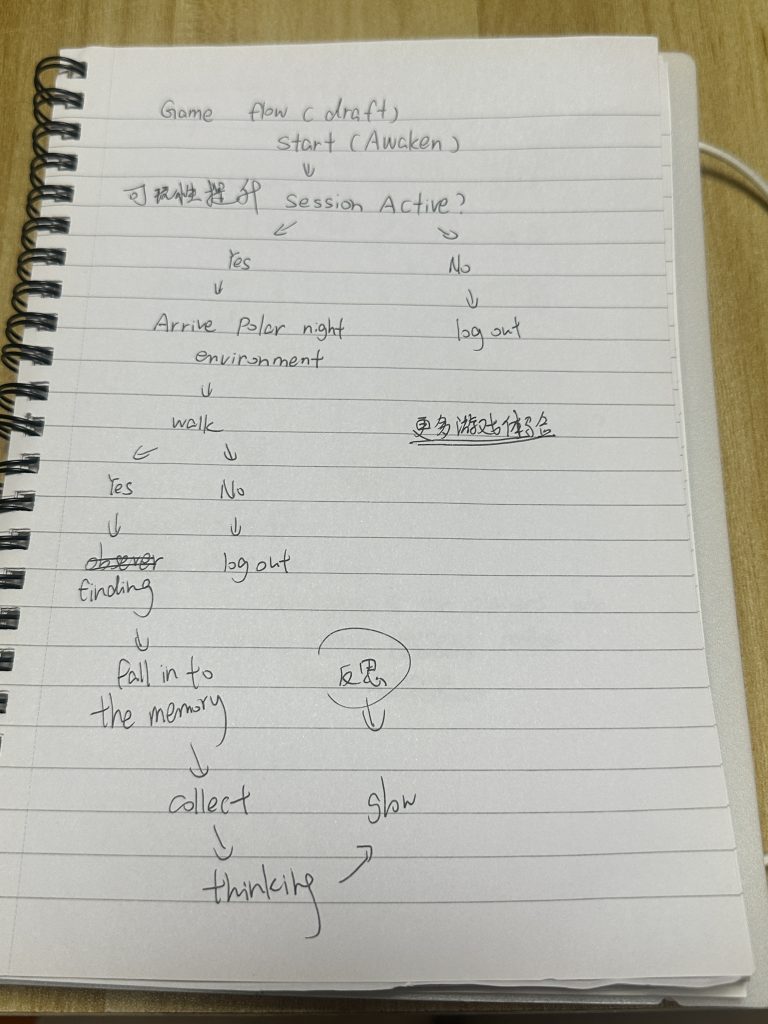
In response, I refined the game loop and explicitly positioned Fall into Memory as an interactive state rather than a symbolic transition. I also clarified the role of memory fragments within progression, connecting them more directly to player actions, buffs, and world expansion.
This process helped me strengthen the alignment between design intention, mechanics, and player understanding, without compromising the project’s contemplative tone.
Planned Improvements
Given more time, I would introduce earlier prototyping of core systems, especially sound and player feedback. Many assumptions — such as the night/day audio behaviour, or memory fragment pacing — were resolved conceptually and visually before being playtested.
In future iterations, I would validate these assumptions earlier with low-fidelity playtests to help refine the emotional pacing in a more grounded way.
Reflection on Sound Practice
In defining the sound direction and conducting practical recordings, I realised:
In slow exploratory games, sound should be present and subtle — a companion — rather than foregrounded.
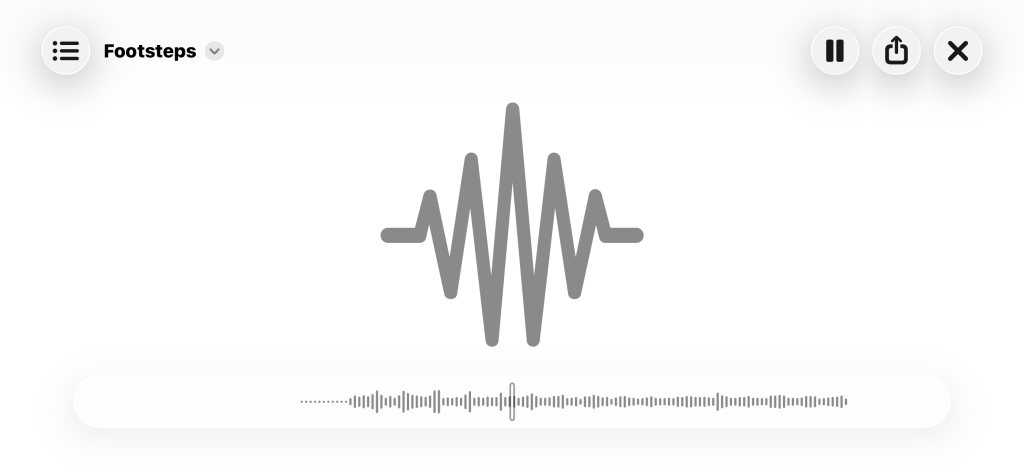
Reducing music density and emphasising player-generated sound helped me understand how sound shapes emotion, rhythm, and presence without interrupting gameplay. This confirmed one of my core project principles: sound should function as part of the world system, not as its narrator.
Closing Reflection
This semester reshaped my view of game design: from focusing on objects and visuals, to designing experiences and perceptual spaces.
It reinforced that games can be a place for presence, reflection, and emotional return — not just progression or mastery.
Leave a Reply