During the process of creating the river ambience, I initially tried placing multiple emitters along the river, hoping to simulate a longer river sound area through the overlap of several sound sources. However, in practice, due to a bug that I still have not fully figured out, this method did not work properly.
Although this issue was not continued as the final solution for the river ambience, it made me realise something: if I need to create a large-scale forest ambience surrounding the player later, I may still encounter a similar requirement. For example, wind, leaves, and general background ambience in a forest do not necessarily come from one specific point. Instead, they form a spatial atmosphere from multiple directions around the player.
Therefore, following advice from people with relevant industry experience, I started testing AkAmbient Multi-Position Mode in the Wwise Unity plug-in.
The purpose of Multi-Position Mode is to allow the same Wwise Event to correspond to multiple position points. In other words, it does not make each GameObject independently play its own copy of the sound. Instead, it uses multiple positions to describe the spatial distribution of the same sound event.
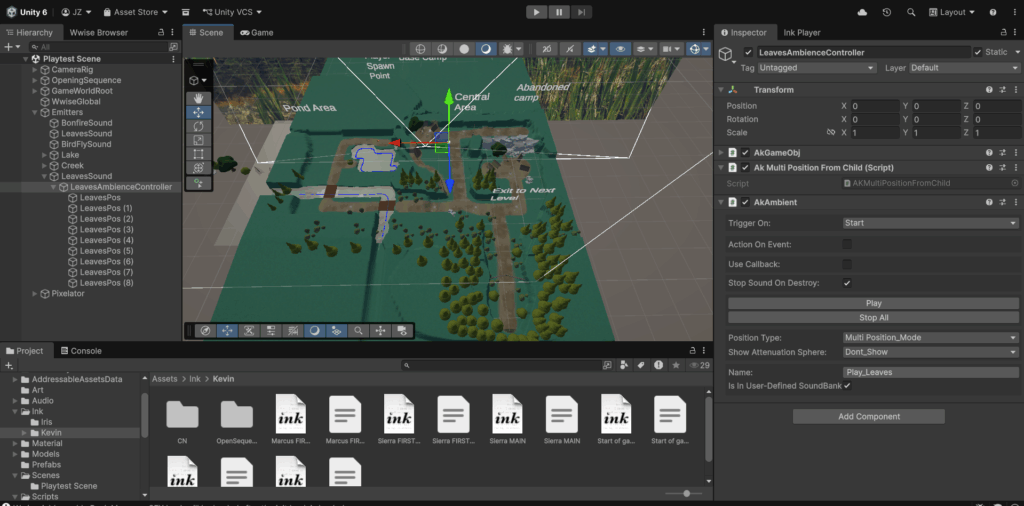
In Unity, I tried using AkAmbient’s Multi-Position Mode and placed multiple position points in different directions within the forest area. The purpose of this was to make the forest ambience feel less like it was coming from a single point, and instead allow it to spread around the player in a more natural way.
Compared with directly duplicating multiple emitters, the advantage of Multi-Position Mode is that it is better suited for representing “the same ambience event existing at multiple positions”, rather than simply stacking several independent sounds on top of each other. For an environment like a forest, which needs a stronger sense of surrounding space, it can help the sound feel like it comes from an area rather than from one isolated point.
However, Multi-Position Mode does not mean that multiple emitters share the same playback progress of one loop. It is more suitable for “similar ambience sounds distributed across multiple positions”, rather than something like a river, which requires one continuous sound that changes along a path. Therefore, for the river, the spline + moving emitter approach is clearly more suitable.
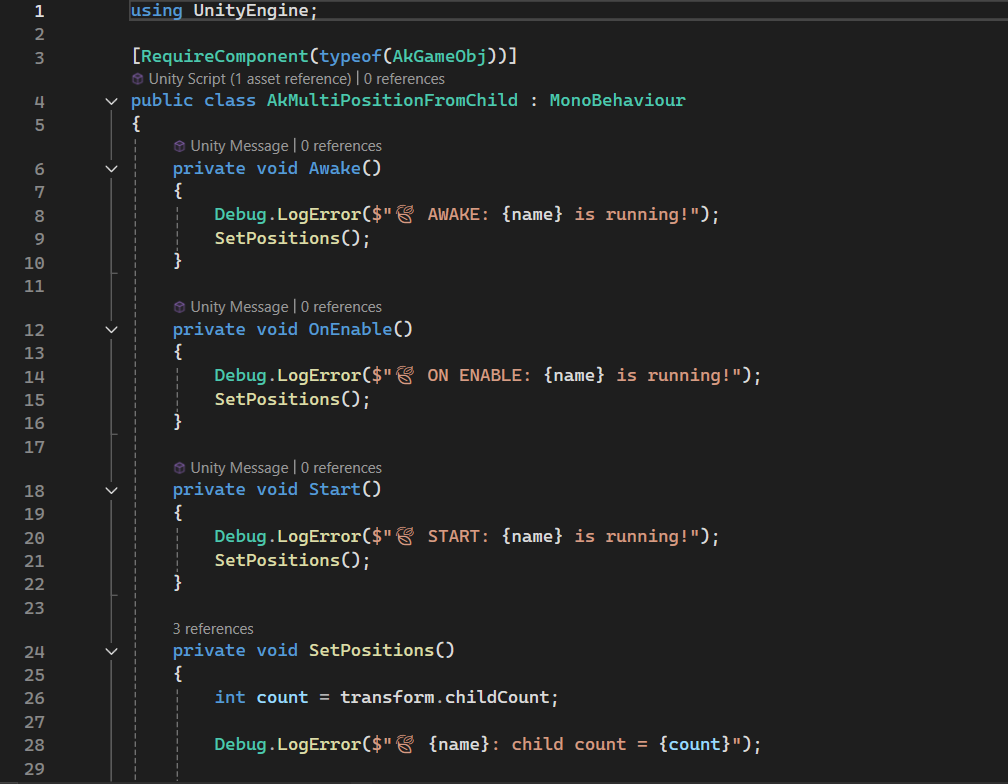
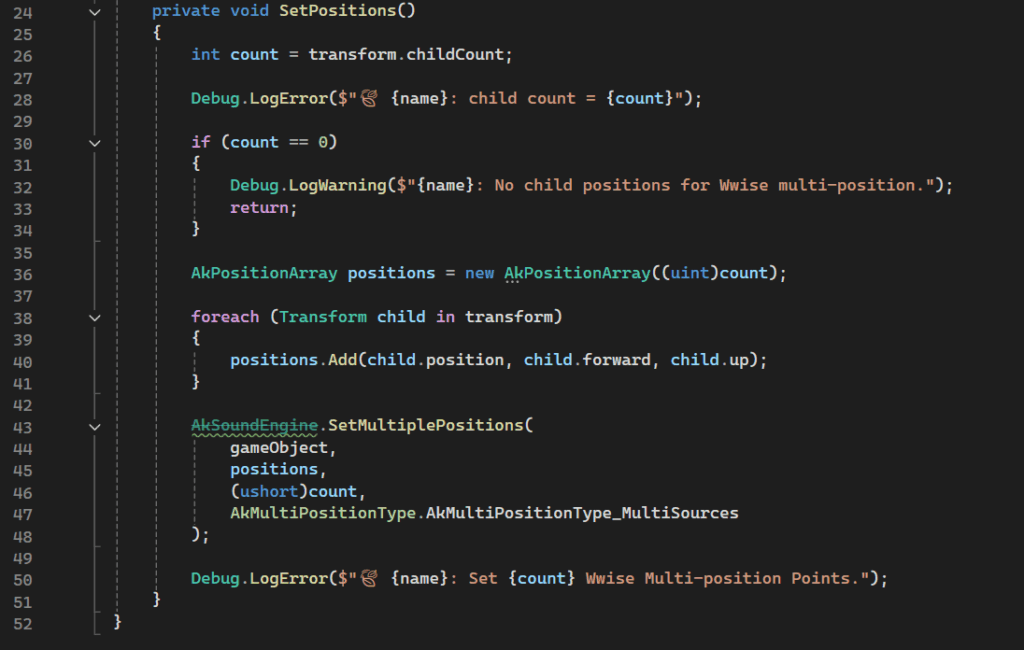
This is the script of the multi-position setting
Leave a Reply