
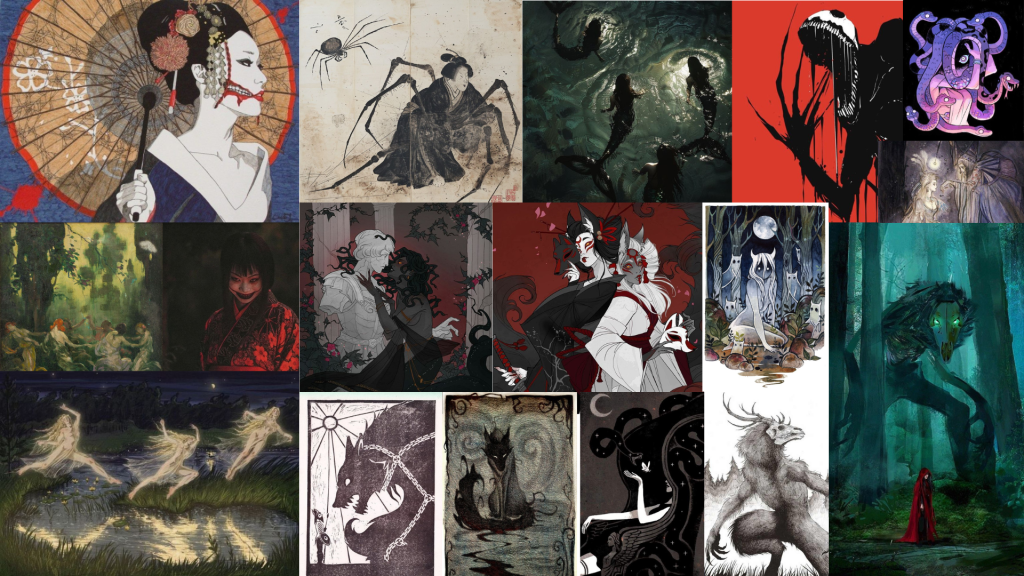
Mood board :
What is folklore?
Myths, legends, and stories from traditions that are passed down to future generations. This could be a moral lesson or just a warning.
Why is it important?
It’s been used historically many times; most times, it’s a way for stories to be passed down to future generations. This could be to teach important lessons or just provide a warning of supernatural beings. It also serves as a way to preserve tradition and culture.
MODERN DAY USAGE OF FOLKLORE:
Current-day usage of folklore is often seen in digital media and is often shown by retelling stories. This is often seen in films, series, and games. Most stories inspire in-game creatures, especially in fantasy/horror games. A good example is God of War Ragnarök, which references Norse mythology by using the term ‘Ragnarök’ in reference to a series of destruction, as well as mentioning notable figures such as Odin, Thor, and Loki. They also refer to Greek mythology, which is where Kratos originated.
“In the modern world, contemporary authors are breathing new life into ancient myths, reimagining mythological stories for a new generation of readers. This reimagining often involves exploring familiar stories from fresh perspectives, shedding light on the universal themes that have made these stories endure. For example, the figure of King Arthur has been reinterpreted countless times, each iteration offering a different take on the legendary king and the values he represents. In some modern retellings, Arthur is depicted not as a flawless hero but as a complex figure, grappling with the moral complexities of leadership and the burden of absolute power.”
Moreover, since folklore is so diverse with these stories, the characters within each story could pivot to a certain mood. For me, I view folklore to be whimsical, magical, and somewhat dreamlike since I instinctively relate it to fairytails; however, others may link it to creatures that are more sinister or eerie, caused by supernatural malevolent beings such as the Wendigo, vampires, and werewolves.
Furthermore, because folklore is so diverse, the characters in each story may determine the mood of the folklore. For example, folklore to me is whimsical, wonderful, and somewhat dreamlike since I instinctively associate it with fairy tales; but some may associate it with creatures that are more terrible or eerie, originating from stories that involve supernatural, malicious creatures like the Wendigo, vampires, and werewolves.
Why folklore?
From the Initial ideas post: “I’ve always liked hearing about superstitions and watching many animated videos about these supernatural beings. I’d definitely be interested in diving deeper into folklore or researching further in different regions of the world to see what other tales I could find out about.”
As I’ve previously mentioned, I personally enjoy hearing about the different superstitions, folklore stories, creatures, spirits, etc. Even if they are a little scarier. I enjoy learning about new stories about the supernatural beings, moral lessons, and just stories in general.
Click here to review the Renaissance era topic
Leave a Reply