
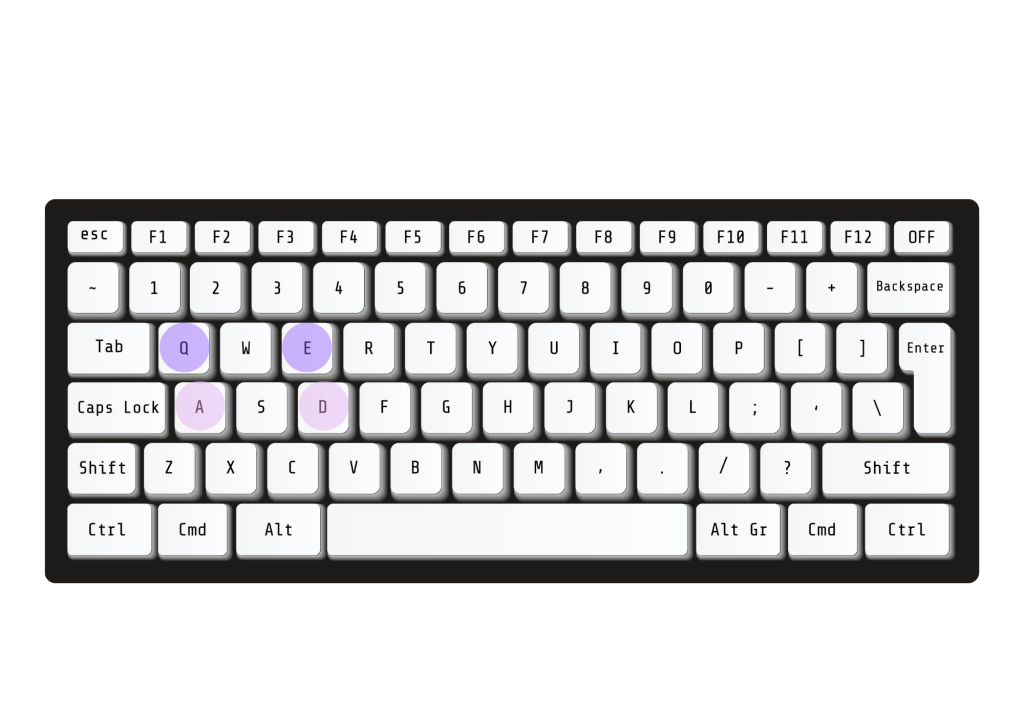
The Mechanics: for PC
Movement: Keys (A, D) or (arrow keys: ←, →)
Interacting with items: (E) or left mouse clicks
For decision making: (Q, E) or left mouse clicks.
- Finding collectibles
- Puzzles
- Decisions making
- Walking
- Running
IOS Mechanics:
Movement – Arrowkeys
Interacting with items – Tapping the items
Player goals
The Experience: The players should feel curiosity and confusion first about their character as they wake up without a backstory, but as the story progresses, maybe get a feeling that there’s more than just a goal of ‘getting back home’. I want players to feel like their choices matter and their actions will determine the ending they get, hopefully making them think more about the consequences of the choices they make. The overall game should be slower-paced to focus more on the character, mood, and difficulty the player will face later in the game. By keeping the mechanics minimal and mainly story-focused, I’m hoping that it will be emotionally compelling for the player.
Primary player goal: To get home to Miss Mya, the witch’s cat.
Other player goals: Exploring the forest, collecting/ finding collectibles, discovering secrets of the narrator and the other characters.
Rules: There aren’t many major rules other than trying not to get caught by the narrator and making choices.
Win state: Completing the minigames.
fail state: Unable to complete the minigames.
Game loops: Interaction > story > choice > Impact
Collecting collectibles: Missing pages
Minigames
- Shell game (point and click mechanic)
- Click and drag mechanics
Target audience
Demographic:
Age: 13 – 34
Gender: All genders
Language: English
Platform: PC / Mac, Ios
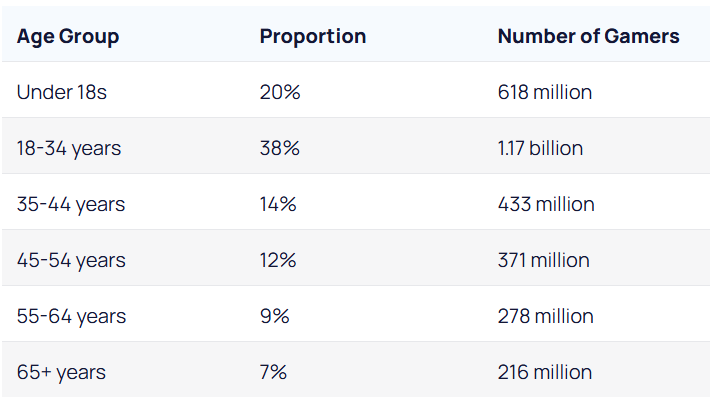
Target audience: The game’s intended rating would be PEGI 12 because of the few violent situations. Mainly targeting players who prefer story-driven and choice-based games. I believe it’s also suitable for new players because the game is simple and approachable, and there aren’t many mechanics involved.

Research for the target audience:
Which platform is used most popular globally, pc & mobile?
This graph shows the amount of time people spend playing video games on console/PC or mobile phone/handheld devices around the world in a typical week.
Collected data from adults aged 16+ years and 18+ years.
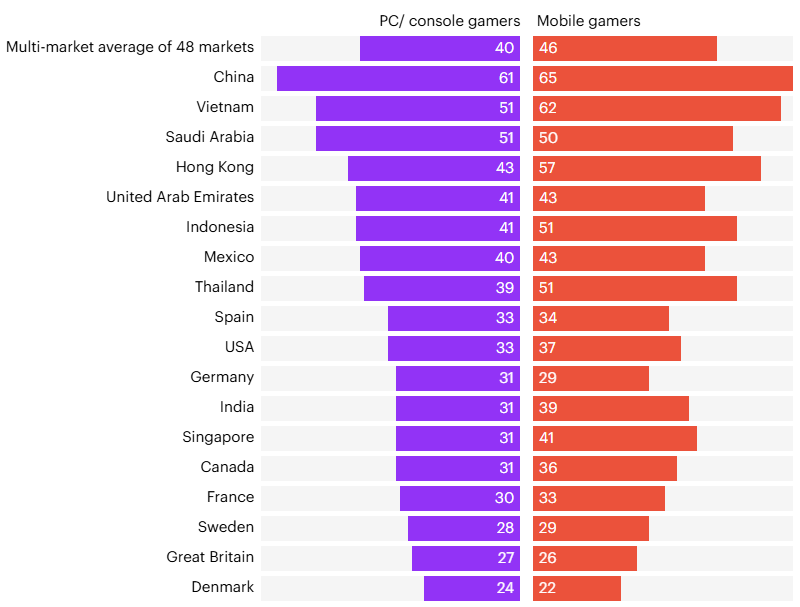
Kineree, S.(2023). Console vs. mobile gaming – understanding trends across 18 markets.
I’ll be scoping more in English-speaking markets, as the only language I can provide for the game is English. European markets such as Germany, France, Sweden, and the United Kingdom have a split of PC gaming (27–31%) and mobile gaming (26-33%)
In the United States, mobile gaming is slightly more popular than console gaming, with 37% preferring mobile and 33% choosing consoles.
Which demographic uses mobiles for gaming?
Mobile gamers now make up 54% of the total gaming population, overtaking PC and console combined.
- As of 2025, 53% of mobile gamers worldwide are female. The 18-34 age group makes up 48% of the mobile gaming audience, making them the largest demographic.
- In the United States, 33% of all mobile gamers are aged 35 and up, indicating a surge in elder consumers.
Gender preference: While men dominate action, strategy, racing, and sports genres. Women prefer word, puzzle, and genres.
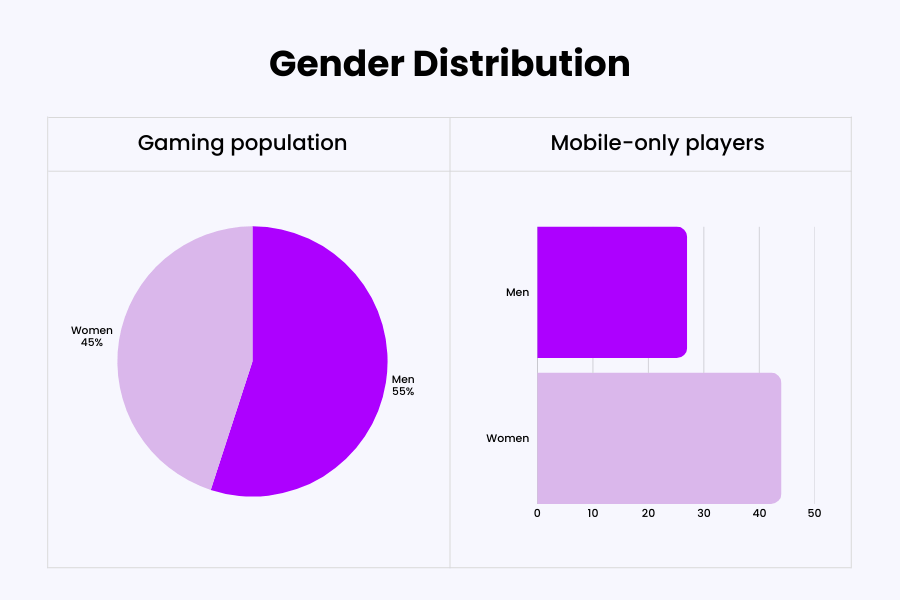
Women tend to play exclusively on mobile than men: 44% of women players game exclusively on mobile, vs. 27% of men. Women also tend to be casual gamers (44%) than men (28%).
Belfiore, F. (2025). Mobile Gamers Demographics: Data by Gender, Age, and GEO.
But why play?
- To prevent boredom (52%)
- Escape from stressful work (50%).
- Develop new talents (45%).
- Engage in creativity or roleplaying (21%).
- Compete with Others (18%)
- Socialise with others (14%).
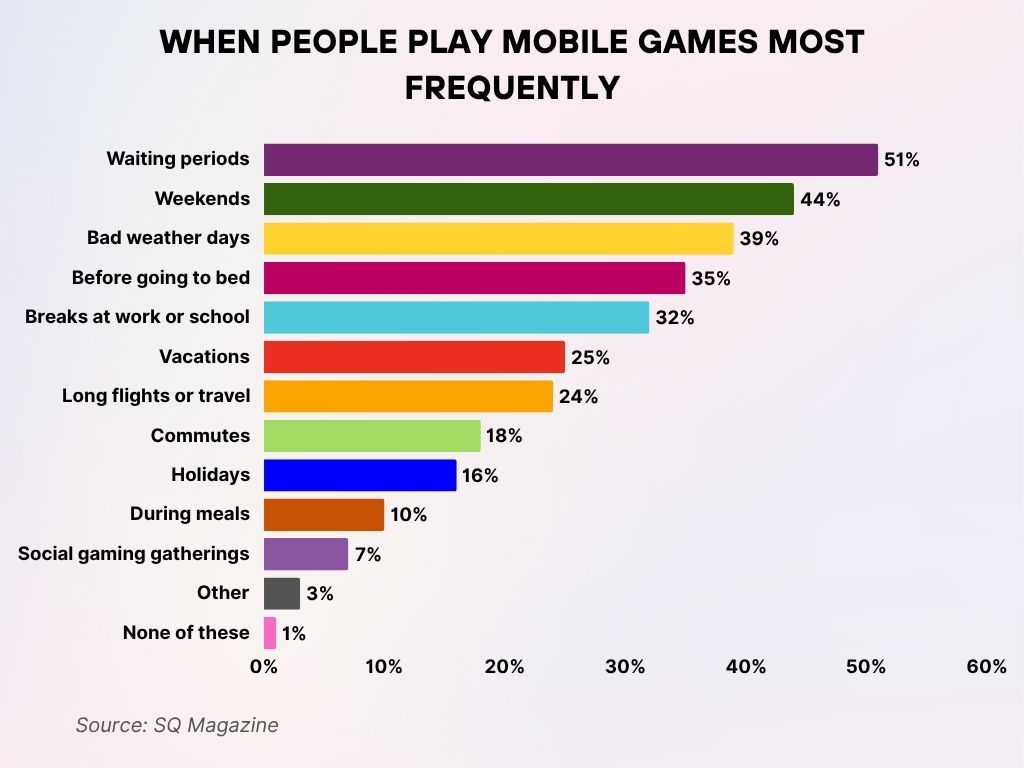
Thakur, T. (2025). Mobile Games Statistics 2025: Demographics, Monetization, and Market Leaders.
51% during waiting breaks
44% play more on weekends
39% play games on adverse weather days, most likely for indoor enjoyment.
35% play before going to bed
32% play during work or school breaks
25% on vacations
24% during long flights or travel.
18% utilise their commuting time to play games.
16% during the holidays
10% play during meals
7% participate in social gaming meetings
3% other scenarios.
Impact of Mobile Gaming on Traditional Gaming Platforms:
In 2025, 43% of former console gamers say they now spend more time gaming on mobile than on other platforms.
Retention rate
Why IOS? iOS has higher retention rates than Android. For example, the top-performing games in 2024, D1 retention ranged from 31-33% on iOS and 25-27% on Android.

Mistplay.com. (2025). Mobile gaming loyalty in 2025: Genres driving monetization, engagement, and LTV | Mistplay.
Accessibility
Why is accessibility important? Accessibility is essential because it makes the game more inclusive and easier to play. Giving opportunities to every gamer who wants to engage with the game. Being inclusive benefits the players overall experience without any frustration and helps reach a larger target audience. It’s also a common industry practice.
Visual accessibility adaptation:
- High contrast visuals
- Readable text
- Colorblind-friendly design
- Reduced effects
- Subtitles and visual cues
Audio accessibility adaptation:
- Adjustable volume (music and environmental noise)
- Audio indicators for important events
Cognitive accessibility adaptation:
- Clear tutorials.
- Consistent mechanics
- Simple UI
Narrative & Content accessibility adaptation:
- Able to skip conversations and cutscenes.
- Content warnings for sensitive themes.
Graph: In the last 12 months, have you purchased a game that you haven’t been able to play due to poor accessibility?

- “66% of gamers with an impairment or condition say they face barriers or issues related to gaming. The experience has resulted in some gamers playing less, leaving, or changing games, and enjoying gaming less.”
Leave a Reply