
Competitor analysis:
I’ll be comparing my games that are largely story-driven and follow a similar narrative. Analysing competitors allows me to better understand the current market and make professional decisions. It also shows me what my competitors have placed before, what worked well for them, and how much value I can get from my game. If done correctly, it would allow me to properly explain my idea, concept, and theme. Furthermore, comparing games will allow me to avoid repeating identical paths and make new creative options to better the entire game. To summarise, researching competitors encourages critical thinking and consideration of industry expectations.
Little Misfortune:
Genres: Adventure game, Indie game, Puzzle Video Game, Adventure
Platforms: Android, PlayStation 4, Nintendo Switch
Goal: To get eternal happiness for our mother
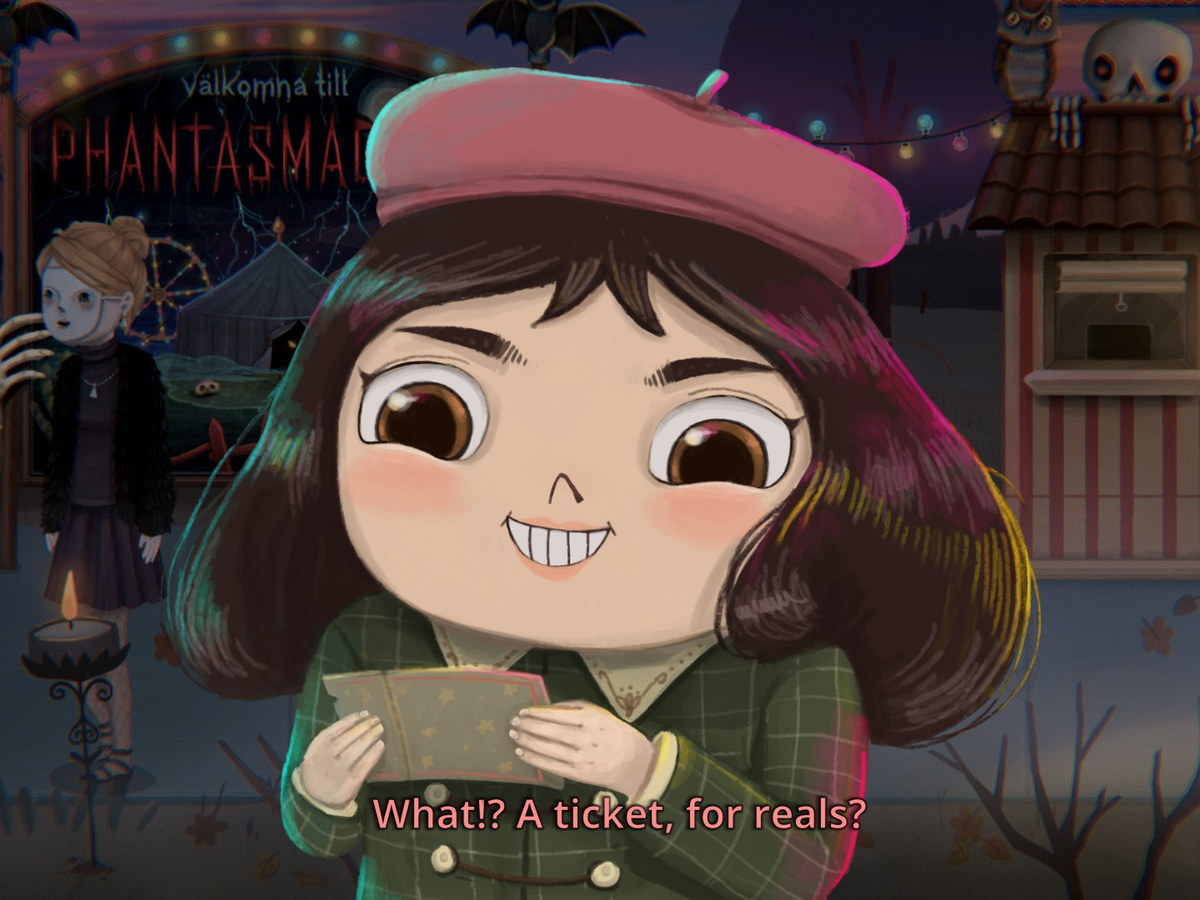
Story summary of Little Misfotune
You’re introduced to three characters: Benjamin ( The fox), Little Misfortune ( The little girl), and the Narrator. It begins with the narrator speaking to the player about Miss Fortune foreshadowing death, but Misfortune can hear the Narrator and names him Mr Voice. Miss Fortune and the Narrator end up making a deal; Miss Fortune would play his game, and in exchange, he grants her eternal happiness. Throughout the game, Miss Fortune travels far away from home to reach this eternal happiness for her mother, whilst secretly being spied on by Benjamin, whom she has a crush on. During the journey, you make various choices for Miss Fortune and see many supernatural events, all while throwing glitter around. By the end, it’s revealed that the Narrator is actually a demon named Morgo who was the cause of the missing children around the town, and Benjamin is the fox trying to save you.
Gameplay
Little Misfortune incorporates a variety of minor puzzles throughout the game to keep players engaged; yet, the core gameplay centres on making decisions. By clicking and interacting with objects. Progression is mostly narrative-driven, with choices influencing dialogue and the ending. It’s perfect for casual gamers or just first-time players.
Comparison
Similarities:
- Choice driven
- Narrative driven
- Both include narrators that actively involved in the gameplay
- The themes of innocence and loop
Difference:
- Visual art difference
- The environment isn’t the same
Reflection: I’ve previously researched Little Misfortune as game research, and it was my biggest inspiration for this game idea. With similar narrative and mechanics, and goal-focused, since the game focuses on ‘everlasting happiness’, by game focuses more on returning to the main player’s cat (Miss Mya). I hope to add a different value, however, with the overall game’s visuals and the story narrative.
FranBow:
Genres: Adventure game, Indie game, Puzzle Video Game, Adventure
Platforms: Android, PlayStation 4, Nintendo Switch
Goal: To find ‘Mr Midnight’ Players cat and to escape the asylum.
Comparison
Similarities:
- Choice driven
- Narrative driven
- The themes of psychological horror
Difference:
- Visual art difference
- The environment isn’t the same
- More darker themes
Gameplay
Fran Bow focuses on exploration and problem-solving. Fran can travel through environments, interact with objects, and solve puzzles. The ability to transition between reality and another version of reality is a key gameplay feature because it changes the world and opens up new paths or solutions.
Story summary of Little Misfotune
You play as Fran Bow, a girl who is stuck in a mental asylum, struggling with trauma and psychosis. She sees spirits and the supernatural beings; her goal is to escape the mental asylum and find her cat, Mr Midnight, along with what happened that night with the death of her parents.
Fran takes the red pill from the mental asylum to see the other world and escape the ward. After escaping, she visits many different realities, all while being chased by a demon (Remor: The prince of darkness)
Reflection: Fran Bow helped me see how gameplay prioritises narrative and emotional themes. The use of simple point-and-click mechanics combined with the ability to transition between realities illustrated how interactivity may be utilised to express emotion and meaning.
Critical Analysis:
Current concept : My game idea Narrator is a choice-based adventure and psychological horror game influenced by fairy tales, fables, and narrative-focused games. The game’s summary shows a witch waking up in a forest with a goal of reuniting to her cat. The narrator of the story gives the players options for the witch while narrating her “fairy tale.” However, this narrator is unreliable and easily distracted; and as a result, the player discovers additional myths and events she is not supposed to see. She only later discovers that her story is still unfinished or ‘not correct’ because the final page is missing. The narrator dislikes this and eventually becomes the antagonist, wishing to restart the world and the witch’s story.
Strengths: I feel as if the overall game story is the leading strength for the game and hopefully the visual art style too.
Limitations: However, my game idea has undergone numerous narrative changes inside the story since I’ve found it difficult to remain with one idea. I’m analysing it to improve and identify flaws in the game concept. One major issue is that the game’s puzzles are lacking, therefore it may not be as intriguing for others due to its story-driven focus. Another limitation is that I have limited coding knowledge, so I’m not sure how the game will be programmed altogether. In addition, time management may be a risk factor, as I occasionally go behind. To improve and reduce risk, I will frequently seek advice from peers and lecturers and gain support or guidance.
Reflection: After analysing my game idea, I learnt that I still have a lot to work on; I can work on some issues that I don’t think are resolved yet at the start of semester 2 and make the final iteration of the story.
Leave a Reply