
Moodboard :
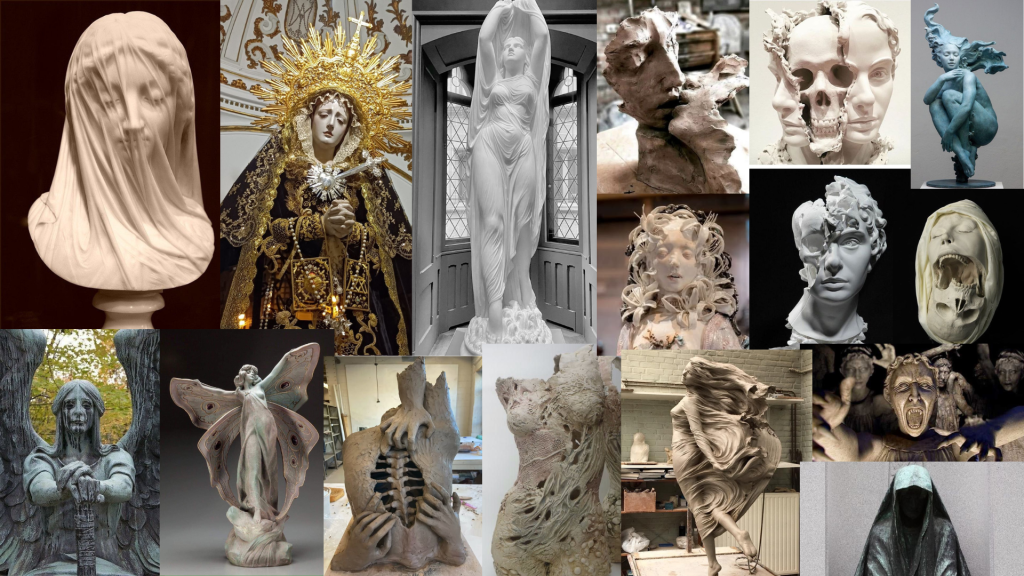
Initial research :
What is sculpture?
To me, sculpture is using materials to create a three-dimensional art object. These materials can vary a lot, including clay, wax, stone, metal, wood, etc. These materials are often carved, molded, sewn, and assembled to create the artistic form. – Sculpture | Definition, Types, Techniques, Elements, & Facts | Britannica
Where did it begin?
Humans have been sculpting for more than 70,000 years! Ancestors have been carving in rocks/wood likely before they made cave paintings. Sculpture is one of the oldest forms of visual art.
The art of carving became more widespread, and sculptures for use in rituals became commonplace. Intriguingly, the prehistoric peoples seem at first to have simply replicated the carved tools, weapons, and vessels in oversized versions and used these as religious offerings. – Blog – History of Antique Sculpture | Mayfair Gallery
WHY SCULPTURES?
Quote from initial ideas post: “As my final topic, I chose sculpture, which I know the least about, but I still think it’s amazing, especially the lifelike statues. I chose this topic for two reasons: the veiled Virgin statue, my favourite statue to admire, and the weeping angels from Doctor Who, which used to always frighten and fascinate me.”
The Weeping Angels from Doctor Who: If you’re wondering why this creature is so frightening, it’s because they can move when you blink and murder you.
Doctor Who uses the idea of statues staying still, something that we are familiar with, and turns it against us. Changing our perception of statues to create tension and the fear of the unknown.

I decided to pick sculpture because I’ve always liked looking at stone sculptures, specifically those that show realism.

I focused on my favourite statue, ‘The Veiled Virgin’, which was made in Rome, 1818-1875.
The Veiled Virgin depicts the Virgin Mary with a veil draped over the contours of her realistic features. With her eyes closed and her head tilted down, the figure appears to be either peacefully praying or expressing grief—both of which are historically characteristic of Virgin Mary portrayals.
Click here to review the Renaissance era topic
Leave a Reply