Observation:
People are reverting to a more physical way to live. People choose to live a harder lifestyle because they see value in it. Making things by hand even though you can buy the same thing for cheaper. Building a house, using dumb phones or designing furniture for their own sake is almost like there is a human need for it that bypasses what’s logical: being maximally effective and have every convenience at reach.
- Dumb phones
- Building a house with your friends
- Designing your own furniture
- The IKEA effect of making your own furniture creates a better attachment to it
- People yearning for physical touch
- Of books like in waterstones. Books arent dead although in theory they should be because we have devices slimmer than most books that can fit tens of thousands of them.
- Of clicky buttons on your phone – most dumb phones have that
- Slow productivity and Deep work by Cal Newport
- My and Other peoples preference over single purpose tools even though their phones technically made them obsolete.
- Watches, timers, Stopwatches, Alarms
- A physical Calender
- Pen and paper over digital notes
Another observation is how people simply don’t care about how the world is moving forward. I find this really devastating. I feel like everyday there is a fight to make yourself proud. Whether it’s too do work you’ve been putting off or avoiding things that feed into bad habits. So there is a divide, and not between groups of people, but within the person themselves. Most people have many bad habits as well as fight to do something right for themselves.
- AI conversations overheard at work – mentions of how it’s probably bad for their cognition but laugh it off
- Comfort crisis by Michael Easter
- 2% rule, where 98% of people take the escalator instead of the stairs.
- Dependent on a lot of things – airconned cars and
This is why in my game it’s perfect to have two characters represent two different mentalities: Someone who spends more time on things but technically gets less done – what i think people strive for, versus someone who is always busy doing everything and dont or cant look after themselves very well – how I see people nowadays.
Artistic and Design Inspirations
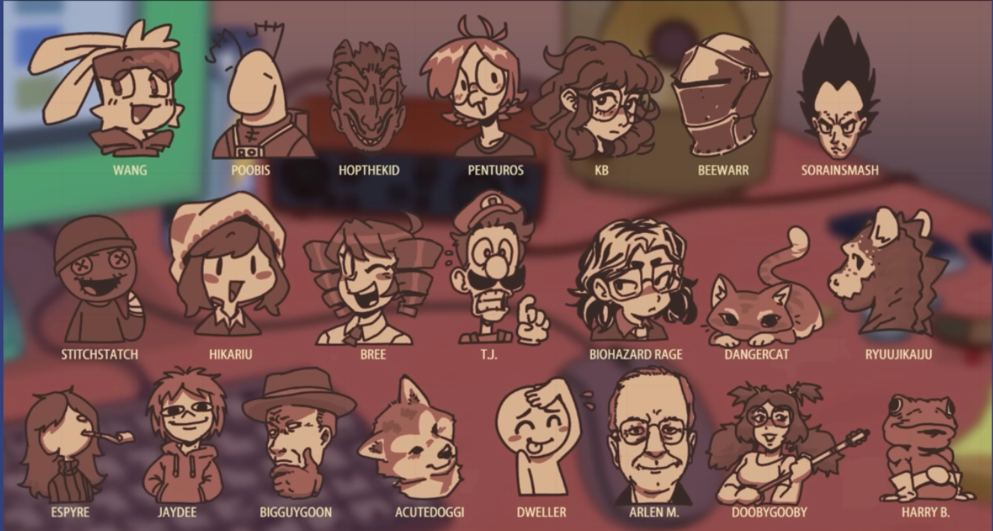
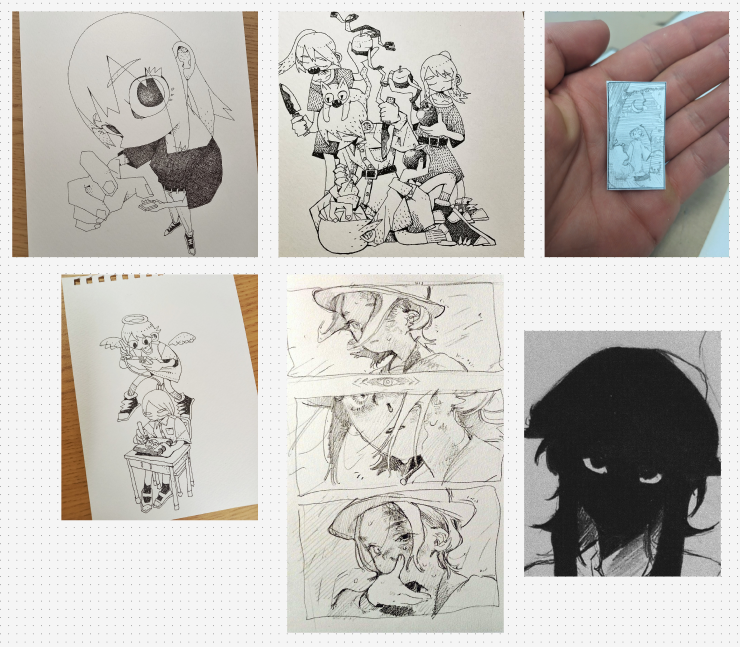
I was searching for quick and expressive ways to make characters because I know I draw in a more illustrative and therefore time-consuming way. I looked at animators because they have to make hundreds of drawings, keep them expressive and unique all at once. The screenshot below shows how the artist plays with the silhouettes, the expressions and features of each character to push a personality. They don’t rely on lots of colours and even keep the same line width. I think this type of work takes more strategy as you have to keep account of more things before you start drawing, mainly their personality, in addition to their pose, shading etc.
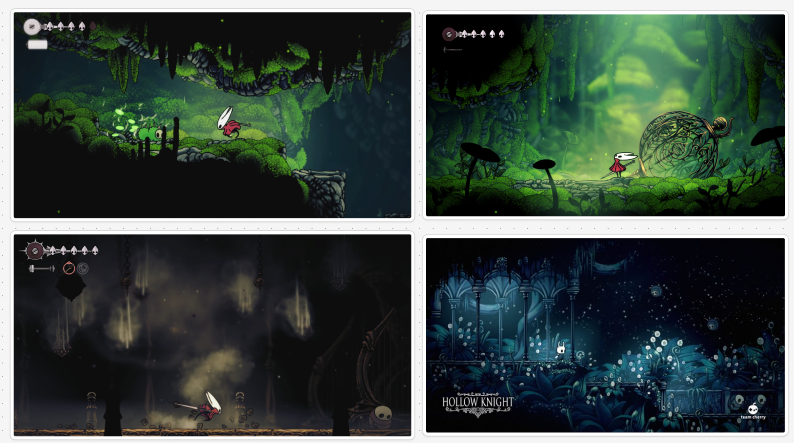
What makes Assemble with care charming?
When searching through similar games to my concept, “Assemble with care” popped up. AWC had a really interesting and highly interactive way to repair little trinkets. It had stunning 3D graphics which merged well with the 2D. As I played it, I found the controls incredibly intuitive (Played on IPad). It was very fun to tap, twist and pan through all items as I progressed the repair.
The game also made you figure things out for yourself. Since the game didn’t hold your hand or instantly give you hints, you tap into how to logically repair your commission. Therefore it feels more accomplishing.
The game gets its charm from its relaxed nature and very little stakes. It is a softly designed game with pretty visuals, and the gameplay does not punish you, because you can’t get it wrong, you can’t break anything, you have infinite time. This clearly invites the player to take their time and enjoy it’s little details more than other games.
The negatives
I found myself skipping through the narrative of assemble with care. I found it so unengaging and wanted to fix things not for the people but for the enjoyment and mechanics of it. I didn’t empathise or have any reason to care for them. I never engaged with the character I was playing either because the situation she would always find herself in was boring with no stakes or problems. Shes enjoying her holiday and fixes things for people as she’s on holiday.
A final criticism is that there is little replay value. I know the story and have seen how to fix everything. I would only repay it for the satisfaction of the repairs. I’d probably do one and then be ok to quit.
Takeaway
I love that the game keeps things very simple with just a storyline and then the item you work to repair. It probably had a nice development timeline that wasn’t overwhelming.
I also enjoyed their illustrative style for their drawing and they kept the colours catchy.
Cat Mail co – How can sorting out mail be so engaging?
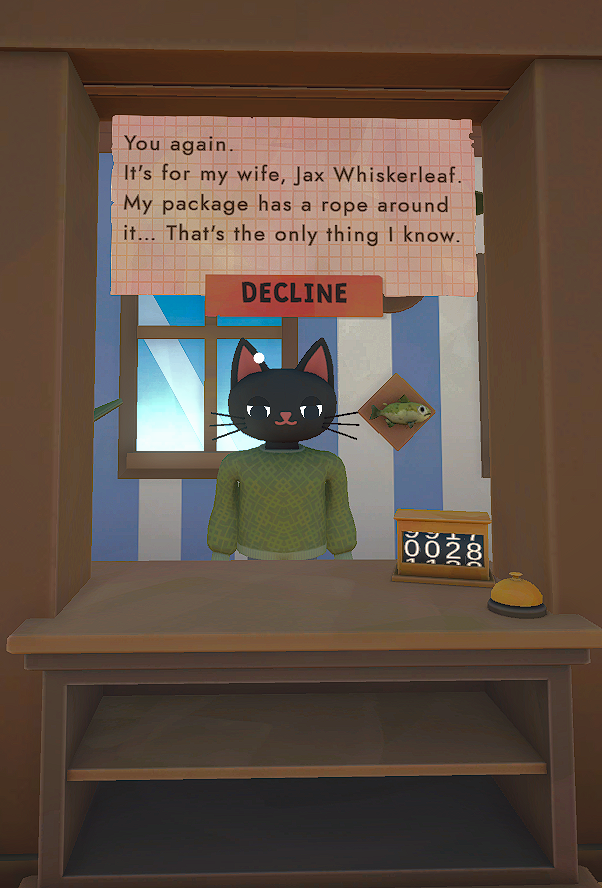
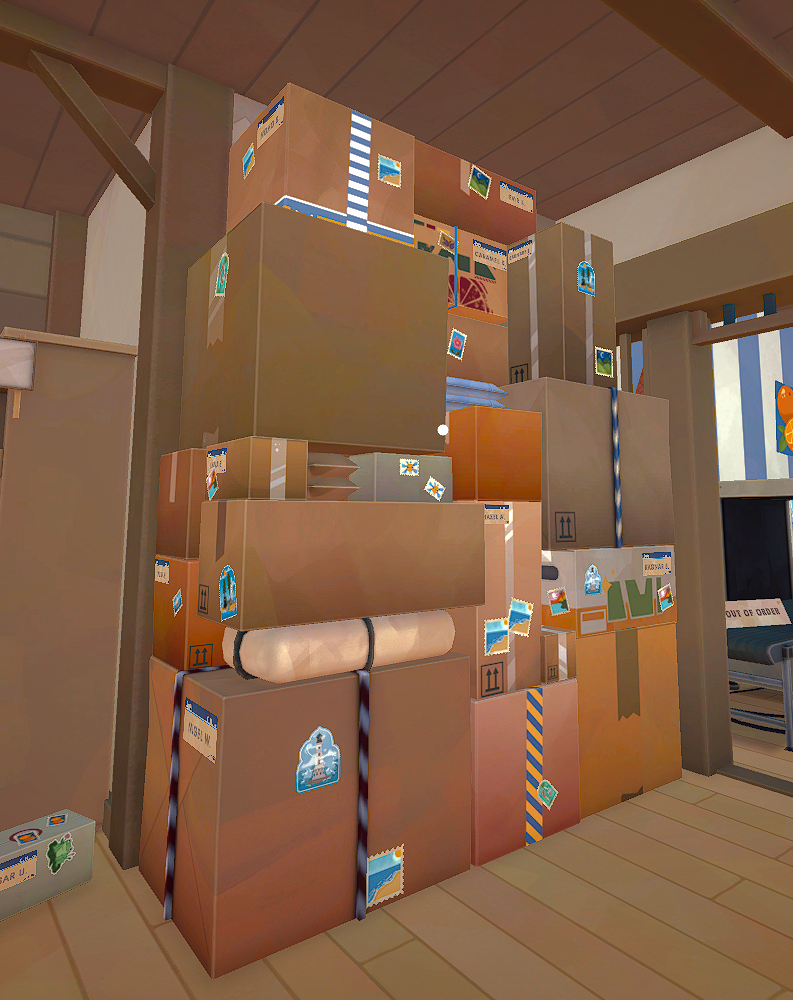
Sorting out boxes for hours does not sound fun at all, yet I enjoyed it. Cat Mail gave me multiple things to do all the time. Whether it was to clear the mountain of parcels, talk to the customers, figure out how you’d organise your parcels yourself, send off parcels to the neighbouring islands at night etc.
You also have the freedom to sort things how you like. You play alone and manage the place to your own liking. There are many ways to play the game and the right way is decided by you. Moreover, there are no big consequences to getting the wrong parcels delivered in cat mail besides a penalty.
I think it is made to be engaging because it’s also a very intuitive game. You can drag your parcel around to view it how you like, you have a sticker section on the side that you can bring up easily, you can throw things or carry boxes on other boxes. There are ways of playing that make the process go smoothly and effectively, enough to have you for an extended session.
Negatives
Cat mail became repetitive kind of fast. It though it had so many tasks they all revolved around boxes and moving them and organising them. Organising takes a lot of time, and if you’re not organising, then you depends on how well organised you were to effectively complete those tasks.
Takeaway
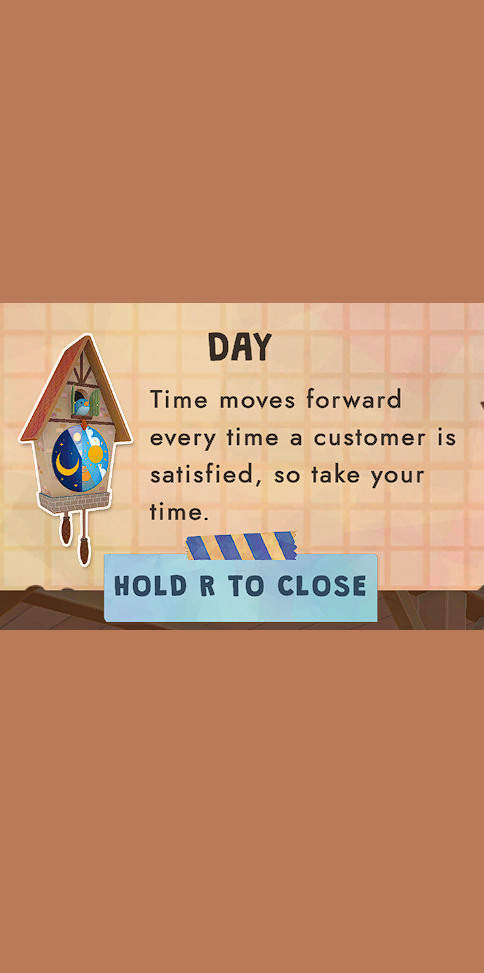
I want to mimic the two distinct stages of the game: their day shift and night shift. Two different modes of work to look forward to. When playing my game I want people to operate on two different wavelengths so they can anticipate night when its day and day when its night. I want to take it a step further as well, your tasks won’t revolve around commissions at night, it’ll be about supplies and the narrative. Whilst at day its the commissions, tracking stock and managing the unique hurdles of each season.
Why is Terraria’s grind so engaging?
The cycle of Terraria
An analysis of this video and my own experience shows that terraria has the player switching through multiple purposes when playing the game. There are three main stages terraria makes you go through: survival, prep for boss fights and then an invisibility stage. These three cycles are distinct and keep the players thinking about different purposes of each game session they have, even if the process is the same. As we play the game, we can tell whether we are farming for something necessary for survival versus a boss fight versus to be godly. And those changes in purpose doesn’t keep the player bored stuck doing everything just for one purpose.
Terraria Gatekeeps a lot of content:
As you play, you’ll eventually enter a phase where all bosses are too easy for you. Therefore Terraria makes the player change into hardmode after defeating the wall of flesh: the gate to hardmode. This lets the player start the cycle once more. This creates a new-found engagement and treats the player with access to:
- Travel faster
- Mining much easier
- Farming easier
- A new array of potions
- New goals: The world evils spread
- New biomes + Each biome has changed, restarting your sense to explore again.
These elements all contribute to the urge to explore terraria further.
Takeaway
I want to mimic this with the seasons of my game, where each season represents a different purpose in playing. Season one is about settling in, moving things out of the way and organising the workshop to how you like. Season two is about doing the commissions properly and finding out about grandpa. Season three is about overcoming his and your problems. Season four is where you do commissions normally with the satisfaction of the resolution.