Final Prototype & Reflection
01 — Game Pitch Presentation & Peer Feedback
On Monday, I delivered a presentation introducing STAY, my 2D psychological horror visual novel. The pitch brought together the main design decisions developed over the previous weeks, including the game’s narrative premise, design intention, gameplay pillars, core loop, character concepts and visual direction.
As the slides mainly contained key points and visual materials, I used the spoken presentation to explain the ideas in greater detail. In particular, I discussed the relationship between the protagonist and the restaurant owner, the influence of Japanese folklore on the owner’s supernatural form, and how familiar elements such as food, hospitality and clothing could gradually become unsettling.
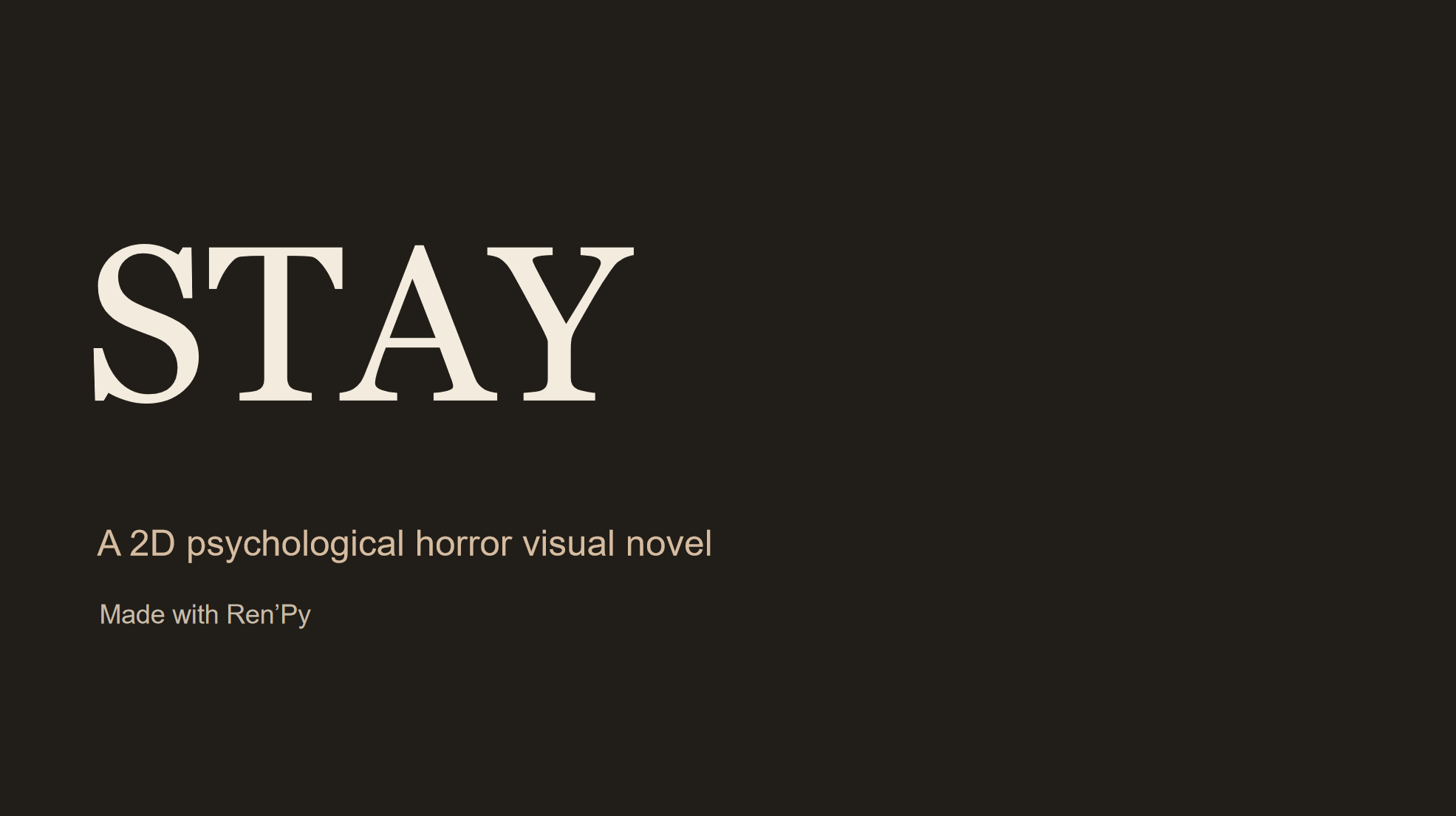
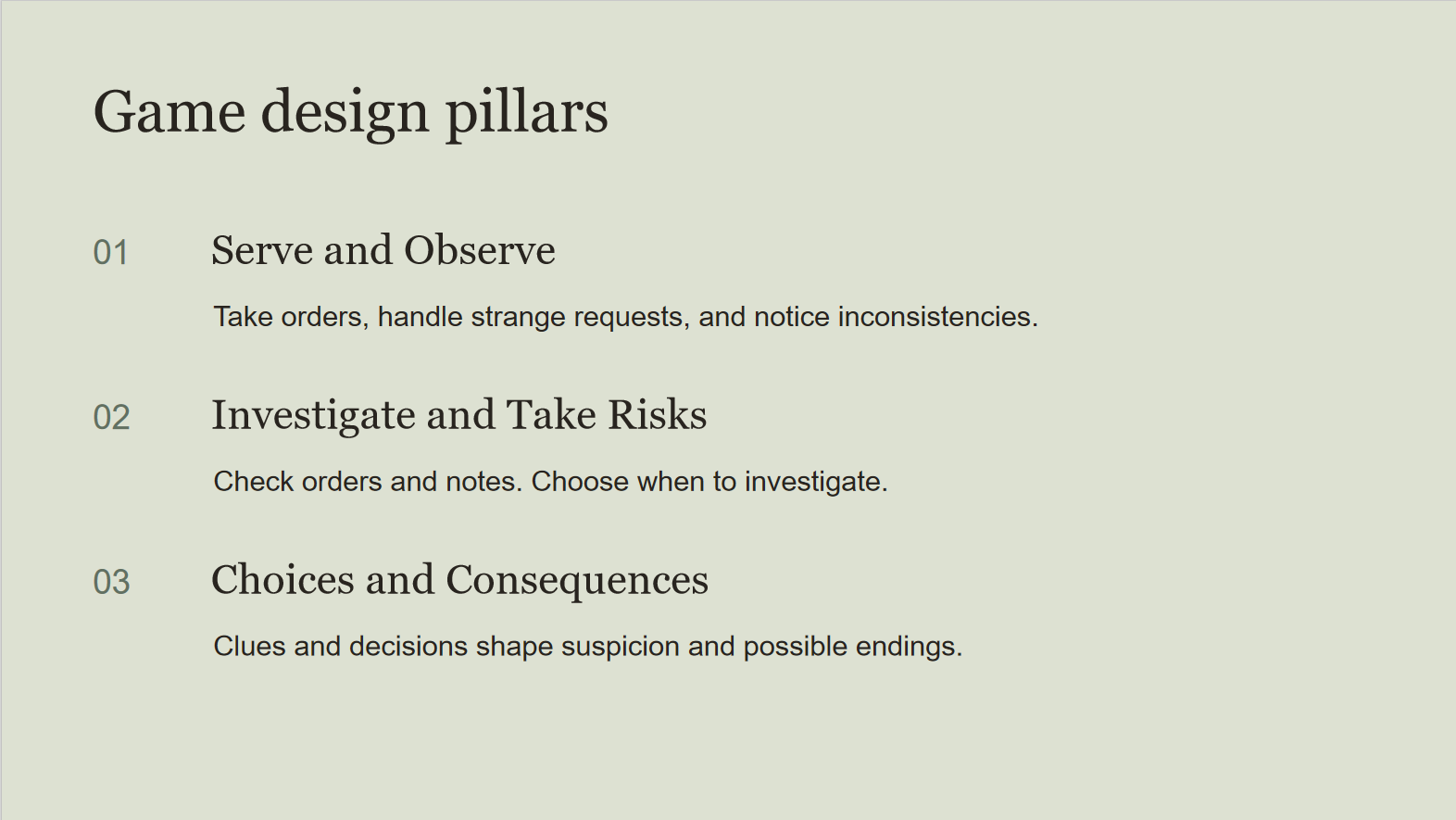
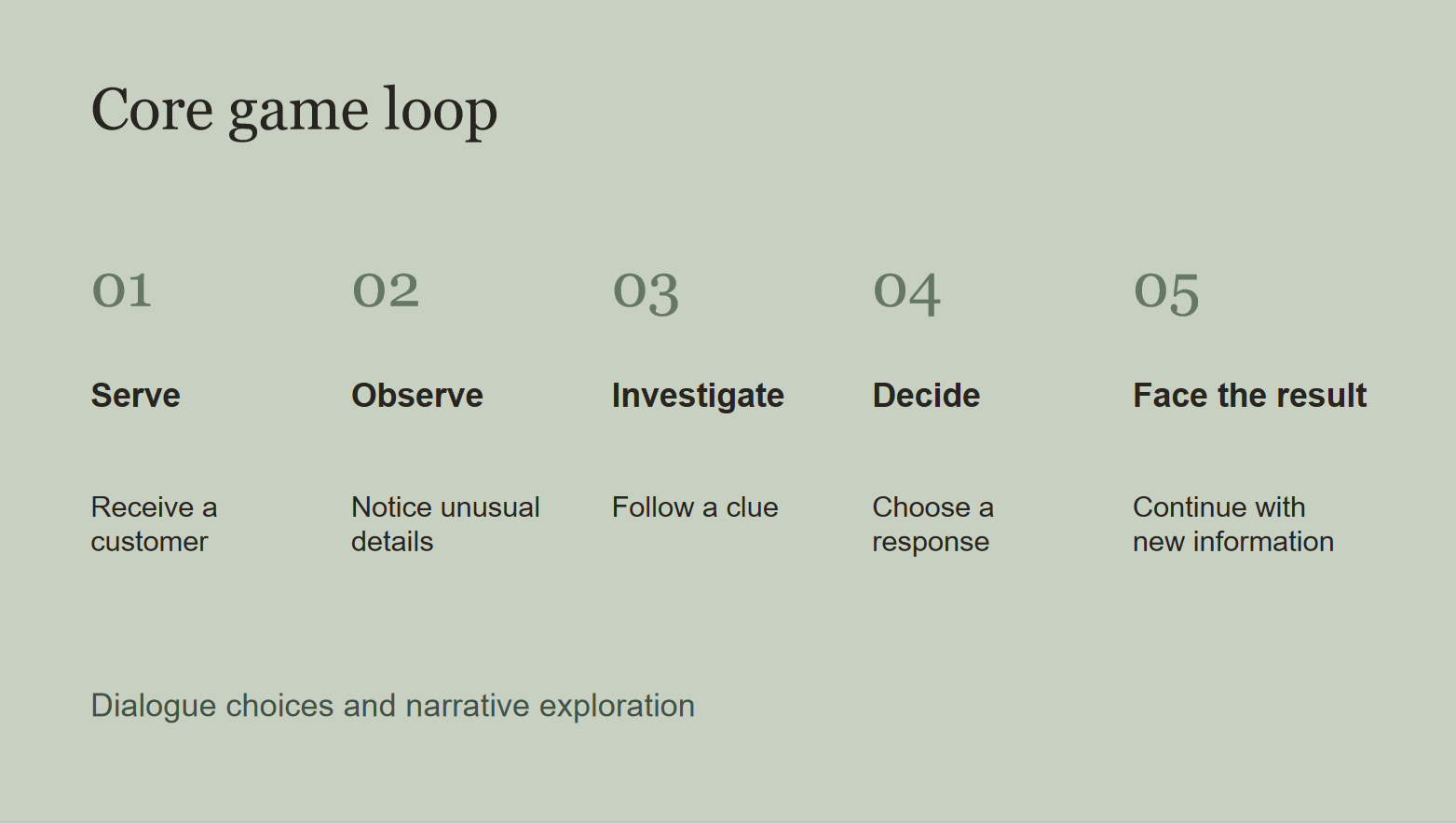
Following the presentation, the audience completed a peer evaluation questionnaire. Eight responses were collected and later compiled into a feedback spreadsheet. The overall average score was 4.04 out of 5.
The strongest result was for the supporting materials, which received an average of 4.62 out of 5. This suggested that my character designs and visual examples helped communicate the concept effectively. However, the game’s unique positioning received the lowest average score of 3.38 out of 5.
This feedback made me realise that, although the overall concept and gameplay structure were reasonably clear, I needed to communicate more effectively what distinguished STAY from similar games. Its main strength lies in the contrast between the owner’s apparent kindness and his hidden desire for control, as well as the gradual transformation of an ordinary restaurant into a place of psychological unease.
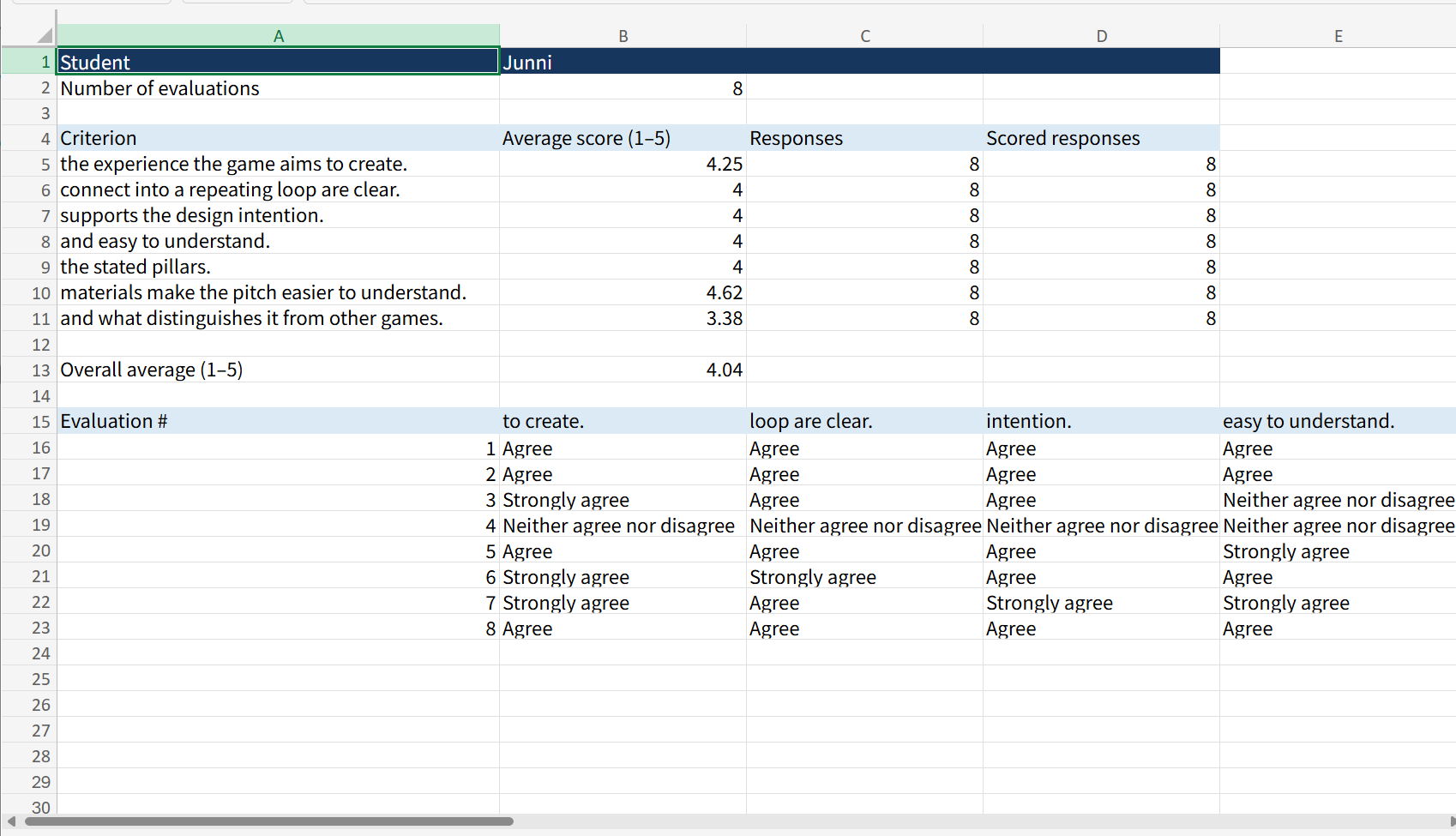
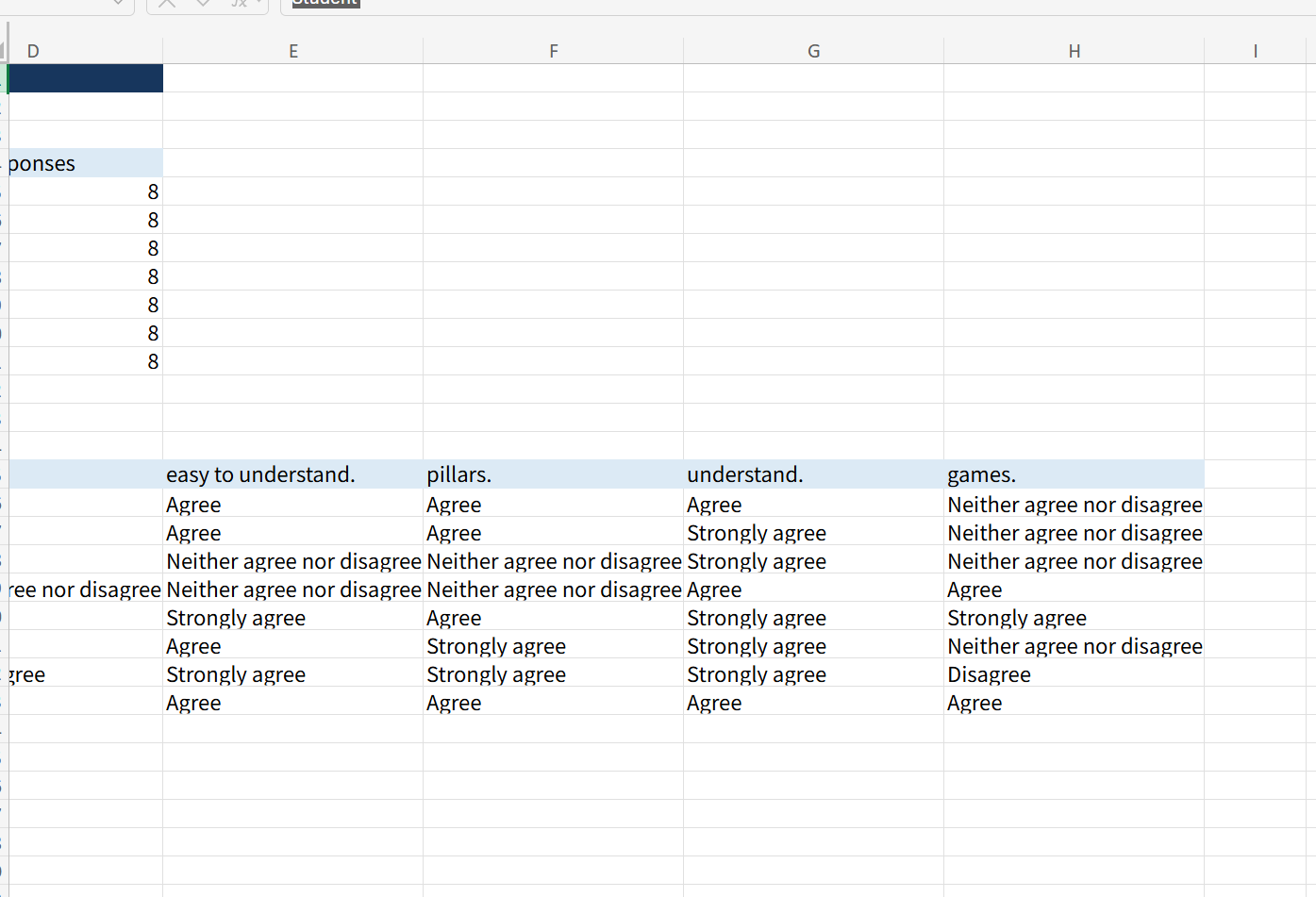
Peer evaluation results compiled from eight responses following the presentation.
Presentation Materials
View Presentation Slides → Read Presentation Script →02 — Final Demo & Project Submission
For the final stage of the project, I developed the earlier Twine narrative prototype into a playable Ren’Py demo of STAY: Night One. This involved bringing together the narrative, character illustrations, environmental backgrounds, food imagery, music and sound effects to create a more complete player experience.
Most of the visual assets used in the demo were AI-generated through an iterative process of prompting, reviewing and refining the results. Rather than using the initial outputs directly, I focused on adjusting their composition, proportions, colour palettes and consistency to suit the game’s intended visual direction.
AI-generated character silhouettes prepared for the final demo.
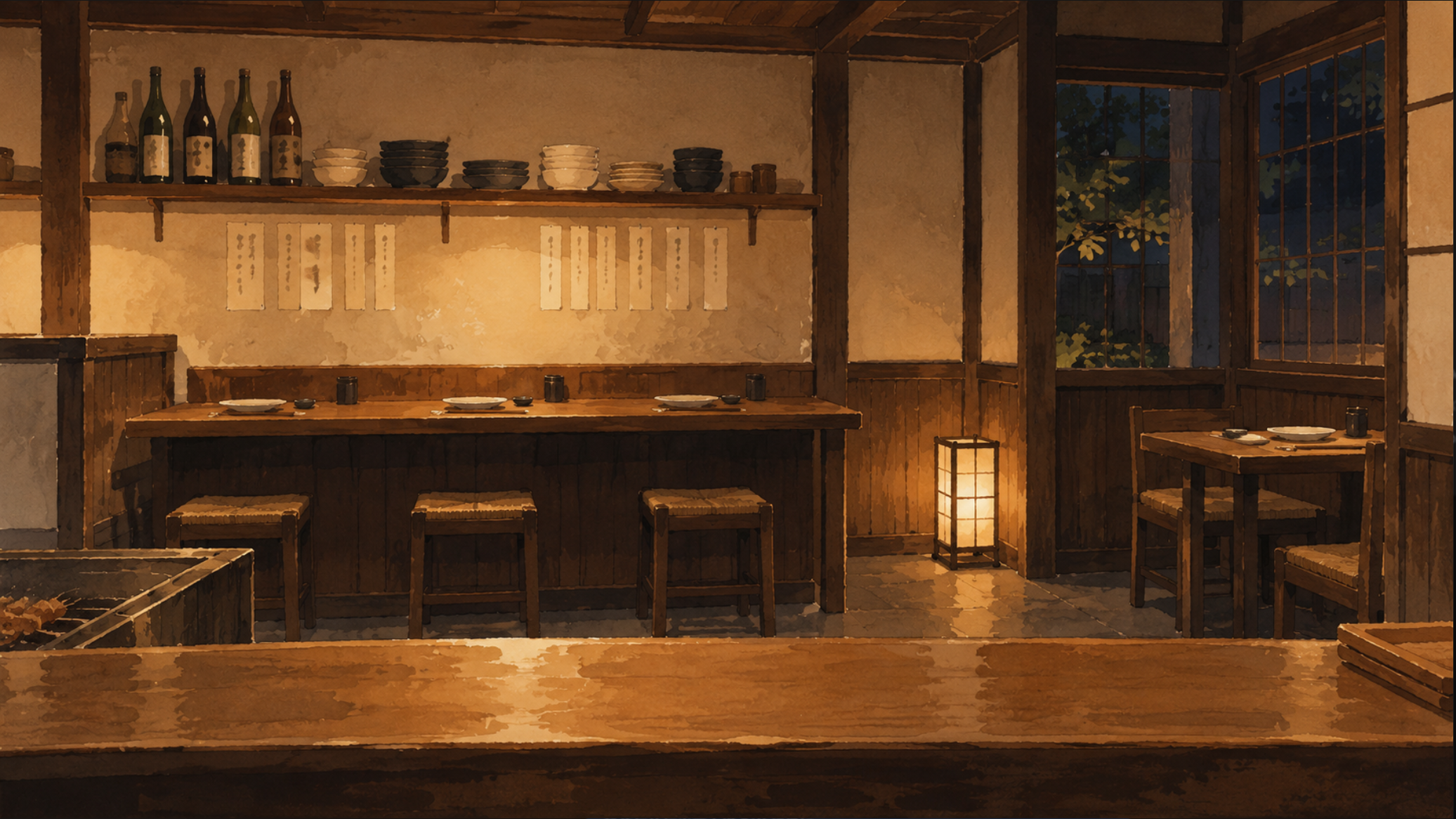
One of the main challenges was refining the restaurant background. Earlier versions contained relatively detailed textures and realistic proportions, which made the environment feel visually busy and reduced the space available for character sprites. I therefore explored a softer, more painterly approach, using broader watercolour-like colour blocks, simplified details and smaller furniture to create a background that would work more effectively within the visual novel interface.
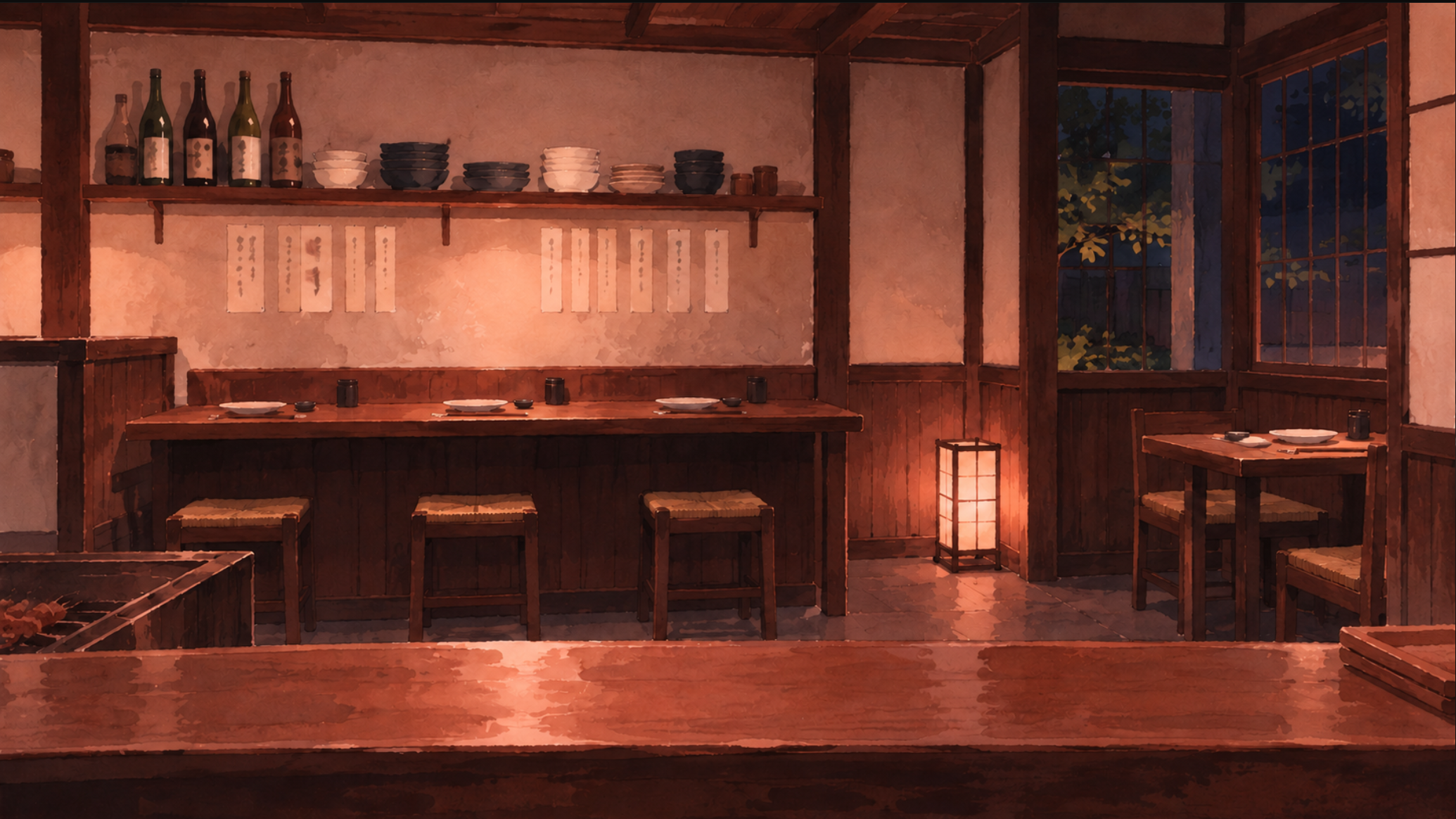
Colour palette experiments for the restaurant background, comparing warm amber lighting with a more reddish tone.
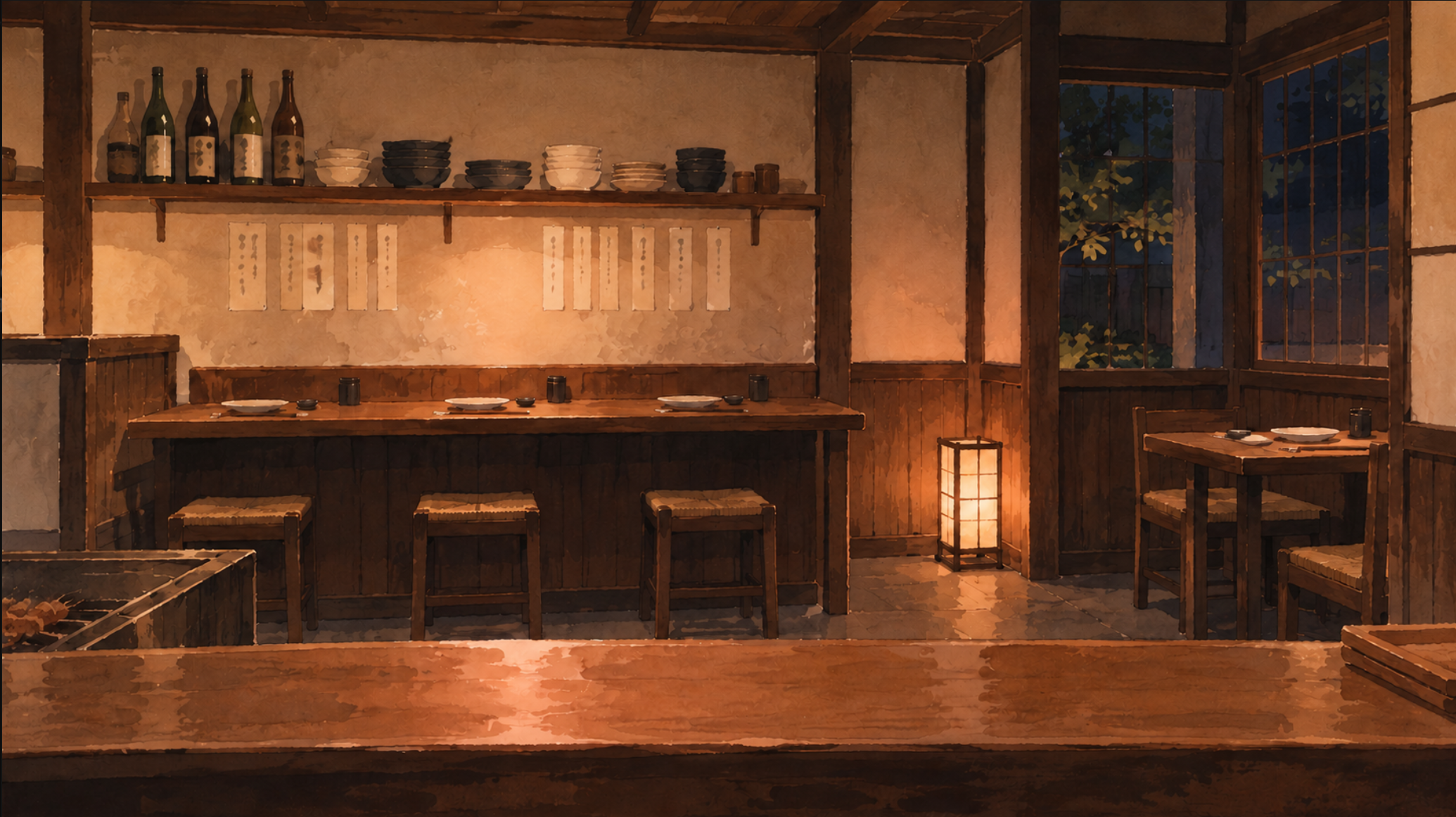
Refined restaurant background with simplified details, adjusted furniture proportions and a softer painterly style.
I also experimented with the restaurant’s lighting and colour temperature. Warm amber and brown tones helped establish the restaurant as a welcoming and familiar space, supporting the owner’s initially friendly appearance. At the same time, I considered how changes in lighting and colour could gradually alter the player’s perception of the environment. The contrast between the daytime and nighttime street backgrounds was another way of exploring how the same location could communicate different moods.
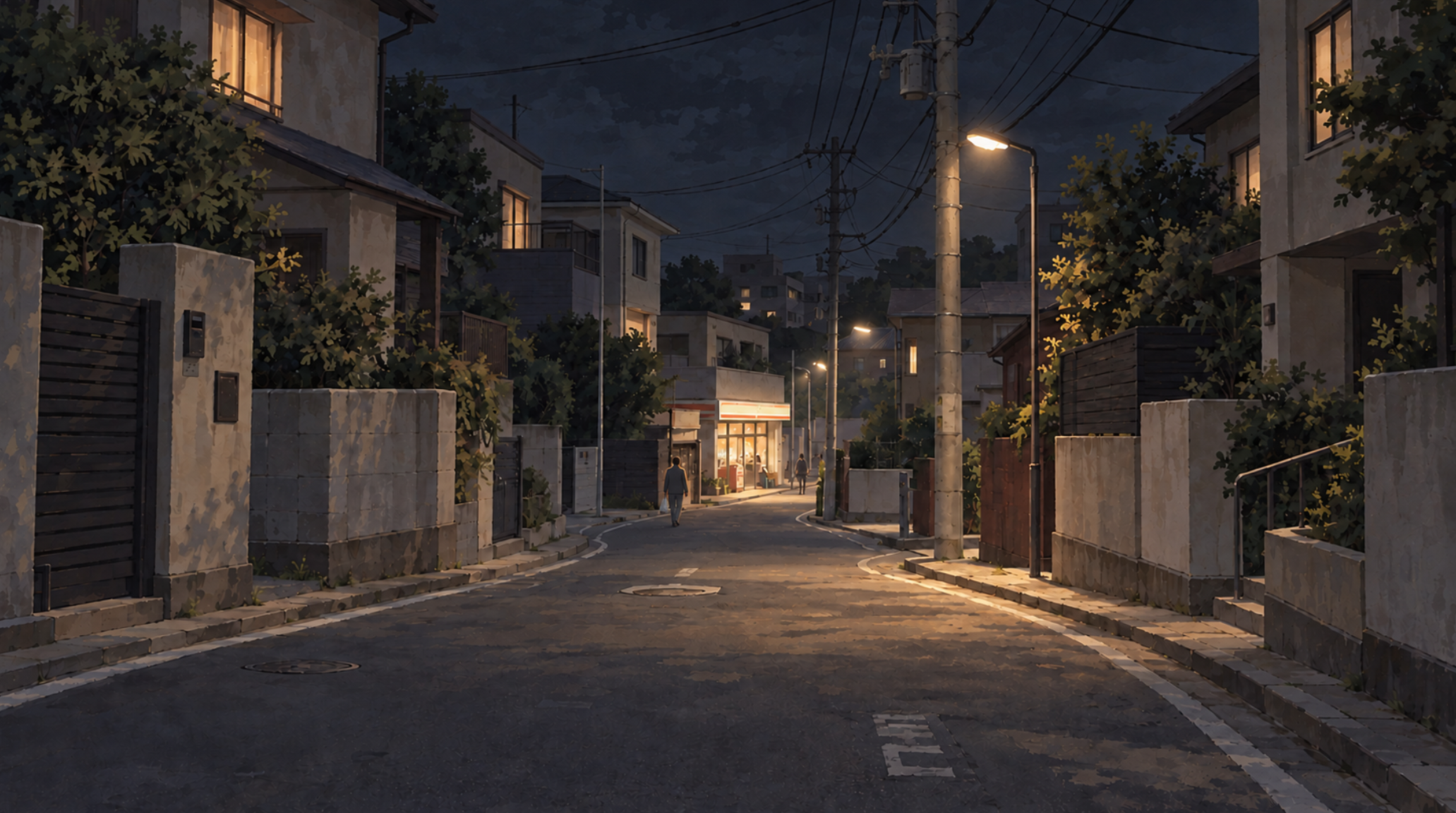
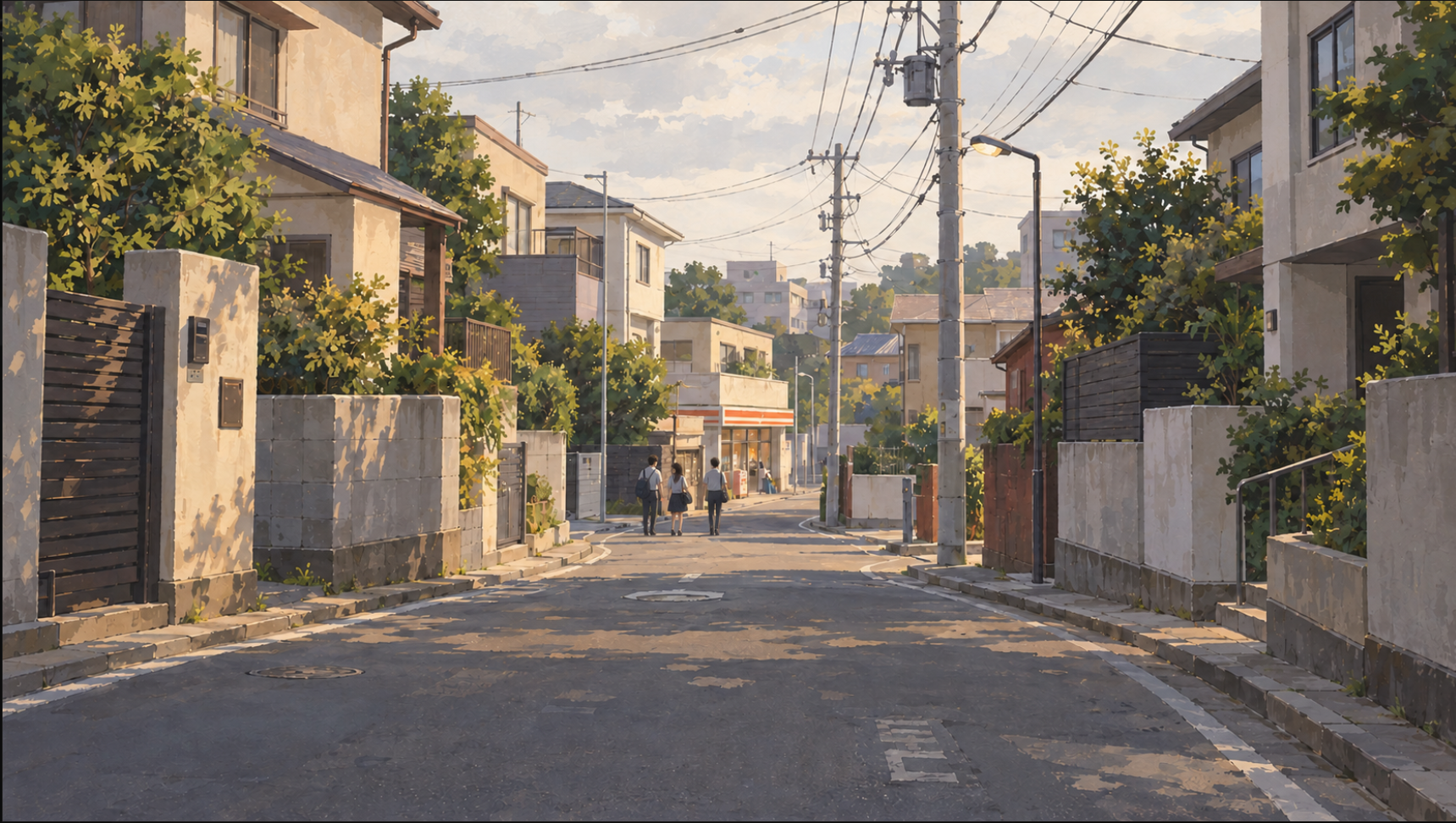
Daytime and nighttime variations of the street environment, exploring how lighting changes the atmosphere.
After refining the visual assets, I tested them within Ren’Py alongside the character sprites, dialogue interface and player choices. This helped me evaluate the composition as a complete game screen rather than as separate illustrations.
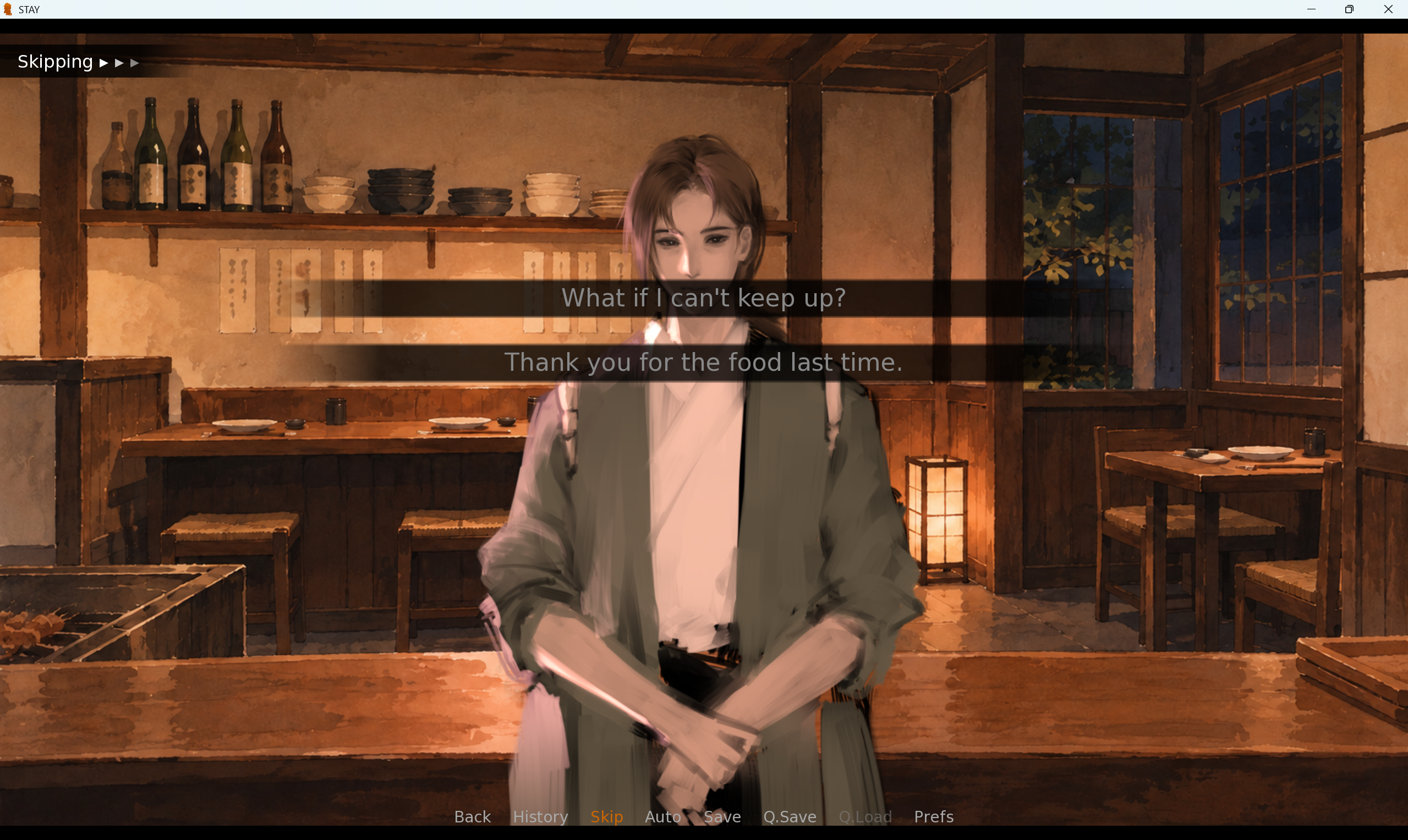
The refined restaurant background integrated with the owner’s character sprite and Ren’Py dialogue interface.
The final demo also incorporates background music, environmental sounds and interactive elements, including dialogue choices, food selection and investigation. Although it represents only the first night of a larger planned story, it brings together the narrative and audiovisual elements developed throughout the six-week project.
STAY — Playable Demo:
Pin is 11112222
Final Reflection
Looking back over the six weeks, the project developed from an initial exploration of fear into a more focused psychological horror visual novel. Throughout the process, I experimented with different gameplay ideas, developed the characters and visual direction, and gradually refined the narrative structure.
One of the most important decisions was reducing the scope of the game. Moving away from a more complex restaurant management system allowed me to concentrate on storytelling, player choices and atmosphere. Although the final demo is smaller than my original ambitions, it provides a foundation that I could continue developing in the future.
The final production stage also showed me that creating a consistent visual experience requires more than producing individual assets. Refining their colours, proportions and composition, and testing how they work together in the game, was an important part of developing STAY’s atmosphere.