Research & Concept Exploration
This week focused on rapid idea generation and exploring how emotions can become starting points for game concepts. Working with Serena, Alice and Echo, our group selected “Fear” from an emotion wheel and used it as the basis for a collaborative brainstorming exercise.
01 — EXPLORING FEAR
We began by selecting an emotion as the starting point for our ideation process. Our group chose Fear, which gave us a broad emotional theme rather than a predetermined genre or game mechanic. This allowed us to explore different interpretations of fear before deciding what kind of game it might become.
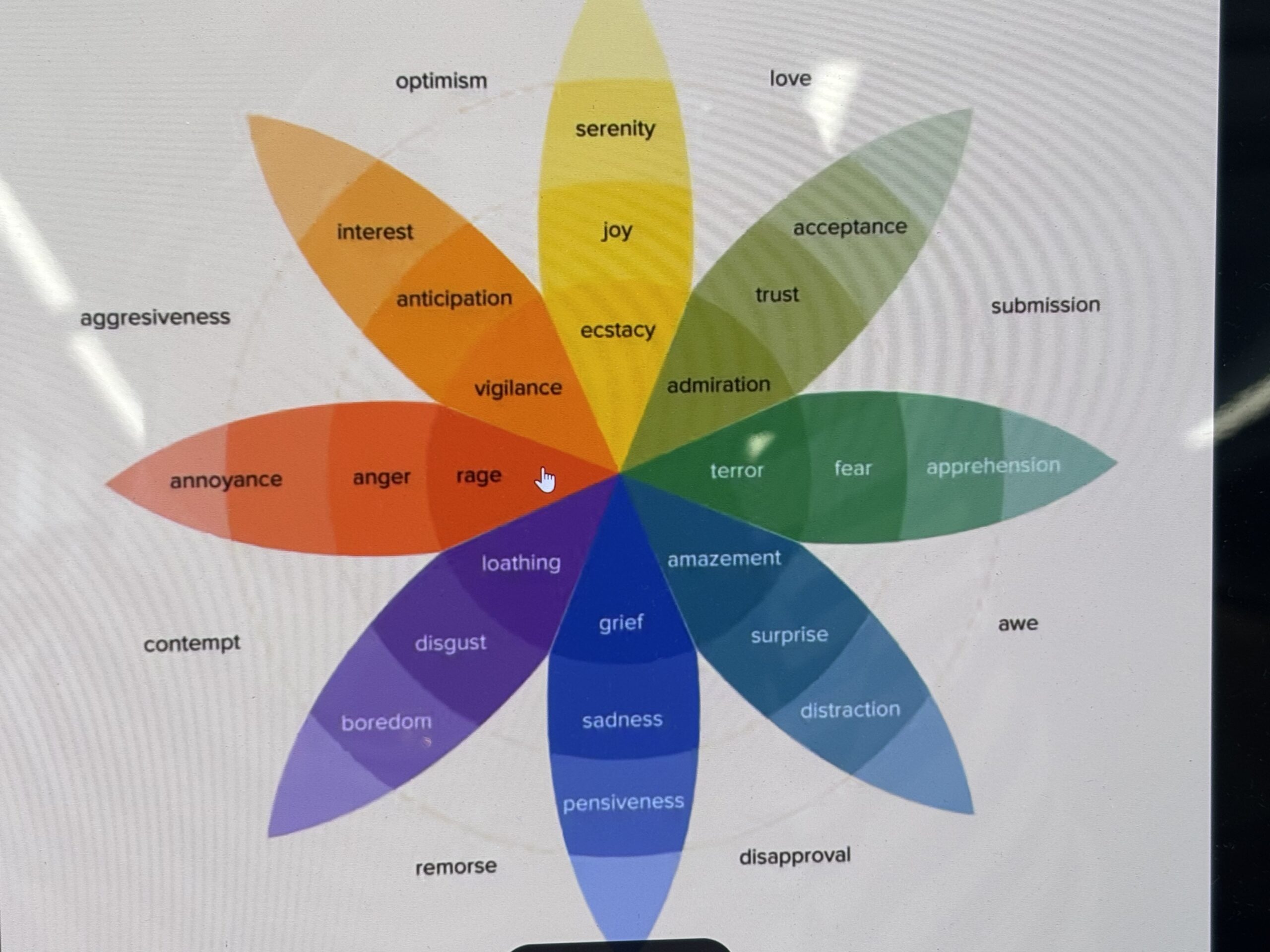
We used an emotion wheel as a starting point and selected Fear as the central emotion for our group exploration.
02 — WORD ASSOCIATION & BRAINSTORMING
From “Fear”, we began a rapid word-association exercise. Instead of immediately deciding on a game genre or mechanic, we explored a wide range of associations and organised them into nouns, verbs and adjectives. This helped us move from an abstract emotion towards possible actions, objects, characters, environments and situations that could become part of a game.
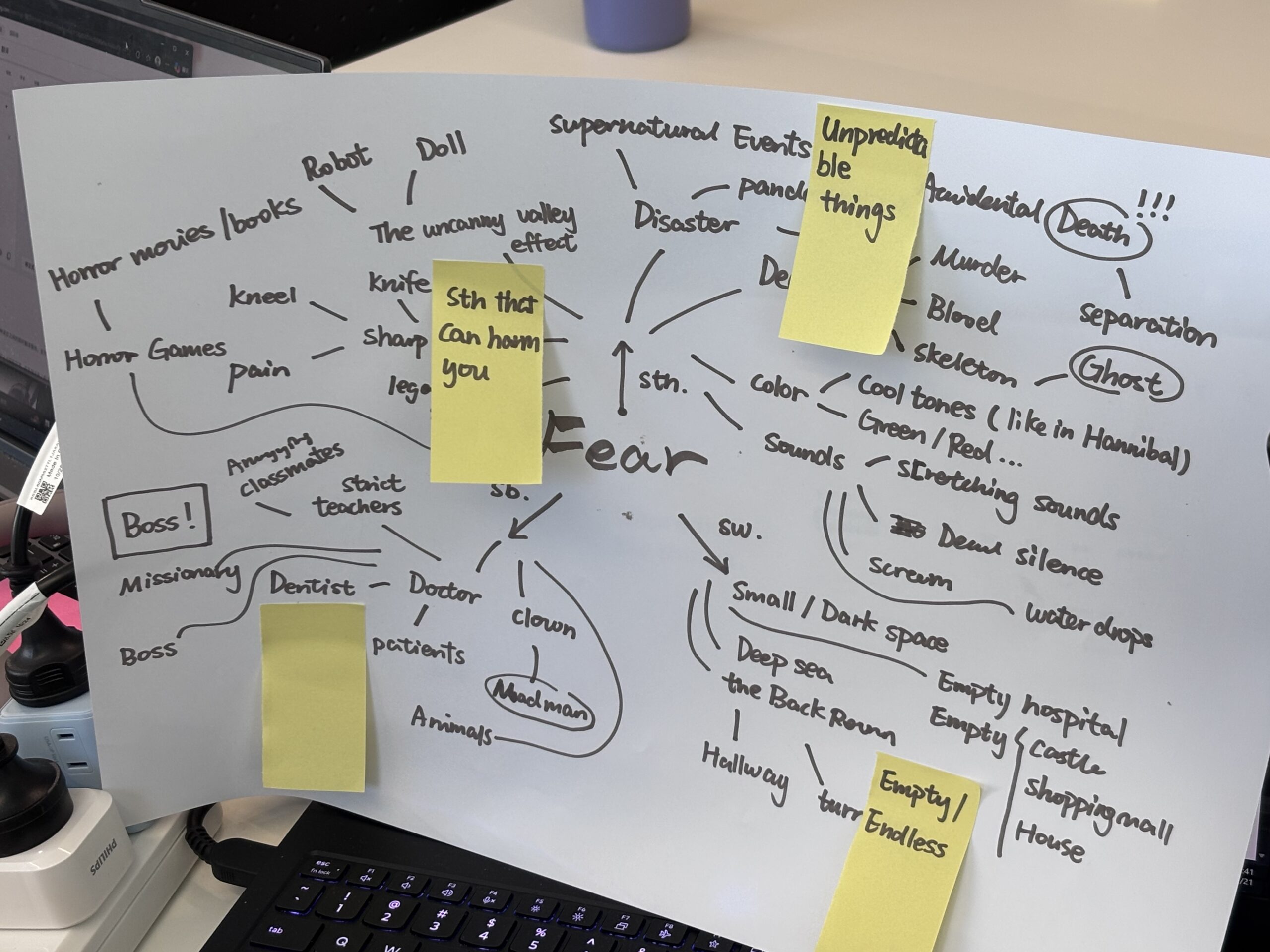
Our initial Fear mind map expanded into associations including death, ghosts, isolation, darkness, violence, hospitals, supernatural events and unpredictable situations.
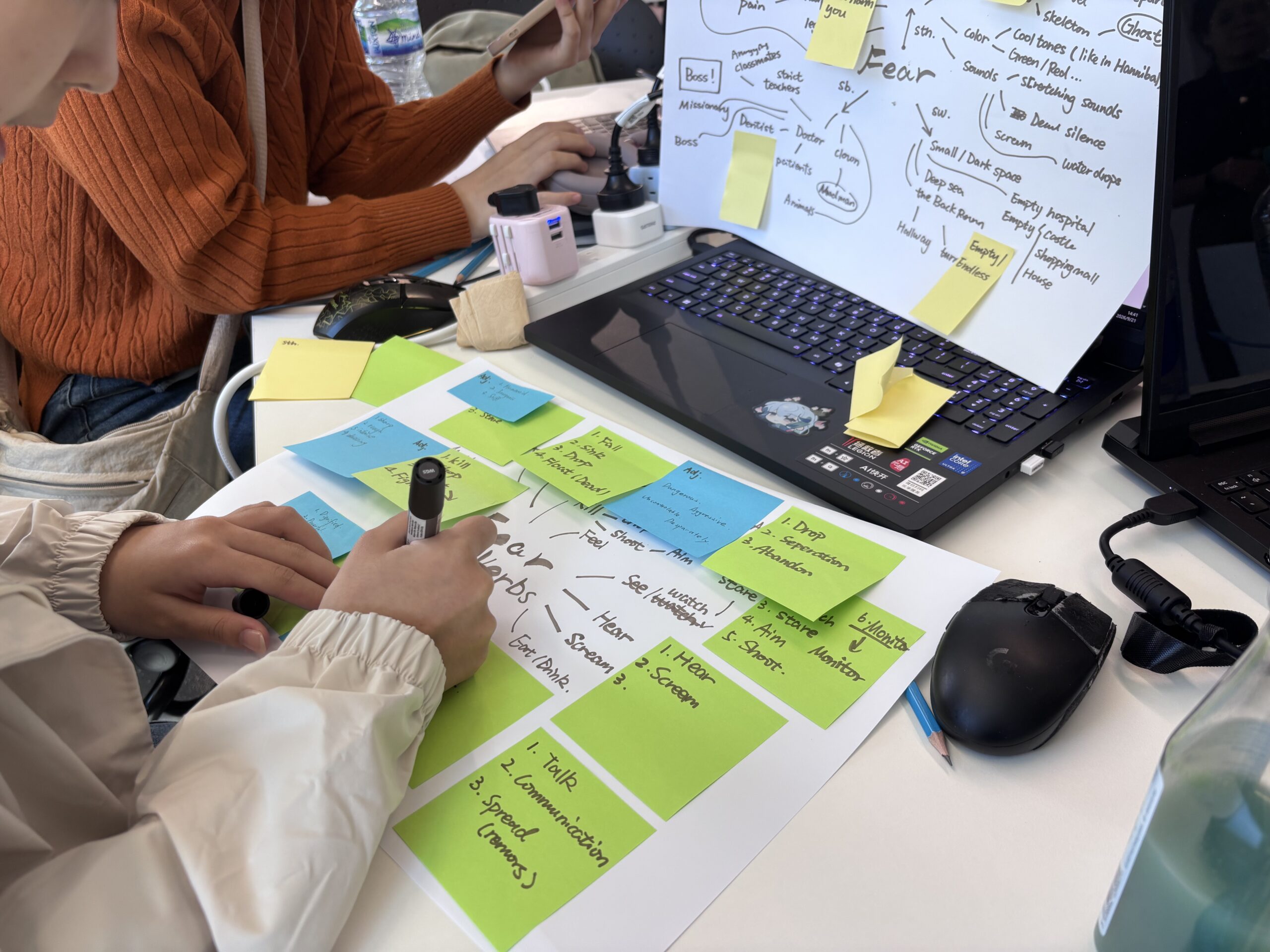
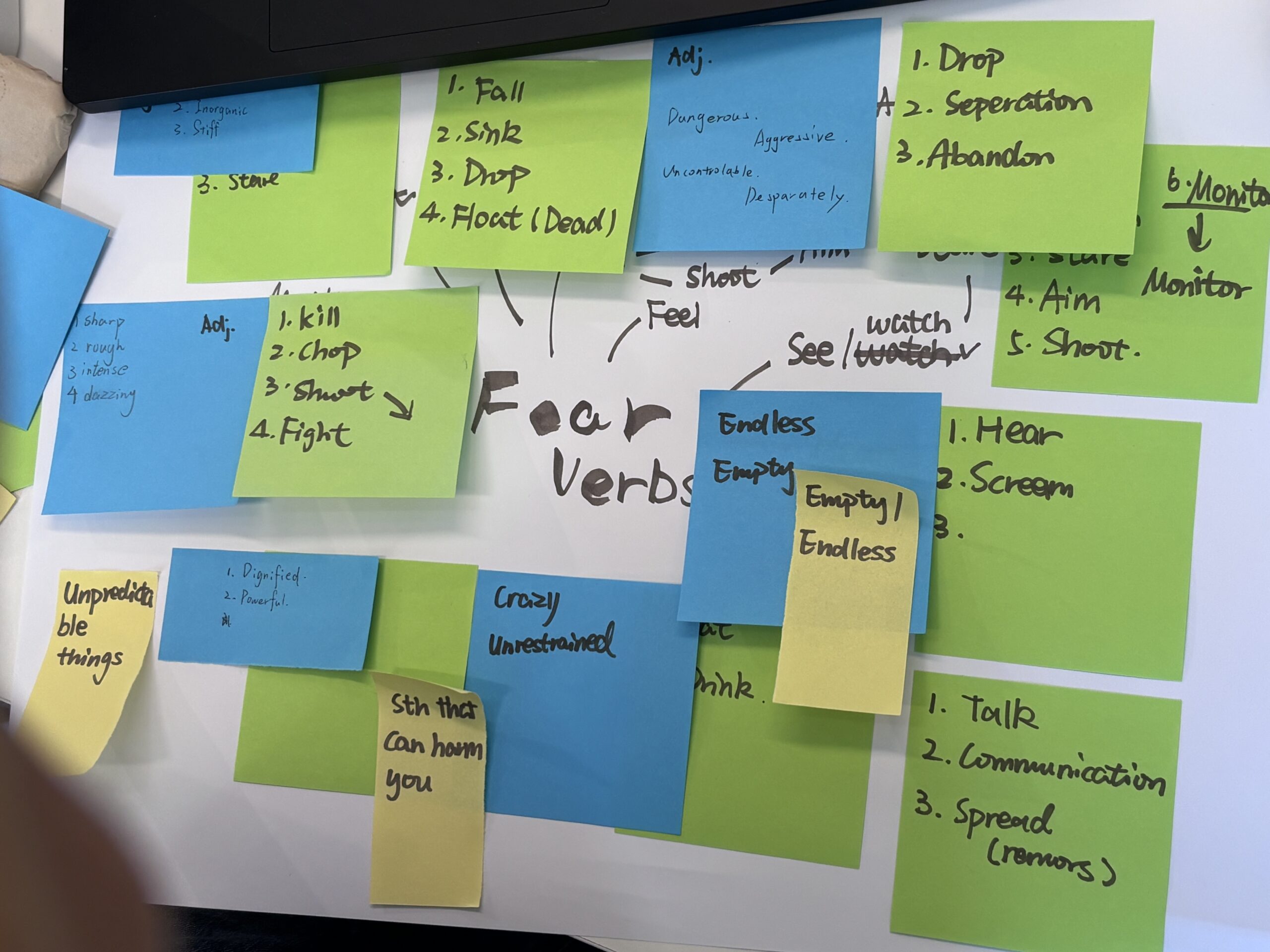
We then developed the brainstorm further by separating ideas into different word types, particularly verbs and descriptive words that could suggest possible gameplay actions and experiences.
03 — FROM WORDS TO GAME IDEAS
The next task was to combine words from different categories — a noun, a verb and an adjective — to generate three small game concepts. The purpose was not to create polished game ideas immediately, but to experiment with unexpected combinations and see how language could generate mechanics, settings and player experiences.
CONCEPT 01 — THE EMPTY HOSPITAL
Noun: Hospital · Verb: Escape · Adjective: Unpredictable
The player is trapped inside an abandoned hospital where rooms and corridors change unexpectedly. They must search for an exit while dealing with an environment that becomes increasingly difficult to understand or trust.
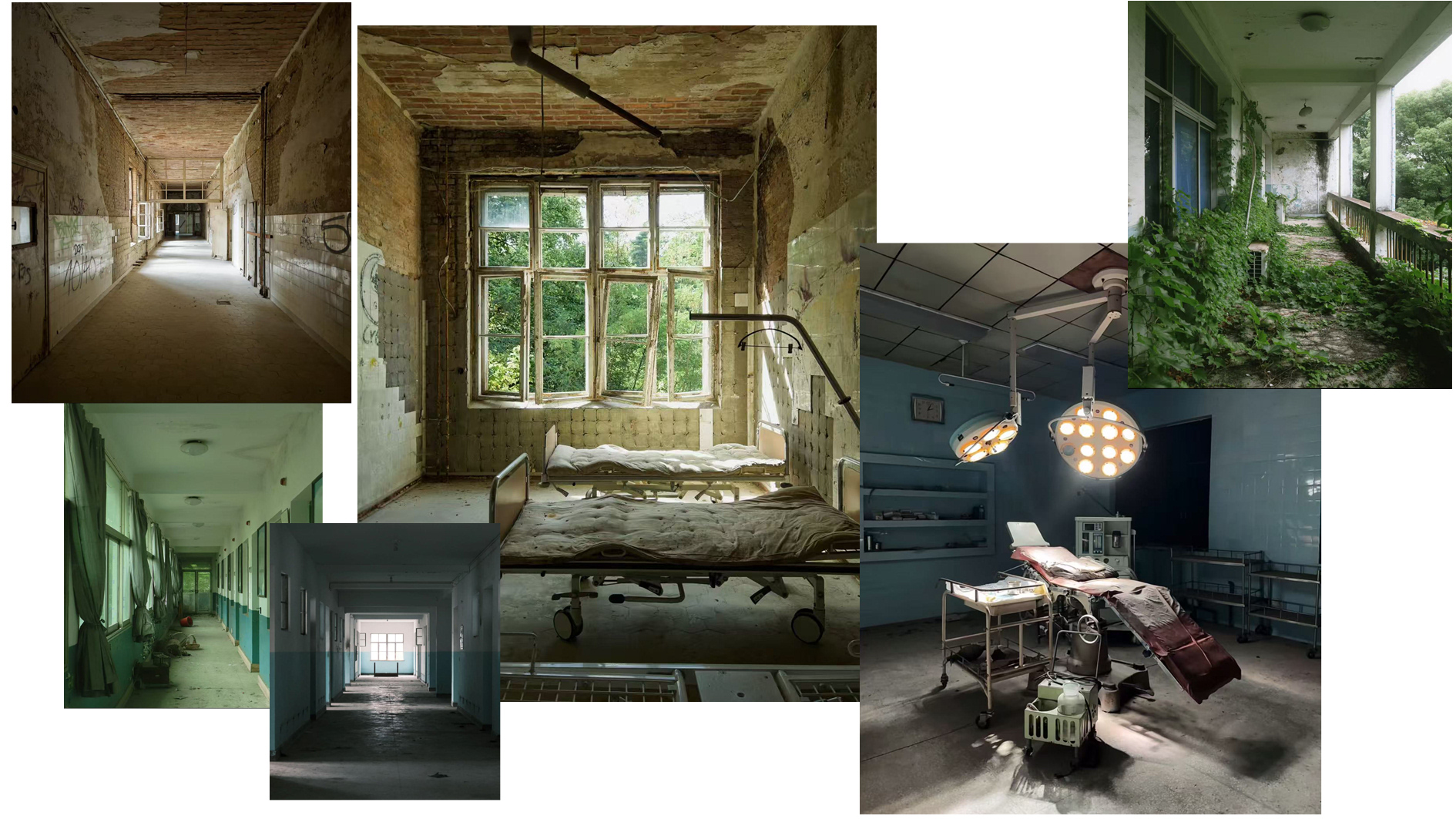
Visual research exploring abandoned medical environments, isolation and spatial uncertainty.
CONCEPT 02 — THE WATCHING DOLL
Noun: Doll · Verb: Watch · Adjective: Uncanny
The player must complete a series of tasks while a strange doll changes position whenever it is left unwatched. Fear comes from dividing the player’s attention between completing tasks and monitoring a possible threat.
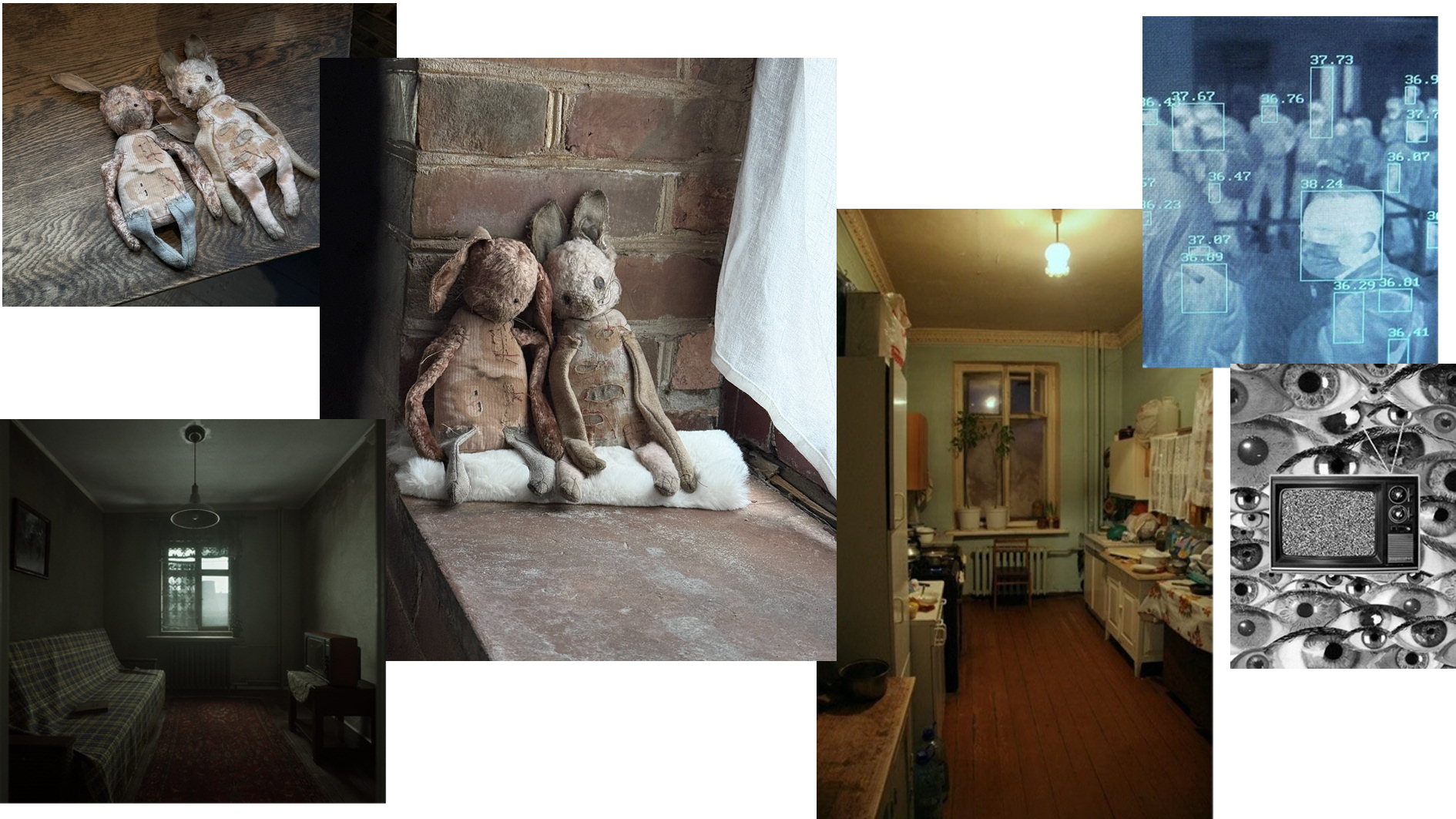
Visual research exploring uncanny objects, surveillance and the discomfort of being watched.
CONCEPT 03 — THE NIGHT FOOD STALL
Noun: Food · Verb: Serve · Adjective: Unsettling
The player works alone at a small late-night food stall, preparing and serving food to customers. At first the work feels repetitive and ordinary, but small changes in the customers and surrounding environment gradually make the situation feel unsettling. The player must continue working while noticing that something may be wrong.
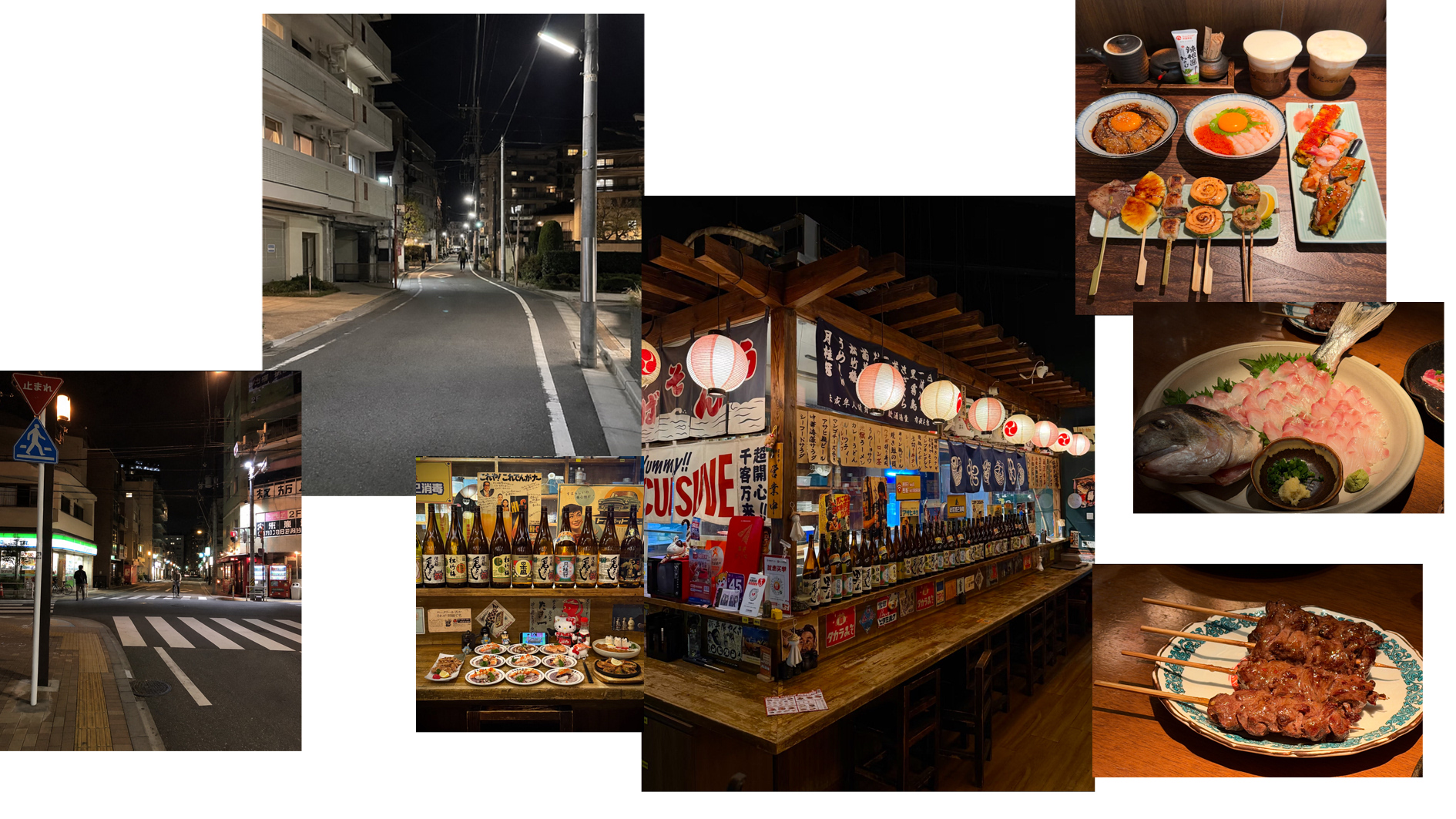
Visual research exploring Japanese late-night streets, food culture and the contrast between warm interiors and quiet surroundings.
Selected direction — Concept 03
Of the three ideas, I was most interested in the third concept because of the contrast between an ordinary food-service routine and a gradually unsettling atmosphere. This became the starting point for the food-service game concept I continued to develop.
04 — COLLABORATIVE DEVELOPMENT
Working collaboratively allowed us to compare and develop the different directions that emerged from the brainstorming process. We discussed which combinations could create stronger player experiences, reorganised the ideas, and identified elements that could be developed further. Through this process, I became particularly interested in combining an ordinary working routine with an unsettling atmosphere, which helped move the project towards the food-service concept.
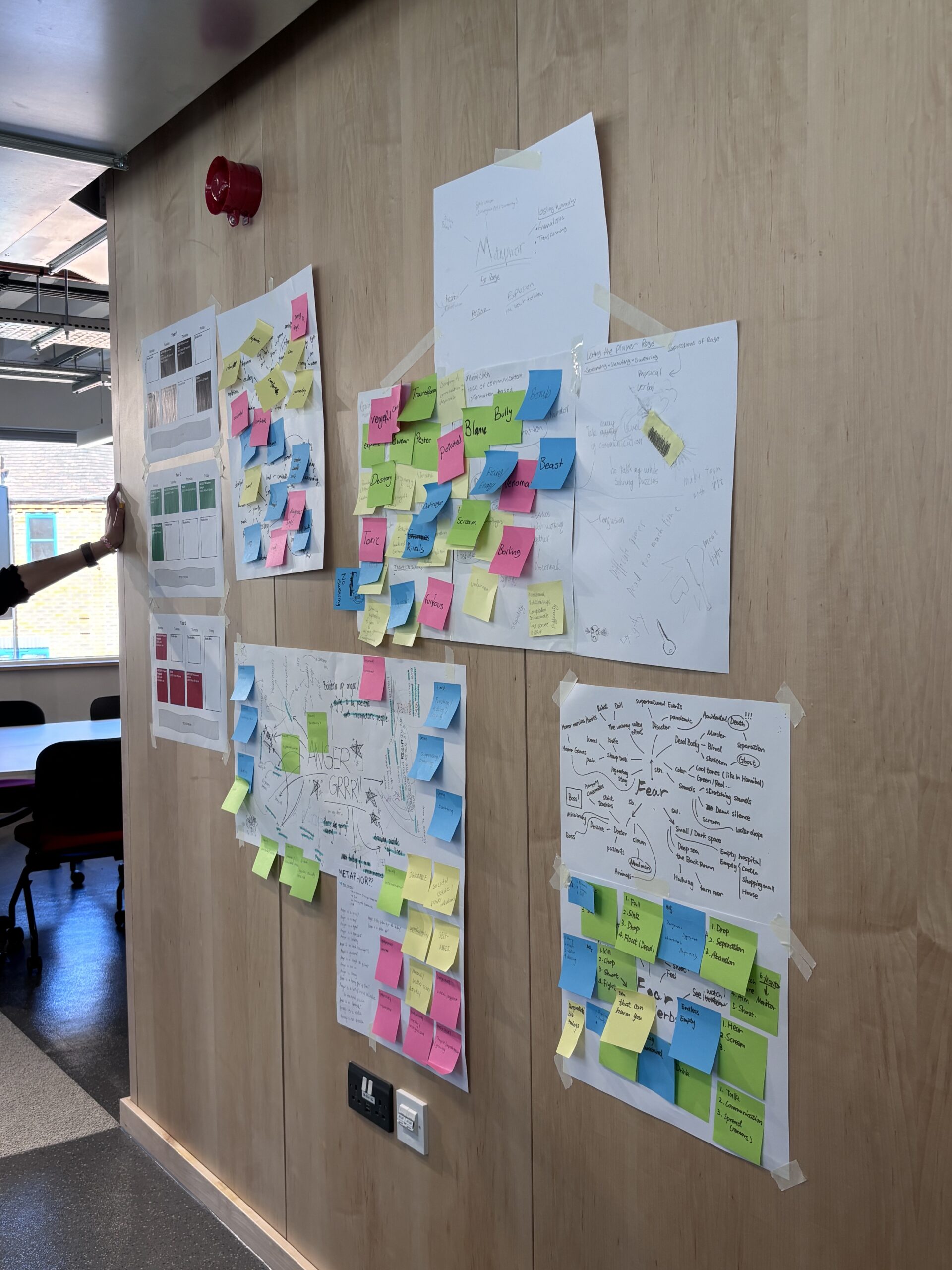
Collaborative discussion and organisation of ideas during the Week 01 session.
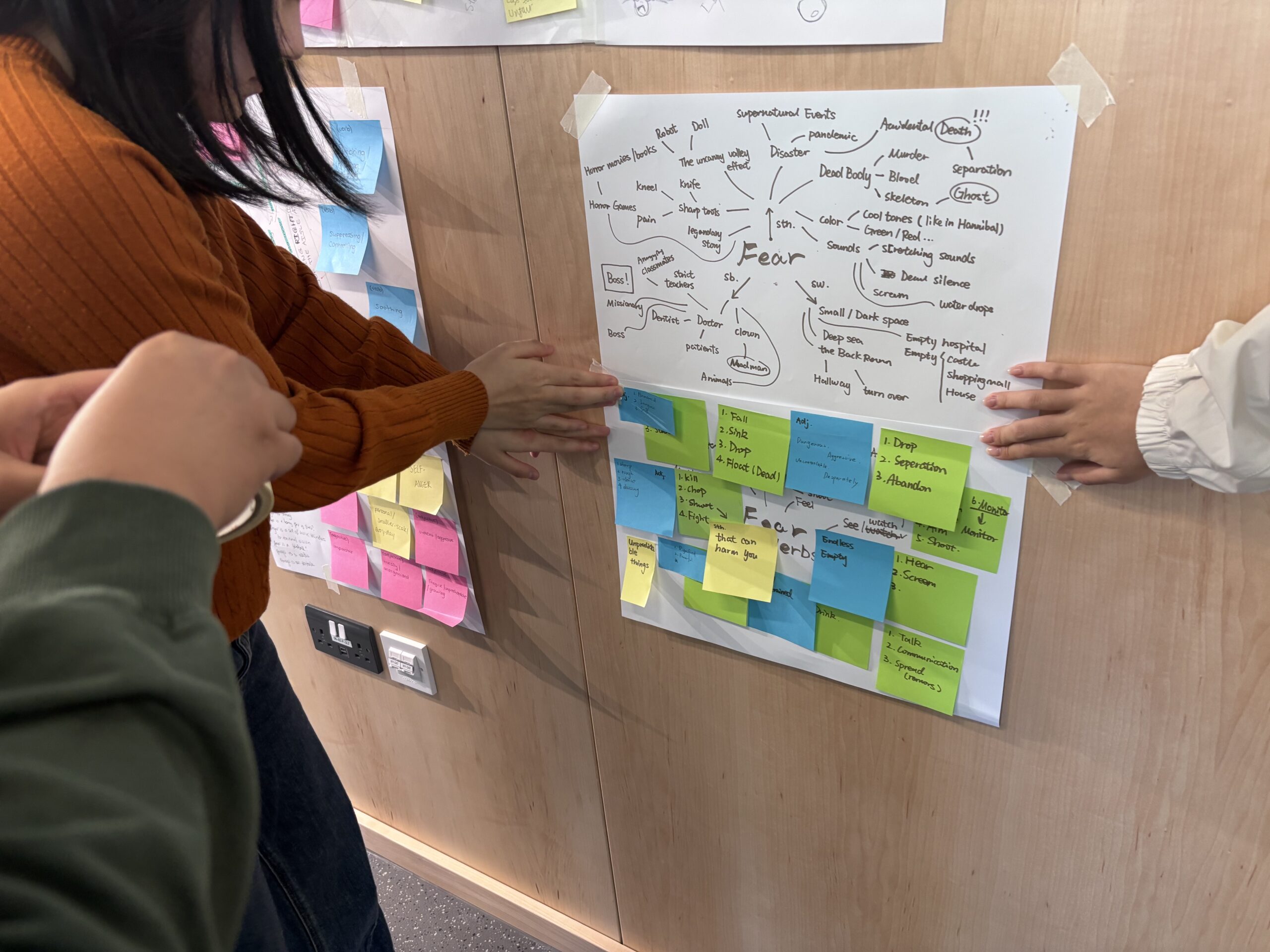
Collaborative brainstorming and organising our ideas during the Week 01 session.
05 — GAME REFERENCE RESEARCH
Game 01 — The Closing Shift
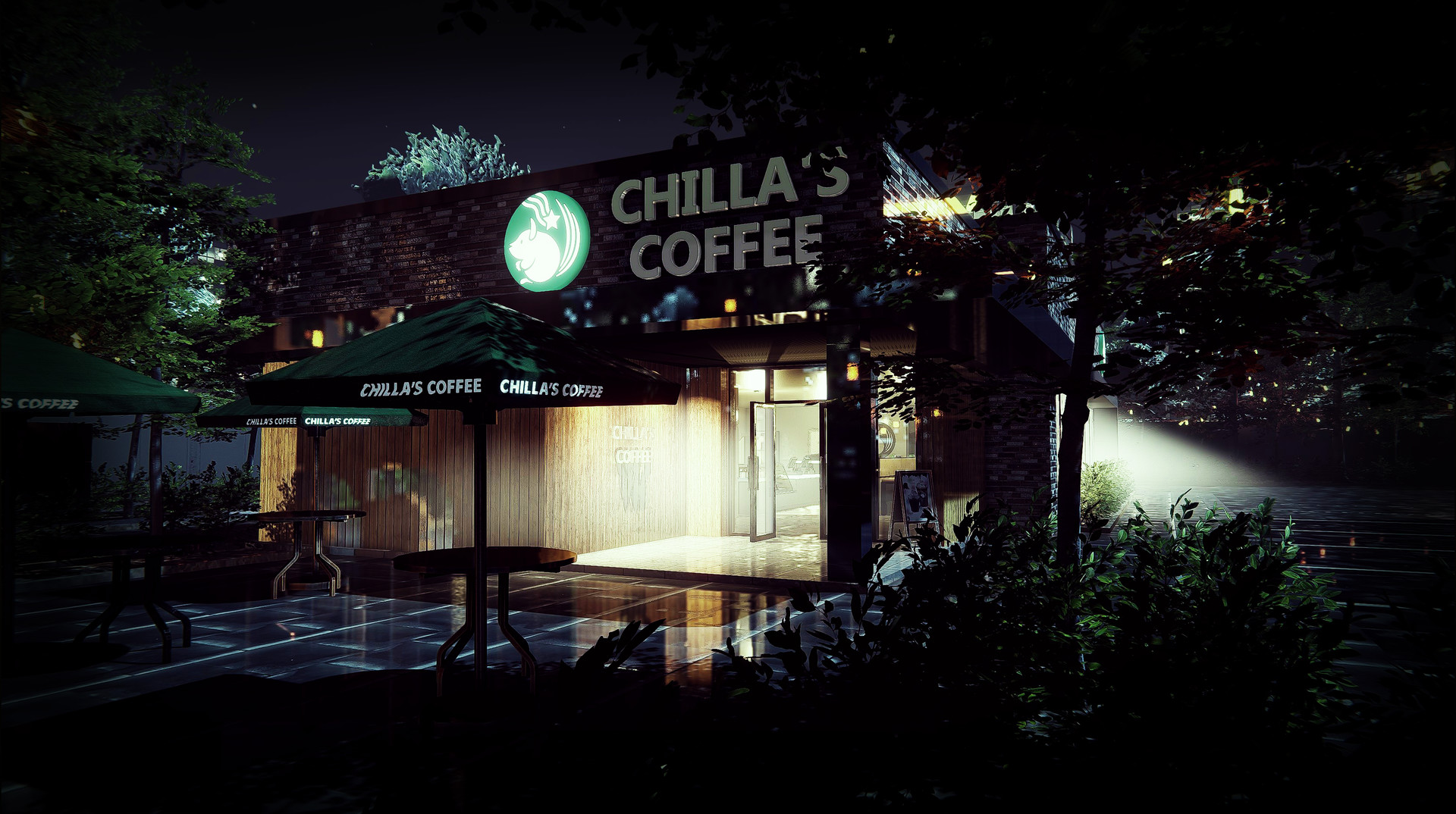
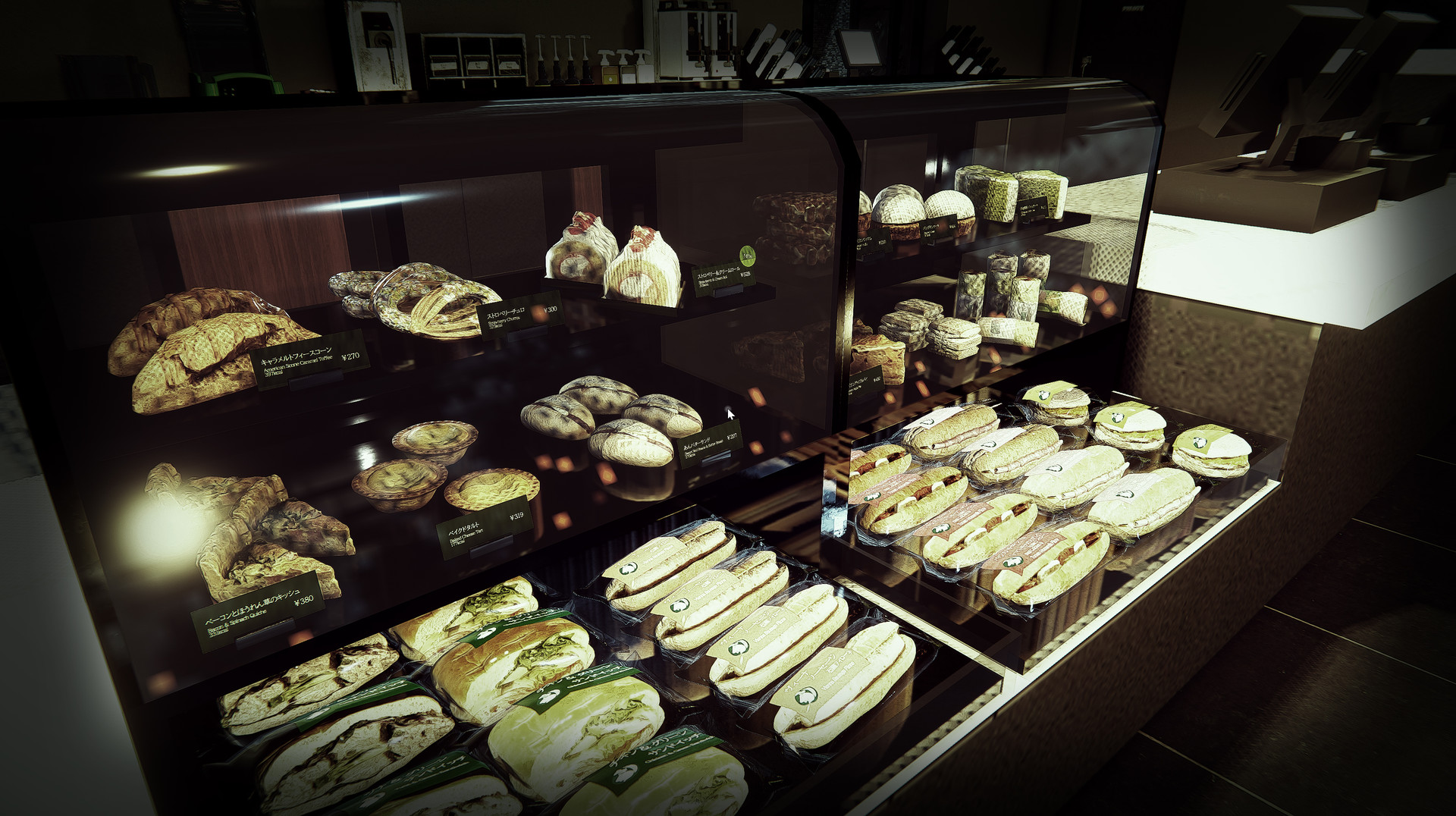
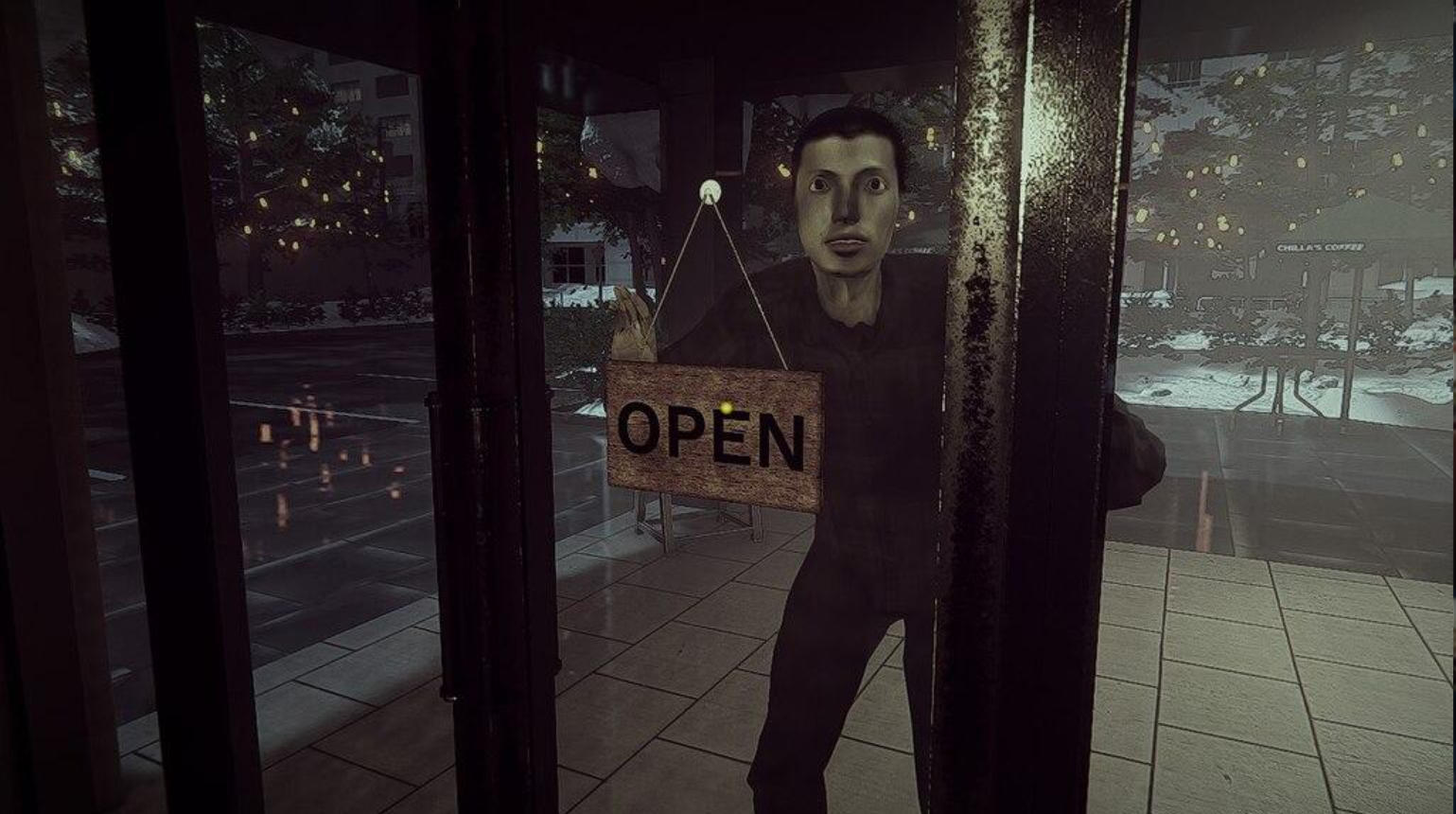
The Closing Shift is a Japanese horror game set in a coffee shop. The player works a night shift, making drinks and serving customers. Most of the tasks are simple and repetitive, but strange things begin to happen as the night goes on.
What interested me most was how the game uses an ordinary workplace to create fear. The shop feels familiar at first, but the quiet streets, lighting and unusual customers slowly make it uncomfortable. The player still has to carry on working, even when something feels wrong.
This gave me some ideas for my own game. I also want to use a late-night food shop as the main setting, where the player follows a normal working routine while noticing small changes around them. I especially like the idea of building tension slowly instead of relying on sudden scares.
Game 02 — Coffee Talk
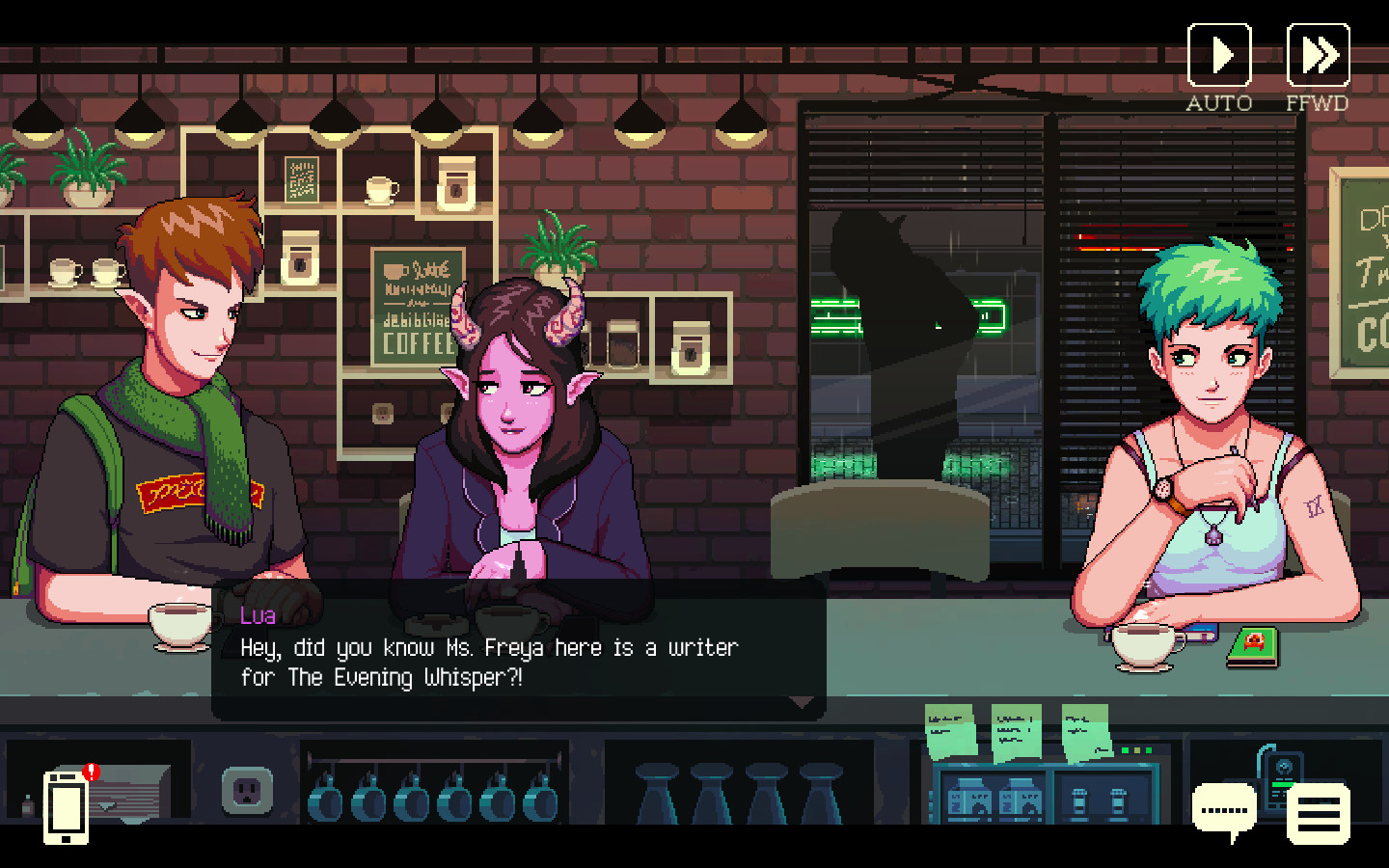
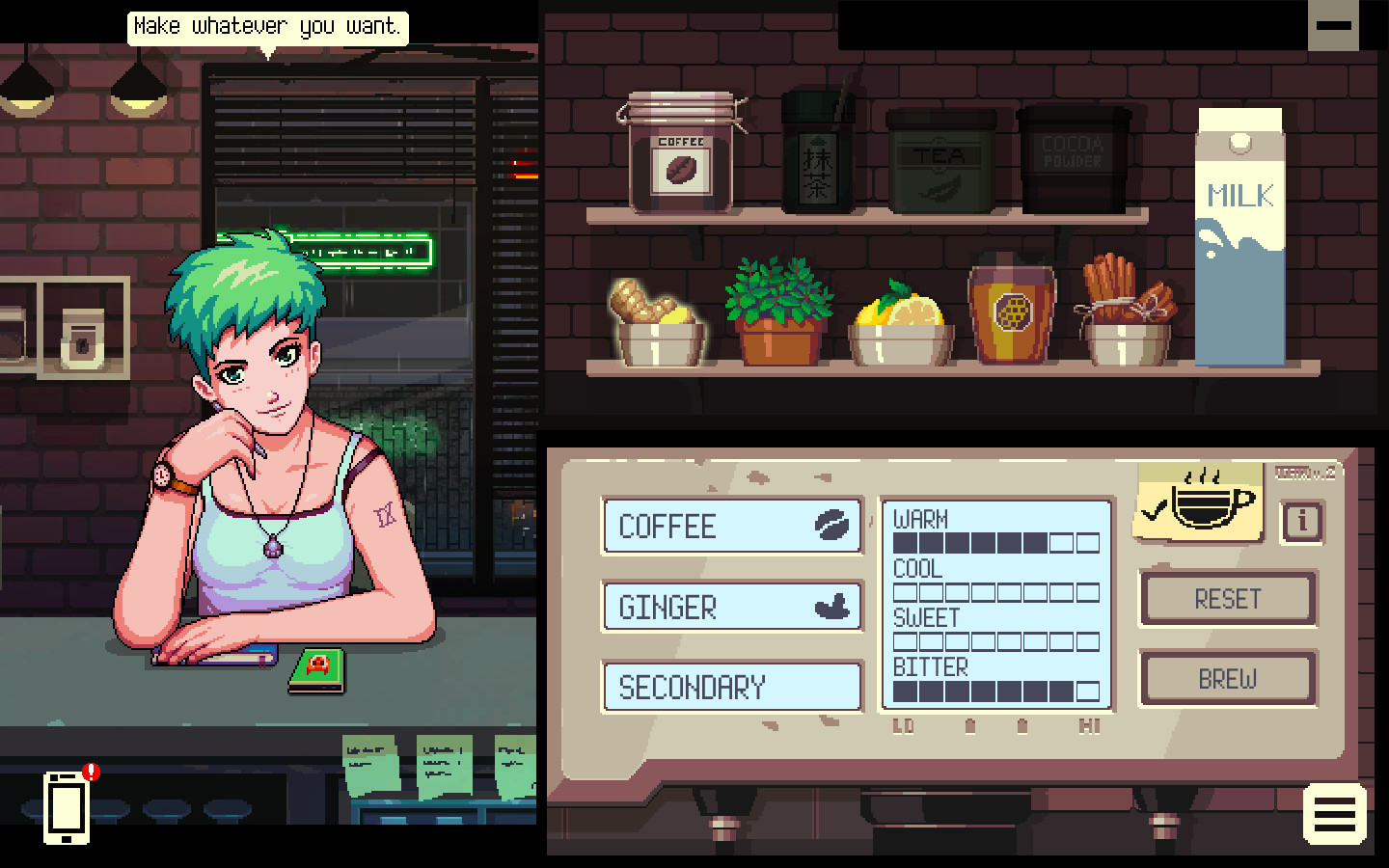
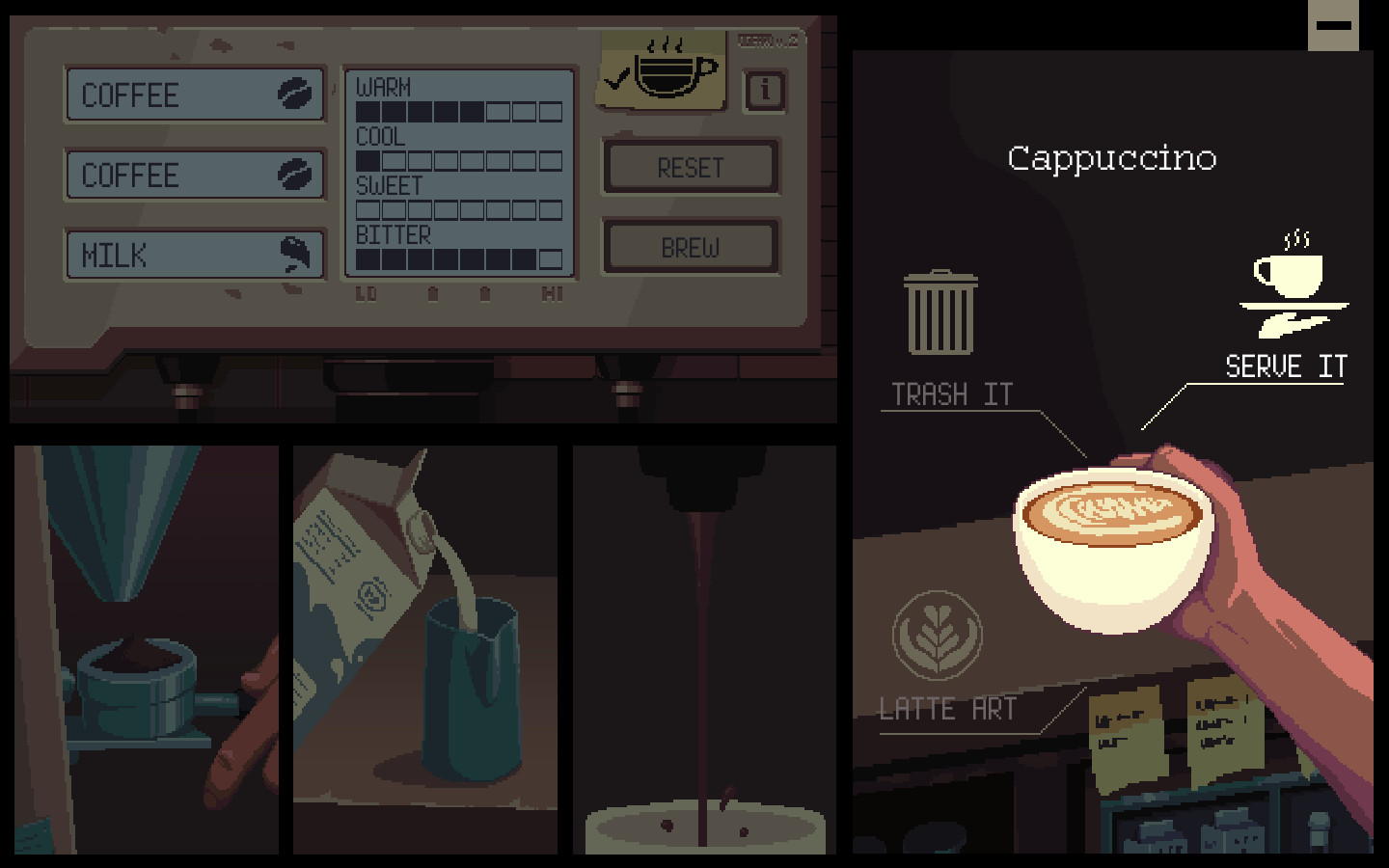
Coffee Talk is a story-based game set in a small café at night. The player works as a barista, making drinks and listening to customers talk about their lives. Most of the story happens through conversations rather than complicated gameplay.
I like the warm lighting, pixel art style and relaxed atmosphere. The café feels like a comfortable place, while the nighttime setting makes it feel separate from the busy world outside.
For my own game, I want to explore how a small food shop can become an important part of the story. Although my game will have a more unsettling atmosphere, Coffee Talk is a useful reference for combining simple tasks with character interactions.
Game 03 — VA-11 Hall-A
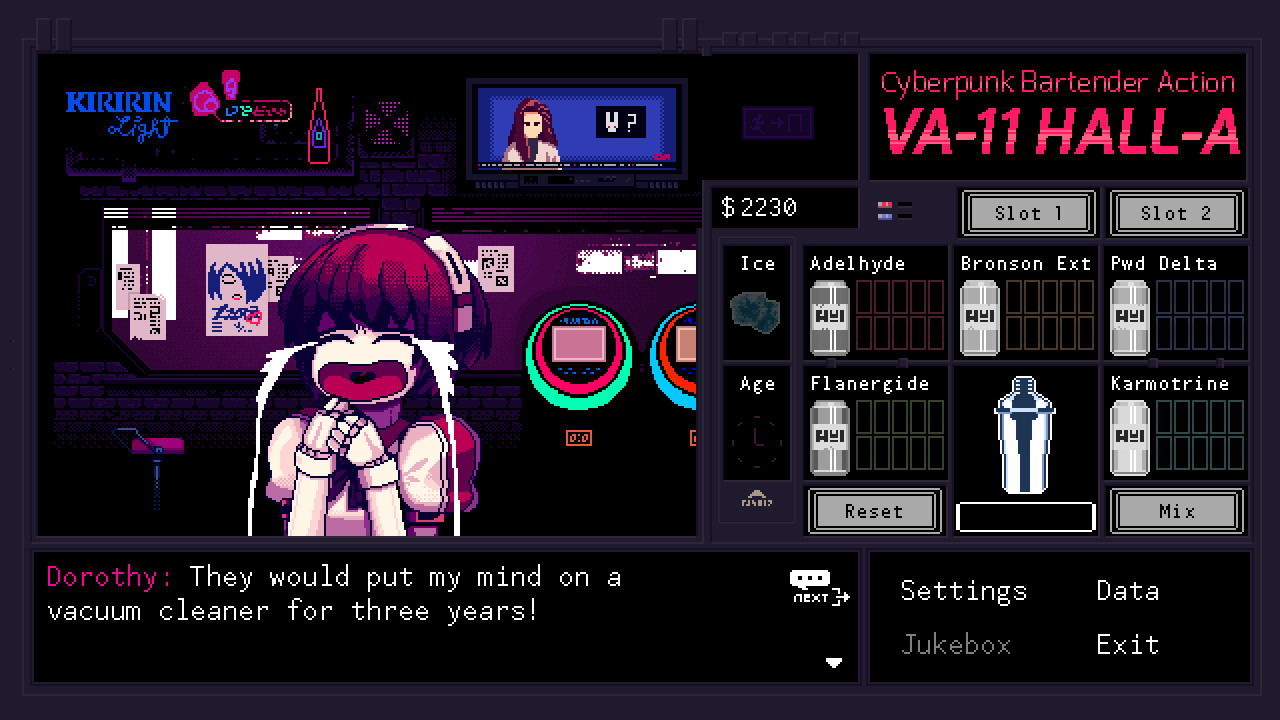

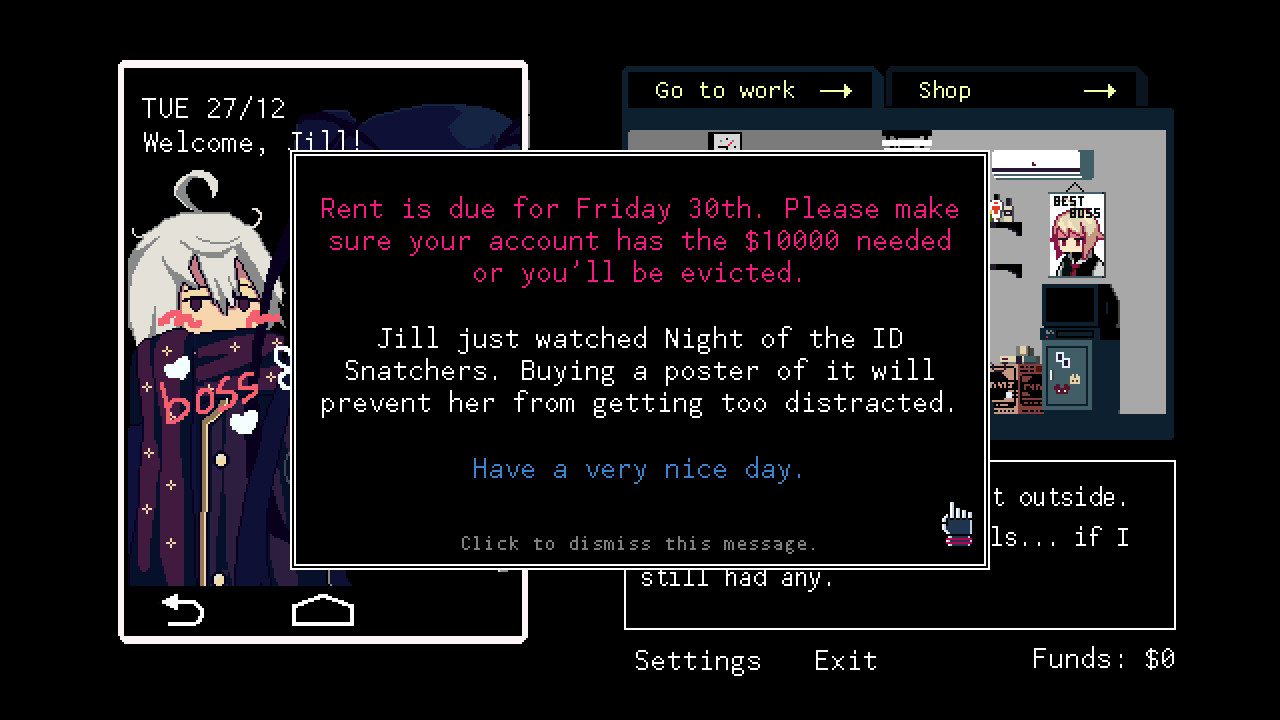
VA-11 Hall-A is a story-based game where the player works as a bartender in a futuristic city. The main gameplay involves preparing drinks for customers and learning about their stories through conversations.
What interests me is how the game combines a simple working routine with storytelling. The player spends most of their time behind the bar, but different customers and conversations help make each shift feel different.
This is useful for my own project because I also want the player to work in a small food shop. I like the idea of using repeated tasks and customer interactions to gradually reveal more about the world and create a sense that something is changing.
Personal Development Plan
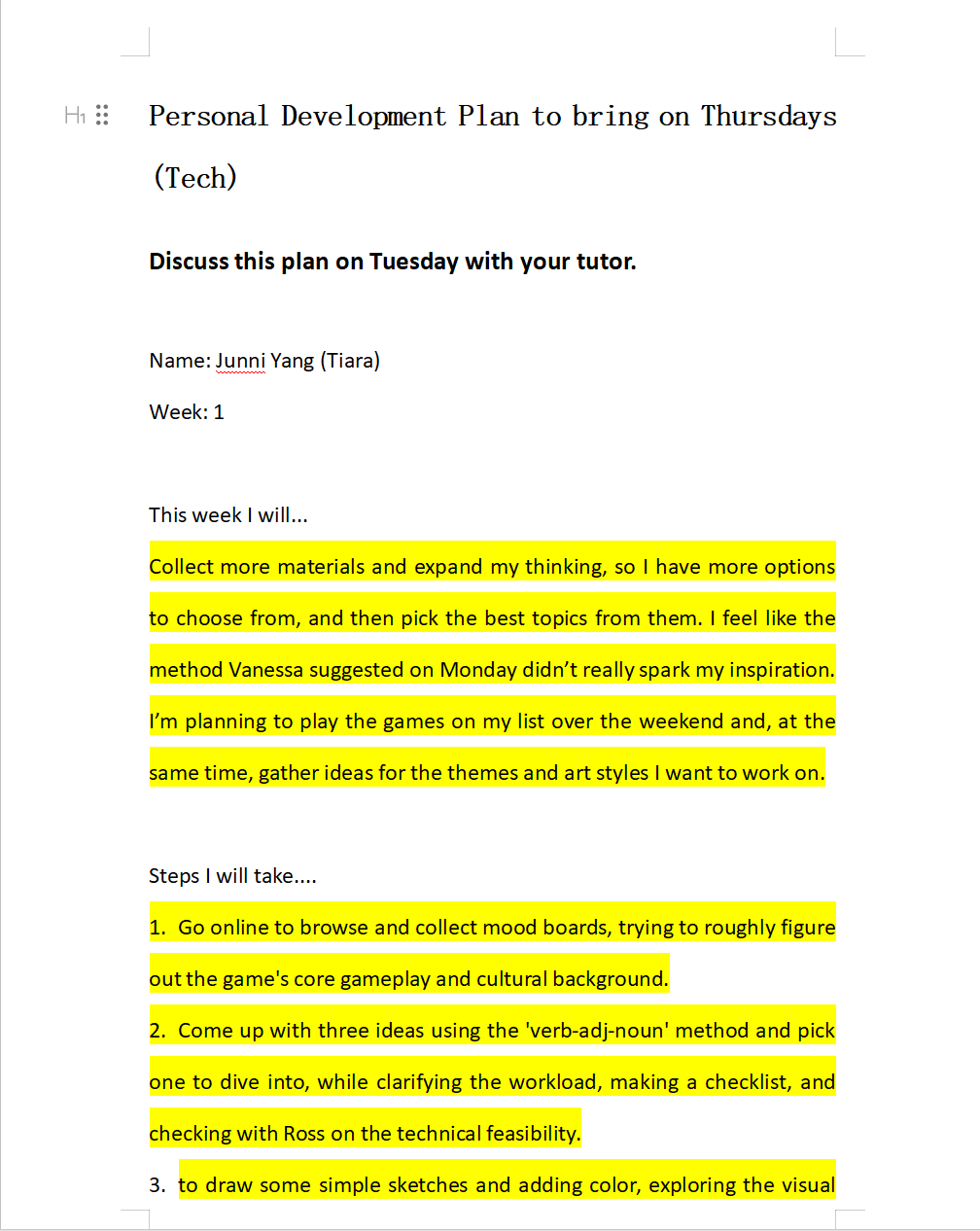
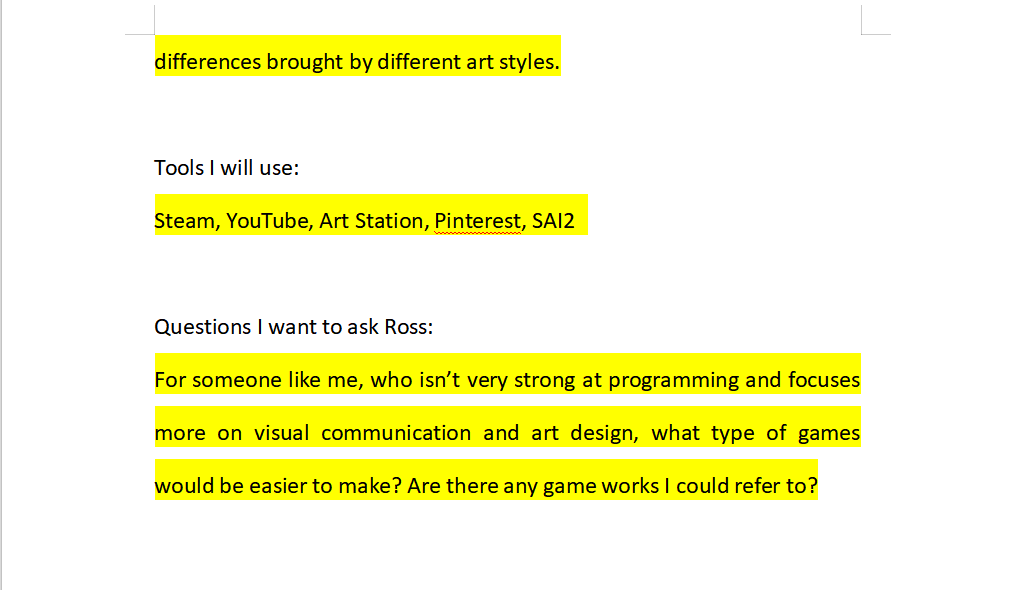
During Week 01, I also completed a Personal Development Plan. I missed the session where the paper version was given out, so I downloaded the document and filled it in myself.
At this point, I was still unsure about my game idea. I planned to look at more games, collect visual references and explore different art styles before making a final choice. I also wanted to ask Ross what kind of game would be realistic for someone with stronger art skills than programming skills.
06 — REFLECTION
This week helped me understand how a simple emotion can become the starting point for a game idea. Through brainstorming and combining different words, I explored several possible directions before choosing the late-night food shop concept.
Looking at games such as The Closing Shift, Coffee Talk and VA-11 Hall-A also gave me some ideas about how everyday tasks and customer interactions can be used in storytelling.
Moving forward, I want to develop my food shop idea further and explore how an ordinary working routine could slowly become unsettling.
Friday Session
I was unable to attend the Friday session in Week 01 due to illness. As a result, I missed the opportunity to present my initial ideas and receive feedback from my classmates. Therefore, I do not have any direct feedback from this session to document.