Design Intention & Player Experience
This week focused on defining the intended player experience and translating it into more specific design decisions. Through analysing an existing game, developing an experiential statement, sketching early ideas and receiving peer feedback, I began to clarify how the food-service concept from Week 01 could work as an actual game experience.
01 — CASE STUDY: FLORENCE
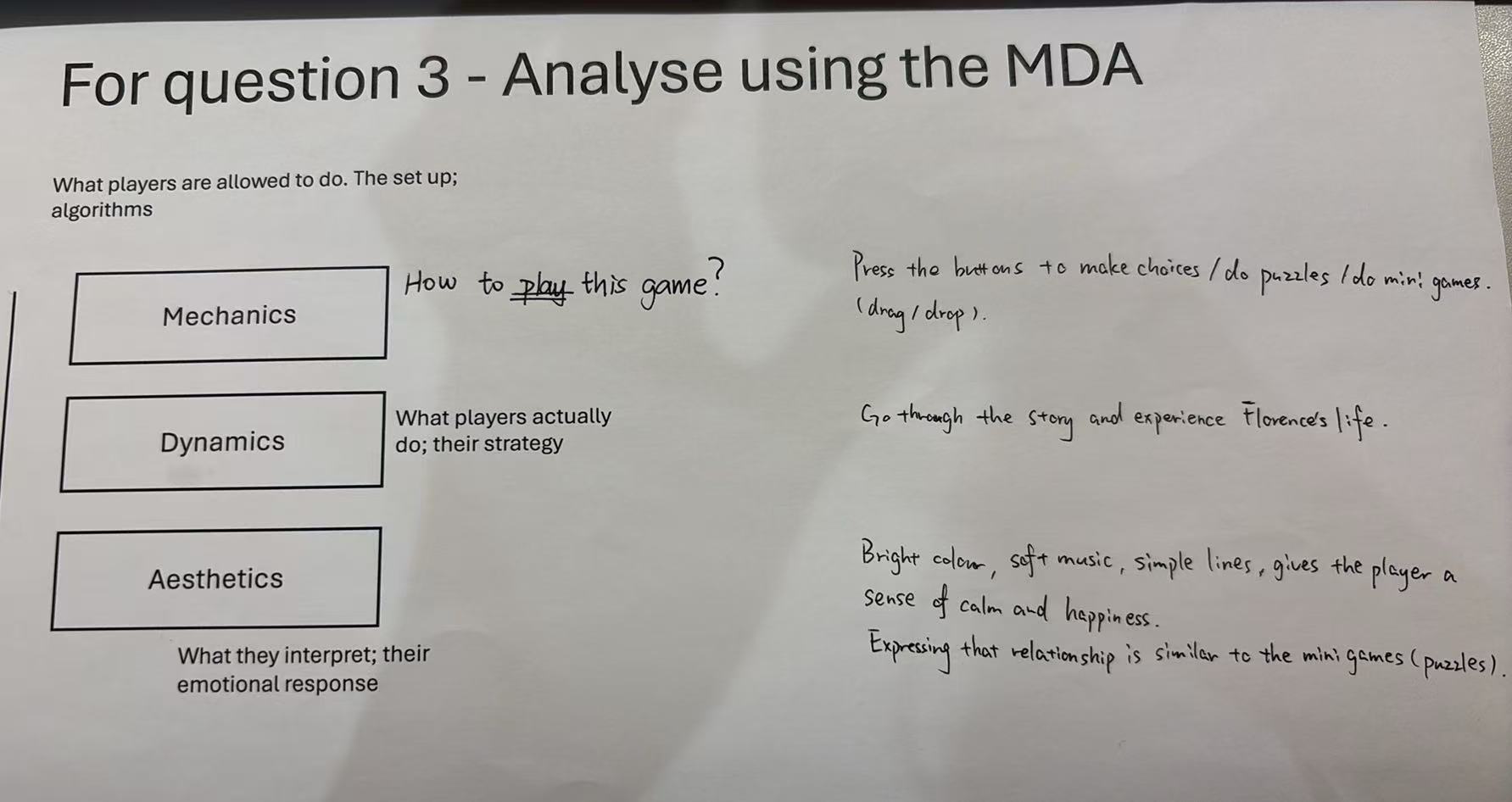
We analysed four games to examine how each communicates a particular player experience. My group focused on Florence, whose 2D narrative-driven structure was close to the direction I wanted to explore. Its simple interactions and mini-games showed how everyday actions can carry narrative and emotional meaning.
Mechanics
Simple button interactions, drag-and-drop actions, puzzles and short mini-games.
Dynamics
These interactions guide the player through Florence’s story and turn everyday moments into playable actions.
Aesthetics/ Experience
Bright colours, simple visual forms and soft music create an initially calm and intimate experience, while the changing interactions communicate the development of relationships and emotions.
This made me consider how ordinary actions in my own game — serving food, cleaning, talking to customers or checking the restaurant — could also carry narrative and emotional meaning rather than functioning only as tasks.
02 — DEFINING THE PLAYER EXPERIENCE
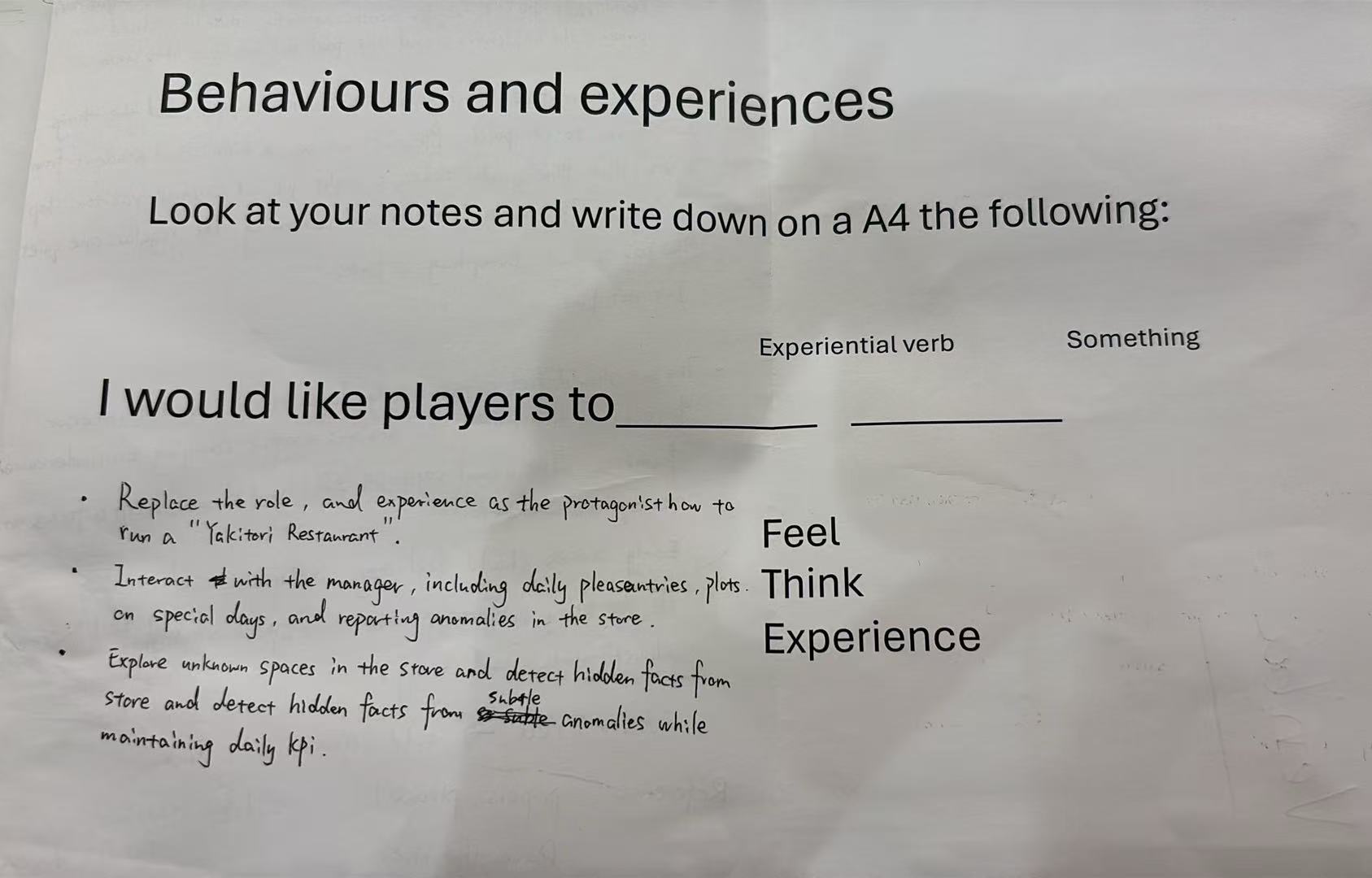
Following the case-study exercise, I began defining the project through the experience I wanted the player to have rather than through story or mechanics alone.
I would like players to experience the unease of maintaining an ordinary routine while gradually discovering that something is wrong.
I wanted the player to begin with familiar and repetitive work, such as serving customers and maintaining the restaurant, before subtle anomalies gradually interrupt that routine. The contrast between familiarity and uncertainty became an important part of the intended experience.
Game Overview — Early Concept
My initial idea was a Japanese-style visual novel with light horror and supernatural elements.
The story follows a quiet Japanese high school boy who takes a part-time night job at a recently opened yakitori restaurant. He has visited the restaurant before and has a good impression of its friendly owner, who seems to be the only person working there.
At first, the job seems normal. However, strange things begin to happen during his night shifts. Some customers disappear without explanation, others pay with old coins, and a few seem to recognise him even though he has never met them.
I also considered including a black cat that appears before certain unusual events.
As the story continues, the protagonist begins to question the restaurant and its owner. At this stage, I had not decided what these events meant or how the story would end.
03 — EARLY CONCEPT DEVELOPMENT
With the intended experience becoming clearer, I began sketching how the restaurant, protagonist and small interactive details might support it.
Protagonist
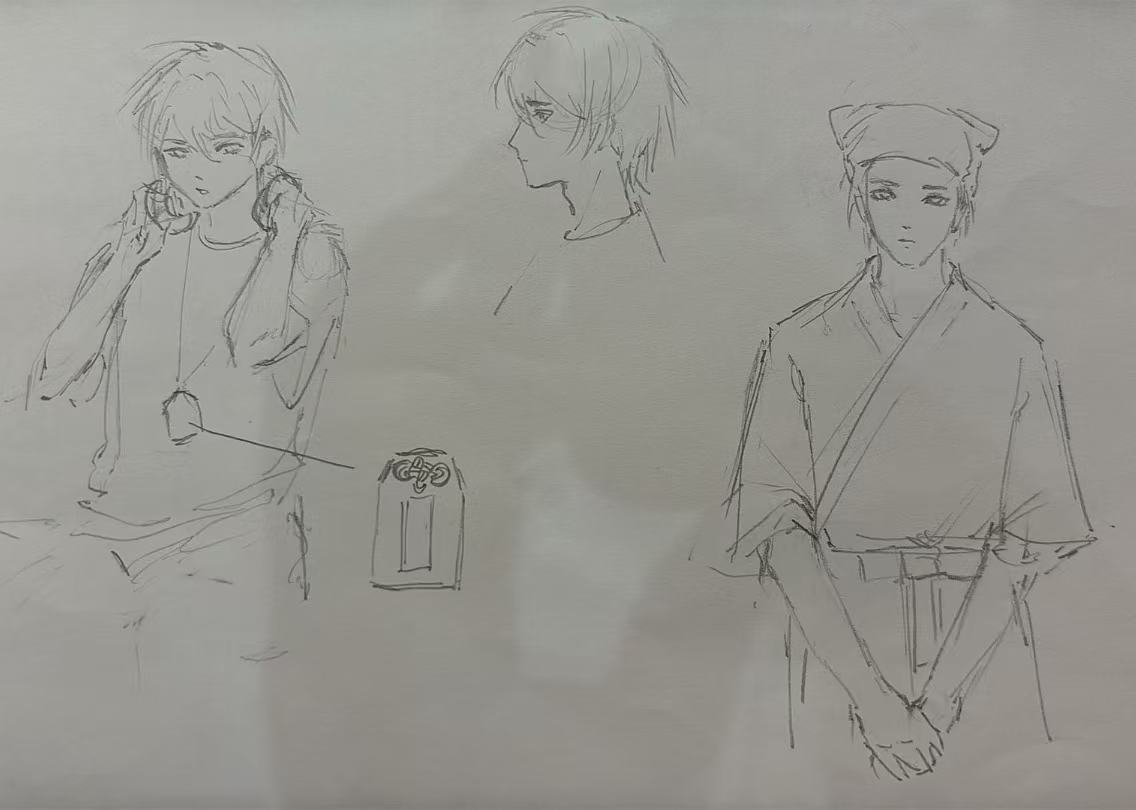
I wanted the protagonist to feel relatively ordinary, allowing the unsettling atmosphere to emerge from the situation rather than from an obviously horror-styled character.
Restaurant & Daily Routine
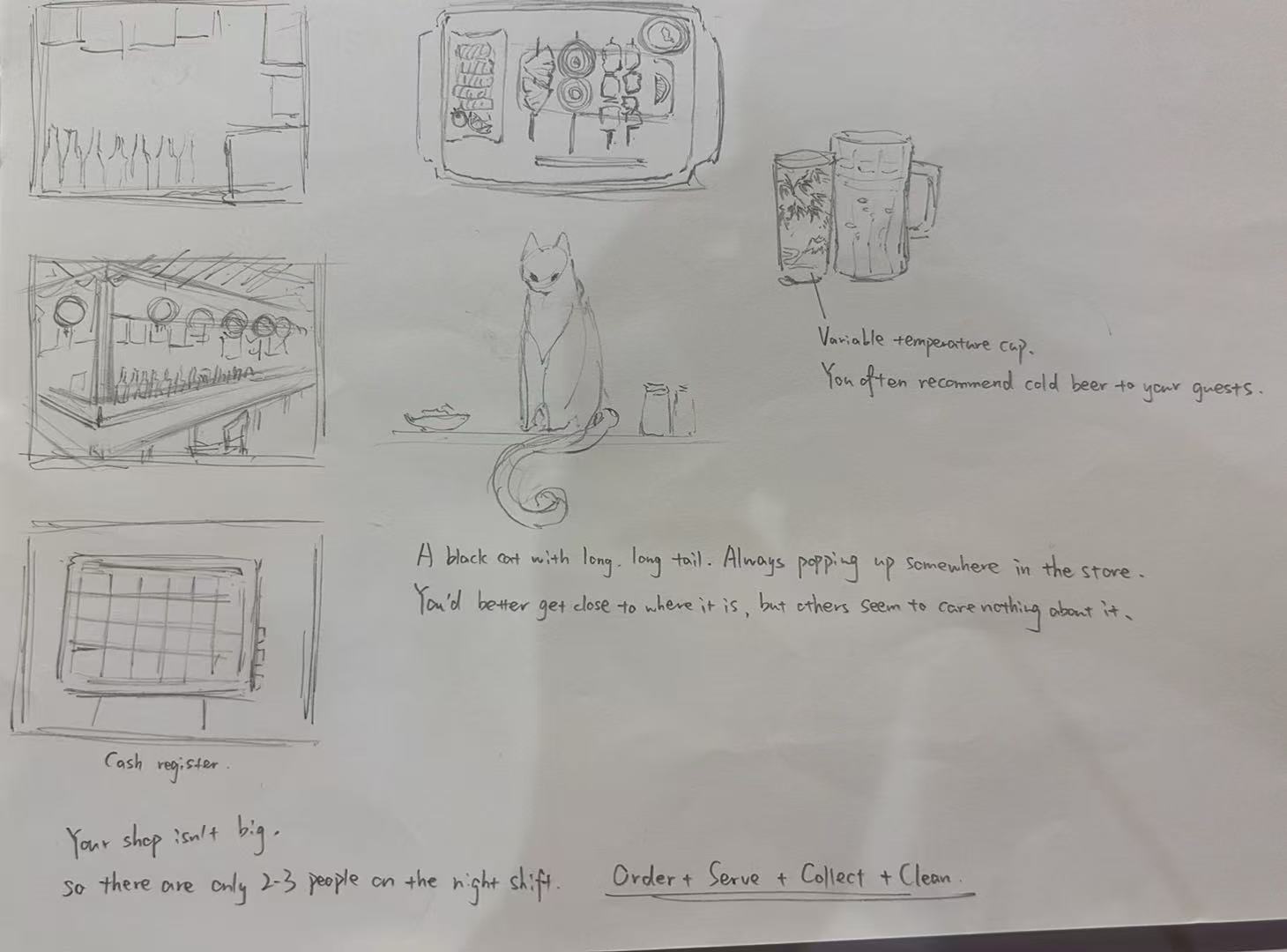
The restaurant was imagined as a small workplace with only two or three people on the night shift. I began structuring the basic routine around Order → Serve → Collect → Clean, creating a repetitive pattern that could later be disrupted.
Restaurant Setting
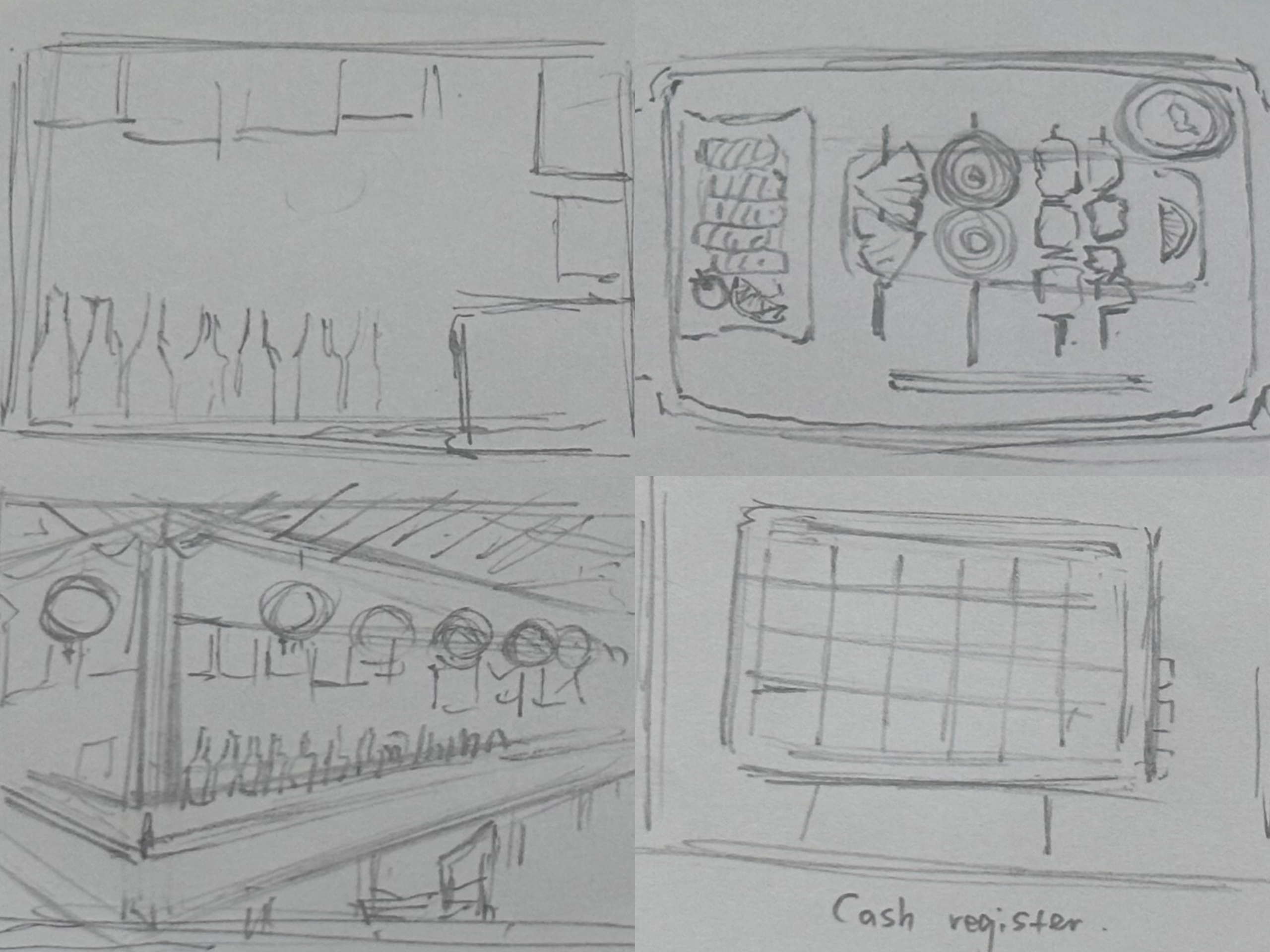
The early sketches show the layout of the yakitori shop and the areas where the player might work, including the counter, kitchen and cash register.
The Black Cat
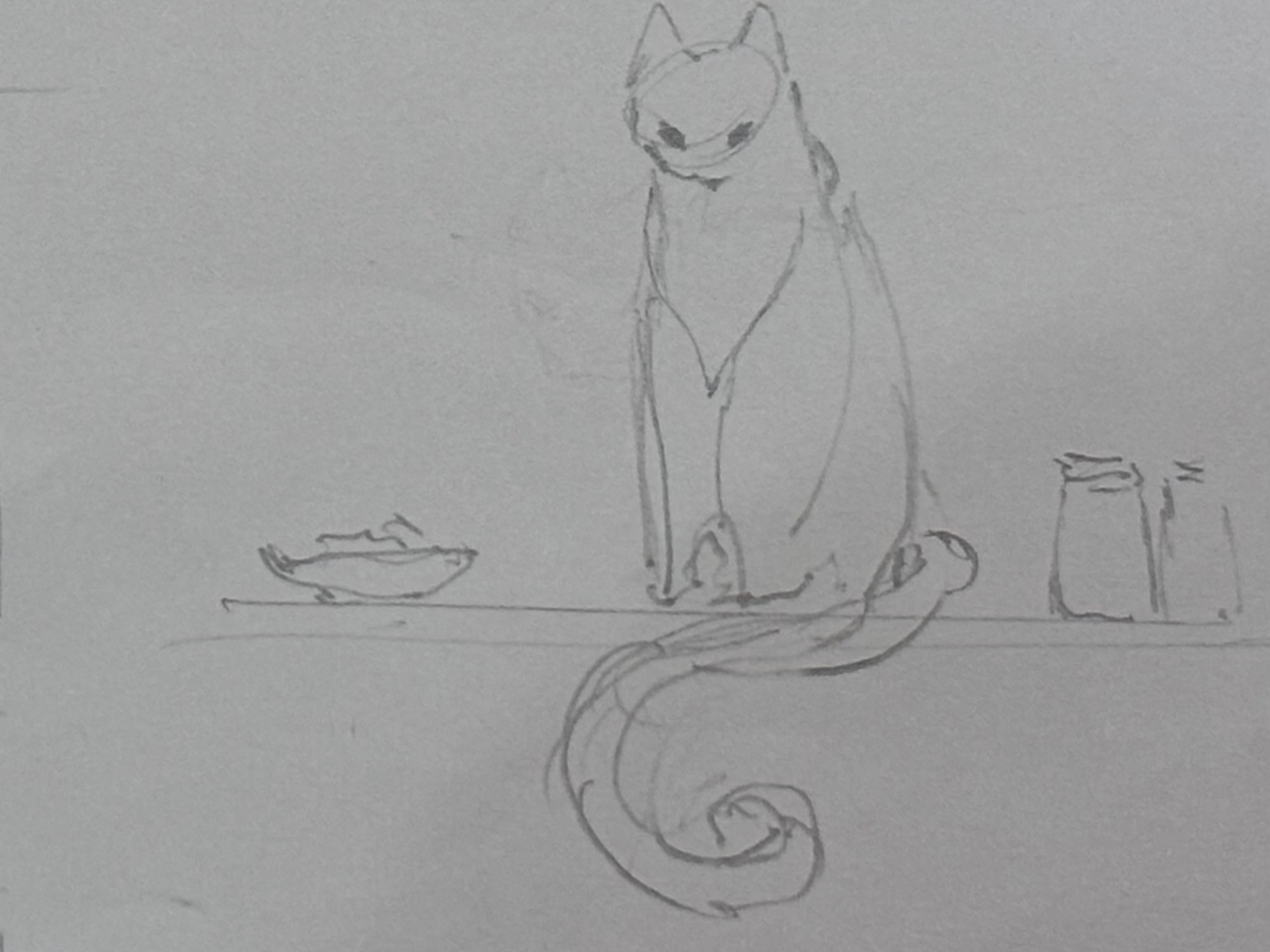
I considered using a black cat as a sign that something unusual might happen. Its appearance could hint at strange events in the shop.
The Temperature-Changing Cup
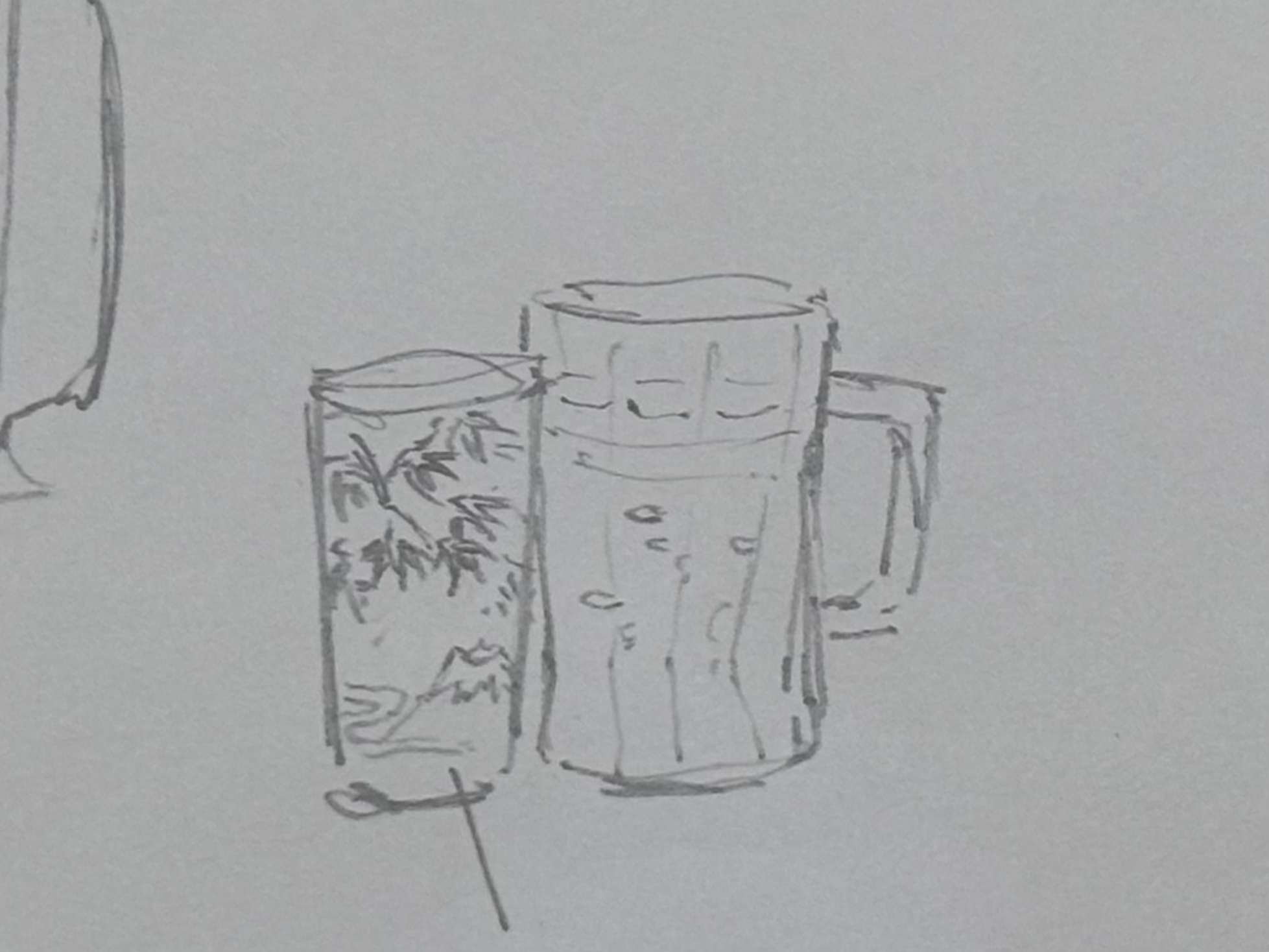
I explored the idea of a cup that changes temperature unexpectedly. It could be a small, strange detail that makes the player feel something is wrong.
Gameplay Direction — An Unresolved Question
At this stage, I was still unsure how much gameplay I wanted to include. One idea was to let the player take orders, handle payments and serve customers, with strange events happening during their shifts.
The other option was to focus more on the story and make it a traditional visual novel, with dialogue choices and different story branches. I liked both ideas, but I was worried that adding too many restaurant tasks might take attention away from the story. I hadn’t decided which direction would work better yet.
04 — FROM INTENTION TO GAME ELEMENTS
On Friday, I tried to work out how my ideas could become an actual game. I used the feeling of an ordinary night shift slowly becoming unsettling as a starting point.
Mechanics
I considered simple tasks such as taking orders, serving customers and checking unusual things around the shop. However, I was still unsure how much of the game should involve these tasks.
Story / World
The story would take place in a small yakitori shop in a Japanese town. The player would work night shifts and gradually notice strange things about the customers and the shop itself.
Aesthetics
I wanted to explore a 2D, Japanese visual novel style. The shop would feel warm and welcoming at first, with small changes making it more unsettling over time.
Interaction
I considered using dialogue choices, everyday work tasks and small details that players could investigate. I hadn’t decided which of these should be the main focus.
05 — PEER CRIT & FEEDBACK
We then took part in a rotating peer critique. Each concept was left on the table while other groups moved around the room, adding feedback about what was working and what could be developed further. This gave me several different perspectives on the clarity of the concept and its gameplay direction.
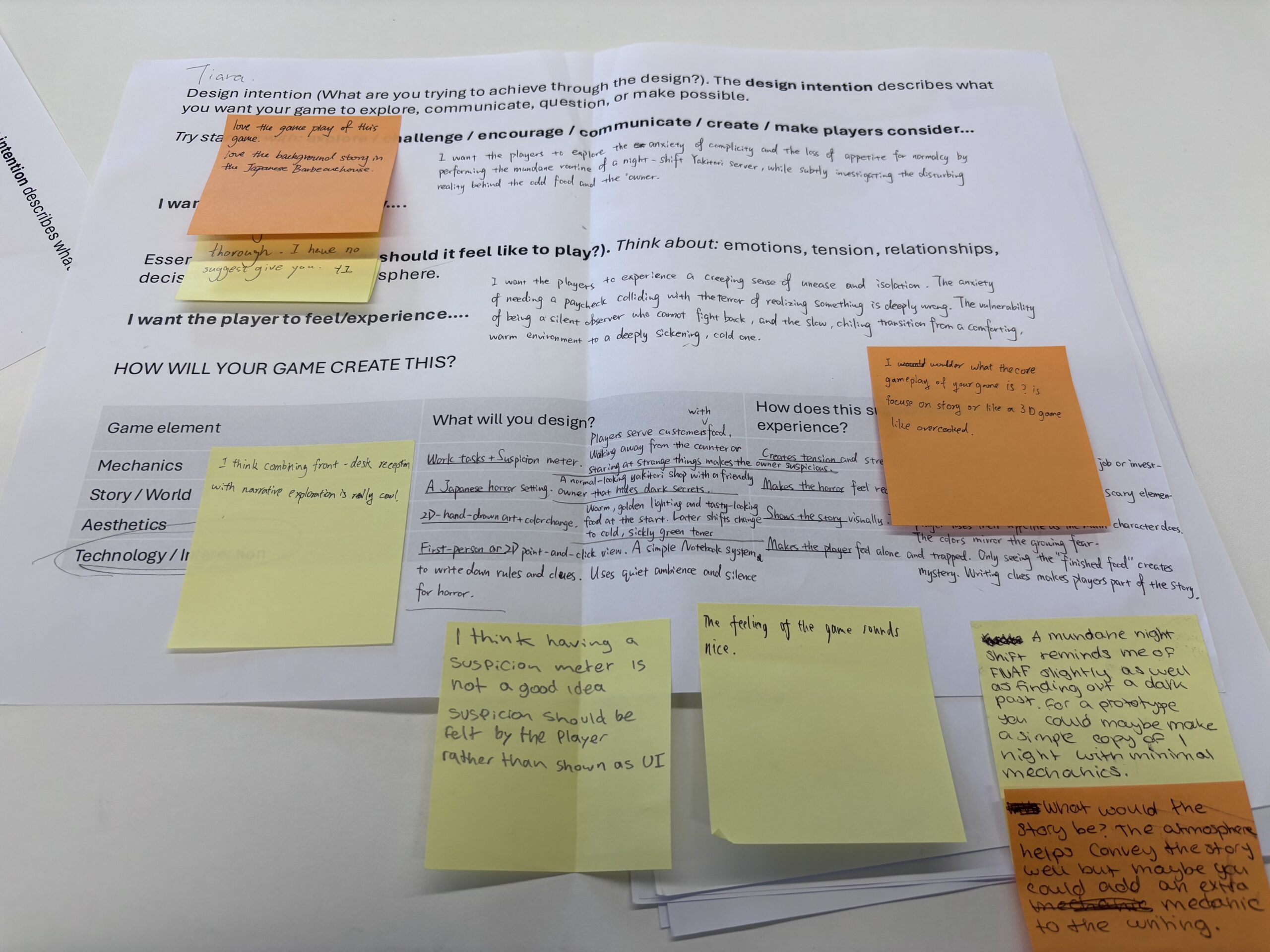
Keep
Feedback responded positively to the contrast between a mundane night shift and a darker underlying story.
Change
The visible “suspicion meter” was questioned. One suggestion was that suspicion should be something the player feels through the game, rather than something explicitly displayed through UI.
Explore
Several comments suggested developing the core gameplay further, including combining front-desk work with exploration and considering a simple prototype based around one night shift.
Tutor Feedback
Vanissa also pointed out that the overall game idea was still unclear. Although I had explored the setting, characters and possible strange events, I had not explained clearly enough what the player would actually do or how the story would progress.
This made me realise that I needed to organise my ideas more carefully, rather than adding more details before the basic concept was clear.
06 — REFLECTION & NEXT STEP
This week helped me develop a clearer idea of the experience I wanted to create. Looking at Florence showed me how simple interactions could support a story. I also became more interested in using ordinary routines and small, strange details to slowly build an unsettling atmosphere.
However, the feedback made me realise that my game idea was still quite unclear. I had thought about the setting, characters and possible events, but I hadn’t fully worked out what the player would actually do. I was also unsure whether to include restaurant tasks such as taking orders and serving customers, or focus more on dialogue and story choices.
Going into next week, I want to organise my ideas and think more carefully about the main gameplay. I need to decide how the player will experience the story before developing more details.