This week we began by getting into small groups and analysing a selection of meaningful indie games. Our group chose ‘Papers, Please‘.
Papers, Please Review
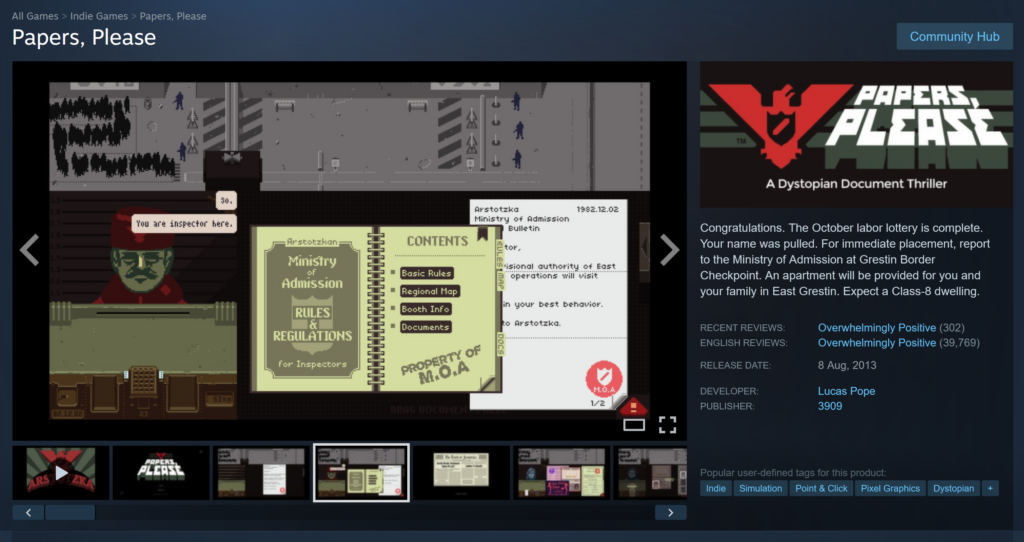
https://store.steampowered.com/app/239030/Papers_Please
In Papers, Please, the player has been randomly selected to work in border control, and given the important job of checking peoples passports and other important documents.
The game mirrors real life historical events regarding border control and immigration, particularly in the days of the Soviet Union, and puts players in the impossible position of choosing between yourself and your family, or the often innocent person in front of you.
Mechanics: Click and Drag.
Dynamics/Game Loop: Player makes the decision whether to let people into the country or not, stamping passports ‘denied’ or ‘approved’.
Aesthetics: Gloomy; desaturated; pixels; dull; haunting.
Applying MDA to Idea 2
In class we were given instruction to think about what we want the players to feel when playing our games and how.
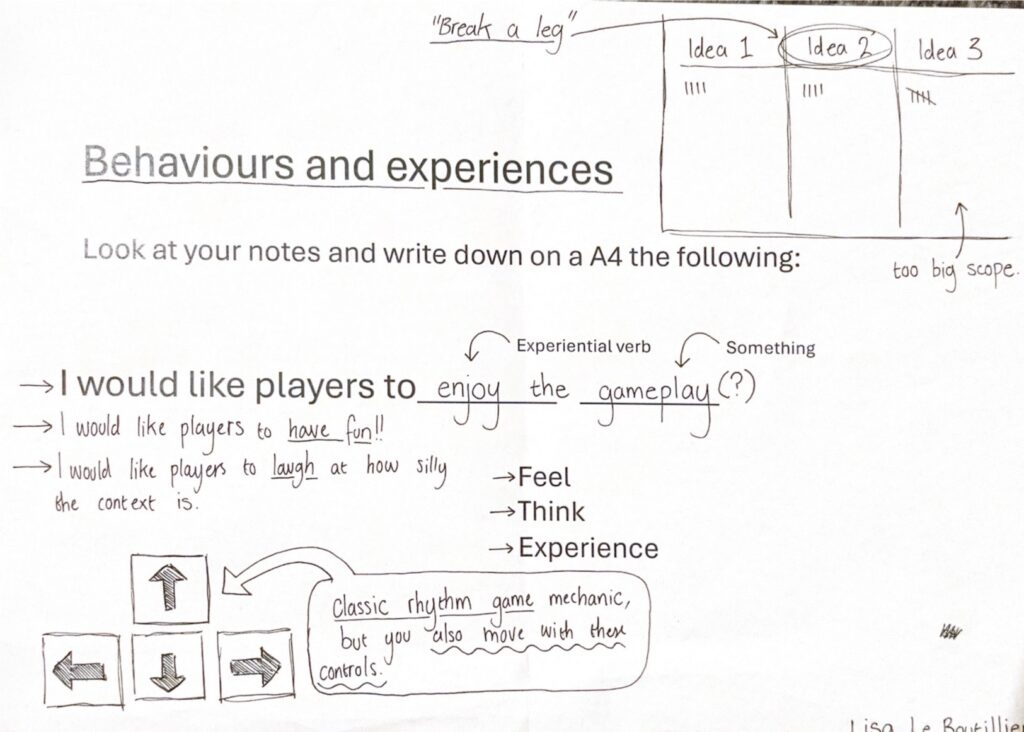
I really want players to feel enjoyment whilst playing my game, and laugh at how silly the context is. So, I need to think carefully about how best to do that with rhythm game mechanics; I don’t want the game to be stressful, but equally I don’t want it to be boring.
After some thought, I’ve decided to keep the classic rhythm game mechanic, but added a twist…
Mechanics: Use arrow keys to move and hit notes in time.
Dynamics/Gameplay Loop: Player moves across the stage whilst co-actor on stage is singing. Player forced to miss some notes, injuring their leg more, so they don’t move whilst the co-actor isn’t singing (moving results in ruining the show).
Aesthetics: N/A (for now).
I’m hoping by having players focus more on where they’re moving rather than focusing completely on pressing buttons in time to the beat, I can lower the difficulty without it becoming dull and repetitive.
Playing with Possible Mechanics
In another workshop we did, we toyed around with making our game ideas a different genre/gameplay mechanic.
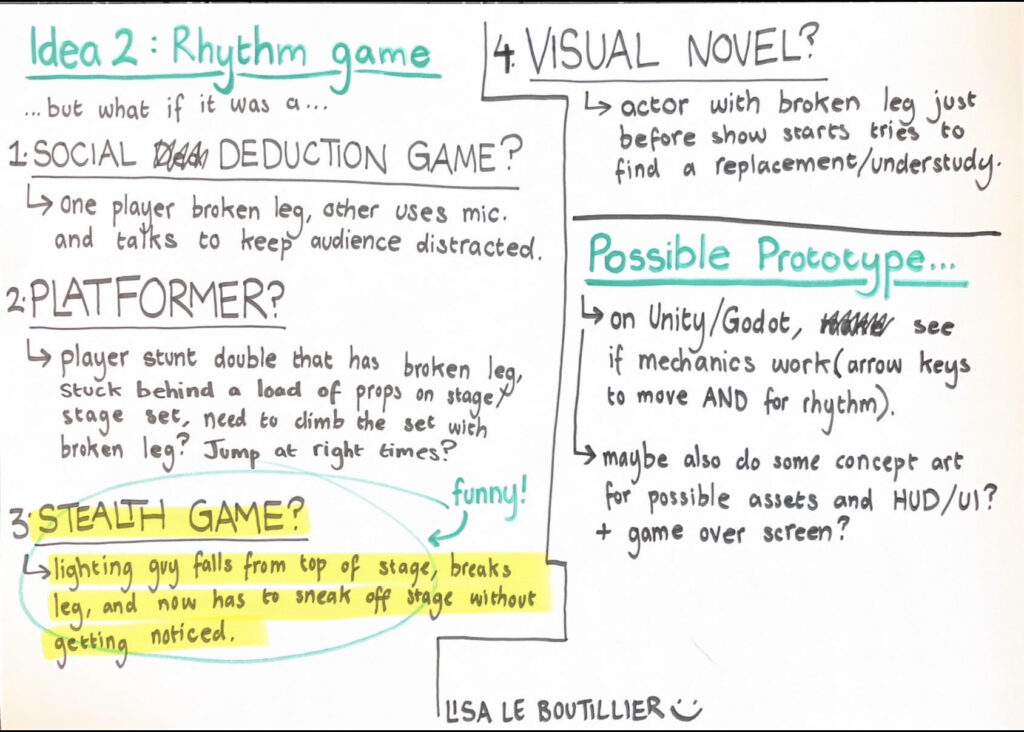
I ended up thinking about four different alternatives to a rhythm game; social deduction game, platformer, stealth game, and visual novel.
I ended up really liking the stealth idea for the game, not necessarily the stealth-related mechanics, but instead the funny narrative.
…lighting guy falls from top of stage, breaks leg, and now has to sneak off stage without getting noticed.
I thought this would work well with the games intention, which is trying to get a laugh out of the players.
Making a Prototype
Using Unity, I made a quick mock-up of the stage, and added a chair that I can bump in to during a demonstration to show that the player avoiding obstacles will be an important part of gameplay.
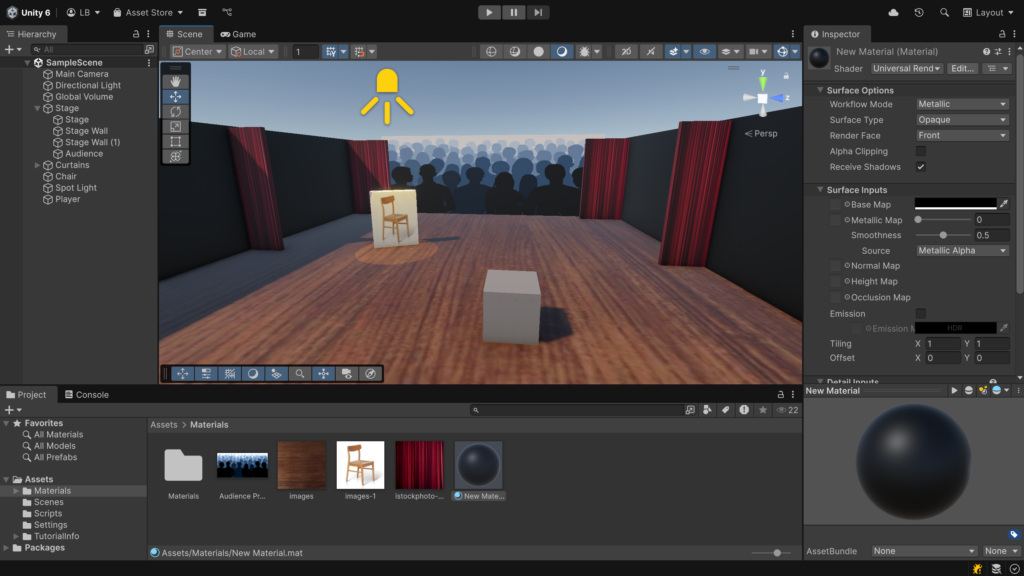
However, after searching for tutorials online of movement in Unity, I stumbled across a lot of Godot tutorials that were half the length of the Unity ones. I’ve heard of Godot before as my friends have said how they preferred it, and that it’s become more popular amongst indie devs.
Originally I chose Unity because it’s the programme I’ve used before, but decided to give Godot a try.
Tutorials and Coding
With no prior knowledge of how to use Godot and very limited knowledge of scripting, I decided to start with the absolute basics. Below is the YouTube tutorials I watched to help me get started with player movement.
YouTube Tutorials Used
Though similar to Unity, I definitely found that Godot was a lot simpler to use, especially as they have some scripts written for you.
After making a very rough stage and adding a movement script, I had my first version of the prototype.
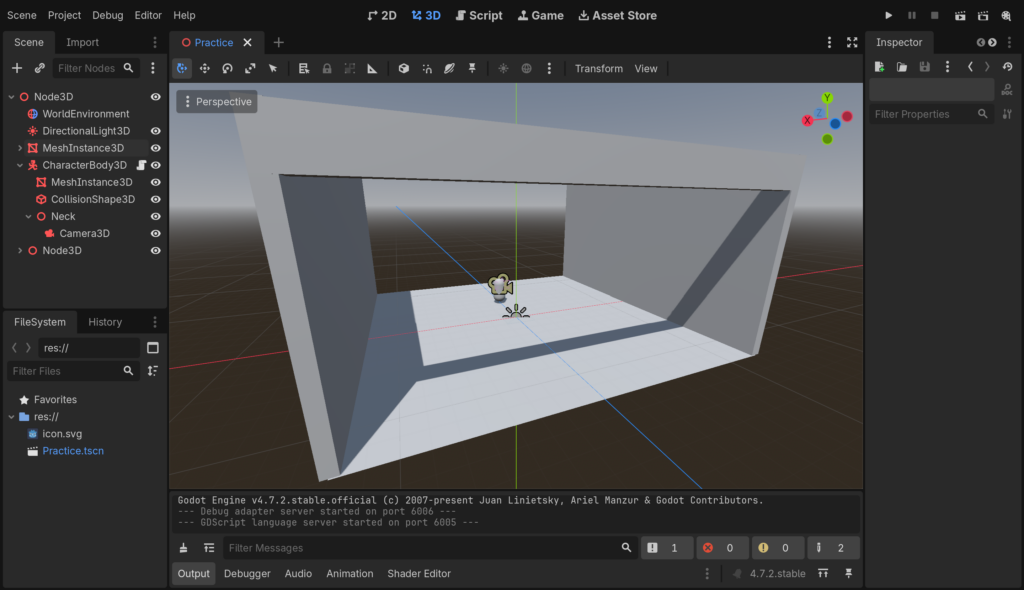
Next was to edit the script so that the play doesn’t move continuously.
With Ross and Issy’s much needed help, I managed to change the movement script so that the player only moved one step after pressing and holding one of the arrow keys.
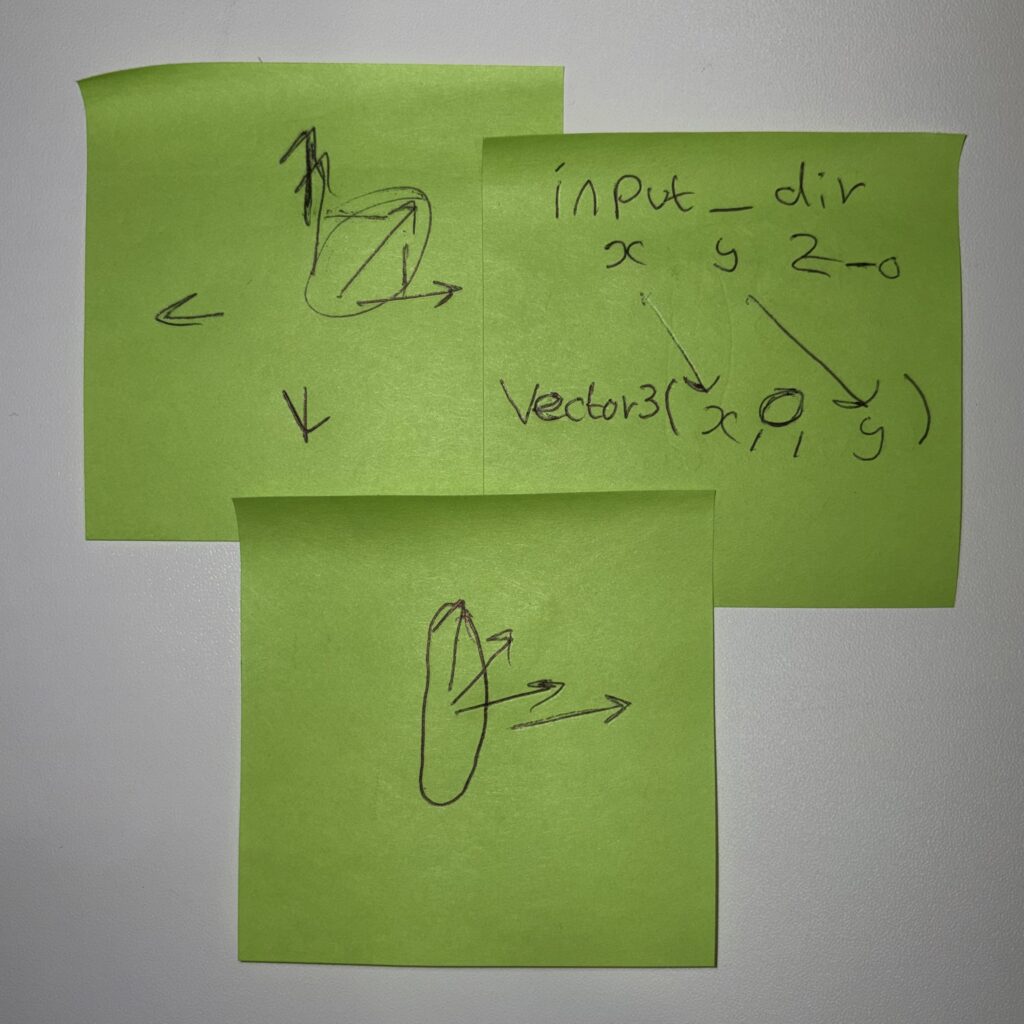
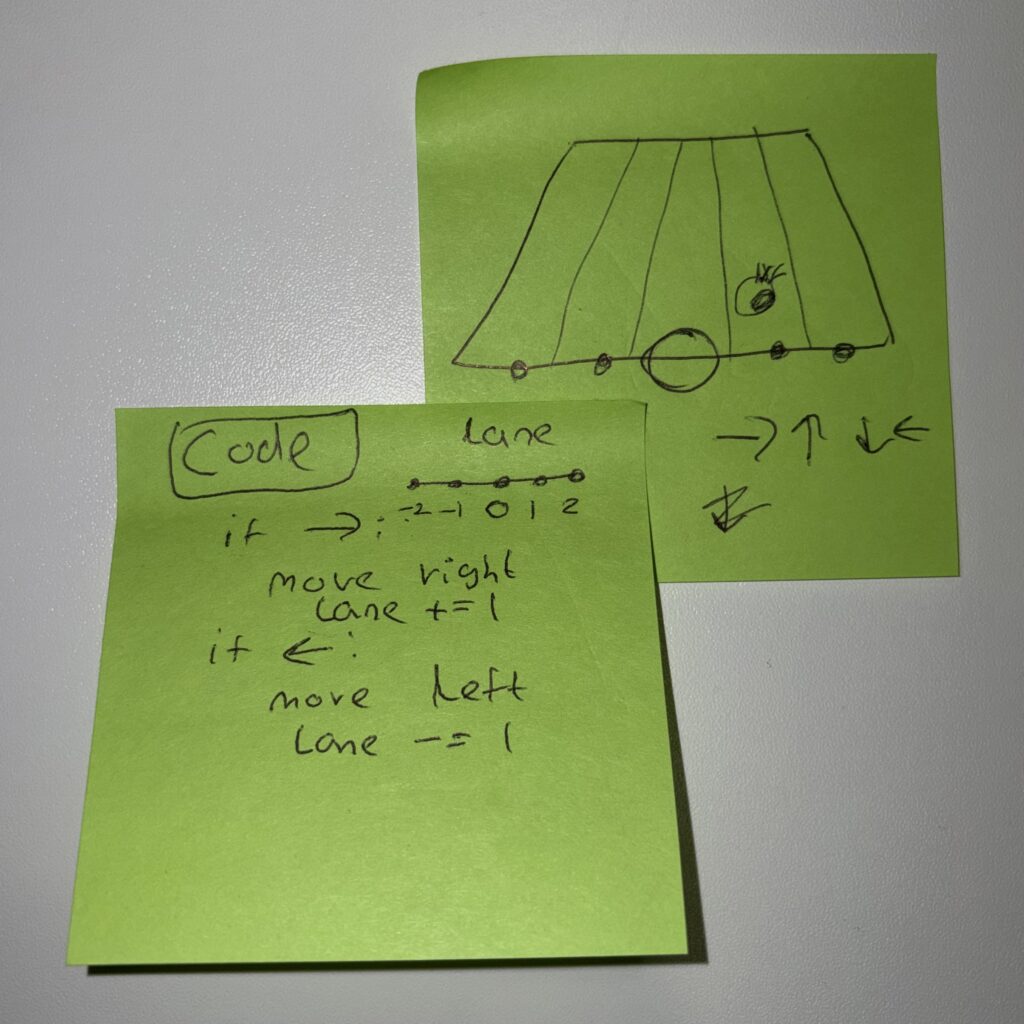
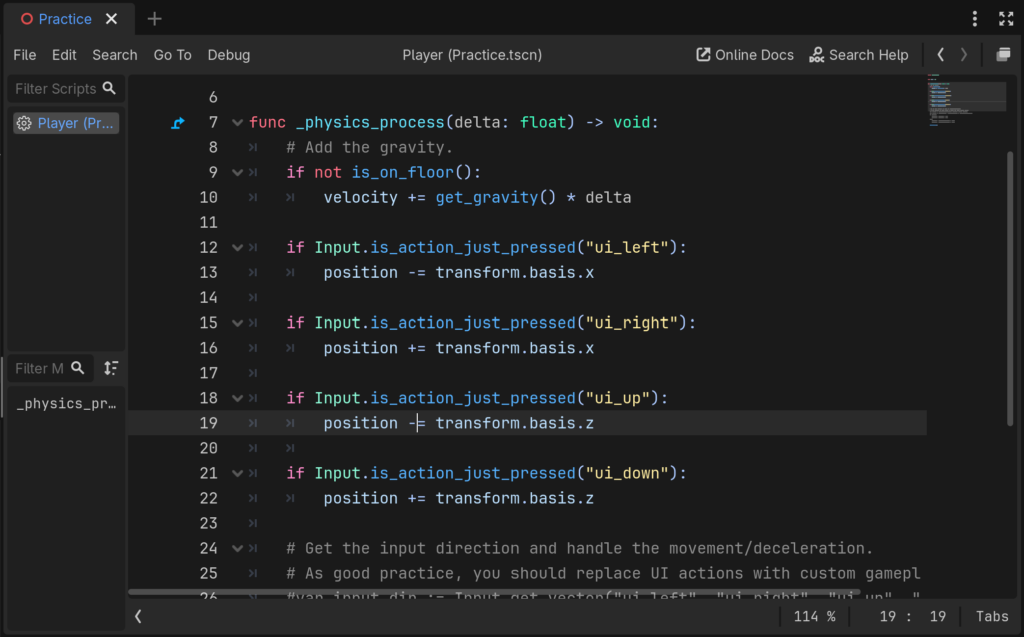
Below is a clip of the prototype so far.
I’m incredibly pleased with the prototype already, but do think I’ll be making some changes in the weeks to come. If possible, I’d like to add:
- Obstacles (props, stage set, etc.).
- Moving spotlight.
- IF TIME: Tomatoes/Roses being thrown.
- IF TIME: HUD.
Reflection and Class Feedback
Below is a collection of post-it notes from the class giving me feedback on my idea.
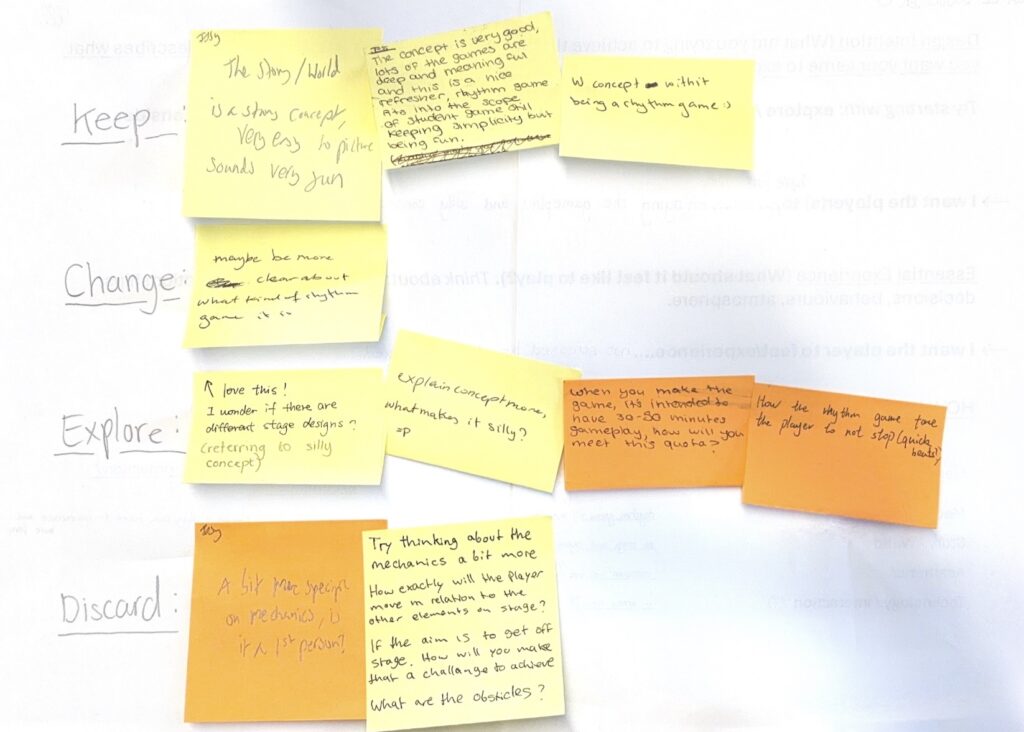
The overall consensus was that the concept was good, but that I should explore the mechanics further. Specifically, what kind of rhythm game is it based off of? How will that work with the movement mechanic? And what’s stopping the player from just staying still the whole game?
Leave a Reply