Week 3 introduced us to essential experience and how it is connected to the game design intention. We have looked into different segments of game design, as well as got familiar with the concept of game design pillars and how to generate them around your ideas.
The first task was to determine which emotions you associated with key elements of your game. In my case, it was mostly centred around curiosity/interest and acceptance.

We were given the diagram with three main aspects of game design — aesthetics, story and mechanics — and we needed to explain how each of them is included in our game idea.

The task was to create game design pillars based on the knowledge we received from the first lesson and present them to the rest of the group. They needed to present the main goals of your game, and also simply show what aspects of the game are supposed to be the leading force.

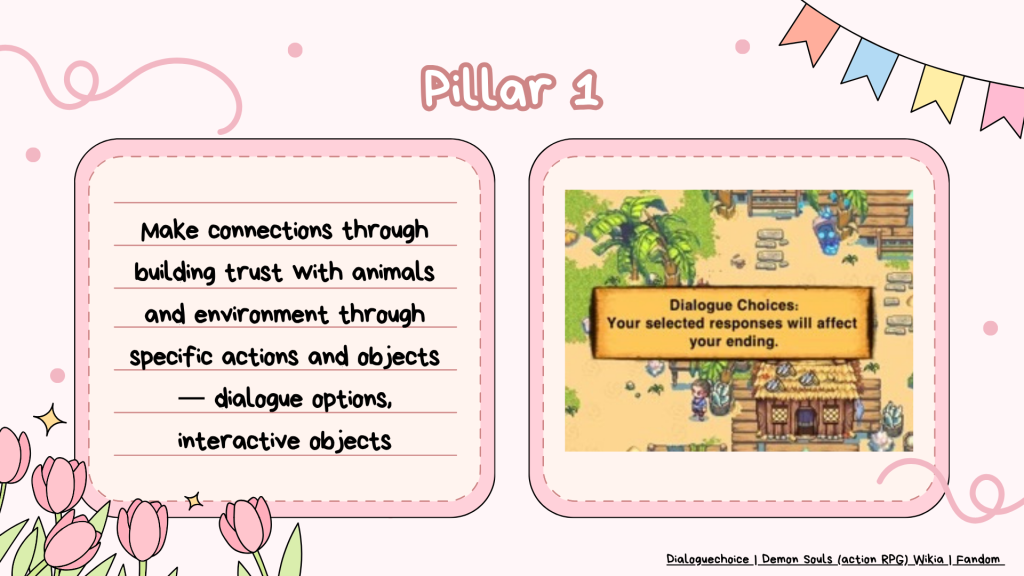

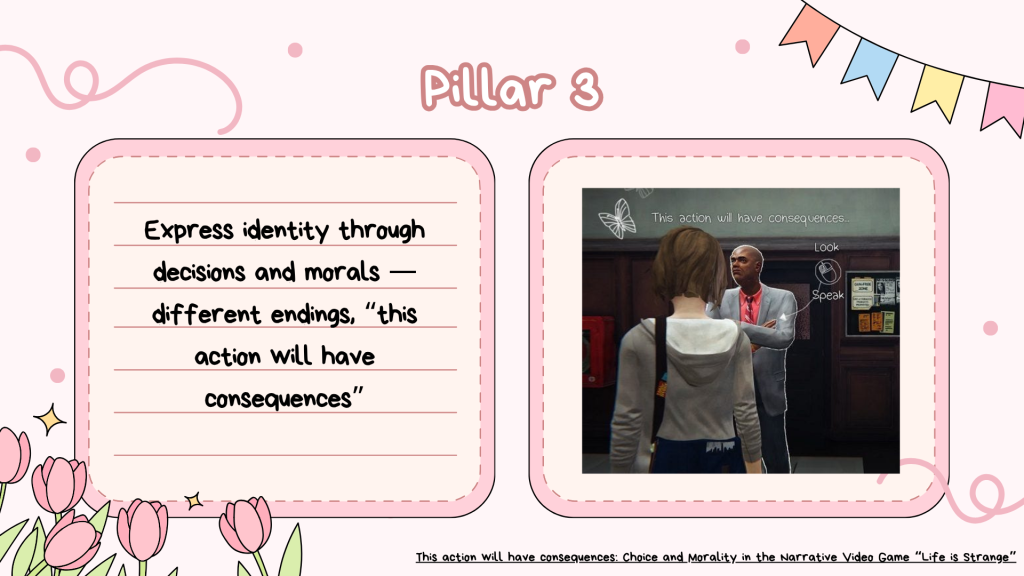
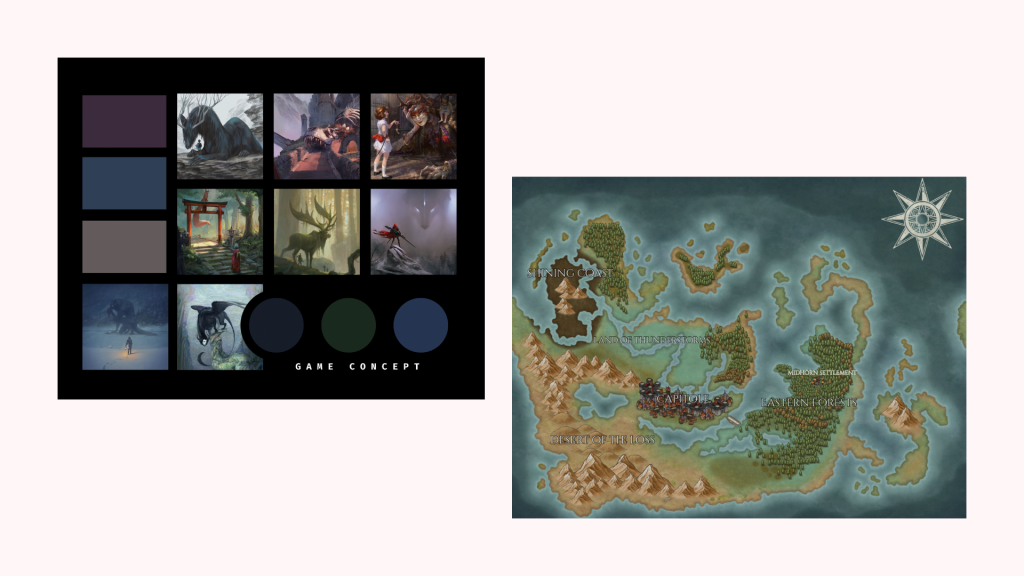
I have also added content that I had before coming to university, because I decided to take the concept of the game I had as my graduation project in college and remake it.
Game pillars really help you concentrate on certain aspects of the game that you think have to be essential in the player’s experience.
Leave a Reply