On Monday, we had a guest speaker Dan Emmerson who spoke about art in game industry and development tips and tricks for assets.
- Games are mechanical things.
- Your art might be fantastic, but it needs to be created with functionality in mind, and as such, will have constraints.
- You aren’t filling a gallery, you are decorating a machine.
Making the Assests:
Start with functional assets first before spending time on finished pieces- “programmer art”/ grey boxing
Functional can mean beautiful, again, depends on what the asset is “doing”.
A capsule can adequately represent a player, but a big vista reveal is going to need some more work.
Depending on how long you have, give the programmer art enough time to test the boundaries. Fail early.
This week, we had to prepare for the playtest on Thursday.
Software Choice:
Actual software doesn’t really matter as much these days.
As long as it exports common formats that engines use it’s fine.
Be consistent across the project.
Stick to you limits, keep things as simple as possible.
Triage & Priorities
Not every asset needs to be a 5 star portfolio piece.
Players don’t notice background assets unless they are phenomenal or terrible.
Sometimes good enough is exactly that – give yourself more time on the stuff players will actually spend time looking at – characters, items, enemies etc.
Be smart! Keep background assets “vague” – this keeps them re-useable and helps blend them into the background
Name things properly
Put them in the right place
Make sure they are the right size and format
Be clever with optimisation tricks! (if it’s worth it)
Implementation is NOT linear
“One and done” is rare
Most things you make will probably need some adjustments along the way.
Keep on top of assets – spreadsheets & trackers are handy, but don’t let them outgrow and become a whole job in itself
Notion/Trello are great tools for tracking.
Just like you, other people will make mistakes. Be patient. But if your team is consistently having the same problems, it may be worth reconsidering your process.
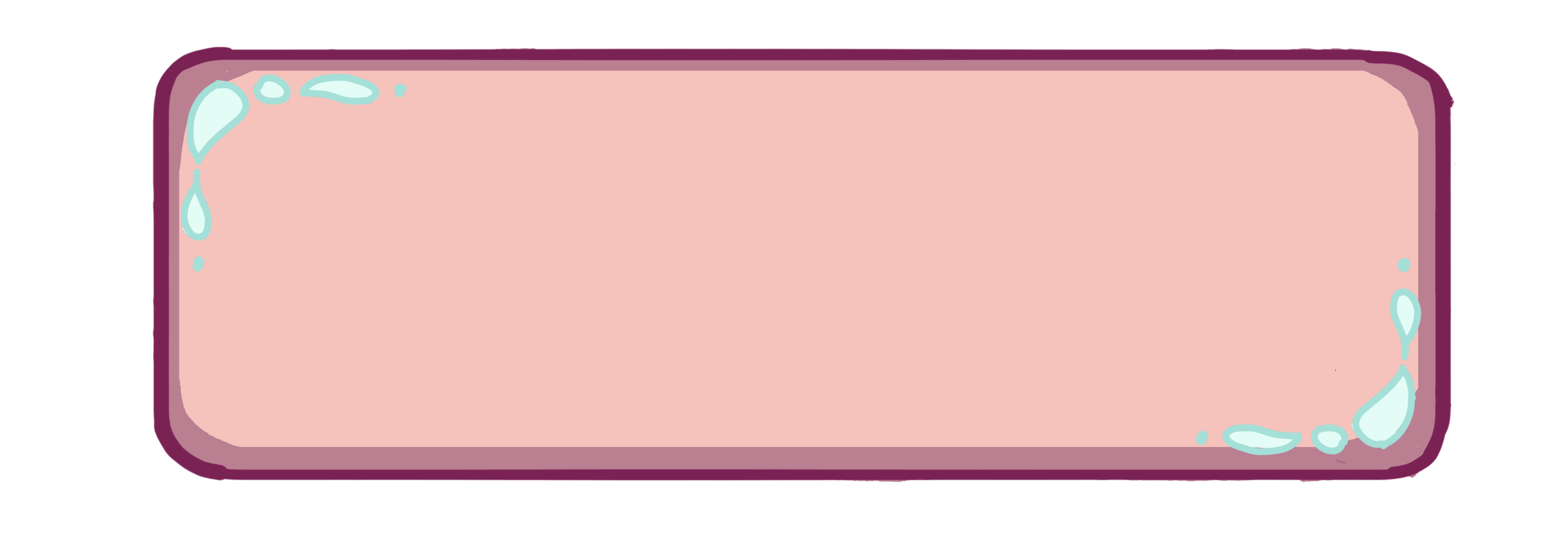
Yufan has also asked me about the dialogue box and how I would like to look in the game. We decided to make it semi-transparent, so I changed it a little and gave him the finished thing. The colour palette was picked by my teammates during week 7 when I couldn’t participate in group discussions.
Our Tuesday meeting was mostly focused on polishing things before the playtest, and since I had the script partially finished, I focused on the objectives for Thursday.
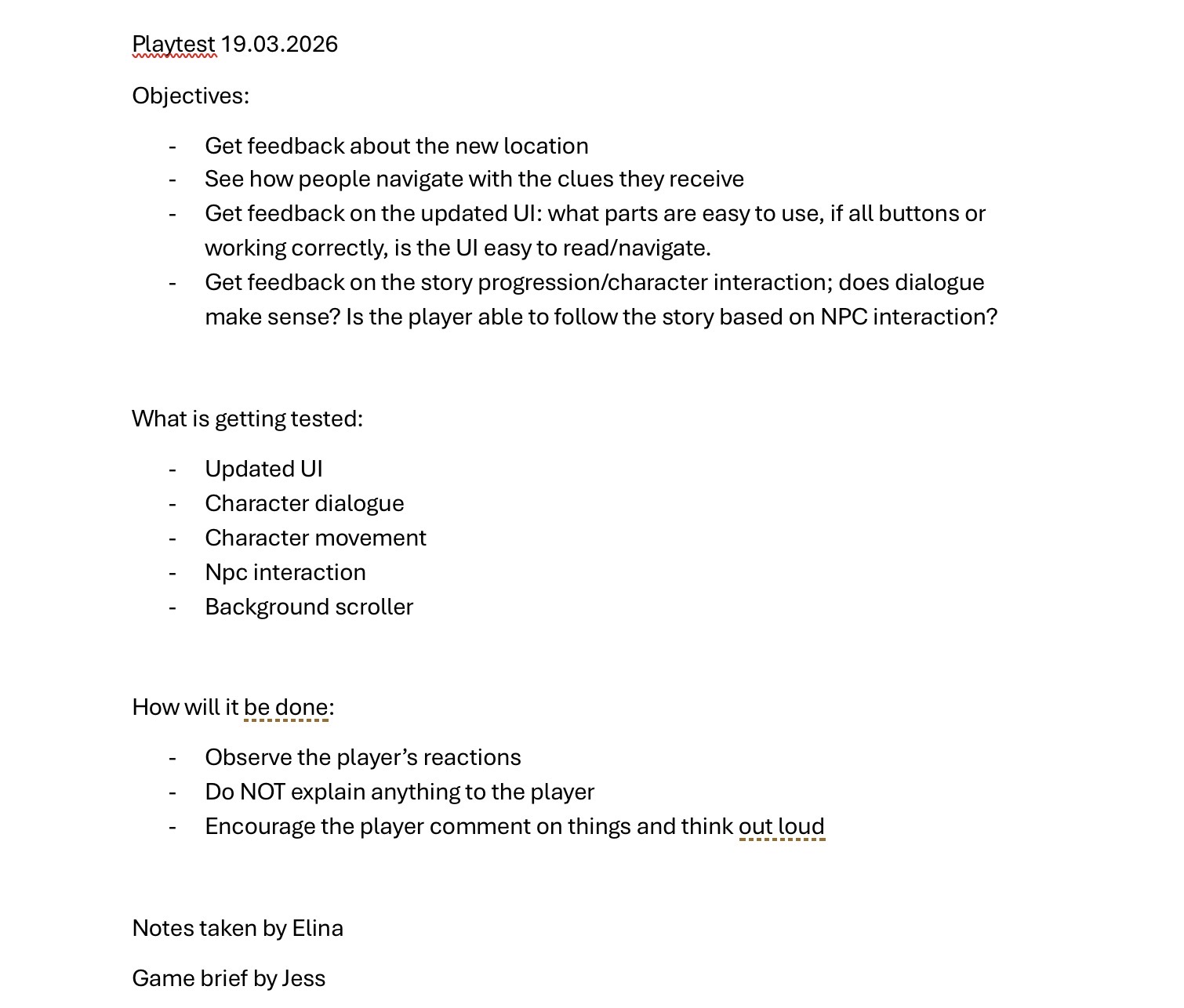
I have altered things depending on what we have achieved since the previous playtest. This time, there were twice as many people who participated in the playtest, so we had more perspectives and opinions that helped us.
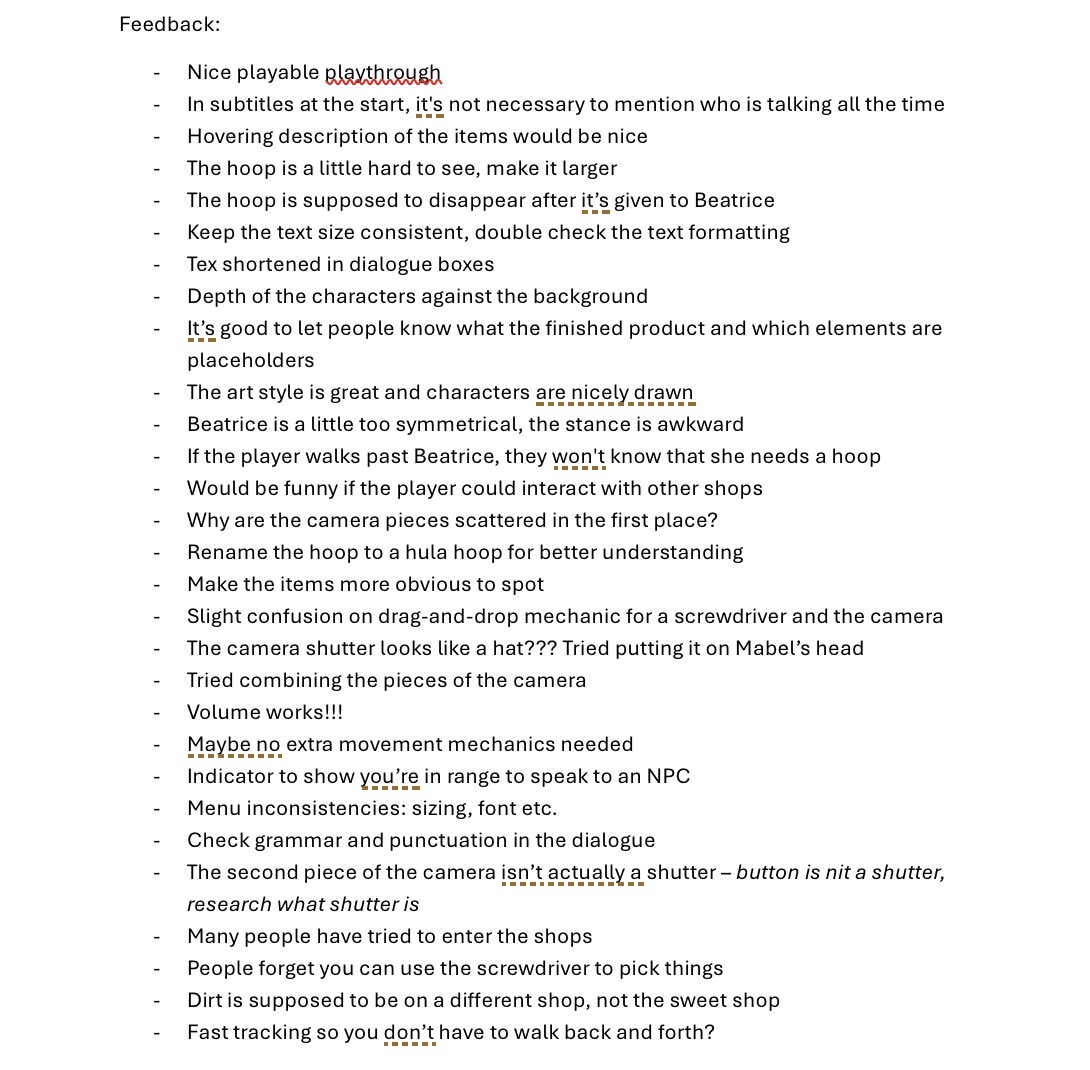
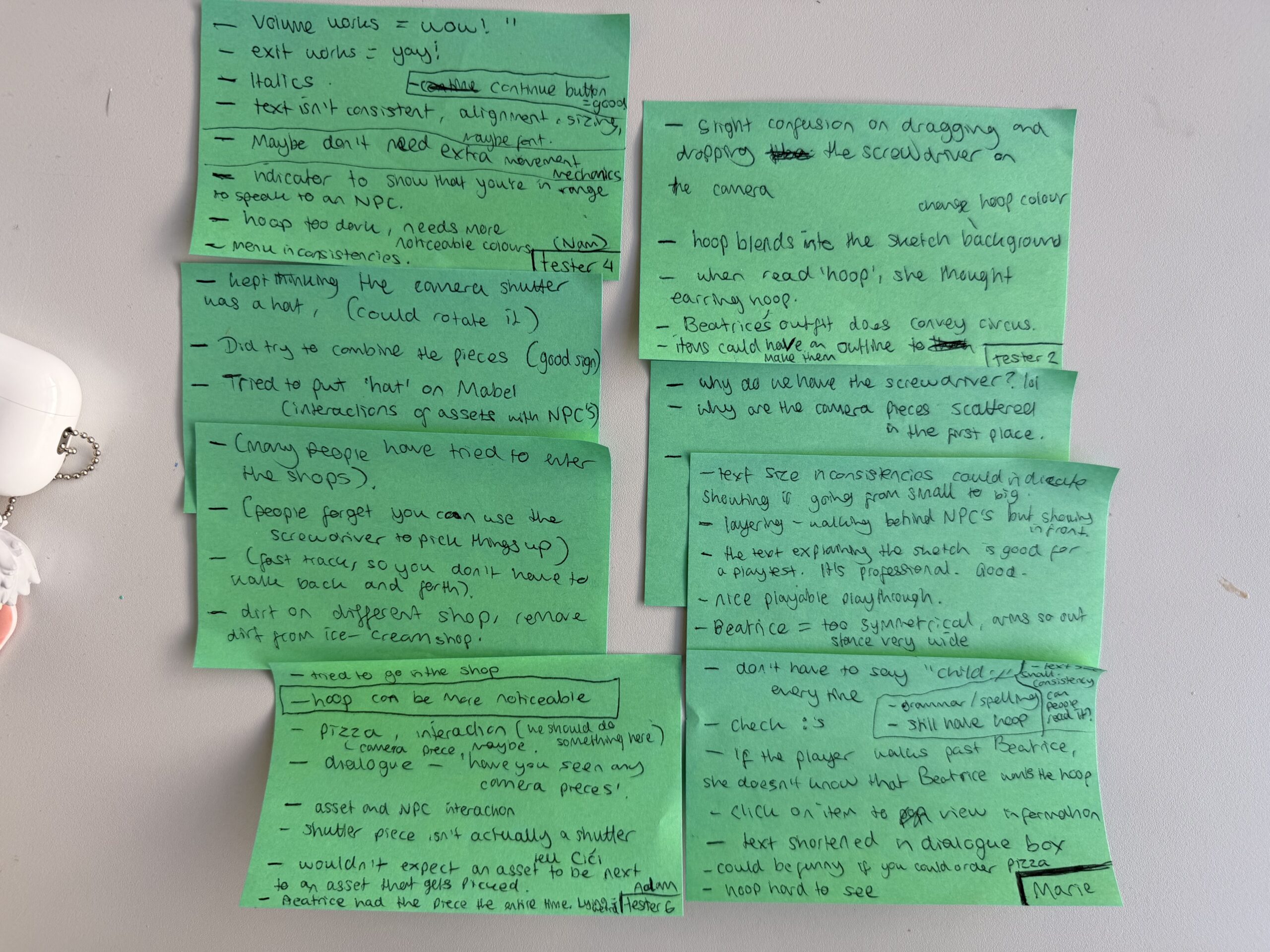
Key takeaways as the Narrative Designer:
- in subtitles at the starts, its not necessarily to mention who talks ever time.
- double check text formatting, grammar and punctuation.
In general, the feedback was directed at the technical and visual aspects of the game, as well as people trying to interact with objects that were not supposed to be interacted with. If we were working on a complete game, we would definitely add more hidden mechanics and NPCs that the player could interact with.
Leave a Reply