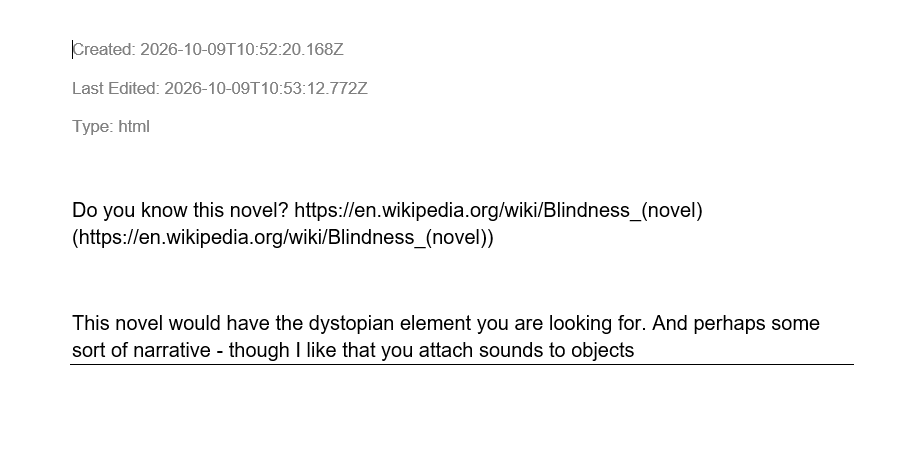
This book seems like a really interesting read but i didn’t want to fall back into the common blind-accessible video game trope of horror games.
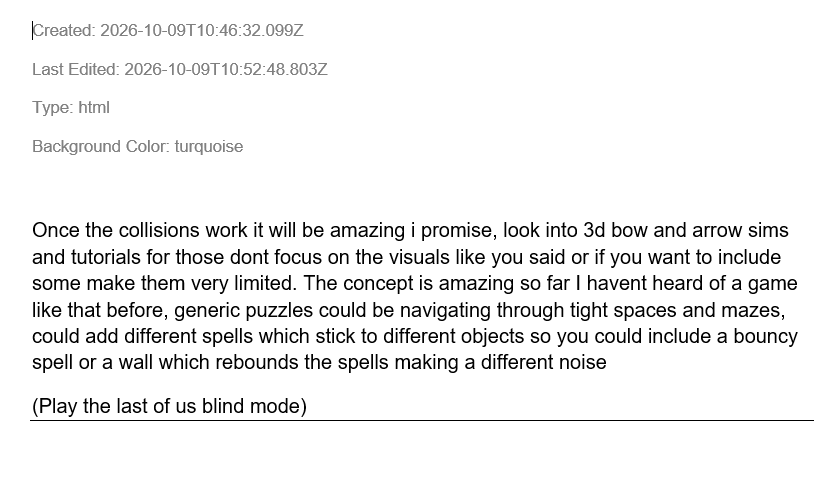
I still need to play The Last Of Us on blind mode. I think a lot of people misinterpreted the fact there was a wand in my prototype to mean that there are magic spells and that wasn’t what I was intending
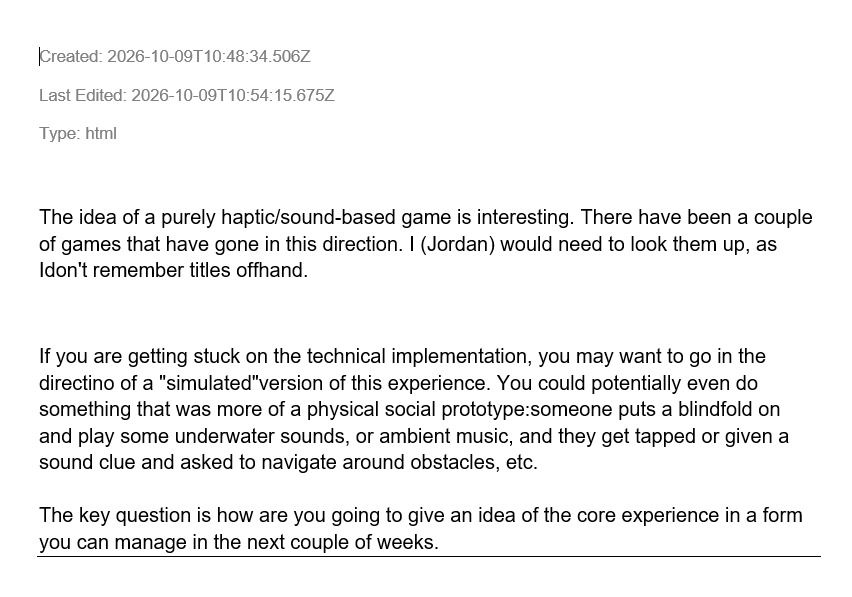
This was the most helpful crit, as I hadn’t considered doing an in person prototype, and I think it may be a way of creating the core experience without coding, as that is not my strength and my game has specific mechanics that I cant seem to find any godot tutorials for.
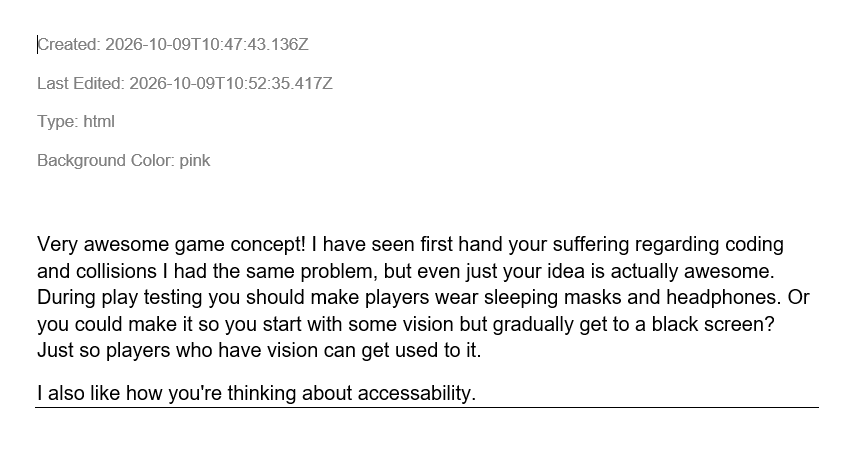
The idea of having some vision to start with is something I had considered, but I felt like it would also destroy the whole object of the game. If I had more time, and more coding skills, I would code three different versions of this prototype, one with no visuals at all, one with subtle visuals of different colours and one where the visuals slowly fade out. However, I think i can faithfully assume that the no visuals concept is the strongest one as the hypothesis of my game is to see if i can make an interesting game relying on just sound and haptic feedback, so to rely on visuals in order to progress to that stage would make the idea fall flat.
Its an interesting idea but Id have to adapt the small amount of story I have considered so far, and i already feel like i am behind with the worldbuilding of my game and so it wouldn’t be good to reconsider this.
In this talk, I learnt how to structure my game pitch so that it appealed to more people and how important it can be to perfect this, as it can impact game sales massively.
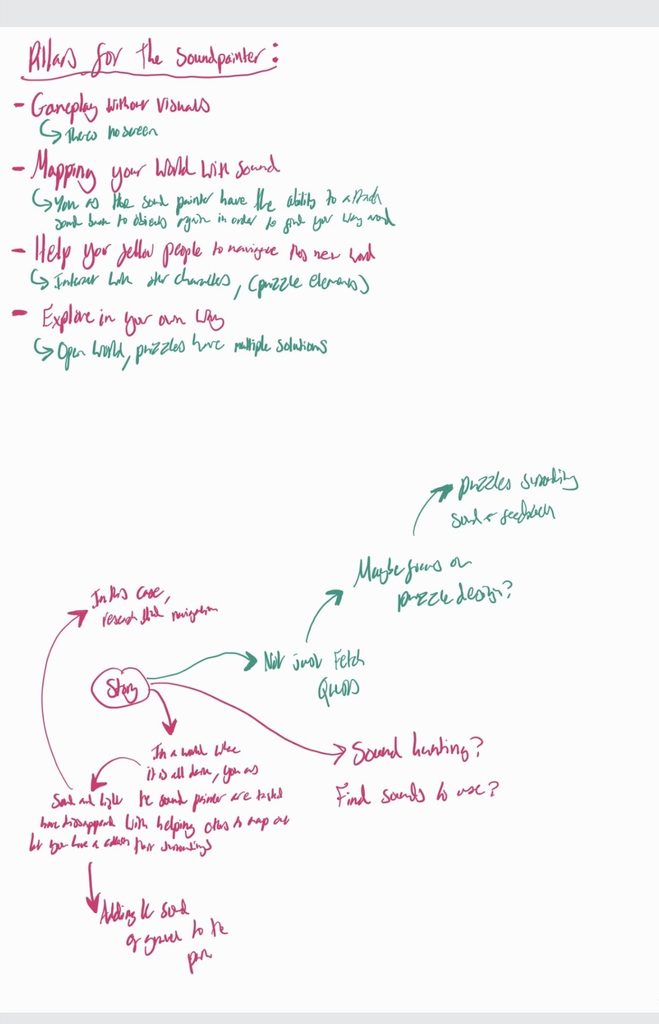
Considering the game pillars also helped me to consider the story elements of my game more as i realised that so far i only really had the mechanics worked out. I decided that the story is about a world that has lost all visuals and sound, and it is your job as The Soundpainter to add sounds back into the world so people can navigate the space again.
Here are my game pillars so far, although as mentioned in the talk, i will likely iterate on them later on as my game concept/vision gets stronger
First Draft of Pillars for “The Soundpainter”:
Gameplay without visuals
This game is screen-less, just headphones and a controller.
Map/ Navigate the world with sound
You, as The Soundpainter have the ability to attach sound to objects which can help you find your way around and ‘paint’ the environment in the way that works for you
Help your fellow people to navigate this new environment
Interact with NPCs and complete puzzles to help your community and progress with the story
Explore in your own way
Open world, puzzles have multiple solutions
Venny looked through my pillars and said that the first three were strong but the fourth one wasn’t as clear, which i agree with.
Mason helped to make my pillars more concise as we both agreed certain bits could be cut out as there were repetitions.
Second draft of Pillars for “The Soundpainter”:
Gameplay without visuals:
This game is screen-less, just headphones and a controller
Map the world with sound
You, as The Soundpainter have the ability to attach sounds to objects or ‘paint’ the environment
Solve puzzles to help NPCs
Encounter characters and complete unique tasks to help your community
Catch sounds and store them for later
Catch Soundbugs with your net and store them to use as tools in future puzzles
A follow up to this task was to consider the game loop and i realised that i didn’t have much of an idea of the actual game part, other than there would be no visuals. I think considering a game loop as my next task will help me to develop my pitch.
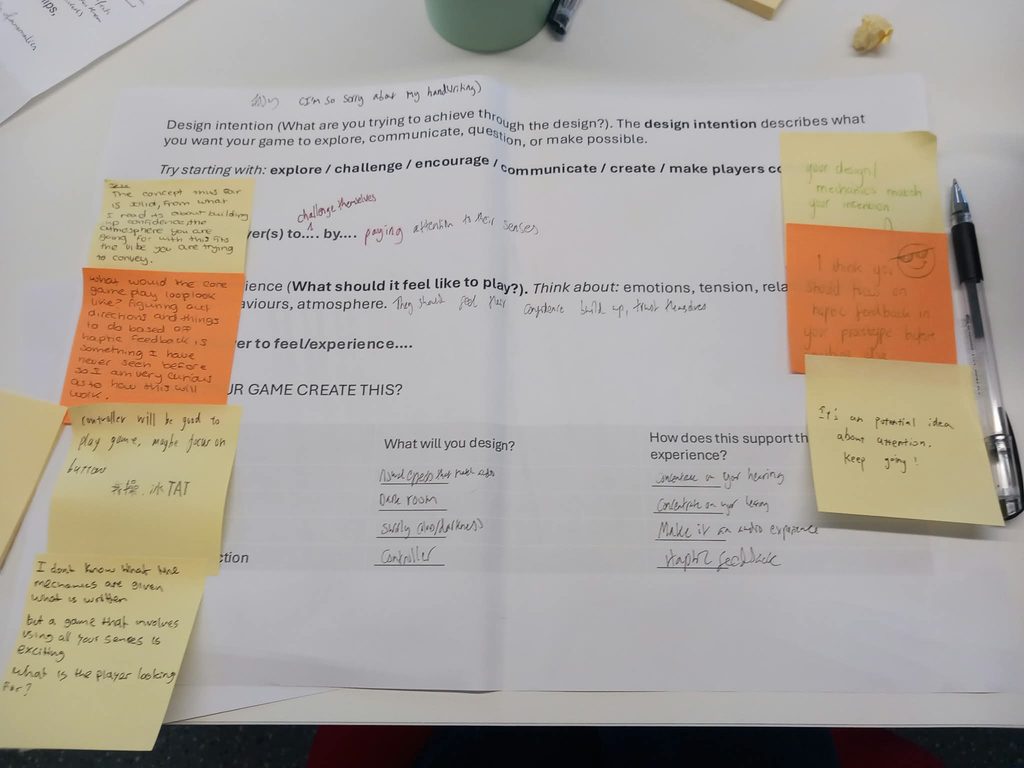
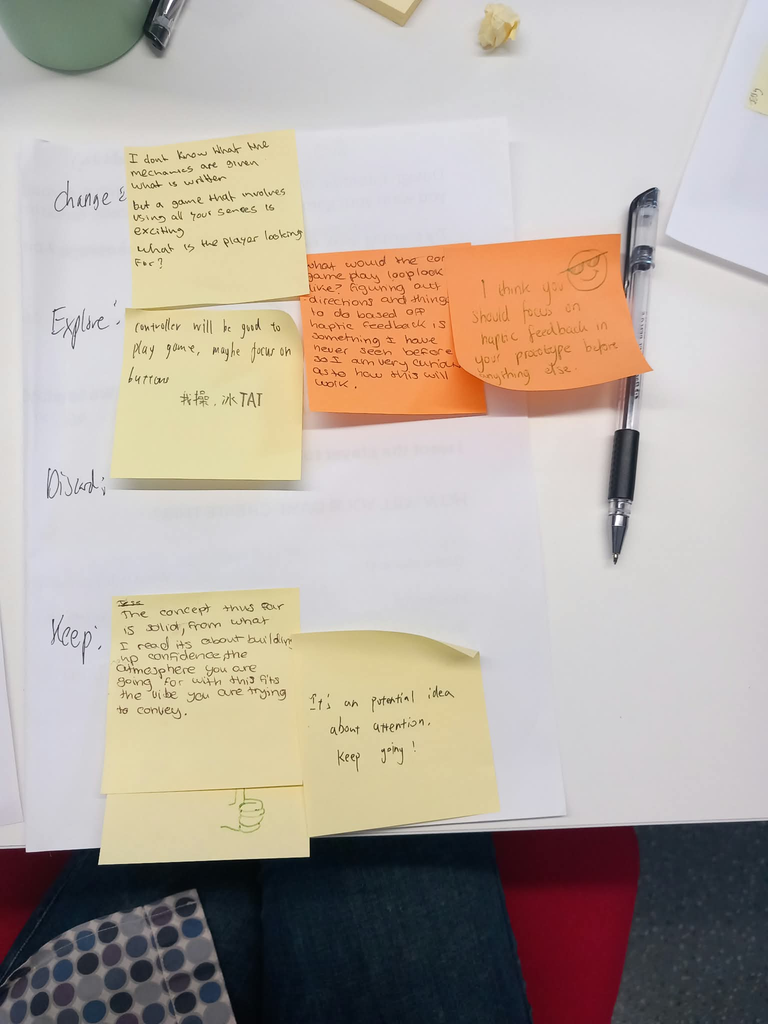
I was given criticism from my classmates about my game concept and what they thought i should focus on when giving my final pitch and my prototype. The yellow post it notes were positive and the other colours were negative, or things that i should focus on to improve.
We then organised our post it notes into four categories, Change, Explore, Discard and Keep. Change was for criticism that was asking us to change something about our game. Explore was for ideas that we felt the need to explore in order to expand upon our game pitch. Discard were suggestions that didn’t fit the scope of our game and Keep were things that we should keep about our pitch.
From the explore category, i need to consider how the game loop will work as i have been focusing a lot on mechanics, i also need to focus on the haptic feedback and what buttons will be used for what on the controller. I also should consider what the player is looking for.
A 2D overlay that displays coloured swirls (that hopefully link with the sounds within the game) (also maybe a 3D overlay is better?)
Haptic feedback on the controller
Basic movement
Adding sounds to the objects within the game (is this even possible?)
The first thing I was very sure i wanted in my game was a 3D character controller so i started by adding basic movement to my game. As I already know how to code movement with a keyboard in Godot, i decided to download a basic movement script to save time, This means that I have more time to focus on more important parts of my prototype. I downloaded this script: https://github.com/Brackeys/brackeys-proto-controller
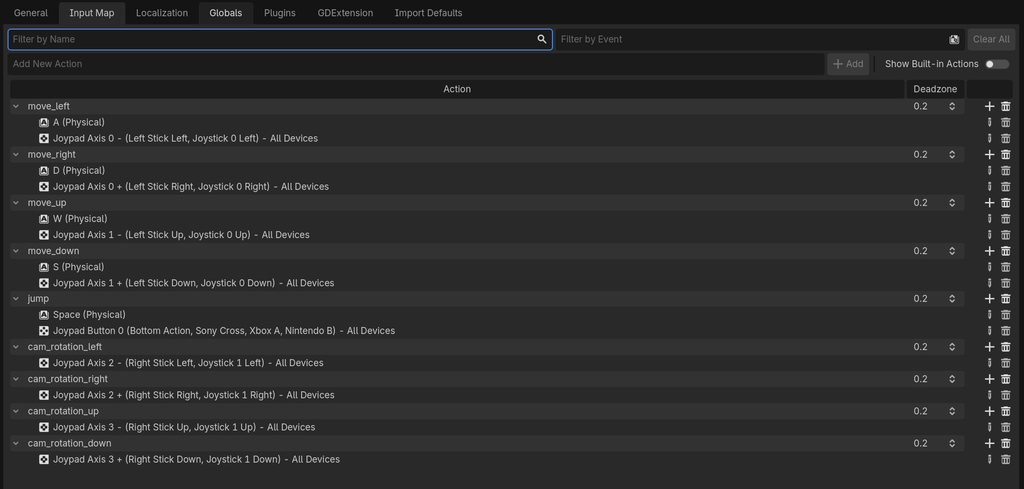
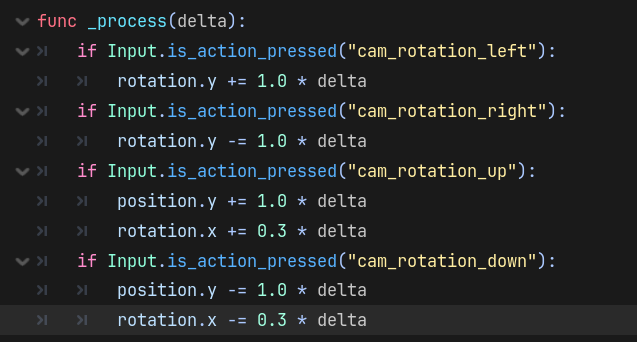
I then needed to edit this code so that it worked with a controller. I used my Xbox controller and adapted the input map so that the movements of the character were connected to the left joystick. I quickly realised I’d also have to adapt the code so that I could look around with the right joystick. At first, I looked at the script to see if I could adapt anything that included the word ‘mouse’ and make it instead pick up on signals from the controller but I realised this was unnecessarily complicated and I could probably adapt the input map as well. I watched this tutorial and fixed my code so that I can now look around too: https://www.youtube.com/watch?v=qsrpPVdMXbY&t=301s
After completing a few more activities within lectures, I developed the story for my game more and turned away from my original idea of having a 3D Platformer and changed it to a puzzle-adventure. The world has gone dark and silent and it is your job as the Soundpainter to attach sounds back to objects to help the other characters in the world.
Because of this further ideation I decided to focus on the mechanic of shooting sounds and attaching them to objects. I used part 7 of this tutorial and onwards to help with that: https://www.youtube.com/watch?v=NJJNWGD25rg.
With this tutorial i could now fire a projectile from the wand but i wanted these projectiles to be able to hit the wall and stick to it, so that they could stick to objects too. I spent a long time trying to research tutorials where this would work. I found one about bow and arrow mechanics but it was in a 2D game and the tips didnt seem to transfer. After the crit on Friday Week 3, I decided to follow Jordan’s suggestion of making an in person prototype as it was clear I wouldnt be able to finish the coding in time and in a way that presented the mechanics of my game well.
I had originally taken an interest in how audio design can almost completely support a game when i stumbled on a Paper Will YouTube video called A (Blind-Accessible) History of Blind Gaming.¹ When i started to think about how my third ideation for a game pitch, I decided to rewatch this video as i remembered it to include a reference to an indie game about a dog that has a mode that allows for complete blind accessibility.
The video starts with a short history of how gamers who are blind had managed to make games that hadn’t been created to be blind accessible into blind playable games through very limited audio cues or text to speech programmes. It then goes onto describe how a lot of games that have a lot of audio cues are horror games. I hadn’t considered this before, but it is true. This is something that i really want to make sure i don’t lean into in my game pitch. I don’t want my games focus to be on a lack of visuals but instead on its varied sound design and strong audio cues. I don’t want my player to feel scared of the dark room but instead resourceful with the audio they can pick up on.
The game that i had remembered Paper Will mentioning before is called ‘Lost and Hound’ and is available on steam. I haven’t played through it, but from what i could tell from the Paper Will playthrough, there was an emphasis on not feeling helpless without a lack of sight. The player plays a rescue dog and so is helping others, and I think i should try to implement that into my game pitch in some way.
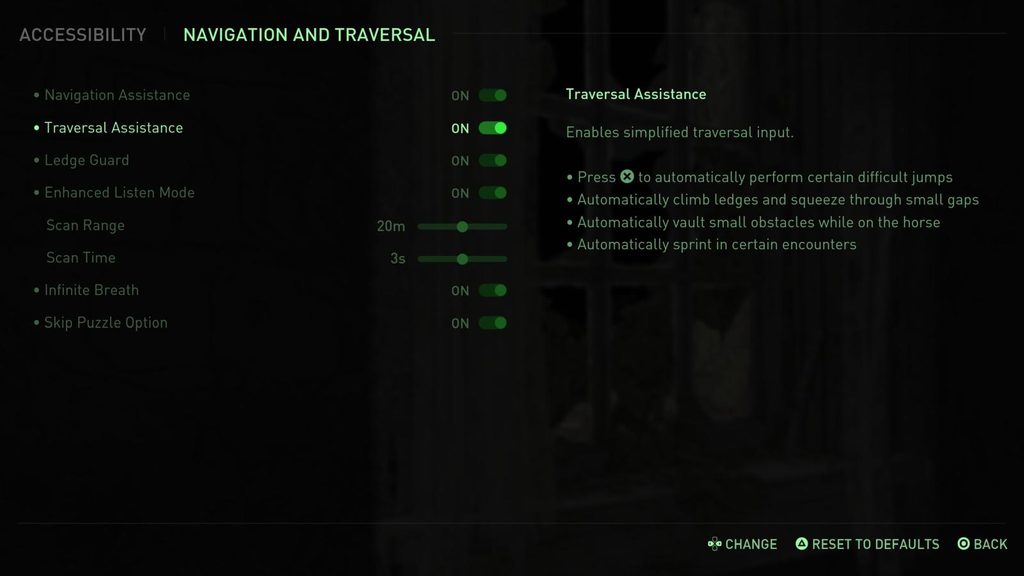
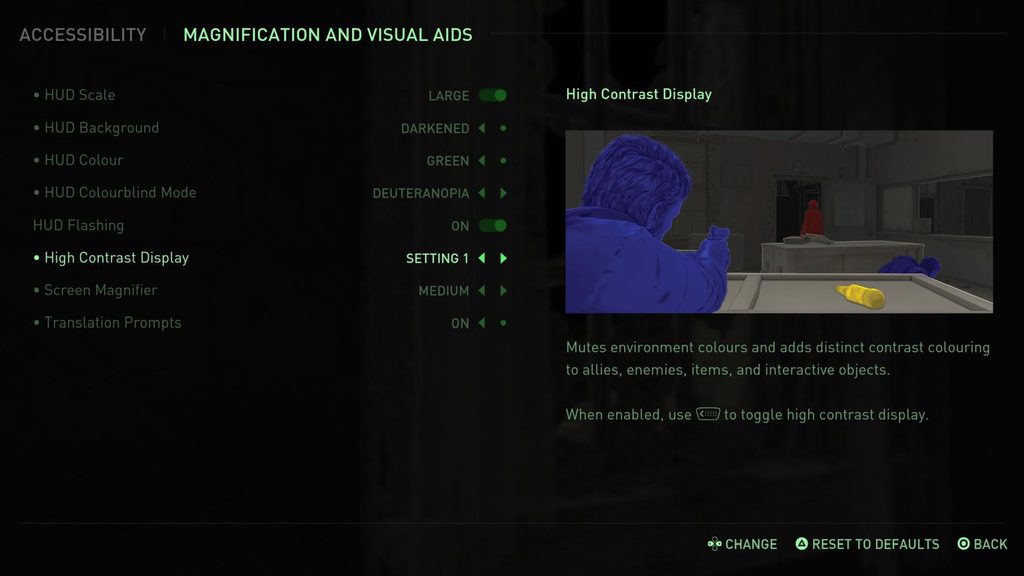
Lisa had also suggested to me that I look into The Last Of Us accessibility features. I am in the middle of playing through the first game and Ive managed to avoid spoilers so i didnt want to watch a whole playthrough, but i started to watch ‘Guy Born blind Plays The Last of Us Part I 1: The Beginning’ by DeadeyeJediBob. ². The first thing i noticed when watching it was how much audio description there was. I suspect it is because The Last of Us is a visual game and so describing the colour of the watch or exactly when Joel sits down is good if you want to be able to imagine the little details, but it was very different from a lot of audiobooks I had listened to, which allow the listener to imagine whats happening through the sound design. I’m not sure which one is better for people who are blind, it almost certainly depends on the individual. When imagining my game, I hadnt expected to include quite so many descriptions but to put more of a burden on the sound effects to shape the world, as i feel like a lot of actions can be intuited through them. I also found the way the player could map the space by using a sonar-like mechanic that played a sound effect in the direction of an interactable object really interesting.
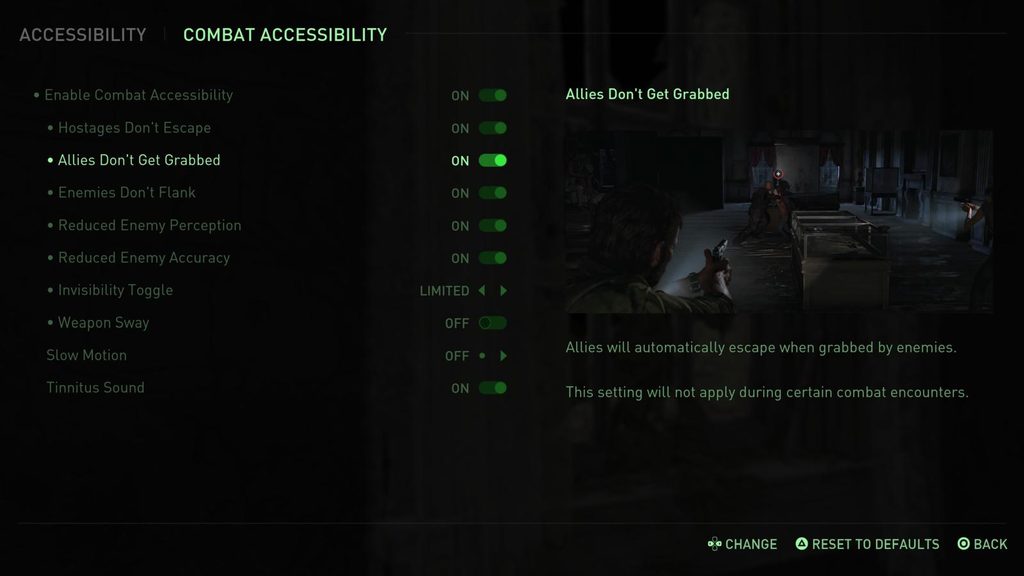
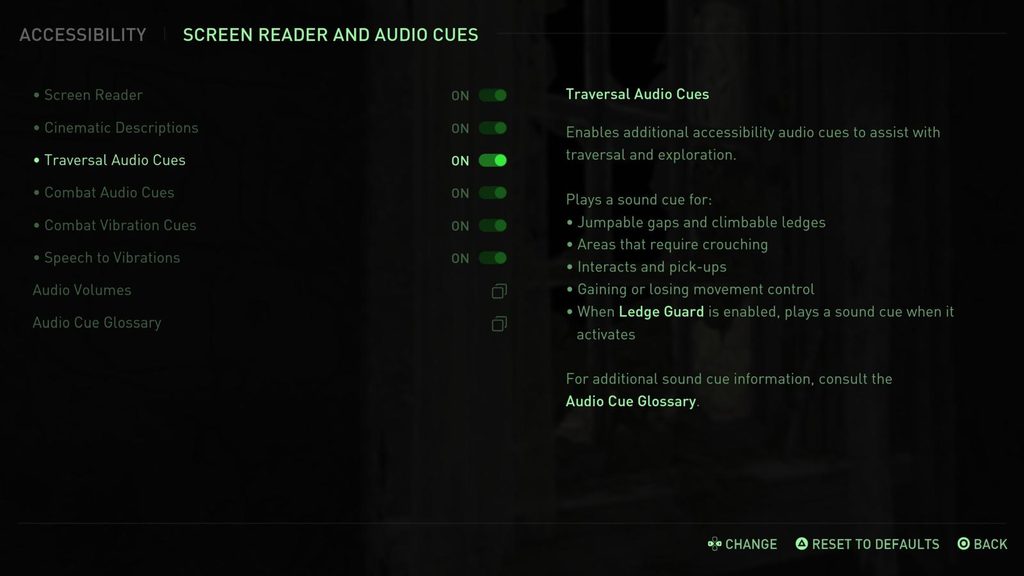
After watching this, I wanted to try playing a section of the game myself with these accessibility features turned on and a blindfold on. My first attempts were very tricky, in hindsight i probably should have read all of the audio cues and what they meant but i wanted to see how much i could work out intuitively. I spent my first few attempts mainly in the wall but i started to get the hang of it as i attempted more times
These are the settings I used:
Another game that i kept seeing mentioned in the comments of the Paper Will video was ‘The Vale’. I started to play the demo without knowing anything about it except that it had blind accessibility and i was surprised to find that just like my game, it actually by default included no visuals. There were little lights that were on the screen and they changed colour for each section of the game. To my surprise, they also followed the movement of the player. This playthrough shows how the movement looks: https://www.youtube.com/watch?v=R4W46G0mCzE&list=PLwTE6ZREOFnFwa_S-KyLNssgHiZM61IM6
The sound design for this game was a lot more what i was expecting for The Last Of Us. There was a heavier emphasis on sound design leading you to where you were supposed to go. I also found the addition of a human narrator a lot more immersive, her voice sounded like it belonged in the game. When researching to see if there were any complaints for the blind accessibility of the game, I couldn’t find anything except that the game didn’t take into consideration the overlapping of other disabilities. People online wished that there was a way of changing the audio to be mono or that there was a way of changing the mapping of the controls.³
¹ Paper Will (2021). A (Blind-Accessible) History of Blind Gaming. Available at: https://www.youtube.com/watch?v=oKgN4va-gas
² DeadeyeJediBob (2024). Guy Born blind Plays The Last of Us Part I 1: The Beginning. Available at: https://www.youtube.com/watch?v=ndodaE6OlSk
³Craven, C. (2021). Is the vale the future of accessible gaming? [online] Can I Play That? Available at: https://caniplaythat.com/2021/08/23/is-the-vale-the-future-of-accessible-gaming/ [Accessed 21 Oct. 2026].
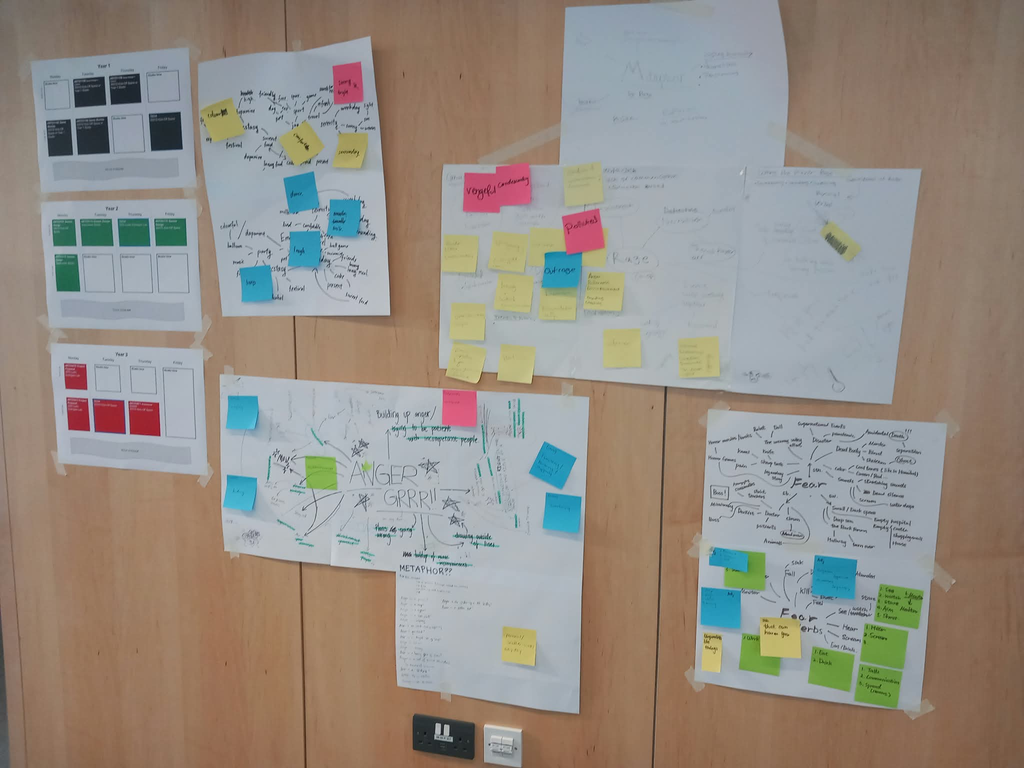
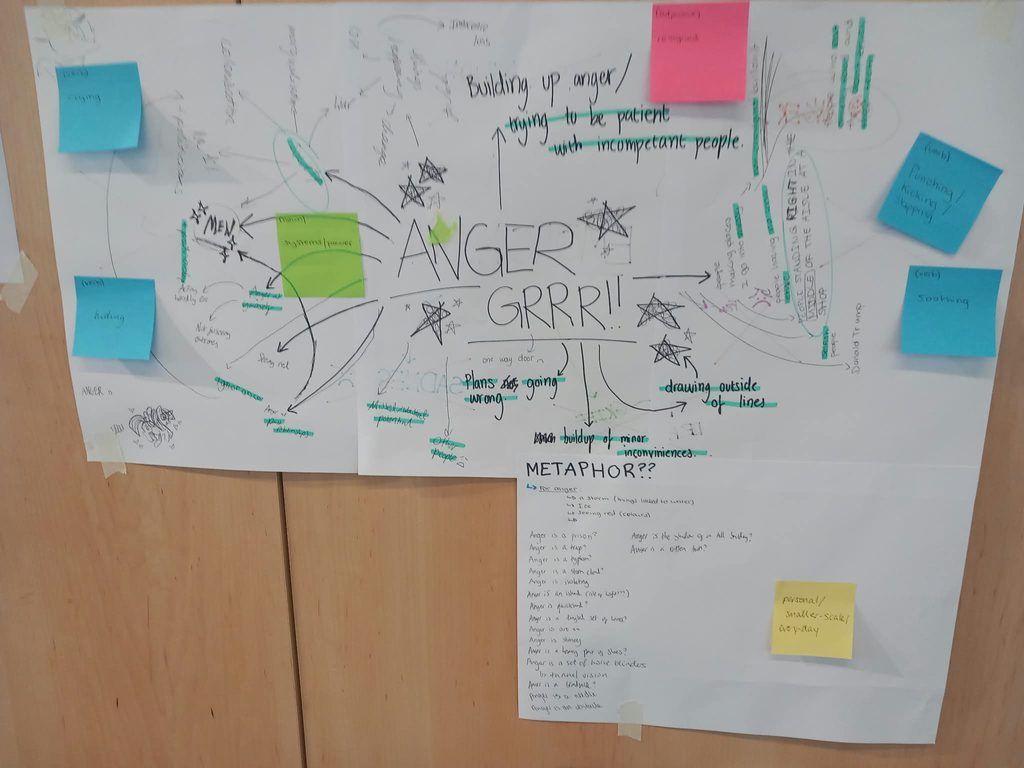
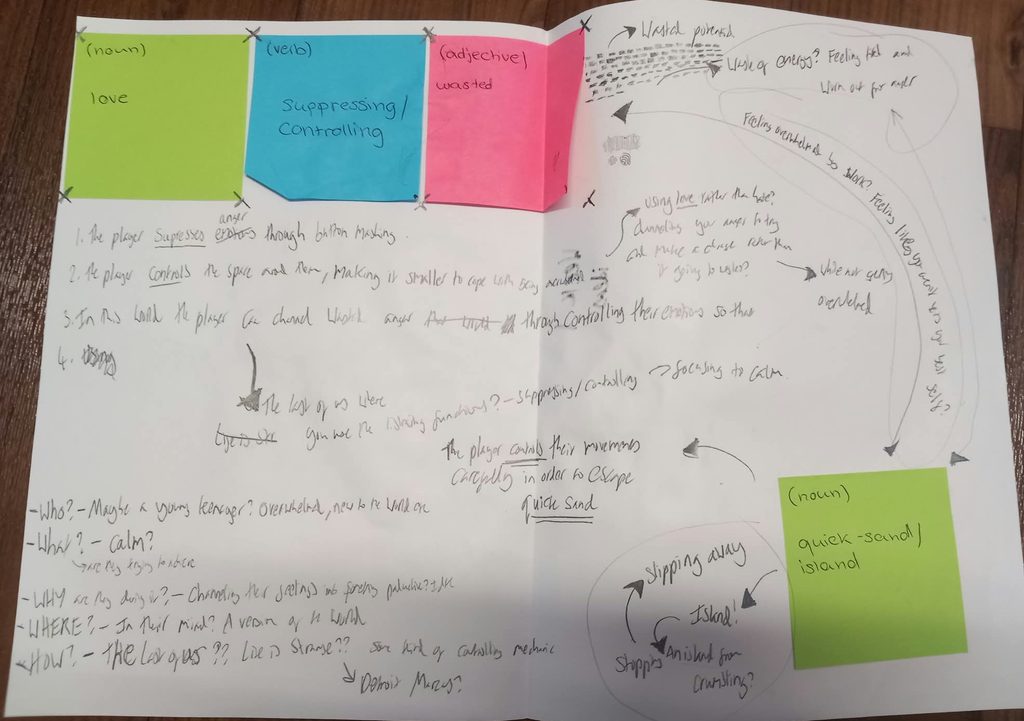
For the first activity we were tasked with choosing an emotion and writing 3 types of post it notes. At first we added verbs, then nouns and then adjectives relating to that emotion.
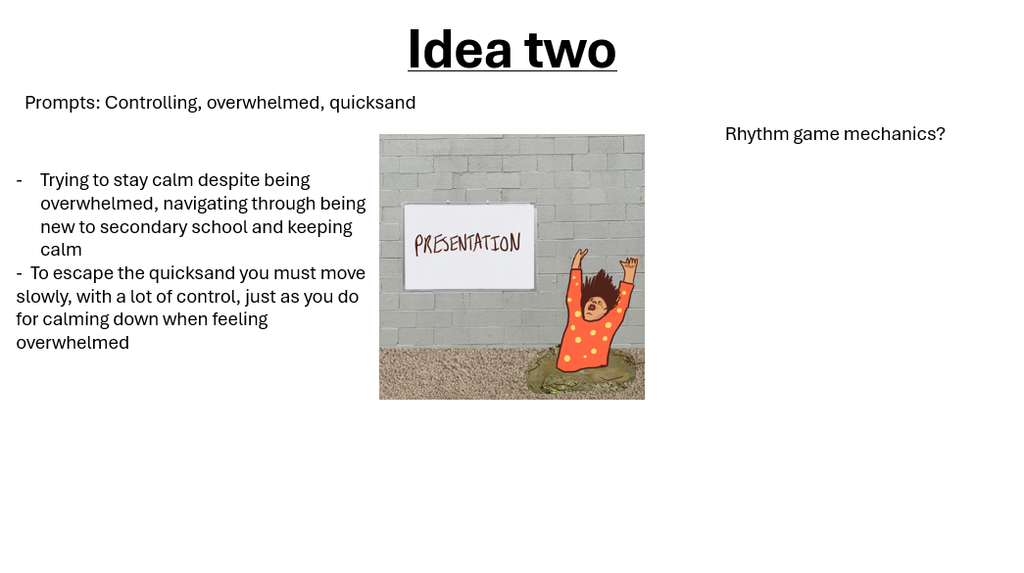
After the first activity, we had to pick three random post it notes for each of the categories and then come up with three game ideas. I think for this activity the post it notes I chose were too abstract but i still came up with a concept i liked with the quicksand one. This was my second idea in my powerpoint i produced at the end of the week.
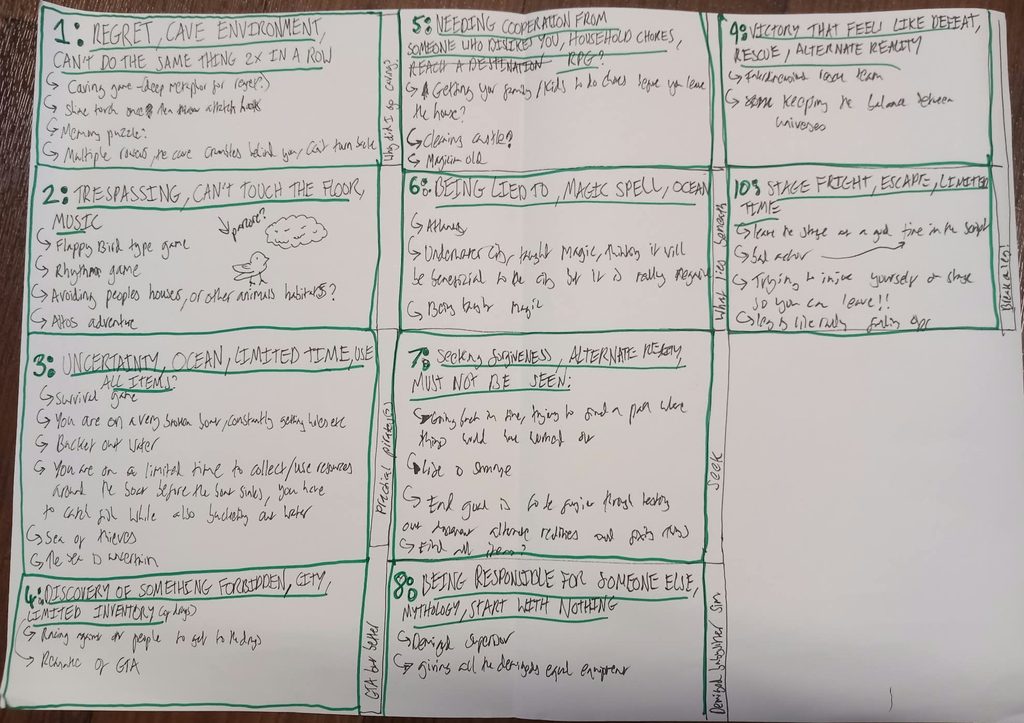
In Jordan’s Lecture we had a quick activity where we worked in random groups of people and were given three emotions and then a list of 5 game criteria using https://www.bafta.org/programmes/young-game-designer/idea-generator/ and we had to come up with a rough game idea in 5 minutes.
This was useful as even if some of the ideas didn’t really make any sense or i couldn’t see them working as an actual game (such as my sixth idea) it allowed me to be more creative and the first idea i actually ended up picking for one of my three to pitch by the end of the week. I could also adapt any of the ideas afterwards if i felt like any of the constraints didn’t work completely, they were just a good starting off point.
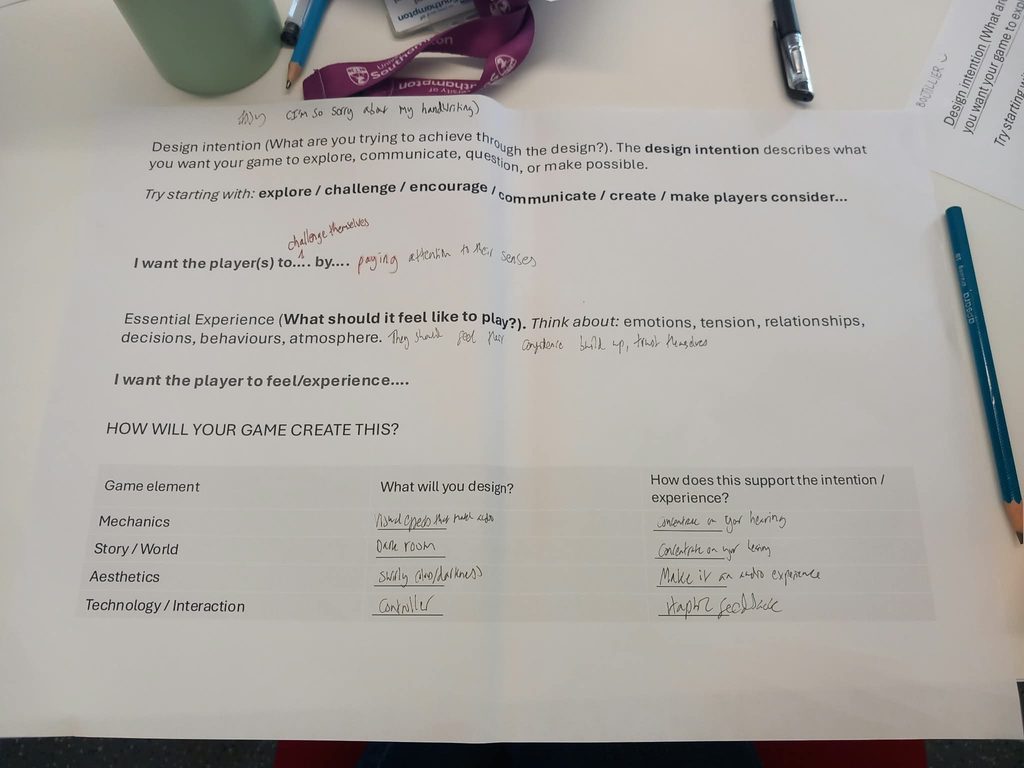
“I would like players to think about self control”
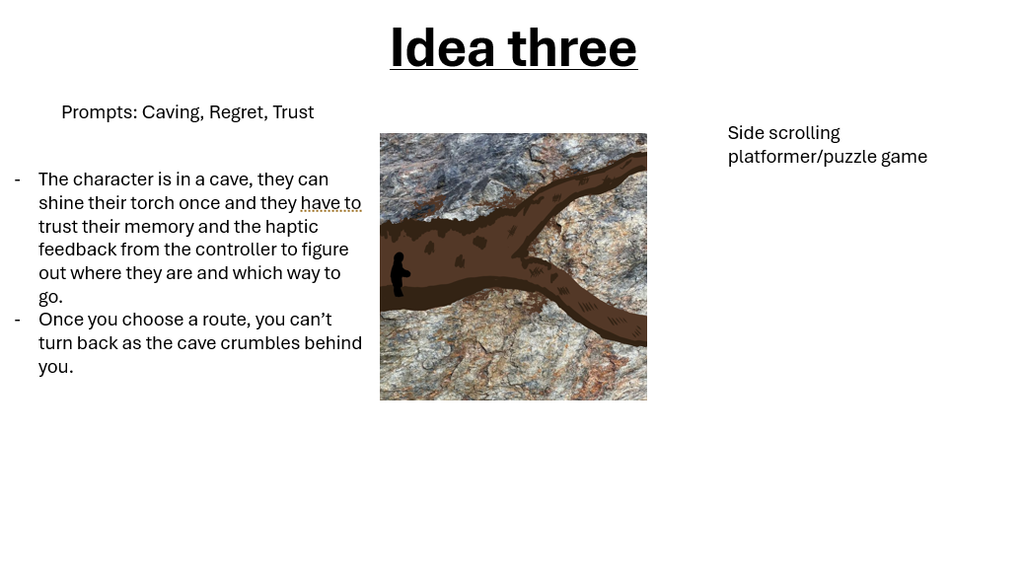
Idea Three:
“I would like players to trust themselves and concentrate on all of their senses”
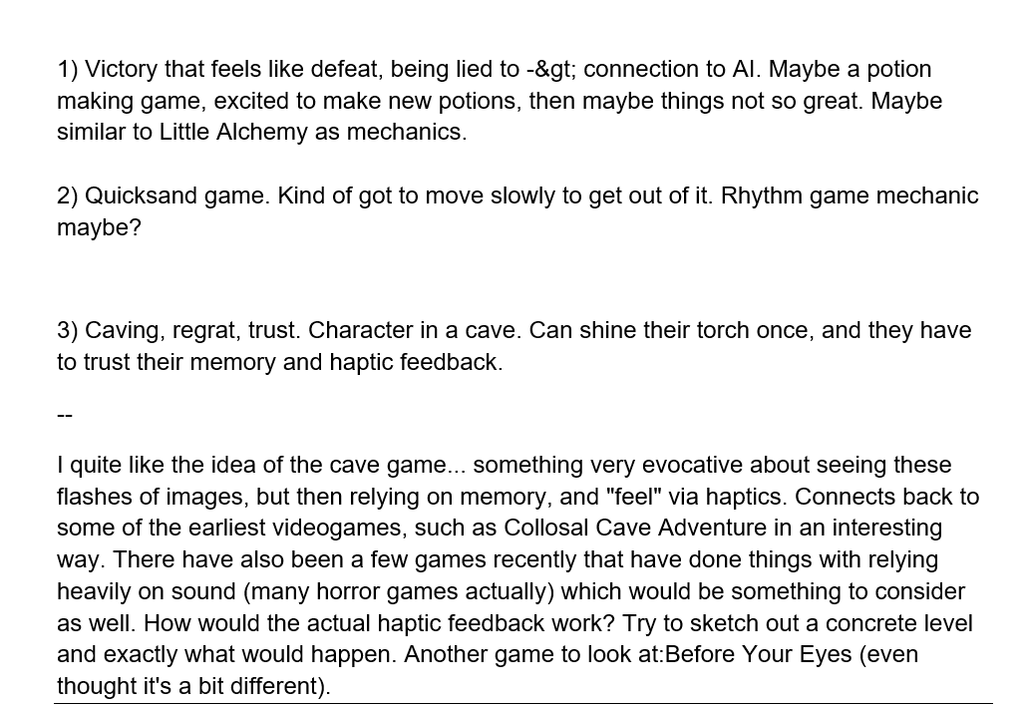
I think Idea three is my strongest idea as it works within the scope of the project. Idea two also does but I feel like there is not much room to expand outside of just escaping quicksand. Idea one I really like but i feel like in order to explore it properly it would benefit more from being a larger game, which is not realistic for the amount of time we have for this project. I’ve also always wanted to experiment with isolating senses within games and utilising haptic feedback and sound design would be really interesting to explore.
What is the experience?
The player will probably feel untrusting in themselves at first, but will have to learn to trust their other senses to figure out where they are. The experience should involve a lot of concentration and hopefully a lot of pride when you as the player manage to make it through a certain area of the cave.
What is essential for that experience?
Researching games that have been blind accessible in the past
Researching how to figure out your surroundings when you cant rely on sight
Researching what feedback you might experience within caves?
Consider how you build trust in yourself, gaining familiarity with not only your surroundings but also your methods of navigating the space, everyone has a different way of working through each section, there is no real set tutorial for how to progress, you use whichever method works for you
Pride? How the more independent you are the more proud you feel when you complete it
How can my game capture that essence?
A lack of visuals? Maybe there will be a torch but not a reliable one?
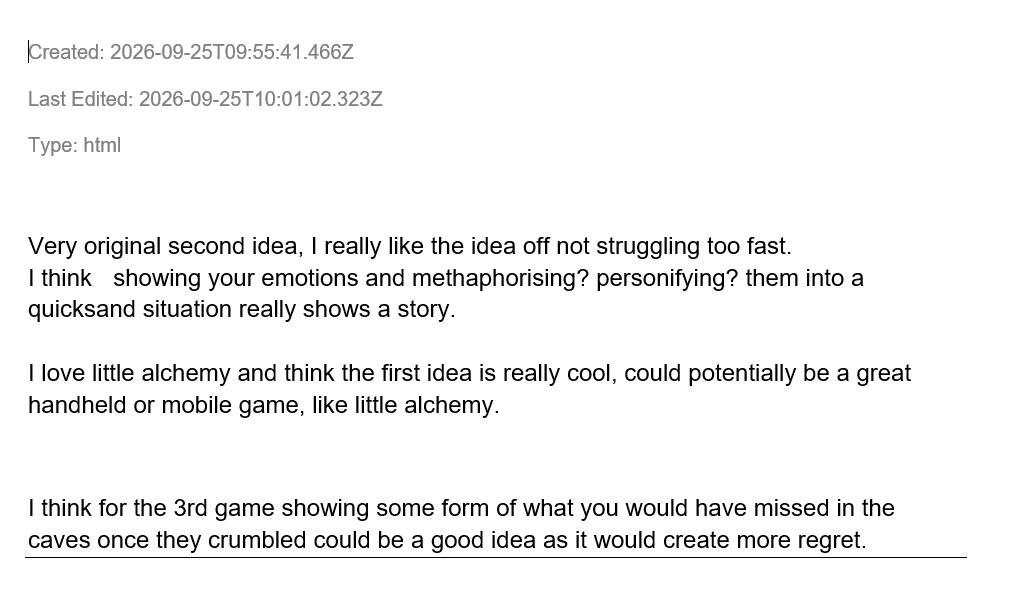
I think the idea of leaving things behind in the caves to have a stronger sense of regret is a good idea, but as my concept is changing away from regret, i have decided to leave this idea.
I do need to consider the backstory behind why they are in a dark space. I wanted it to be a metaphor for something but im not sure what yet.
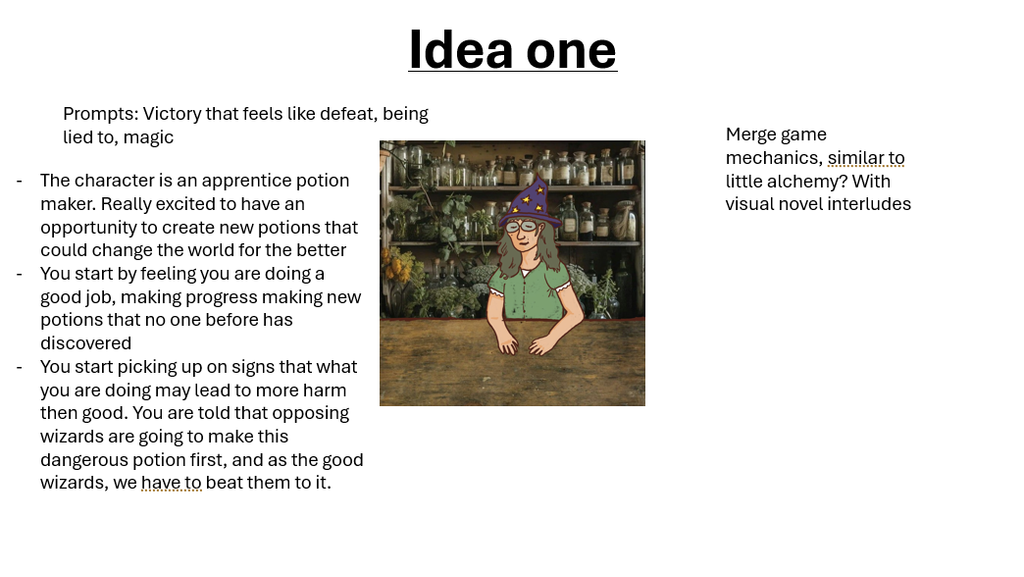
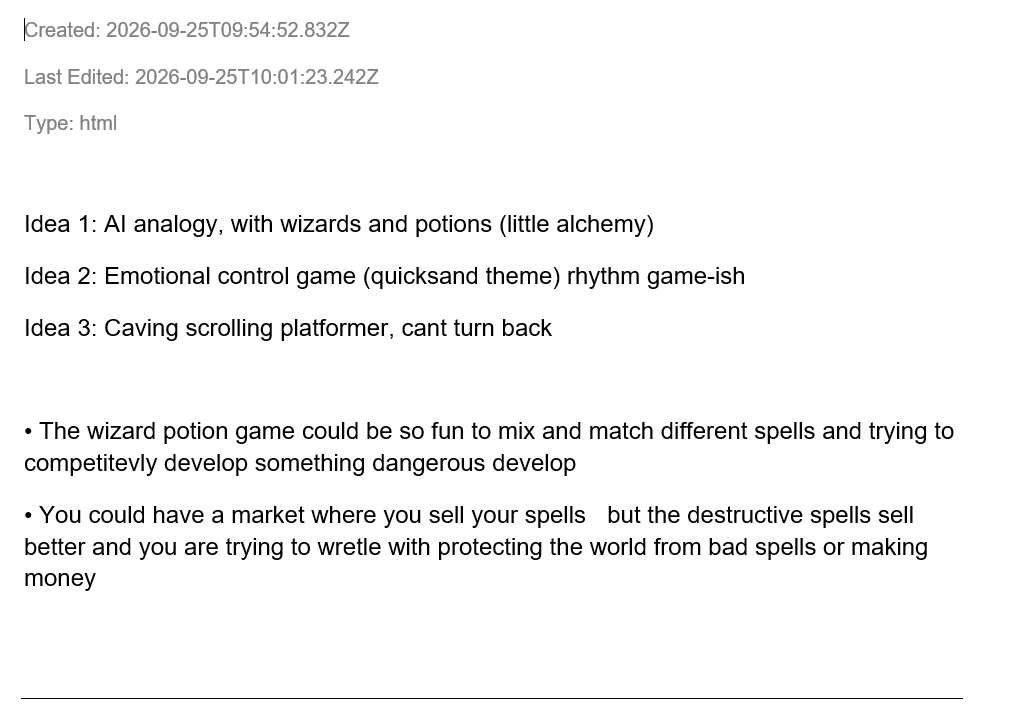
I liked my idea for the wizard game but i feel like the scope of it is too big for this project
I was really battling with the idea of having visuals in my game as the whole reason i chose the idea was to experiment how far you could push a game if it had no visuals. Therefore i have decided to completely remove the screen from the game and so i don’t want the vision to slowly decrease in my game, though it does seem like an interesting concept. I am going to research hearing in other games and a lot of horror games, such as FNAF 4, would be a good place to start.
Conclusion from feedback
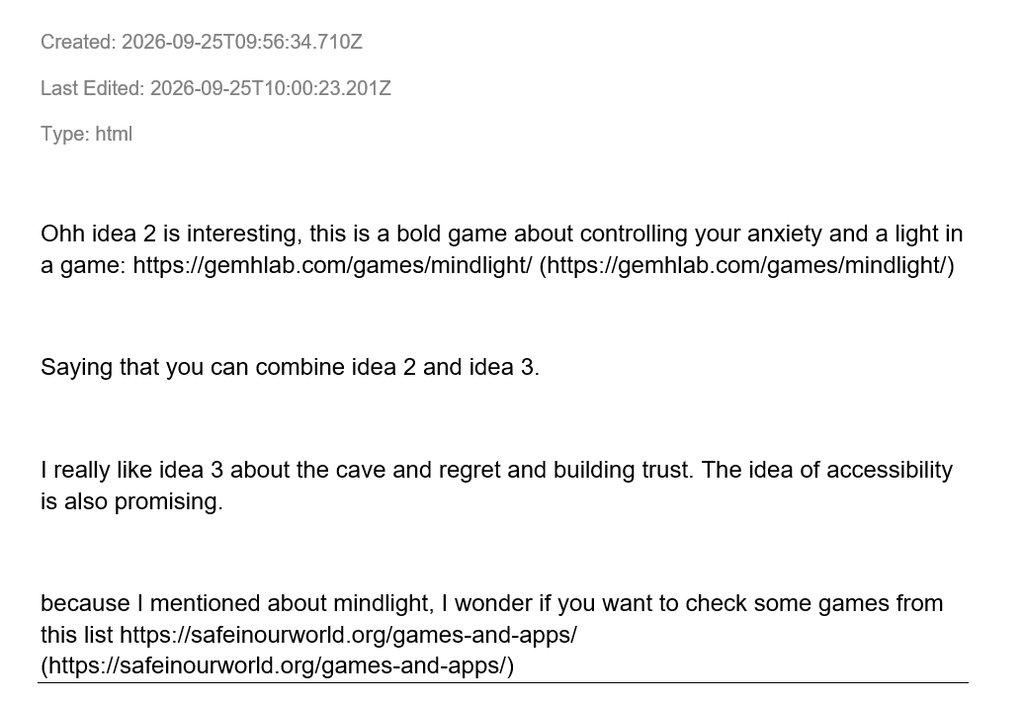
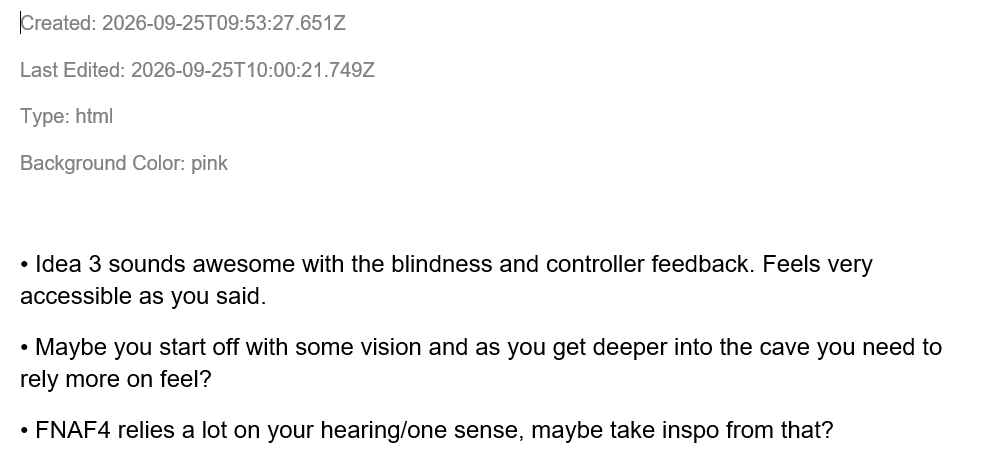
Although I love the first idea and a lot of people seem to like it, I think the scope is too big for this particular project, and I might make it in my own time as a personal project. The third idea seems to be the next popular which I think could work within the scope and I’m also really interested in seeing if games can still hold up when they lack visual cues. The suggestion of looking into Colossal Cave Adventure is something I hadn’t considered, that game does of course lack visuals because it is completely text based. I also had a suggestion from Lisa to look into accessibility in games such as The Last Of Us as there are certain settings that can make the game easier for people who need more visual or audio cues. Also looking into the FNAF games (although i haven’t played FNAF 4 specifically so I should look into that) is a good suggestion as I know, at least in the first game, you have to listen out for footsteps.
What might the designer want players to feel, think or do?
The designer wants to emphasis the powerlessness of the player as nothing more than a playing piece within a fascist regime. They do this through making every action the same, every day, and yet you are so detached from the effects, as all you have the power to do is sift through papers. Every action is supporting some power bigger than you and you are reminded of your poverty and hopelessness at the end of every day through the stats of how much money you can spend on food etc for your family. You are detached even further from your fellow humans as you are in the booth, whereas everyone else is on the other side. You are more machine than human and yet everything you do has a human effect on you. The colour scheme is also very bland which adds to the monotony of the gameplay, and the soundtrack is also very repetitive. It trudges on with the two bass notes in an exhausted way, while still suitably building the tension.
Mechanics: Reading papers, stamping the papers, clicking on what your money goes towards
Dynamics (What players actually do; their strategy): Choosing what you will do with the little power you have, whether you will disobey your orders and risk your life or continue following what is asked of you etc
Aesthetics (What they interpret; their emotional response): An overall sense of powerlessness