History
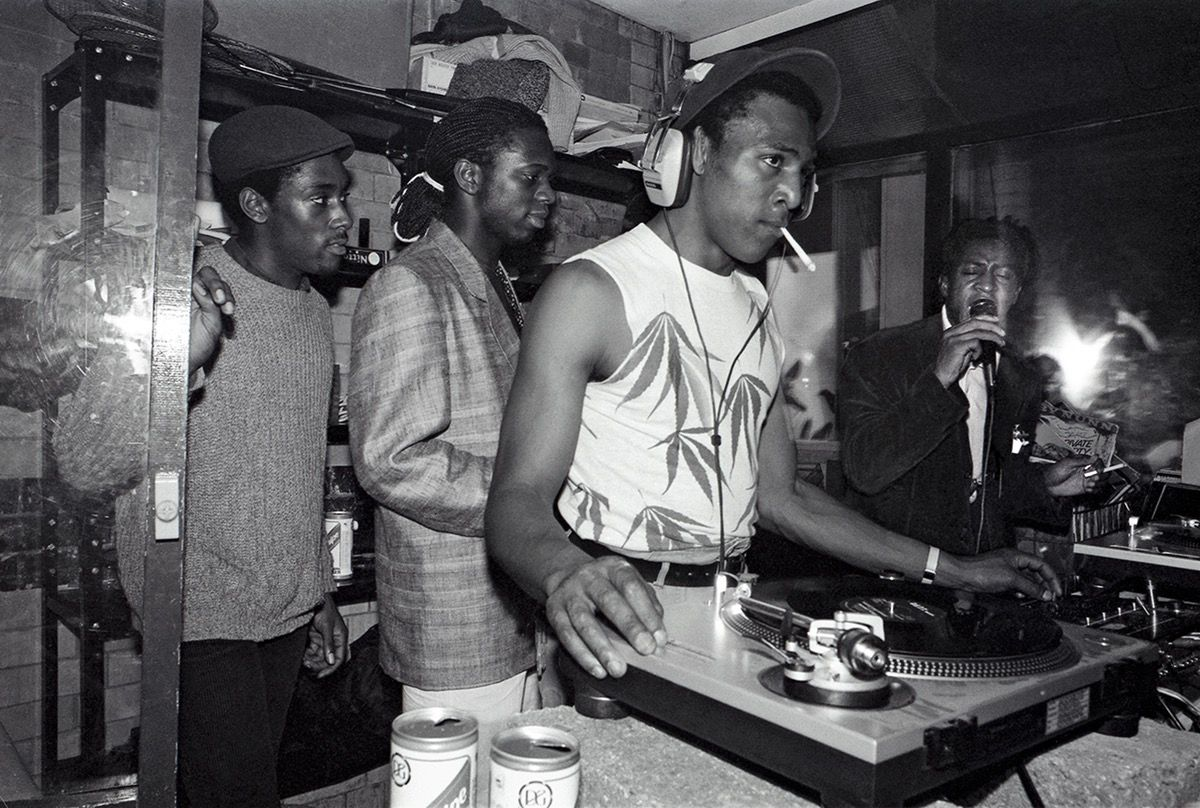
Just before the turn of the 1990’s, electronic music artists within the UK iterated on popular 80s genres from overseas such as acid house in the United States, quickly resulting in an array of different genres arising and being played in underground parties and gatherings around the country. This lead to an underground cultural frenzy intersecting both music, art, identity, & politics that came to be given the overarching label of “rave” culture, already a popular term for underground music parties two decades earlier.
Music of this era spans a large amount of electronic genres but many can be identified by the use of now-iconic sounds, synths and production methods.
Acid House
Acid music in the UK is a direct evolution of the same genre originating in mid 80’s parties in chicago, making heavy use of bass synthesisers such as the Roland TB-303. The 303 was very unpopular at the time of its release in 1981 for its sound being entirely unrealistic compared to the bass guitars it attempts to emulate, but artists quickly found that tweaking the filters the right way results in a trademark bouncy, “squelchy” bass sound which came to define the acid house genre. While other inspirations for acid include genres like disco in which later songs made use of the 303, the actual name for the genre has debated origins. Historians widely agree the etymology centers around the 1987 song Acid Tracks by the house music group Phuture, it being named after the use of psychedelic drugs used at the clubs where it was first played before widespread commercial release. After the genre was discovered by UK artists in clubs in the US and Ibiza it quickly became the foundation for what we now know as rave music.

The Roland TB-303.
As well as within legal dance clubs, a large amount of acid music was played at parties and illegal underground raves, the climax of which happening around 1988, a period known as the Second Summer of Love.
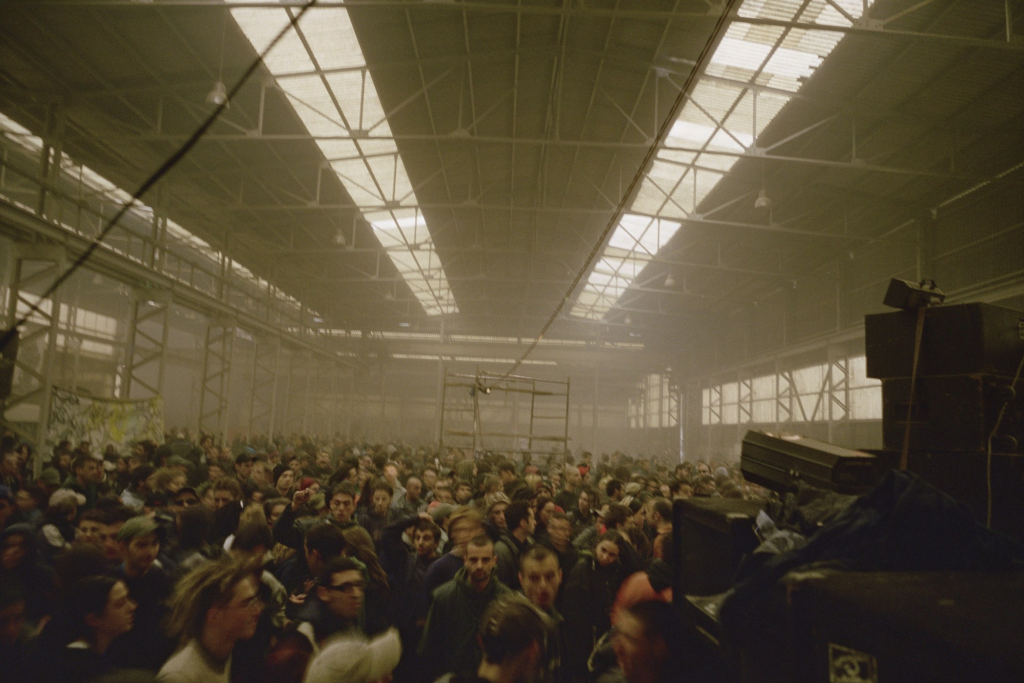
Most of these raves were hosted in empty warehouses, as police started to find and shut down after-parties hosted after popular dance clubs closed. They were advertised via flyers passed around as well as electronic pager messages sent around cities like London and Manchester. This era was also the unanimous with the use of the drug, MDMA or Ecstasy. This drug provides the user with a feeling of love and euphoria but also causes an extreme feeling of dehydration, so the distribution of water was vital at many events. Below is a documentary I researched detailing the use of the drug and how it shaped the formation of the rave scene in the UK:
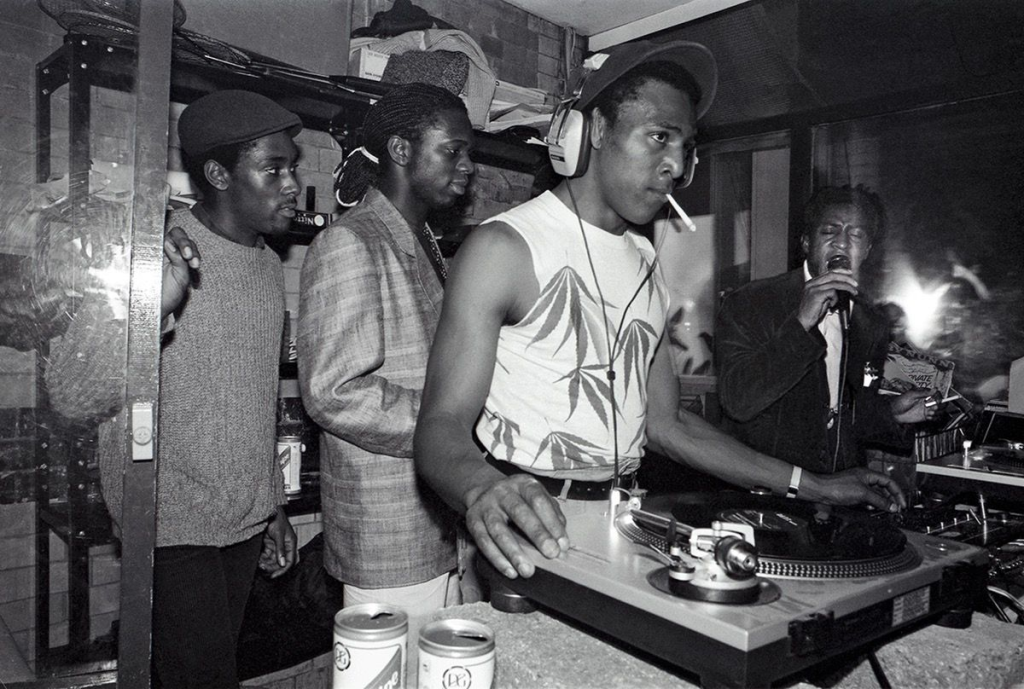
Many attendees to raves recount police starting to shut them down, quoting stories of ravers having to wait in service stations around the M25 orbital motorway for pager messages in the night revealing their locations, as well as DJs grabbing their boxes of vinyl records and scattering at the sight of police presence.
In 1991-92 the scene started to shift away from illegal parties and more towards legally conducted festivals in the face of local councils handing out large fines for disorderly gatherings. Ongoing tensions between the government and ravers resulted in in the UK government taking official steps to crack down on the “free party” scene, culminating in the Criminal Justice and Public Order Act 1994 prohibiting any open-air playing of electronic music at gatherings with more than 100 people, as well as criminalising any suspected preparations for raves. The Act defined electronic music as follows:
‘“Music” includes sounds wholly or predominantly characterised by the emission of a succession of repetitive beats.’
The creation of this bill led to extreme backlash, causing mass protests all over the country. One such example was a cyberattack now known as the Intervasion of the UK. Launched by a group of radical tech-hippies from the United States (calling themselves the “Zippies”), the operation was a denial-of-service attack that flooded the email inboxes of multiple UK politicians as well as destroyed their fax machines through printing of garbage data. This was the first notable example of what is now known as “hacktivism” or using the internet and modern electronic technology as a tool for civil disobedience.
Another notable example of protest against the bill was the British electronic music duo Autechre’s 1994 Anti EP. In particular the EP included the song Flutter, a 10-minute track advertised as having non-repetitive rhythms, allowing it to be “played […] under the proposed law”, with the artists advsing “a lawyer and musicologist [to be] present at all times to confirm the non-repetitive nature of the music in the event of police harassment.” While obviously tongue-in-cheek this release was self-described as a political statement in favour of personal freedom.
The EP recieved positive reception upon its release and Flutter has since become known as one of the most beloved IDM songs of all time, and a pioneering track of the genre.
The Rise of Hardcore
While Acid house counts as the first “rave” genre, there were many others that sprung up in the UK in the early 90’s under the same umbrella from a wide variety of influences.
One notable example is breakbeat hardcore. This genre mainly revolves around the sampling of breakbeats, such as the famous amen break pattern shown in my previous presentation, as well as an array of other sounds such as sampled orchestral stabs and piano riffs, a lot of which being created using “ROMpler” or sampler keyboards such as the Korg M1. The genre also incorporated elements of Techno from European countries like Belgium, mainly its distorted four-to-the-floor kick pattern. A well-known track that serves as a classic example of all these elements would be Your Love by The Prodigy:
The rise in producers making hardcore rave music arose from the proliferation of music software for home computers like the Atari ST. Examples include the audio workstation Cubase as well as the “tracker” software Protracker, a type of music composing software already popular for arranging music for video games. In around 1992-1993 the overarching genre began to split off into different genres, such as happy hardcore which focused on Eurobeat influences and pitched up vocals, or the more reggae/dub inspired Jungle genre.
Jungle & Garage
Jungle emerged around 1992 to 1993 and built upon existing influences on the genre from Jamaican sound system DJ’s playing music like reggae and dub, mashing up their heavy, deep bass and melodies with chopped up breakbeats and vocal samples. Maybe the most famous example is the song Incredible by General Levy, now immortalised in the Ali G film in 2002. Overall the genre took the UK by storm, and a large amount of young producers took to creating jungle due to the heavy emphasis on sampling and digital sounds, as home computers with the ability to do so became increasingly common.
Jungle then served as the basis for what would become Drum & Bass, essentially being the cornerstone for breakcore, grime and dubstep in the late 90s and 2000’s.
UK Garage music came as a natural evolution of Garage House, a very specific offshoot of house music popularised by DJs in gay clubs like Paradise Garage in New York and other American cities. UK Garage mixes this influence with Jungle as well as an array of other popular musical styles such as R&B to produce a sound emblematic of London’s multicultural roots. The genre is defined by its much slower tempo sitting at about 130 bpm compared to Jungle and Drum & Bass and includes a “shuffled” 2-step pattern that has now become instantly recognisable. The genre also includes elements such as off-kilter electric piano stabs, string plucks and vocal samples, several of these also frequently seen in Drum & Bass. The track below, Together by 24 Hour Experience, serves as a perfect example of several of these elements:
Both genres have gone on to influence artists up until modern day, some contemporary examples being PinkPantheress and Nia Archives to name a couple.
Leave a Reply