On Monday, we had guest speakers that run an indie game company CANTEEN. They have shared some important tips for teamwork and work flow in general, how to manage our time and stick to deadlines.
Some key takeaways:
- Games are about iteration: being able to experiment and alter things is really important. Our aim is to make a functional prototype, not a fully developed game. It doesn’t have to be perfect.
- Time management means a lot: separating tasks into small deadlines and spreading them out will help regulate the work flow. There should be enough time to iterate and change things before the final pitch.
- Playtest as much as you can. It helps you understand what you need to create. A core part of it is feedback and the way it helps you navigate through the project.
- Pay attention to how people feel, not what they say. Pay attention to what parts of the game people get stuck on, which ones you need to explain in more detail etc.
- Bad days are inevitable: paying attention to your teammates and checking gin on them is essential.
- Setting clear and achievable goals keeps you on track.
- Keep track of your progress and back it up!
- Be aware of dependencies and how they affect the schedule.
The first task I have done was researching the GDD on the things I needed to focus on. The pages I looked into were Overview, Essential experience and Narrative & World. This is where I found the game pillars, as well as the puzzle dependency chart and its description that helped me start developing my own narrative flow chart.
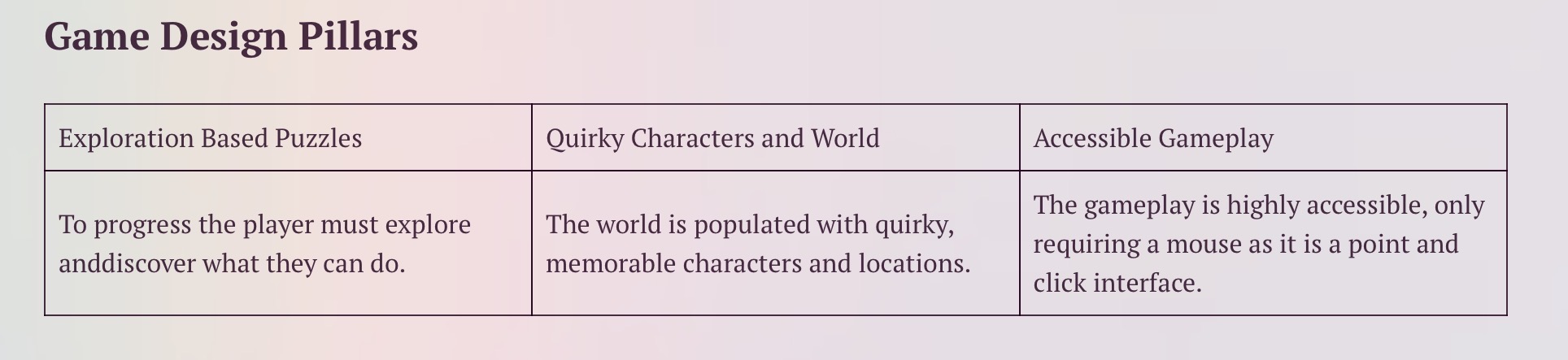
From the provided pillars I could tell that the first two were heavily relying on me as a Narrative Designer. It is my responsibility to make sure the narrative flow and mechanics are working together smoothly, and the characters stick to their gimmick to improve the player’s experience.
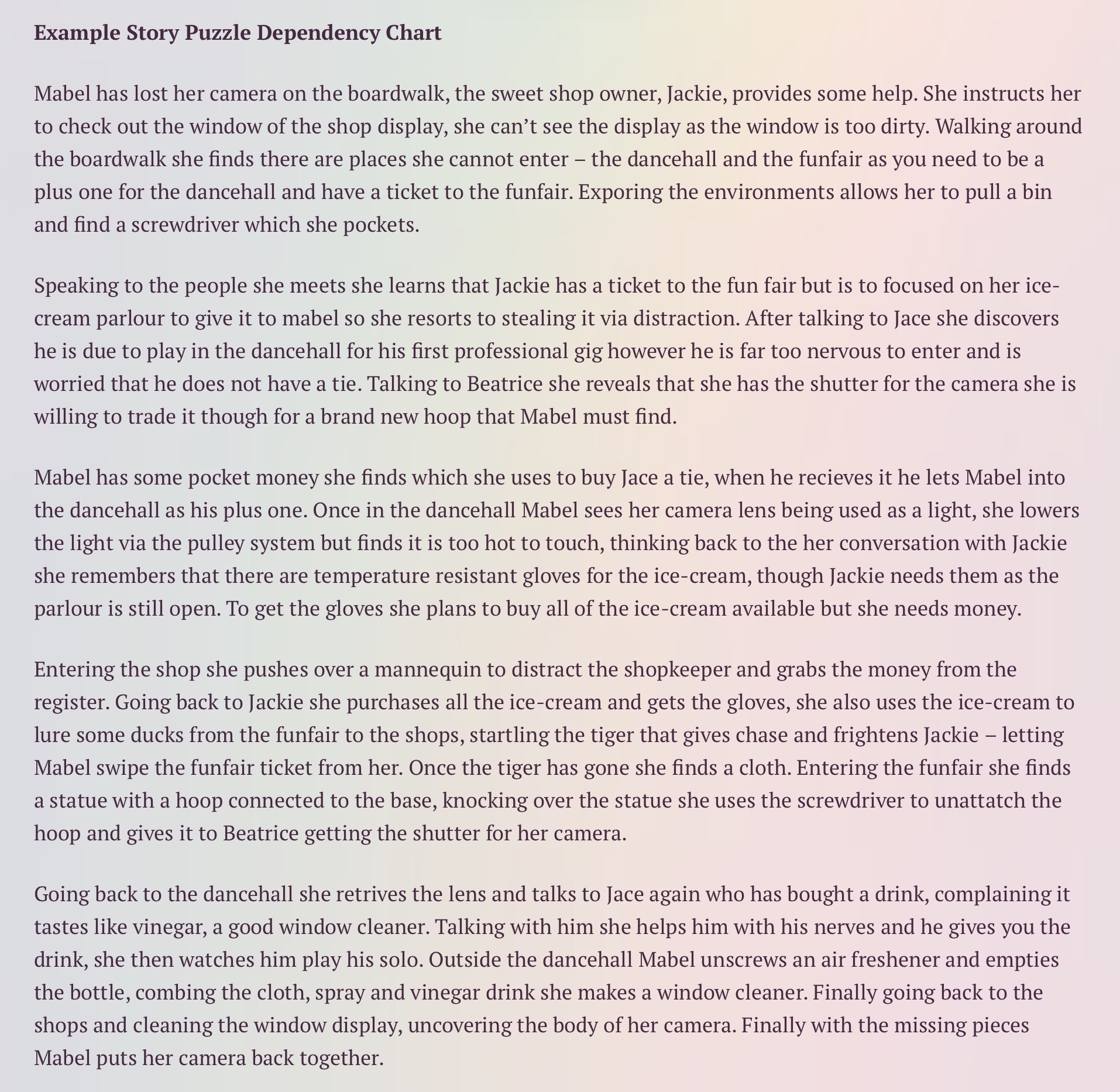
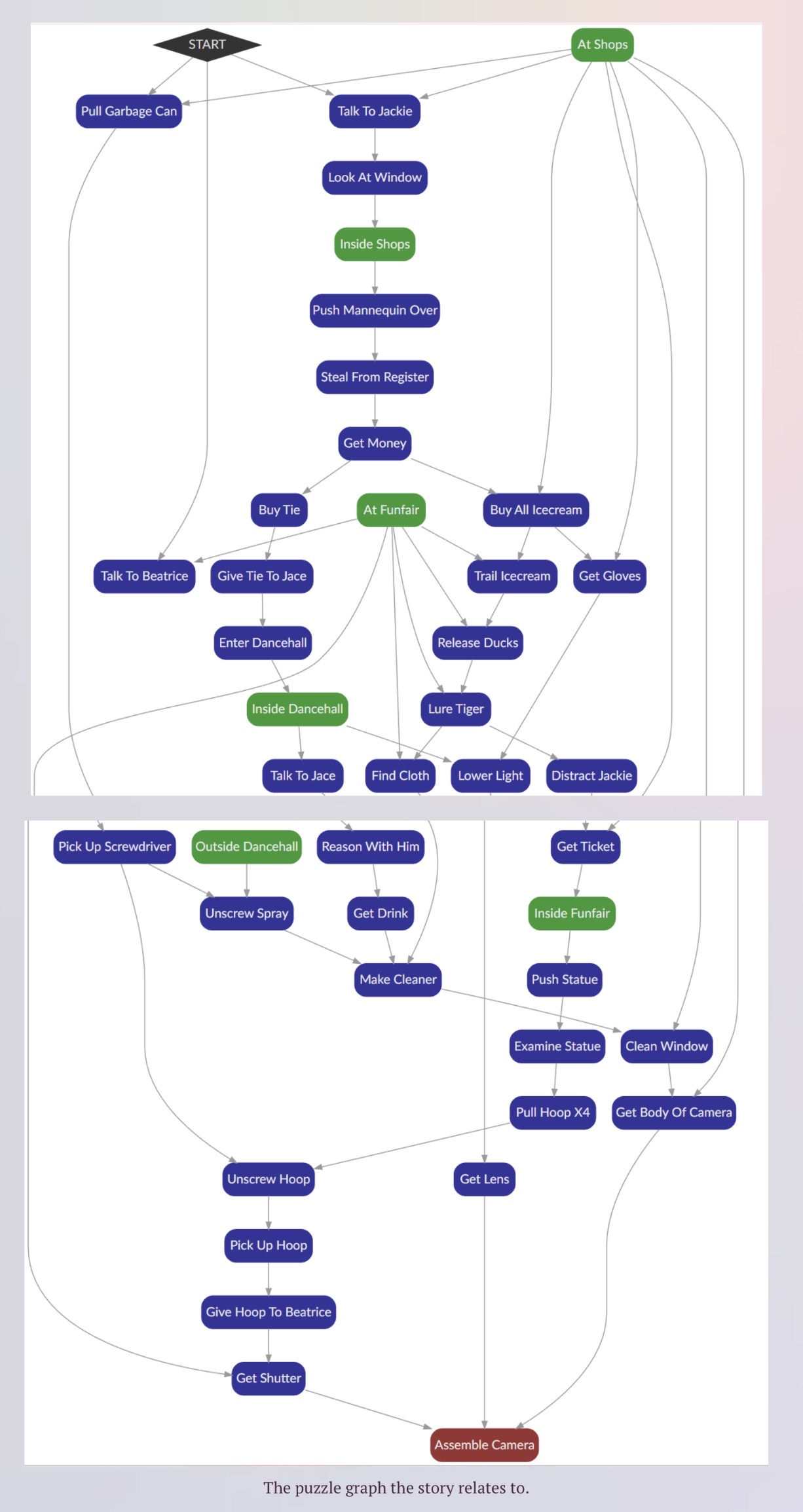
While looking at the chart on itself, things didn’t make much sense. I was lucky enough that Scarlett provided an in depth explanation of it which also shared some parts of the story. She mentioned that the example she added in the GDD was only a possibility in which the story could progress, but we have decided to keep the flow of the plot as it is without wasting too much time on making a storyline from scratch.
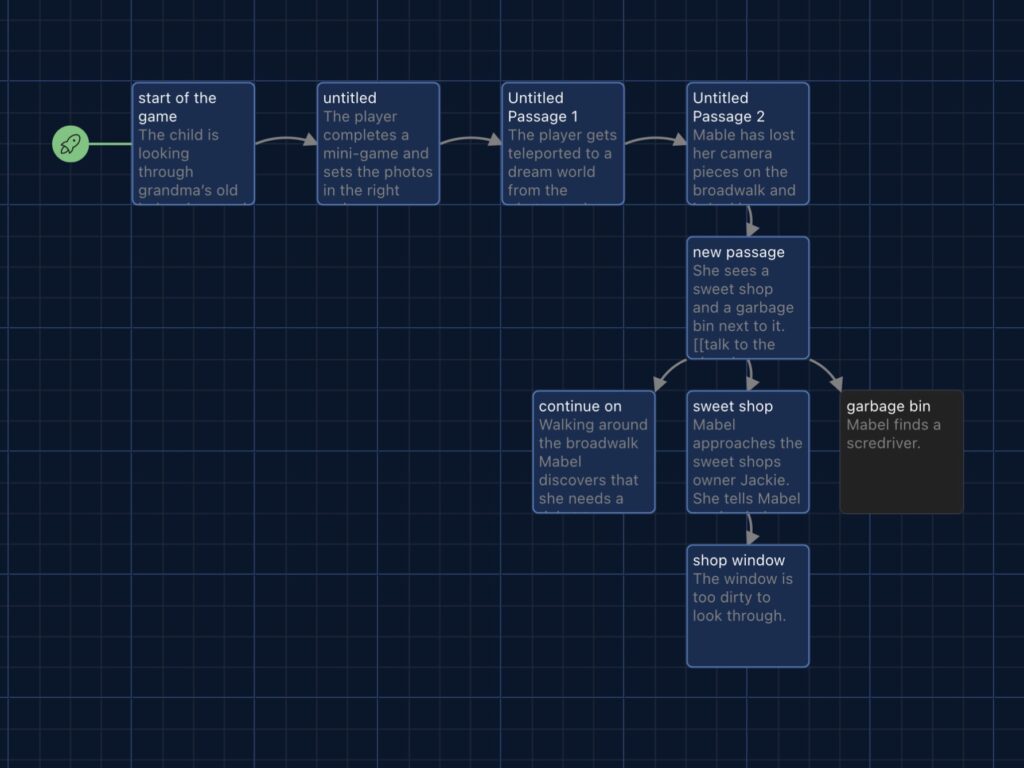
At first, I tried making a simple flow chart prototype in Twine, but it ended up being harder than I expected. Because the pattern of branching in our game is completely reliant on how the player decides to move around, it was very difficult to figure out how to combine everything so it was functioning the way I wanted it to. I think the reason to it was also the fact that the game itself has a component of exploration which is hard to depict through such a simple software as Twine.
I decided to move onto a simpler way of charting. The default app on my iPad, Freeform, turned out to be perfect for this, because it has all the necessary features for creating a flow chart. Combining the existing chart and the explanation, I have managed to create the initial narrative flow chart which looked like this:
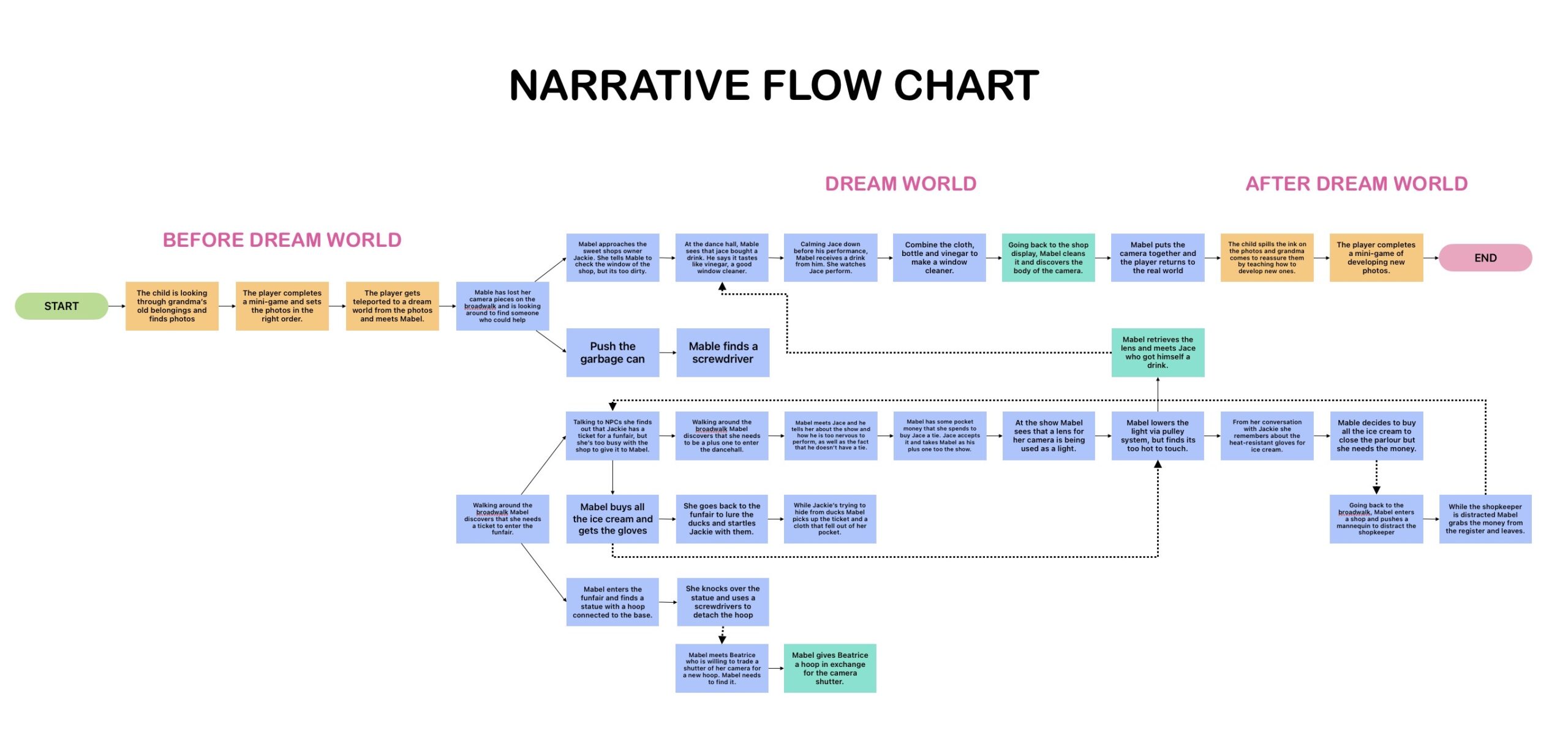
Looks scary and confusing, but it was the only way I could fit every detail from the puzzle dependency chart and also include the storyline. I have asked my team members if it was too much and if I needed to simplify anything, but the feedback was surprisingly positive (not sure if it was out of pity or genuine, whoops). Some original things such as Jackie’s fear of ducks were added to replace “unachievable” details (in terms of time consumption and skills).

I kept updating the flowchart as the time passed. This time I decided to directly connect the results of finding camera pieces to the ending point because this is what essentially would send the player back to the real world.

For Thursday, the day when we were having presentations with our progress shared with the rest of the group, I have updated the flowchart some more. I have added the connecting arrows to things that grew from one another to show how the clues were intertwined.
My main slide for the presentation.
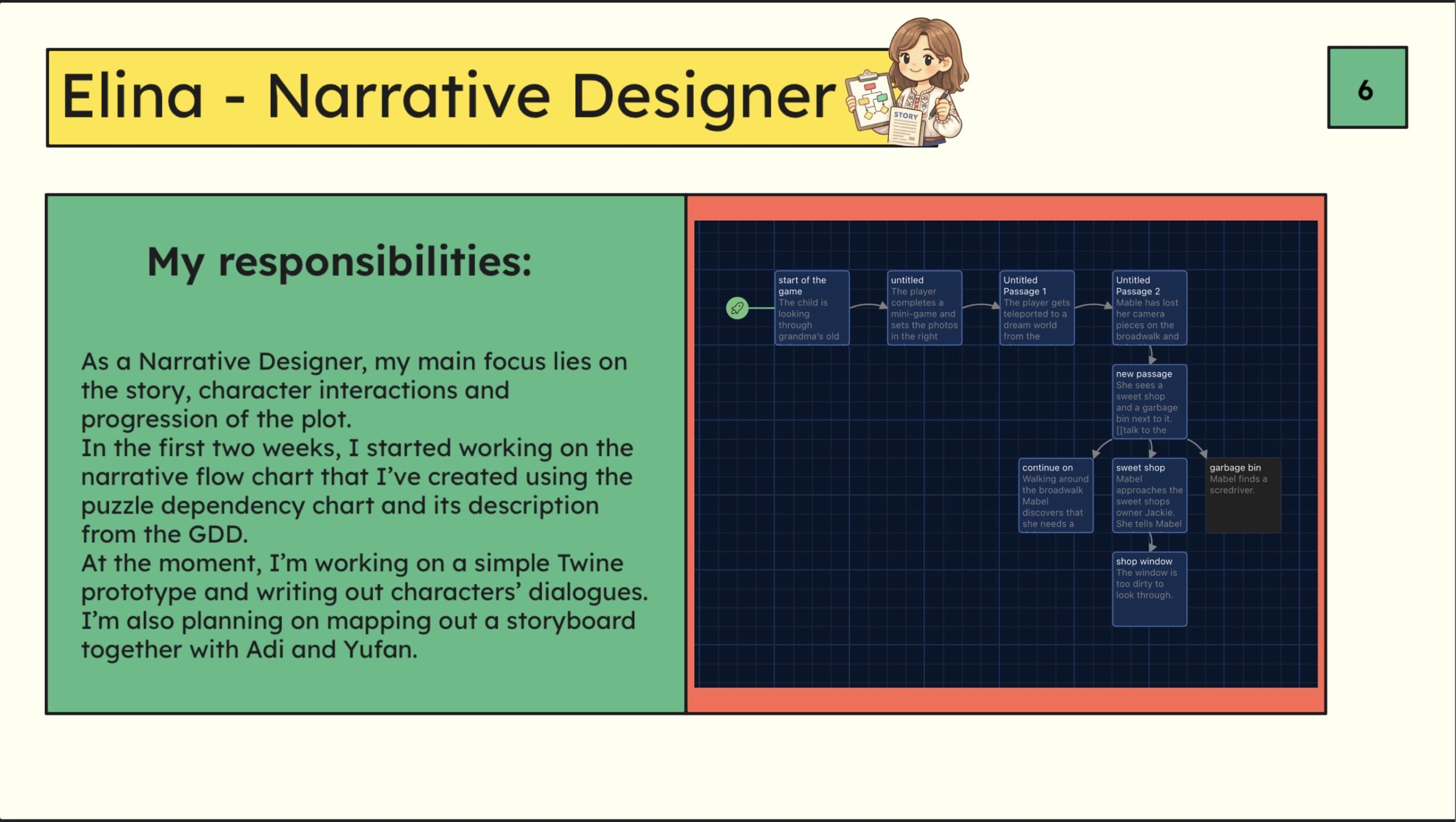
One of the questions we received during feedback was time management, I think it came from the overwhelming look of my chart…At that time it didn’t seem like a big deal because we were doing fine, but over the weekend I did start getting worried I might have unintentionally put too much weight on my team.

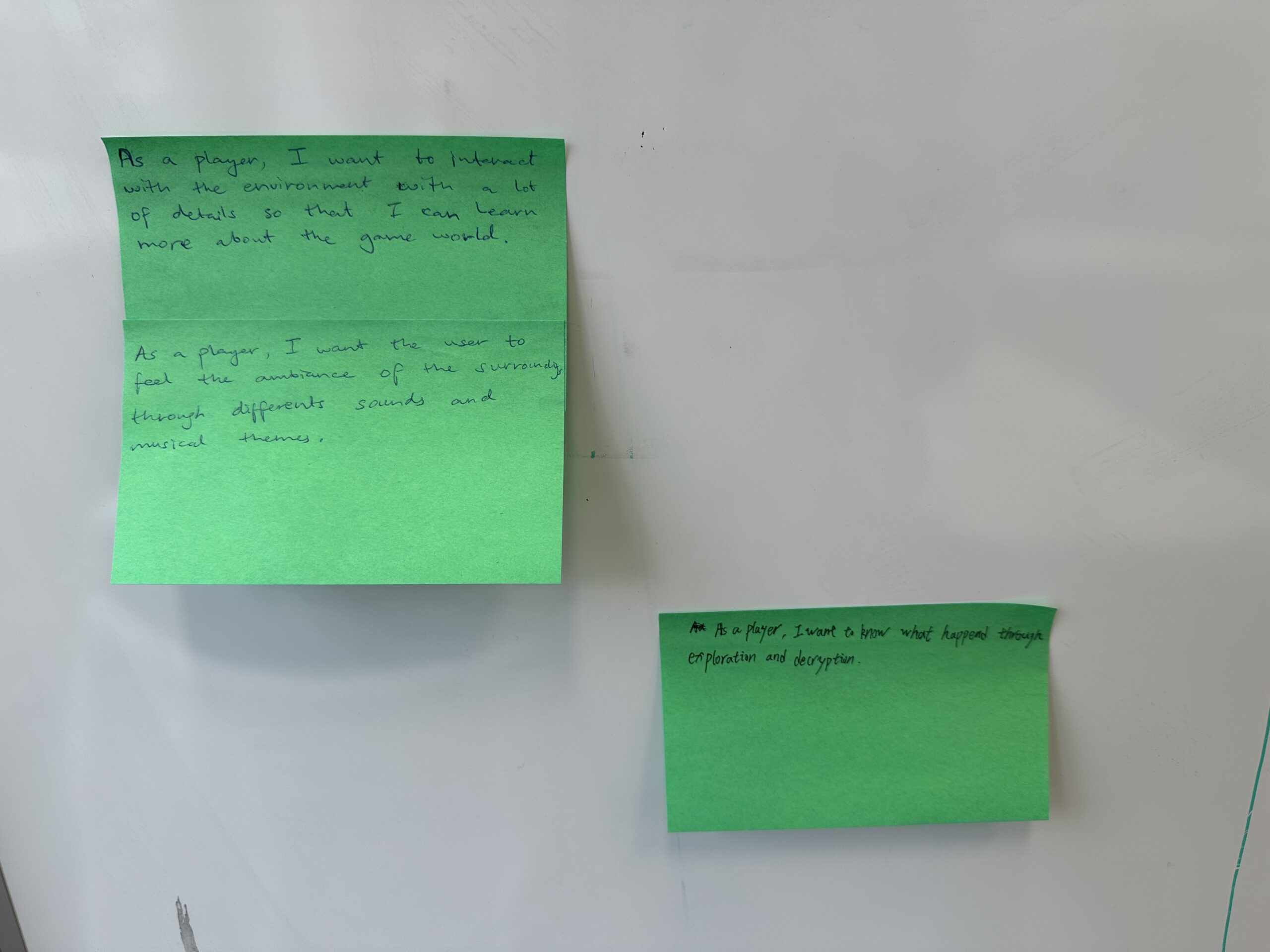

We have also organised the user storied based on the things they included. Making bullet points with specific aspects also really helped because now we could clearly see what was needed from each team member.
I didn’t really “remake” the narrative flow chart but made my own instead, which was honestly what I meant from the start so I don’t really know why I have phrased it that way… Either way, my team’s support put some worries off my chest and they were kind enough to tell me to rest over the weekend.
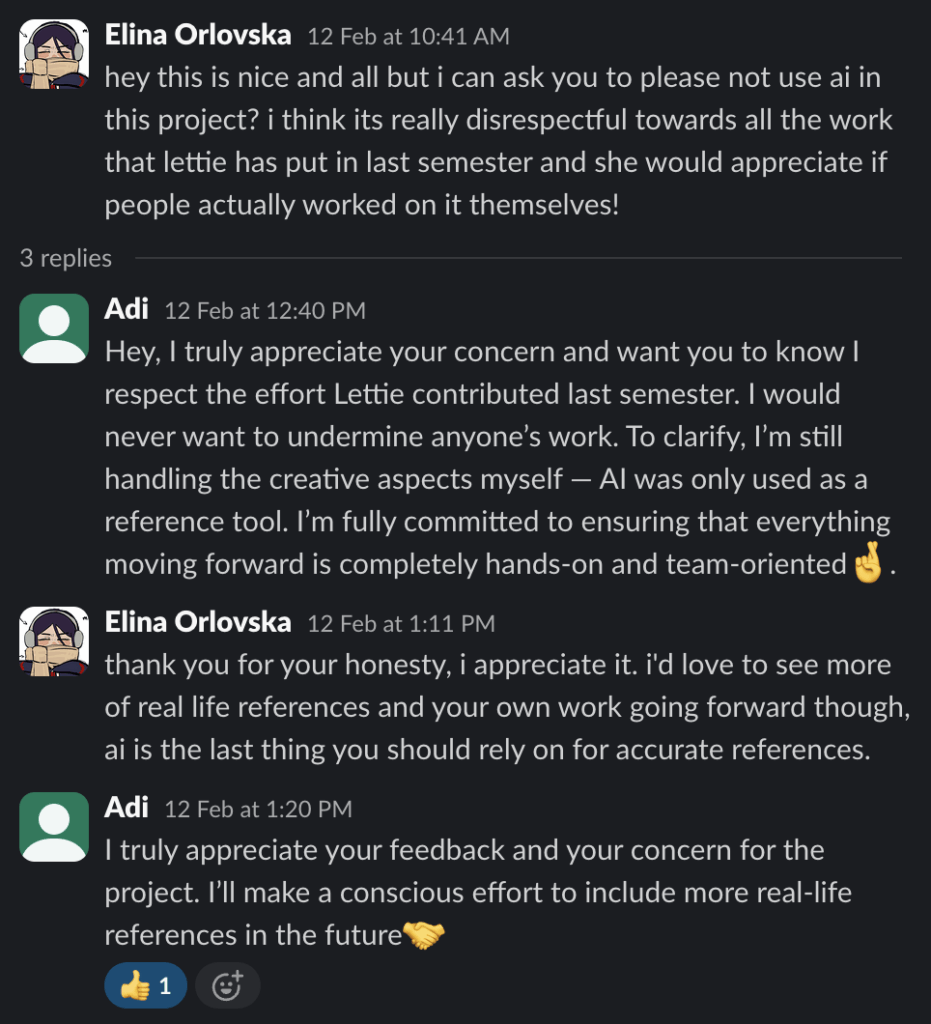
There was also a moment where I had to step up and request to not use AI generated images as “references” for the future work. From conversations that I had with Scarlett beforehand, she shared that she wouldn’t feel comfortable if AI was used in her game concept. I didn’t expect people to actually use it since the idea behind the game was simple and the art style itself was good to take inspiration from.
Leave a Reply