Monday was the day when we had one of the speakers from last semester visit us again. Venny came with a presentation about game testing, different types of tests and how to manage feedback.
Smoke Testing ensures that the most fundamental features of a build are working as envisioned. If a build has failed its Smoke Test, that indicates a show-stopping, game-breaking problem.
User Testing is about all about observing player behaviour – their points of
confusion, frustration, misunderstanding,and delight. It pinpoints what areas of our game need another iteration.
Playtesting isn’t supposed to be perfect, it is made to find bugs and things to improve one at the early stages of progress where aesthetic value doesn’t get in the way of technical development and iterations.
Venny was also giving feedback after the lecture to each team, and I had a chance of showing her what I have done so far. After looking at the flow chart, Venny has said that it does appear to be too big for a quick paced project like this. She advised to minimise the amount of locations and interactions to make it work in time, otherwise there was a big risk to not be able to manage it by the final deadline.
It was refreshing to receive feedback from an outside perspective, but it also made me think that I didn’t get an honest feedback before that from my teammates or people who we were presenting our progress to. I could have fixed this issue earlier, instead of setting my whole team up for a stressful project.
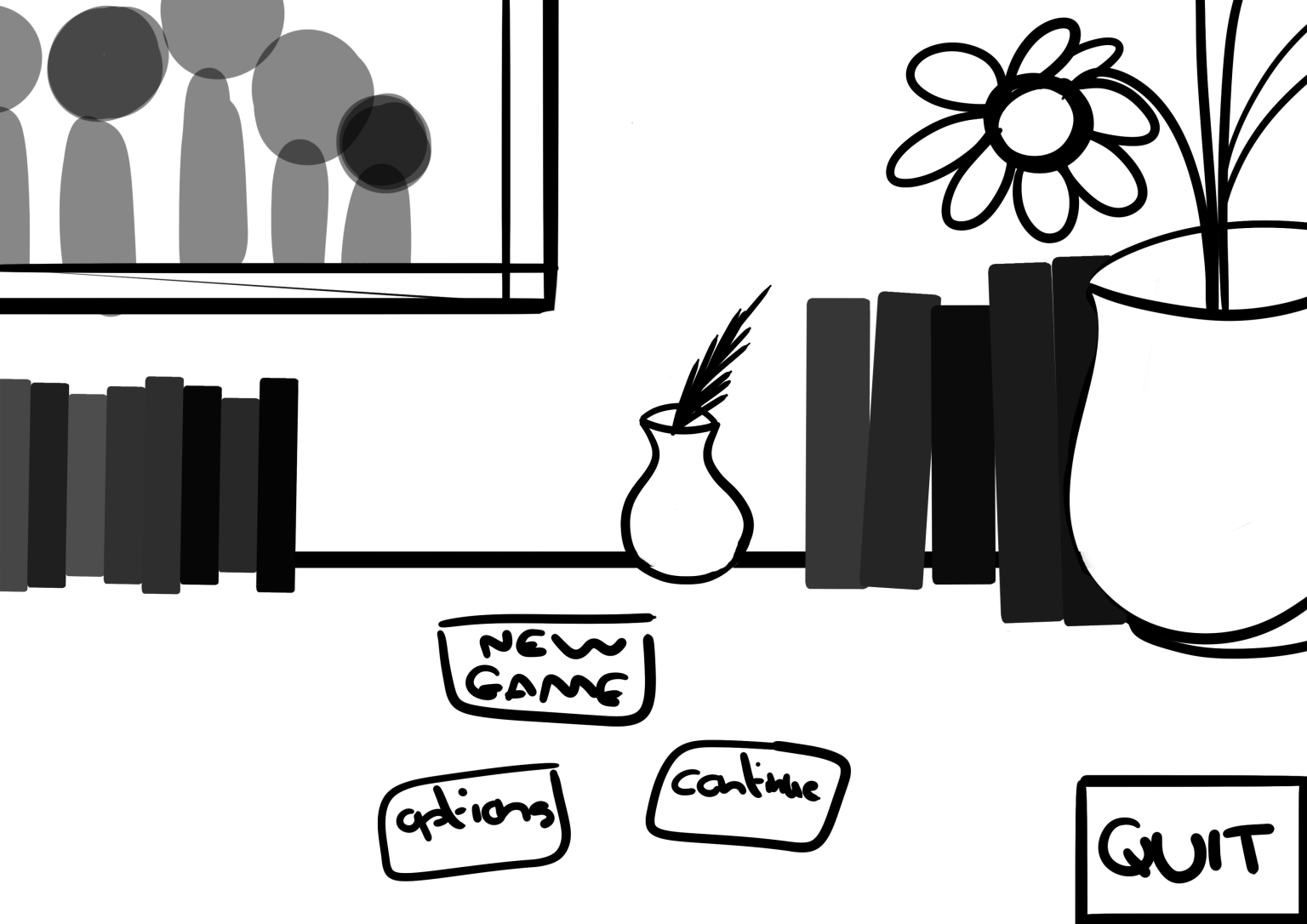
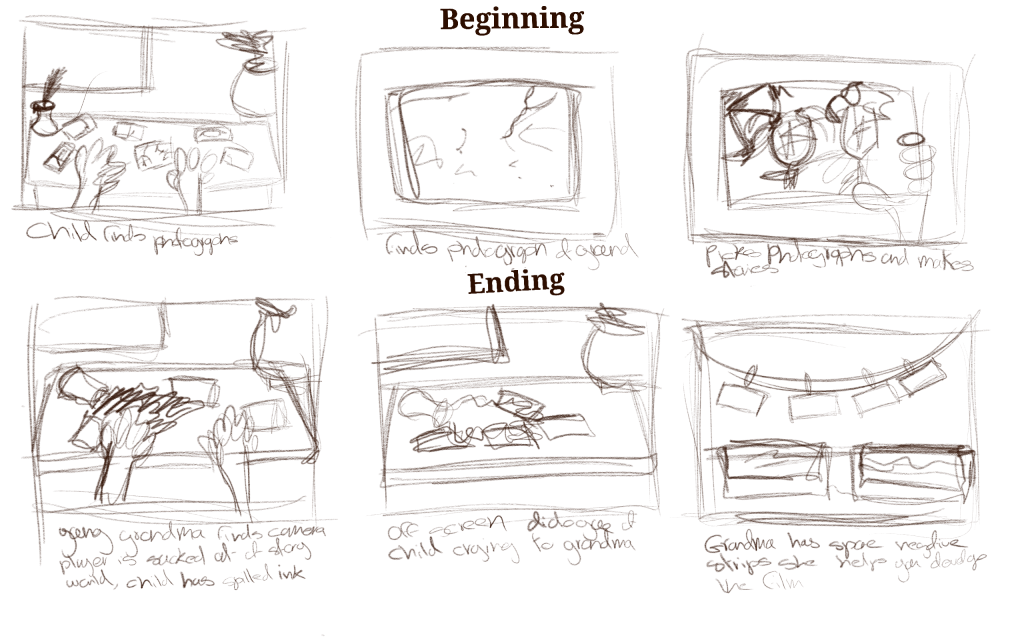
I have also started mapping out the story board for the first playtest. I have looked at the sketches Scarlett has provided on her website to see how she imagined the main menu, UI, and the overall look of the game. Also took a look at the sketches of the beginning and the ending of the game and came to a conclusion that making them into separate illustrations like a visual novel is the most optimal solution. That’s why the first four slides in my story board are positioned the way they are. I wanted to tell a story with minimal narration and clear explanation of what is happening. I also really liked Scarlett’s idea of implementing the main menu buttons as polaroid pictures on the table, so I have decided to keep it as it was.


By Tuesday I had an altered flow chart with less intertwined details and also cut down the amount of locations to three. The amount of interaction with NPCs has also been cut down, and the amount of items they give you has been reduced. Some small details like Jackie’s fear of ducks was also cut out, which was very upsetting for the whole team:(

We agreed to get rid of the mini-games because realistically speaking we just wouldn’t be able to make them all in time. We agreed to stick to a visual representation of events with just the images appearing on the screen and telling the story of how the player got transported in and out of the dream world. There is no need for a complicated animation in a point-and-click game.
On Thursday, we had a lecture about university’s AI policies and the usage of generative AI in our work. We covered the terminology of genAI and its uses, as well as issues that come with utilising it in your projects. At the end of the lesson every team was asked to come up with AI policies for their projects. We have agreed on a complete exclusion of generative AI from our work.
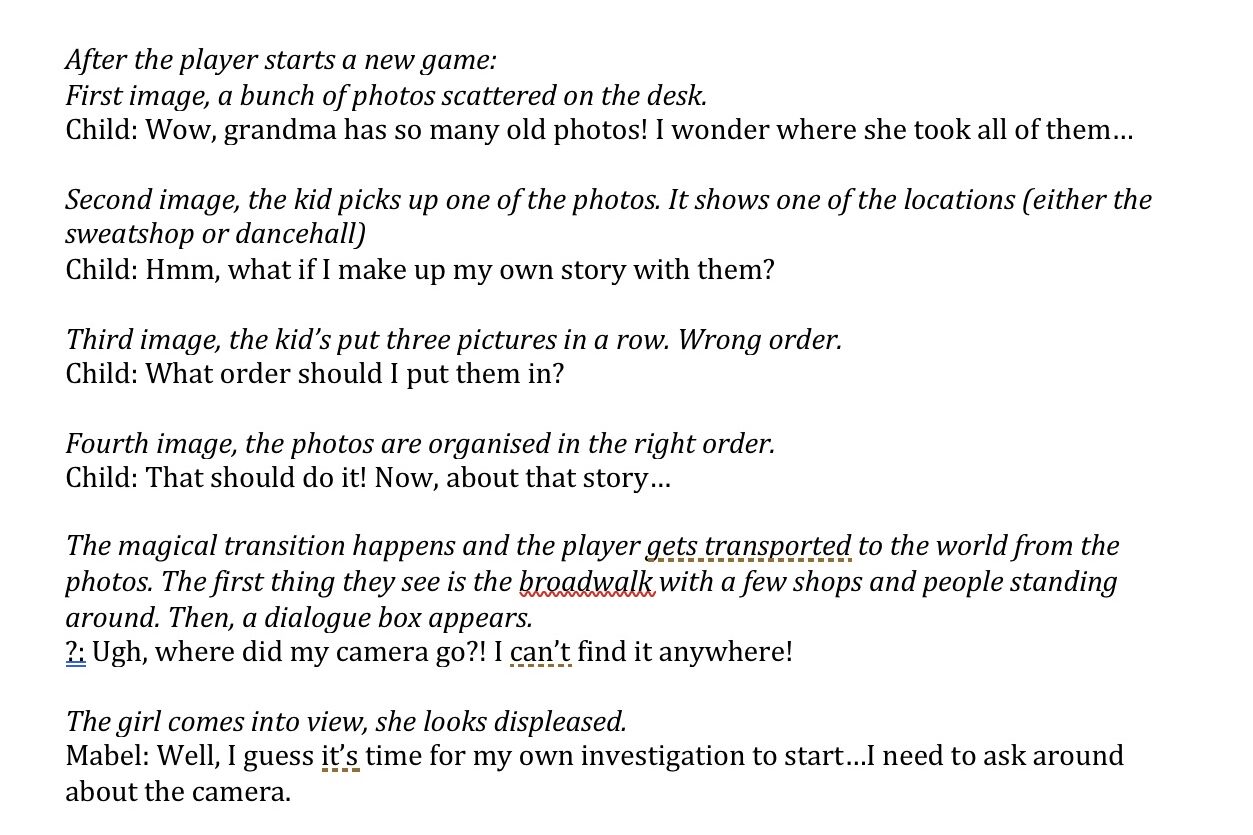
Over the weekend I have worked on the dialogue and character interaction for the playtest. I shared the document with the team on Slack and decided that this will be where all the dialogue will be stored.

Leave a Reply