
This is my prototype made in Unity using my concept art.
Category: GDD
-
-
Sound
The soundscape for the game should be jaunty and jolly, the tone upbeat and curious. There should be emphasis on the walla sounds (crowds) to create a bustling ambient environment for the player even though they do not see the crowds they know they are there.
Ambience
Shops
Bustling Crowds The background music reference Music for prototype Dancehall
Piano solo by Jace Jaunty music for the dancehall More mature music for the dancehall Funfair
Attraction music Circus music Excited crowd sounds Sound Effects
Camera shutter sound for clicking buttons Footsteps Inventory open and close
-
Main Menu and UI
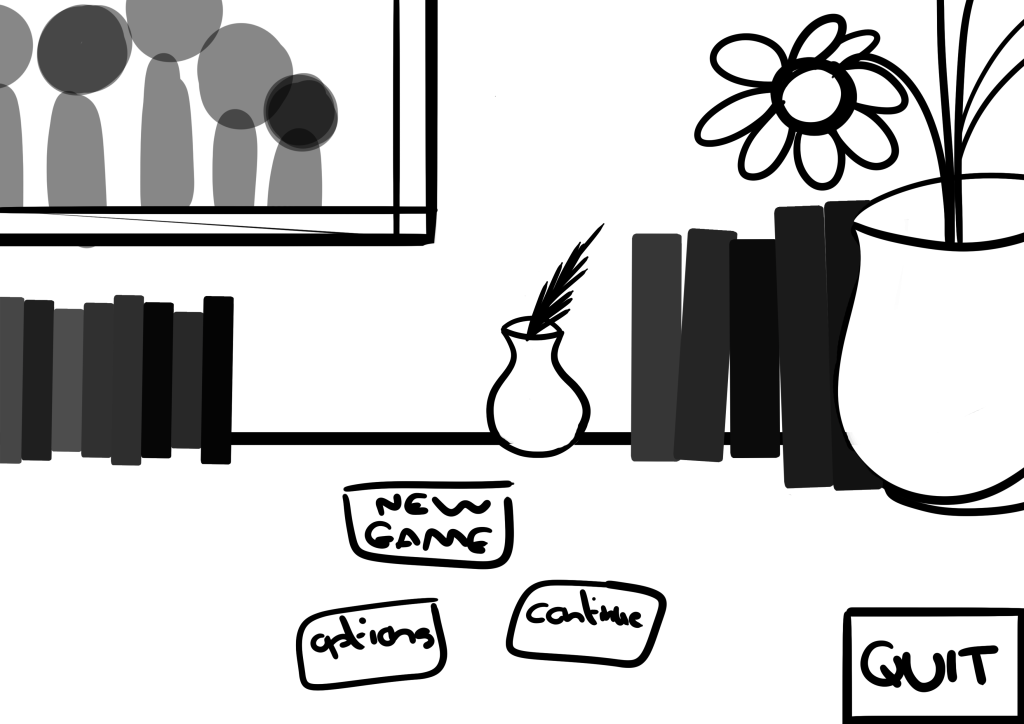
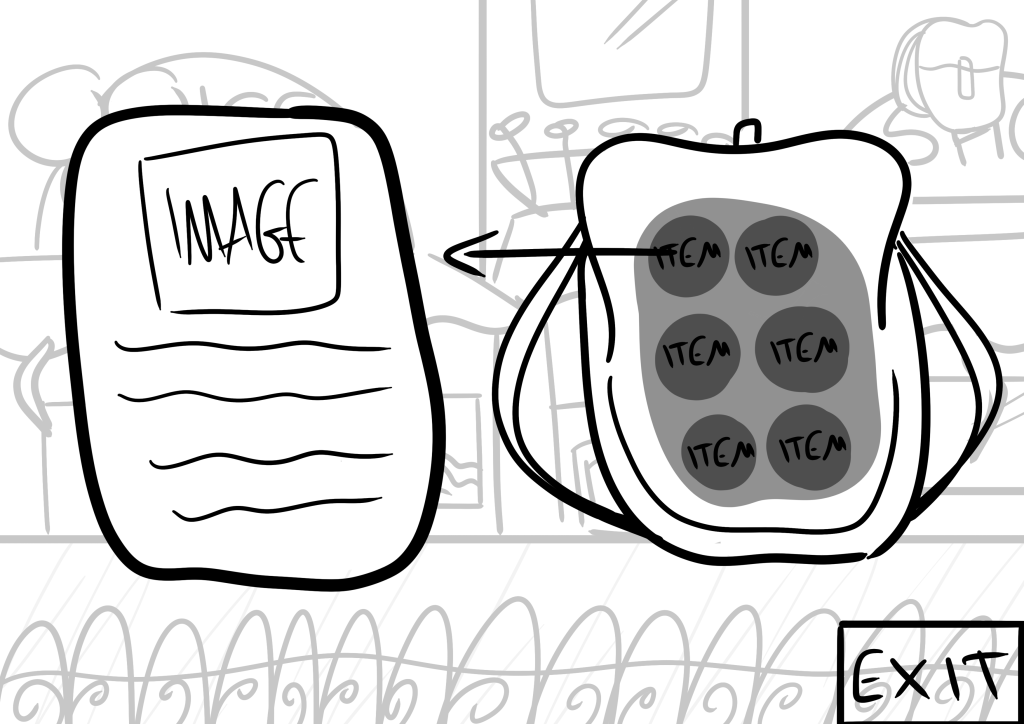
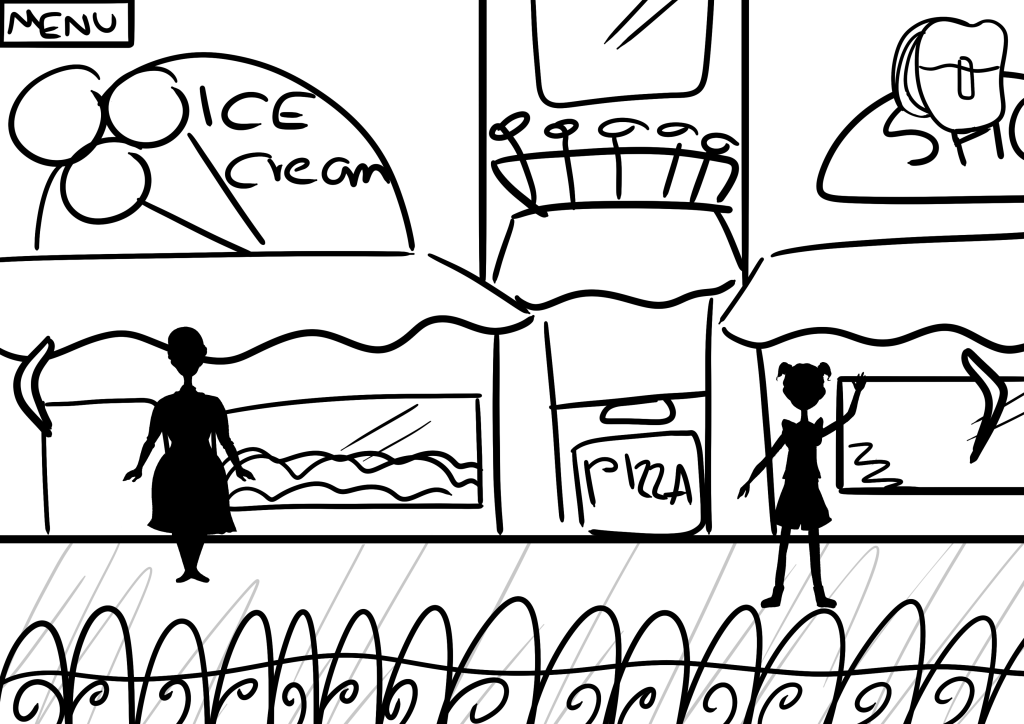
These are simple black and white mock ups of the screens, the style should follow the rules as outlined in the Art Bible.
Main Menu
Inventory View
Normal Screen
Photograph Development Minigame
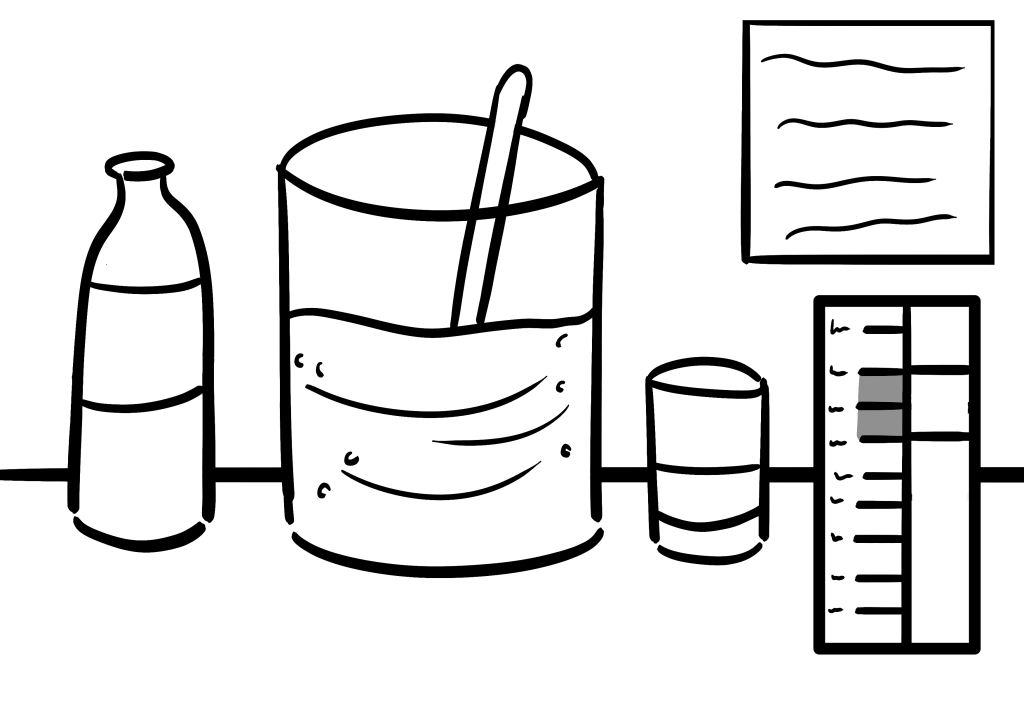
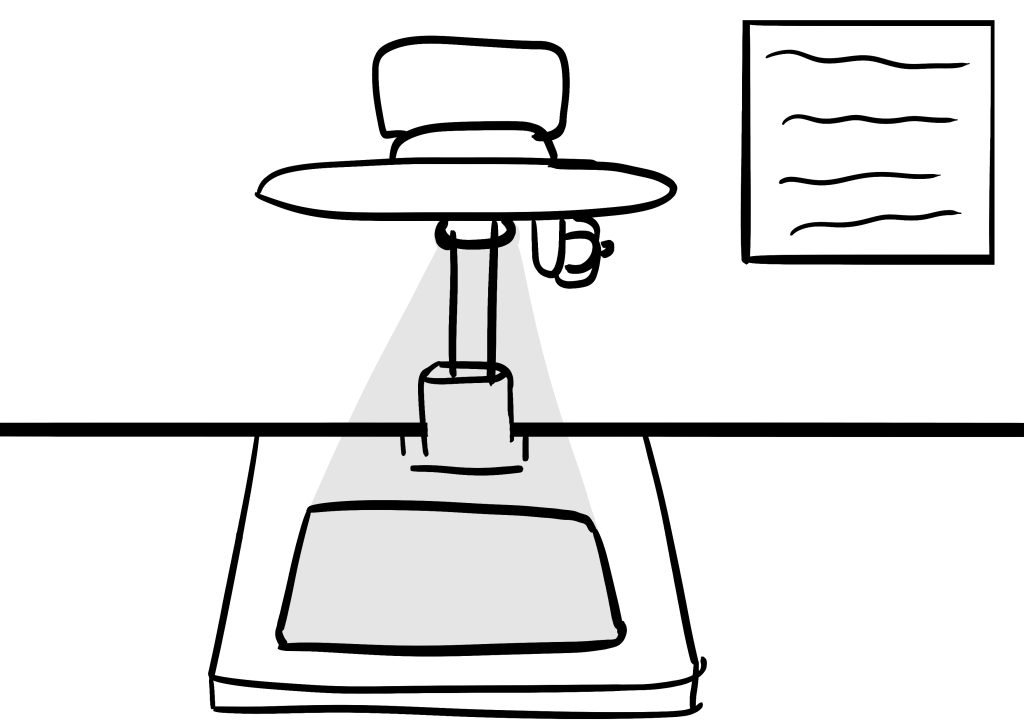
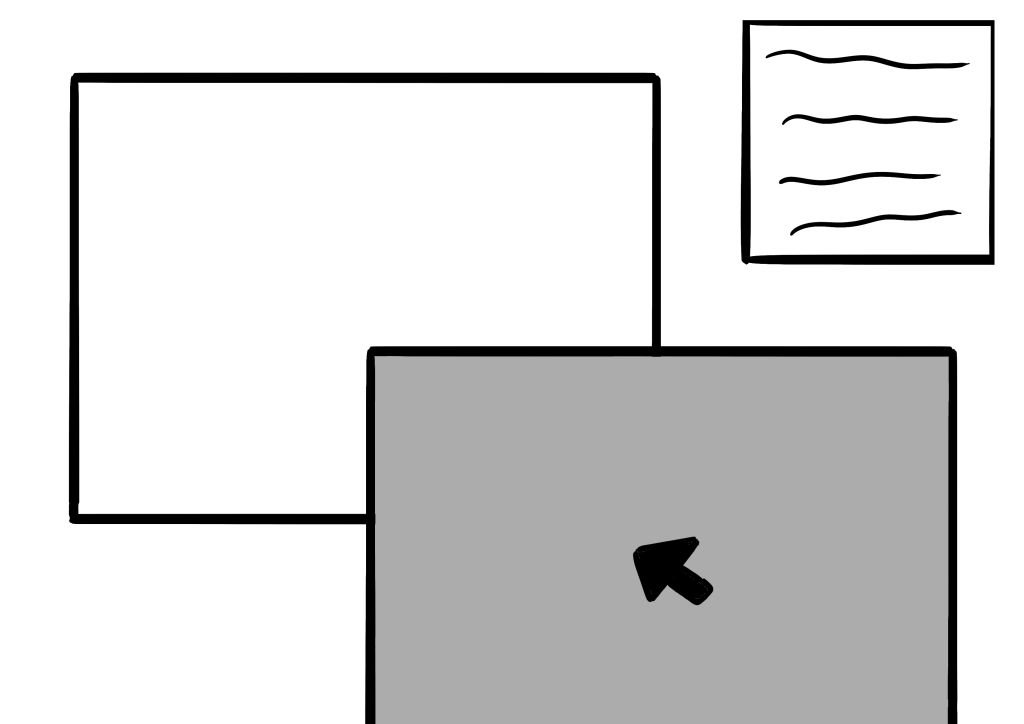
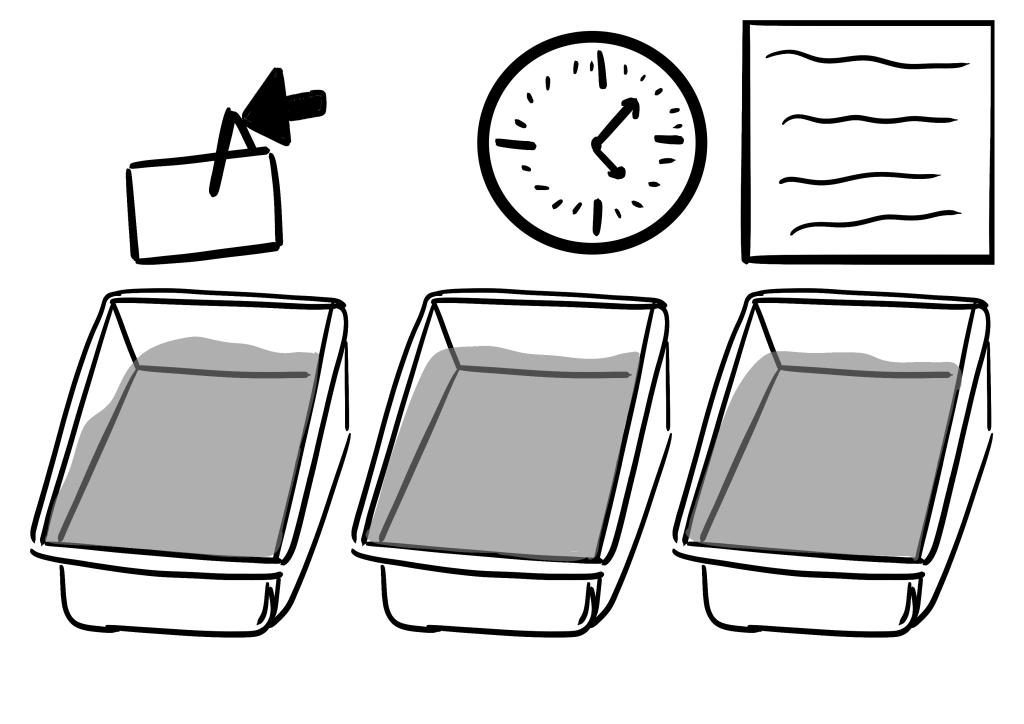
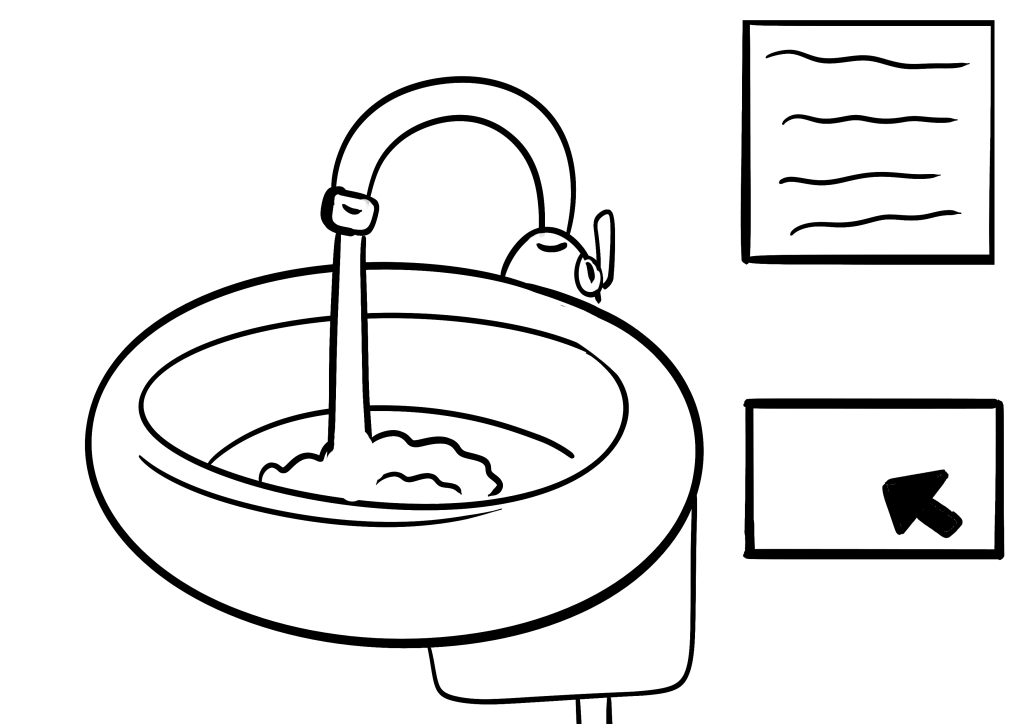
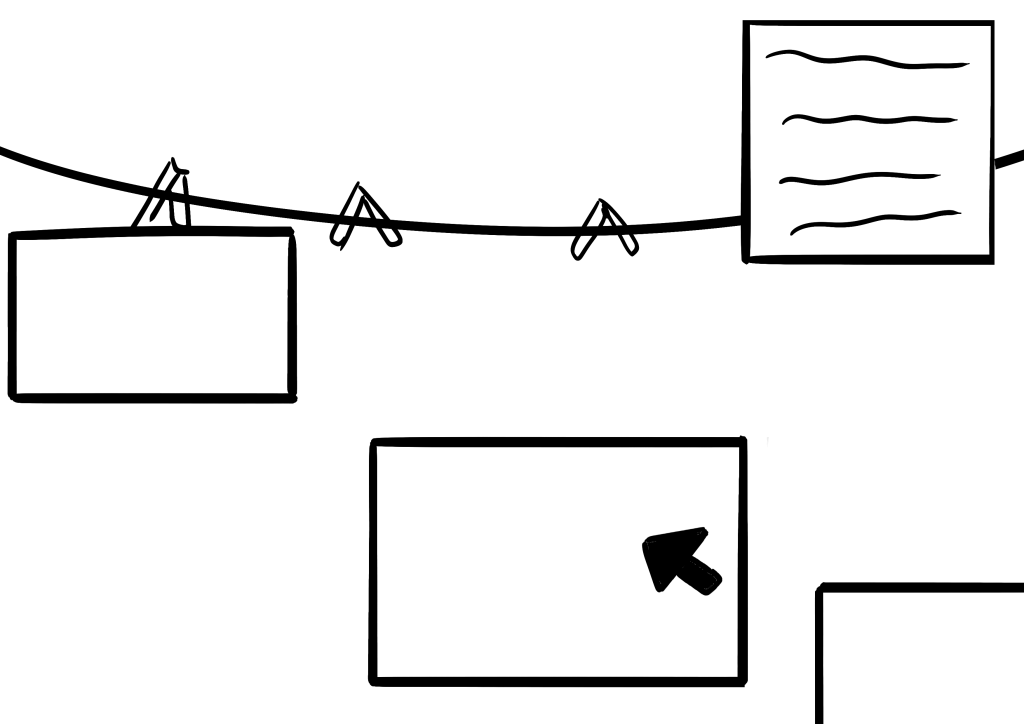
Photograph Development Mechanics
-
Art Bible
Art Vision
Art Direction – A mix of 2D childish crayon like drawings to reinforce the fact it is taking place in a childs imagination. Visual effects influenced by images of “nostalgia”, grainy, blurry, foggy and lens flares are used to give extra dimension and the nostalgic feeling.
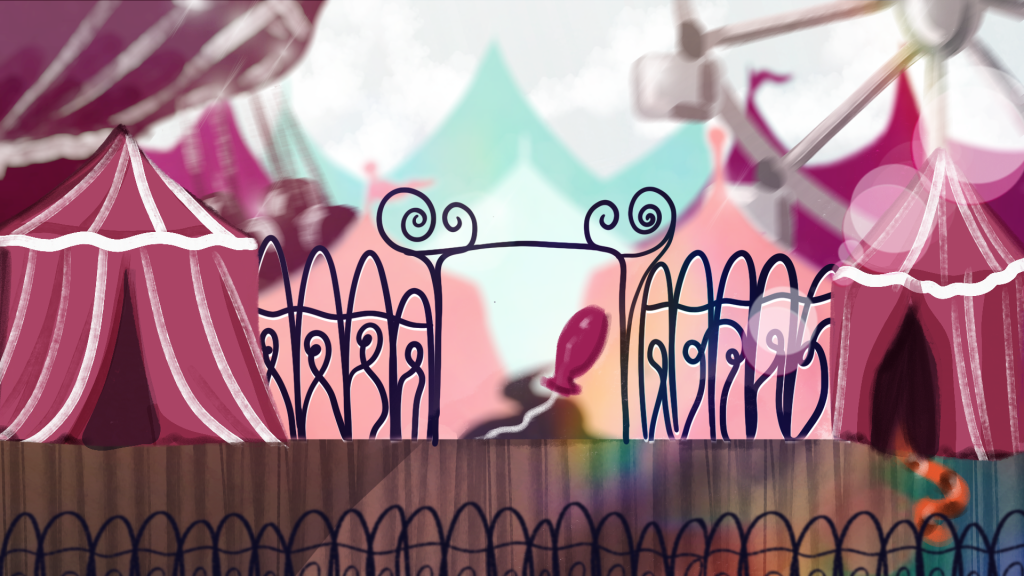
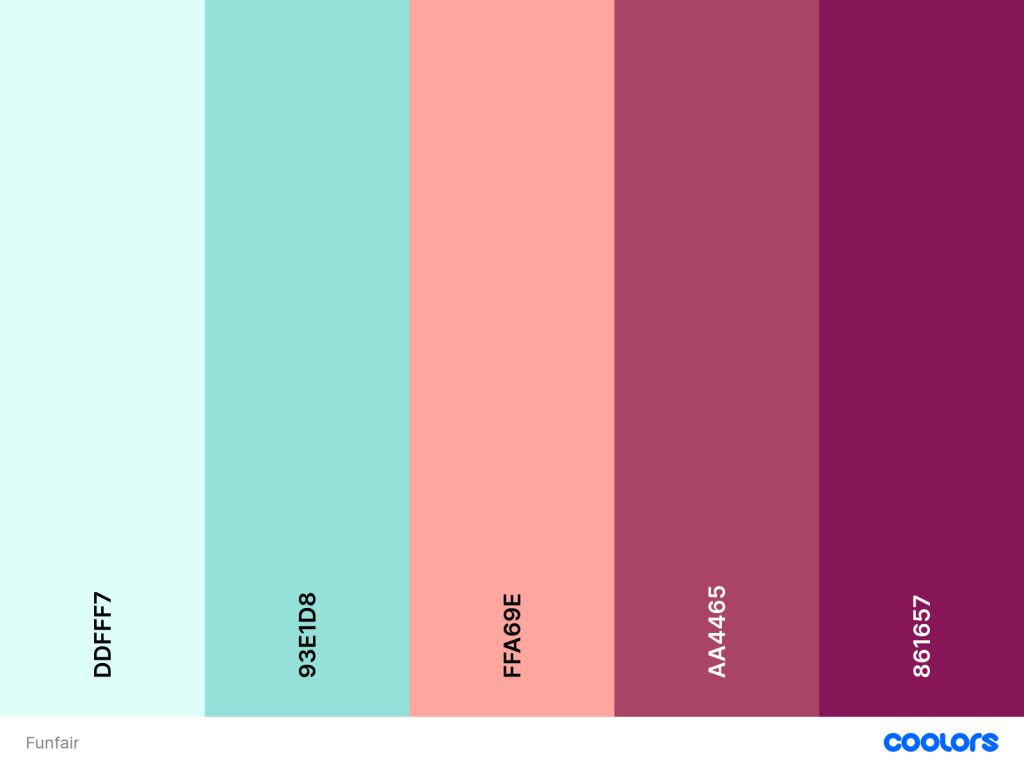
Backgrounds – Parallax backgrounds made up of layers to give movement to the scenes. Pastel colours, blues pinks and neutrals. Not overly detailed, textured Photoshop brushes.

1 
2 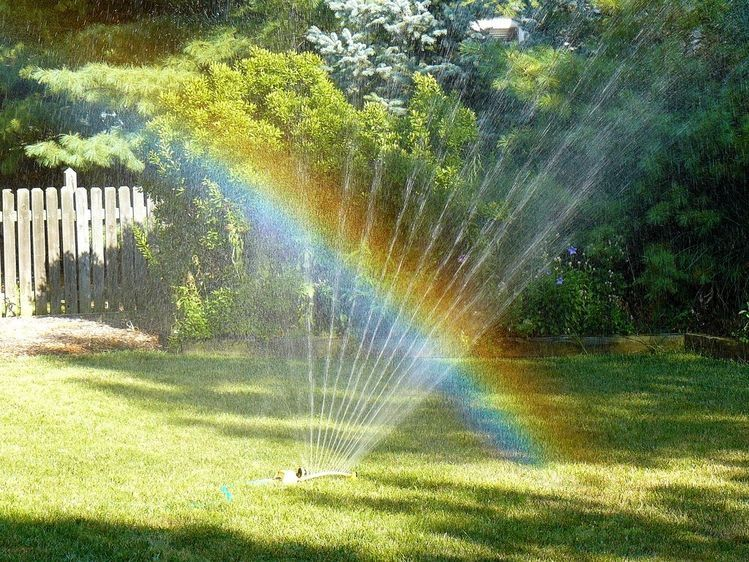
3 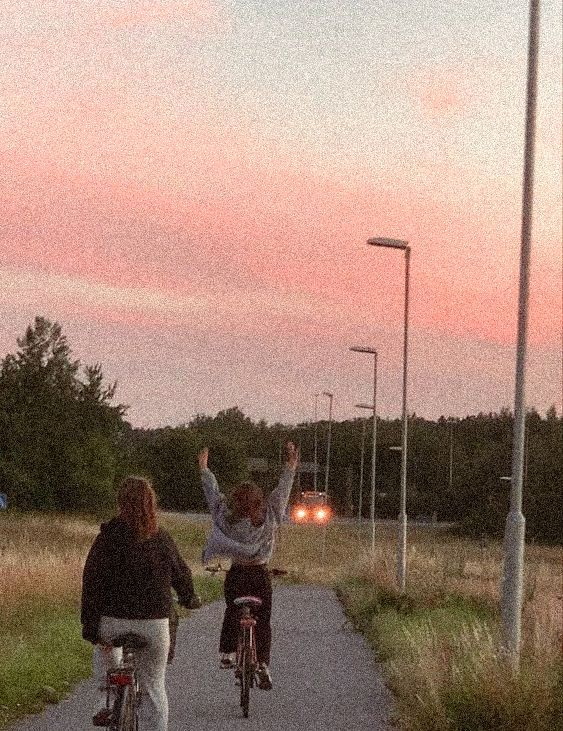
4 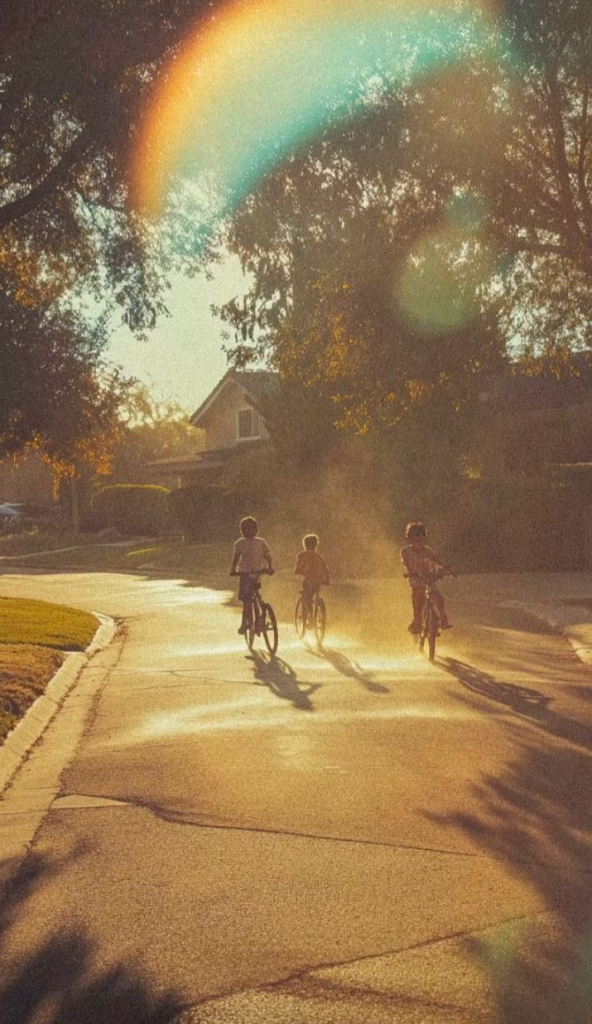
5 Images 1-2 examples of the types of lens flares used https://www.brusheezy.com/brushes/56971-free-lens-flares-photoshop-brushes#google_vignette – Link to downloadable brushes
Images 3-5 examples of the nostalgia I want to evoke.
Font
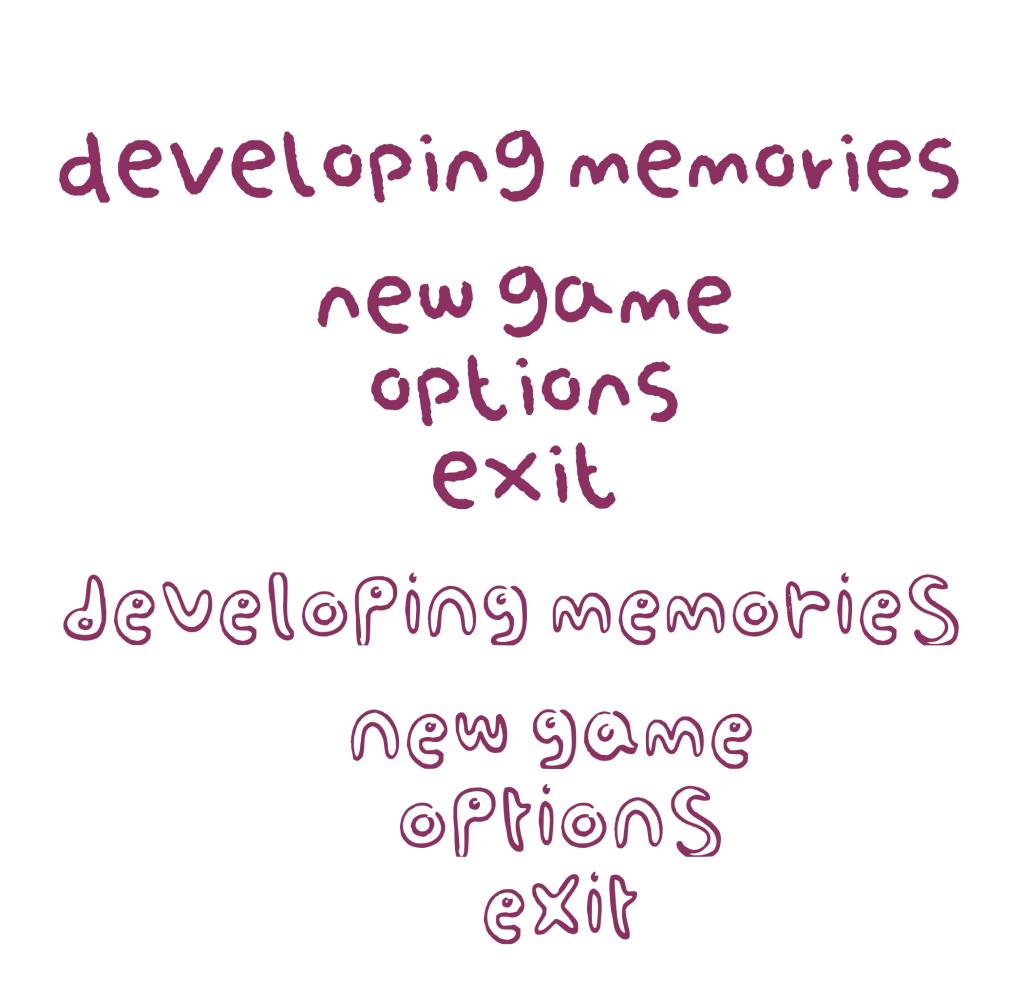
These are two font options. Either one can be used for the menu screens not the dialogue as it needs to be as legible as possible. Although a font that has the feel of being handwritten should still be used for the font.
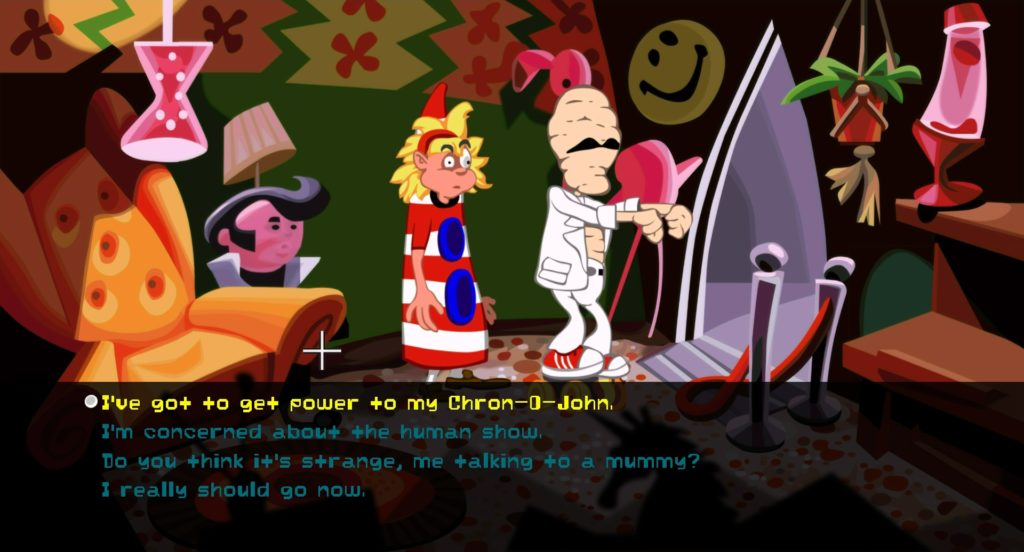
When the dialogue is on screen it should look like this, with the options in a vertical list.
Environments
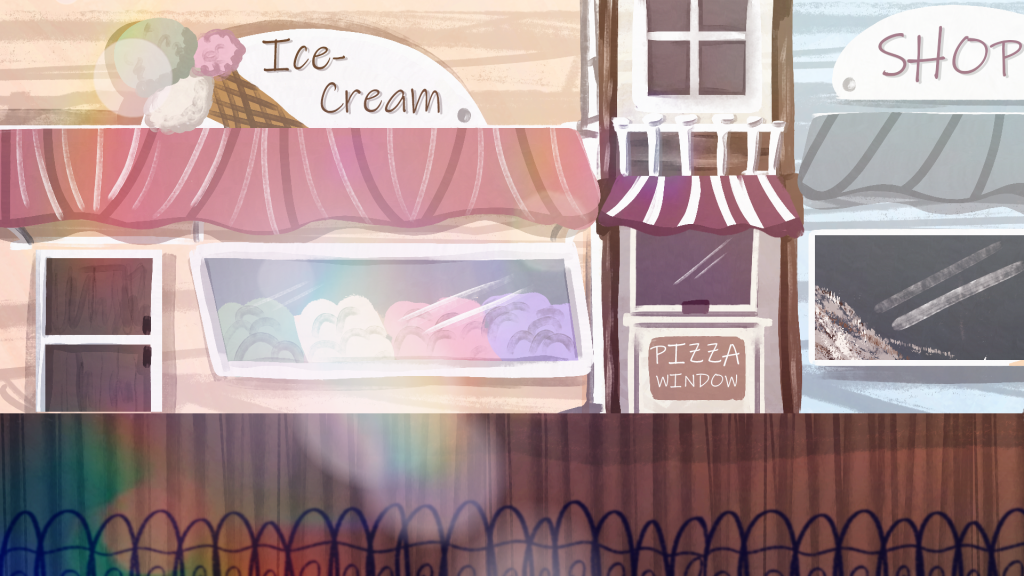
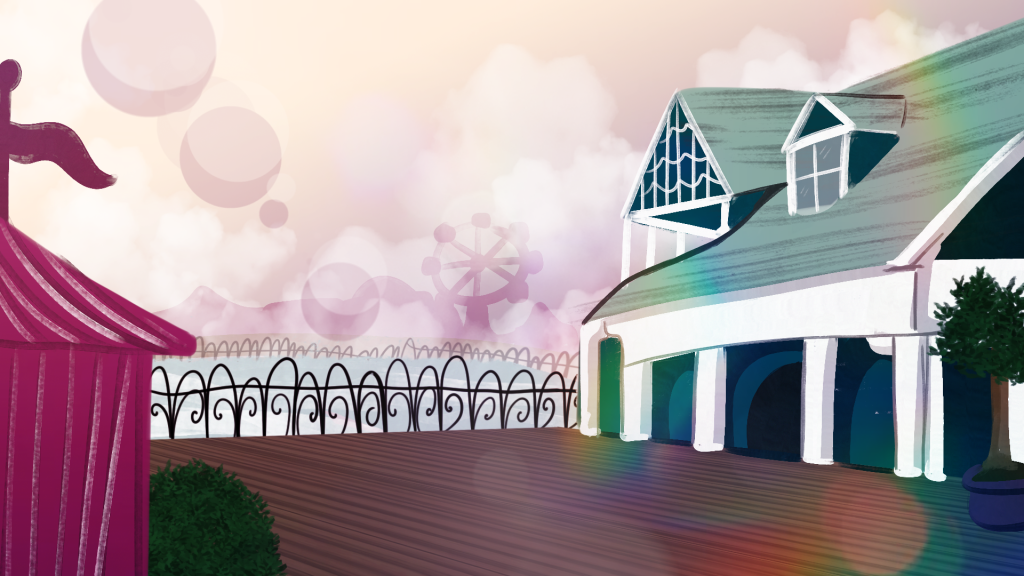
These are concepts for the three main locations. New locations can be added as long as they tie into these ones, such as the interior of the shops, ice-cream parlour, danchall/piano bar and the entirety of the funfair. However they have to follow the art style and use of lens flares and effects. The colour palettes must also follow the same direction and work well with each other.


Characters
Due to the choose your own adventure aspect of the game these characters are only examples of what kind of characters there would be, any further characters created should follow the visual style and thematic elements of these characters. The style is influenced by The secret of Monkey Island Remastered style and the remastered Day of the Tentacle.
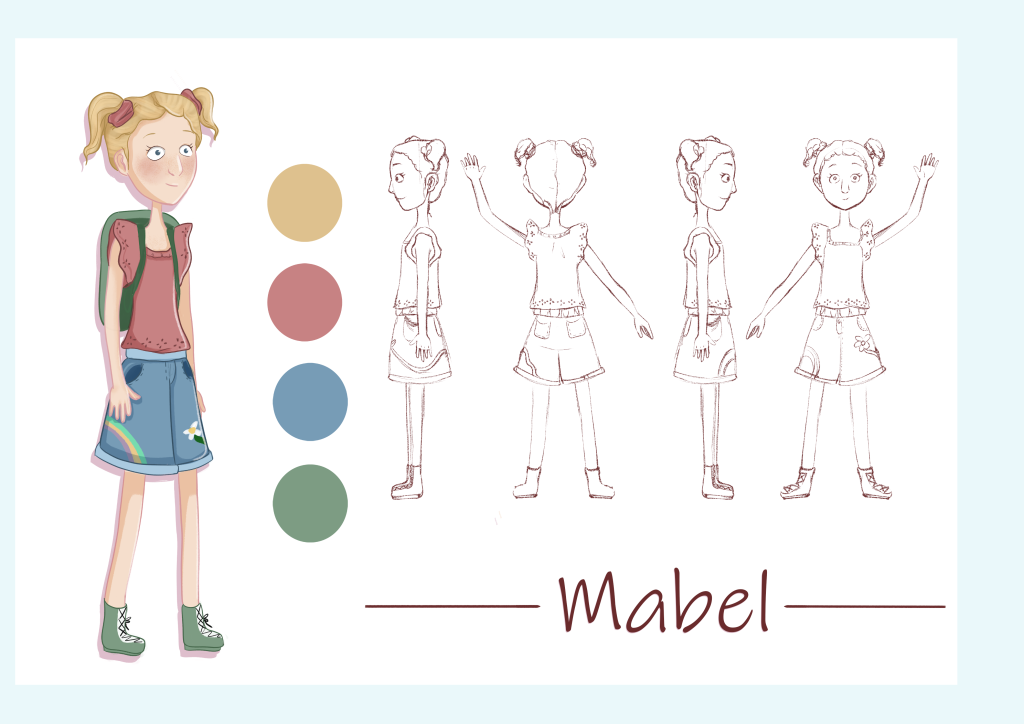
Player Character Development The playable character, she is 11 years old, she is sweet with an occasional bluntness streak though she never means anything with malice. As she is the playable character the player should be able to project a part of themselves onto her whilst empathising and connecting with her.
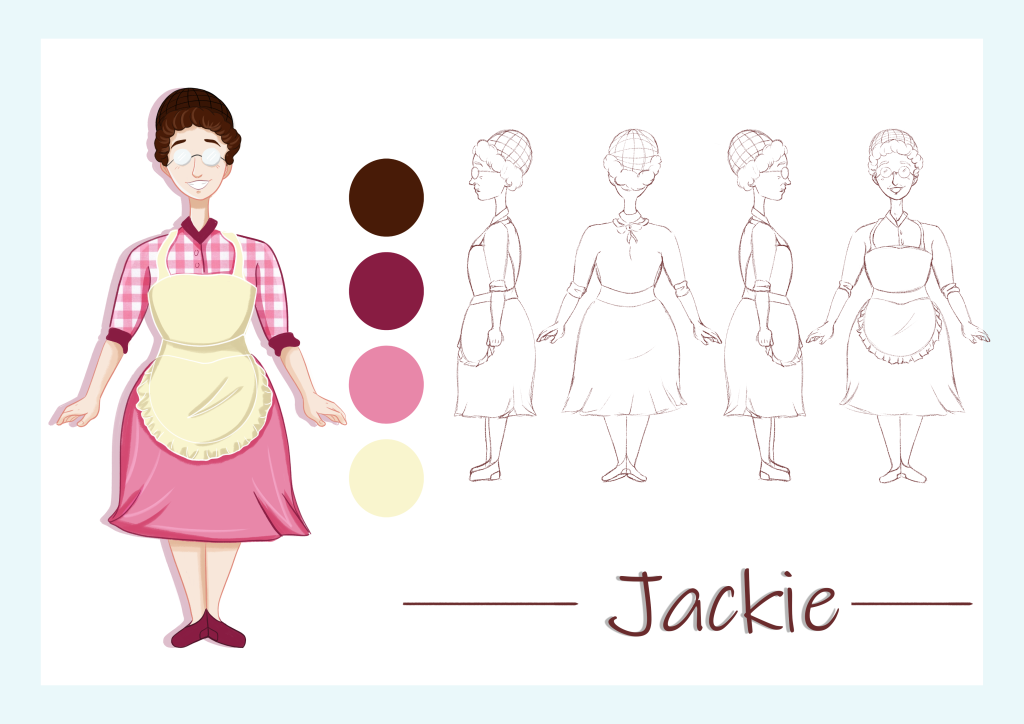
Ice-Cream Vendor Development Jackie is a part owner of the ice-cream parlour; it is her whole life she has started to morph and actually look like an ice-cream, styling her hair as a scoopa and dressing in neapolitan colours. She is a motherly figure and provides the player with hints.
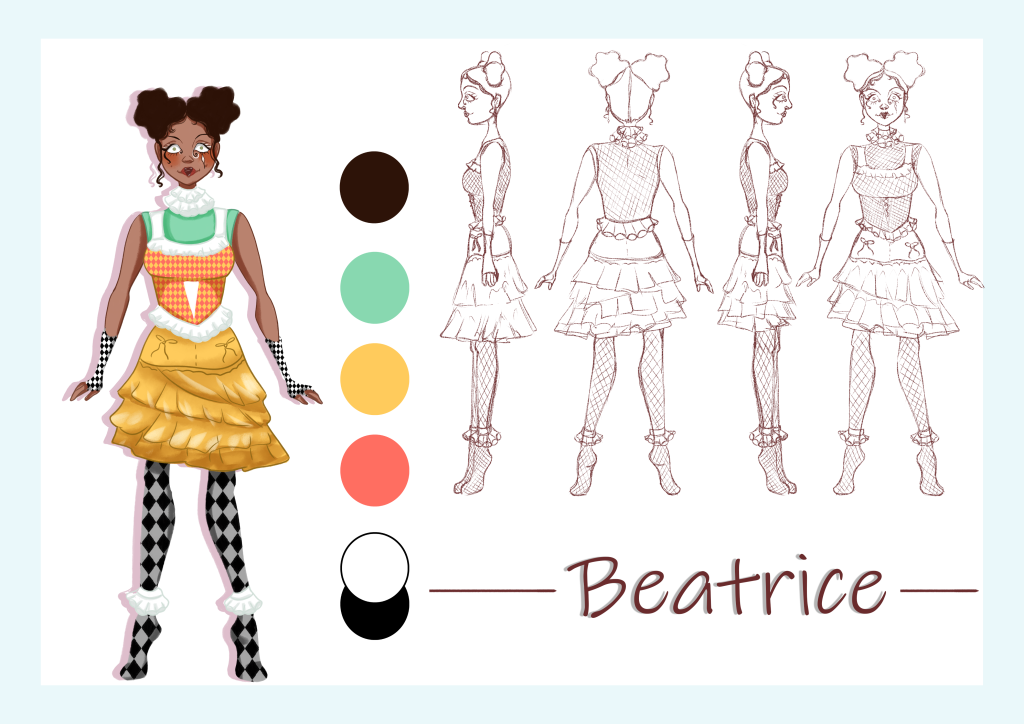
Street Performer Development Beatrice is a ring performer for the funfair on the boardwalk, she is highly influenced by clowns and mimes as reflected in her outfit and makeup. Her personality is eccentric and hyper, her brain going at a mile a minute this is also seen in her clothes – they clash and have bold patterns. Her colour palette also features more colours than the other characters making her look busy and over stimulating to the eye. She always stands on her tiptoes making her taller than she actually is.
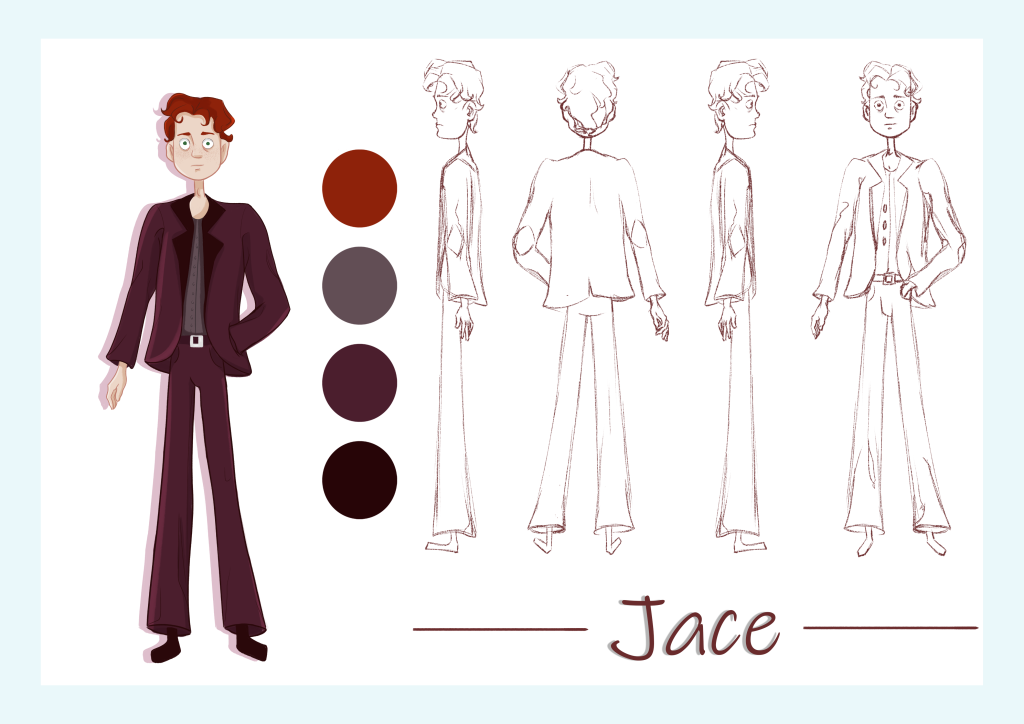
Piano Player Development Jace is a newly professional piano player he has his first gig coming up and he is very nervous about it. He wears an oversized suit representing how he feels unprepared for the job. He has dark circles under his eyes and is quite jittery leading up to his performance.
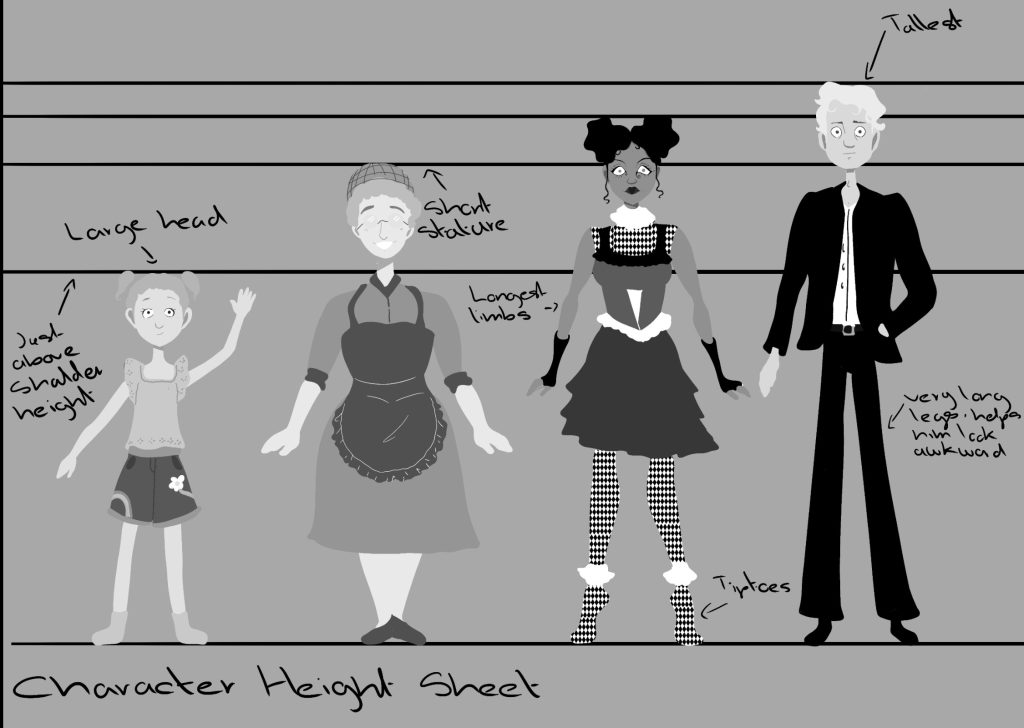
This is a concept sheet of the characters in relation to each other. Mabel is the smallest while Jace is the tallest further reinforcing his awkwardness. Jackie is shorter than average and Beatrice is taller and always on her tiptoes.
Characters in the Environment
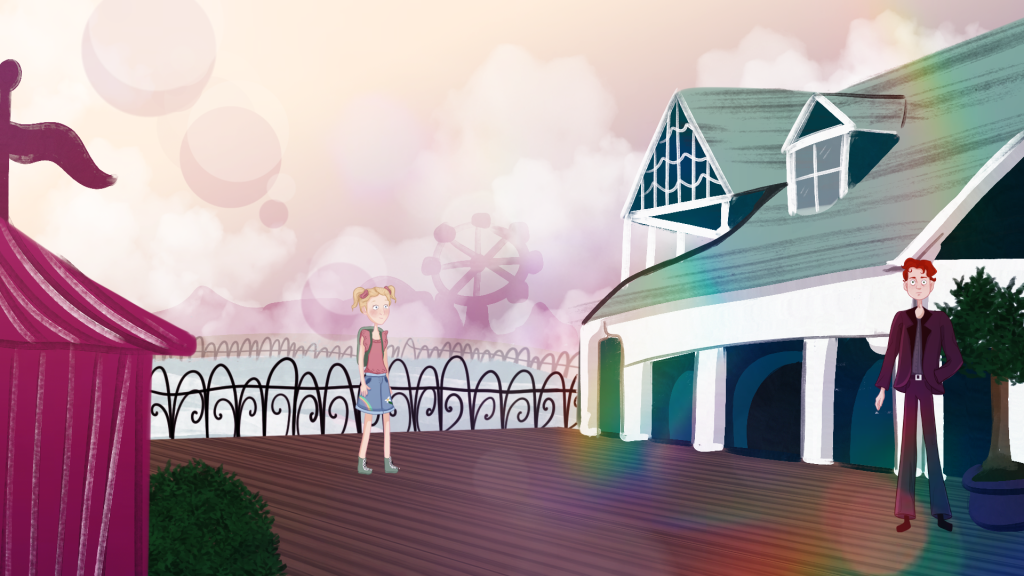
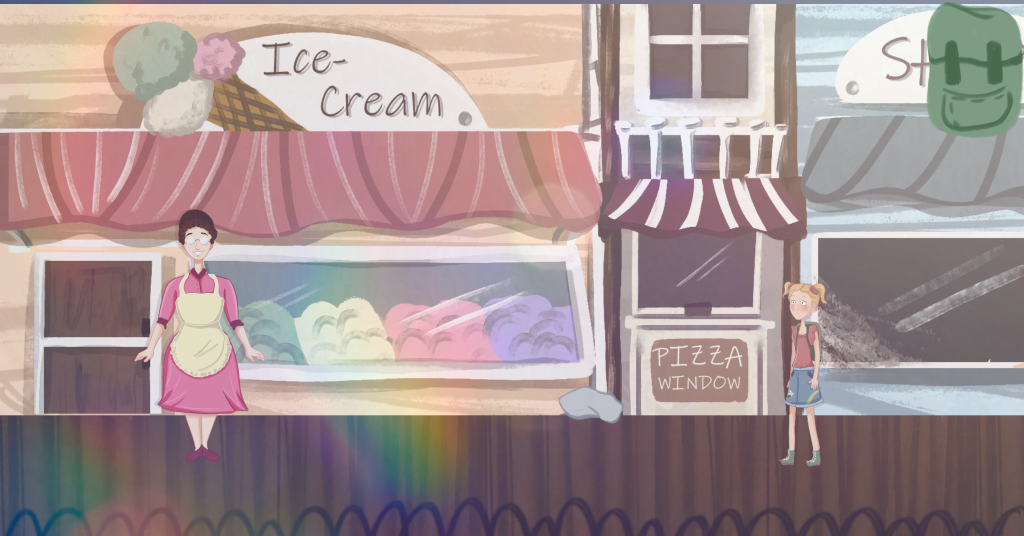
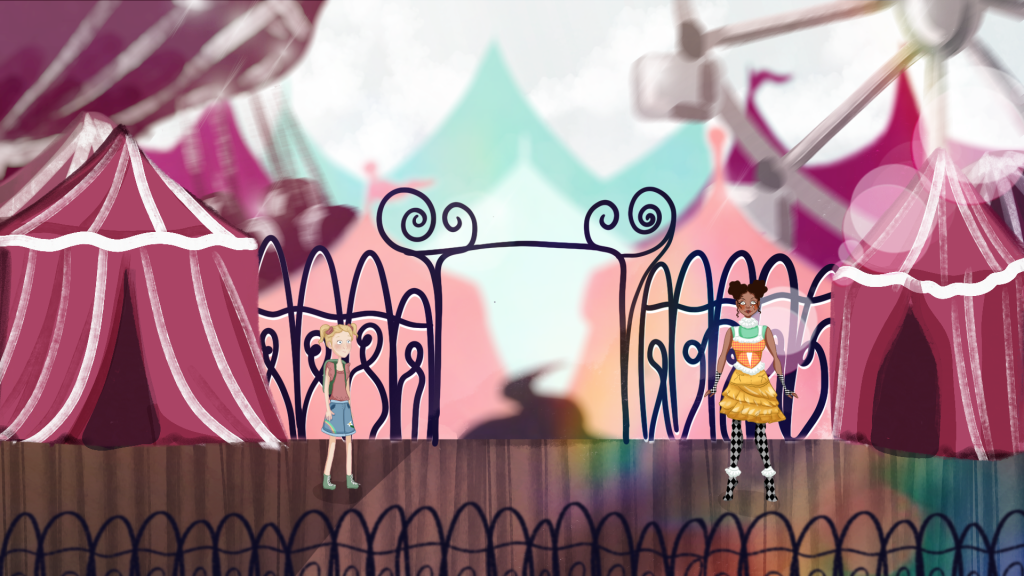
As seen in these concepts the characters should match their environments except for Beatrice as her extroverted personality is reflected through her appearance making her stand out. Perspective should also be used when Mabel walks further away from the camera, becoming smaller.
Animation References
For the crafting and interaction animations they should resemble these from Franbow, with the images for the items being clickable and iteractive. Combining items should just require one item moved on top of the other one.
The cutscenes should also work like this. Animation should be simple and take place in the game, if a cutscene needs to show something a zoomed in version should appear on the screen as like in this clip from franbow.
The walking animations should be simple and not overly concerned with lining up completely with the environments as seen in this clip from The Day of the Tentacle, the character, Hoagie, only moves his legs when walking and simple gets smaller the furtehr away he is from the background.
For the opening and ending sections of the game where the point of view shifts to first person the controls and animation should resemble games like A little to the Left
-
Narrative and World
Premise
The premise of the game is a child making up a story using old photographs of their grandmother. At the beginning of the game the player can select the photographs they want to use in their playthrough, depending on what photos they choose the story changes.
Story
Part 1 – An unamed kid is looking through her grandmothers old things and they find a series of old photographs and begin creating an imaginary story.
Part 2 – This is the imaginary story. The characters, environments and obstacles can be changed depending on what the player chooses. The only constant in this part is that the story revolves around Mabel searching for the missing pieces of her camera around the boardwalk.
Part 3 – Once the second part is finished the POV goes back to the unnamed child, they have spilt ink on the pictures and ruined them. The grandmother comes and consoles them resolving the situation by teaching them how to develop photographs.
Example Story Puzzle Dependency Chart
Mabel has lost her camera on the boardwalk, the sweet shop owner, Jackie, provides some help. She instructs her to check out the window of the shop display, she can’t see the display as the window is too dirty. Walking around the boardwalk she finds there are places she cannot enter – the dancehall and the funfair as you need to be a plus one for the dancehall and have a ticket to the funfair. Exporing the environments allows her to pull a bin and find a screwdriver which she pockets.
Speaking to the people she meets she learns that Jackie has a ticket to the fun fair but is to focused on her ice-cream parlour to give it to mabel so she resorts to stealing it via distraction. After talking to Jace she discovers he is due to play in the dancehall for his first professional gig however he is far too nervous to enter and is worried that he does not have a tie. Talking to Beatrice she reveals that she has the shutter for the camera she is willing to trade it though for a brand new hoop that Mabel must find.
Mabel has some pocket money she finds which she uses to buy Jace a tie, when he recieves it he lets Mabel into the dancehall as his plus one. Once in the dancehall Mabel sees her camera lens being used as a light, she lowers the light via the pulley system but finds it is too hot to touch, thinking back to the her conversation with Jackie she remembers that there are temperature resistant gloves for the ice-cream, though Jackie needs them as the parlour is still open. To get the gloves she plans to buy all of the ice-cream available but she needs money.
Entering the shop she pushes over a mannequin to distract the shopkeeper and grabs the money from the register. Going back to Jackie she purchases all the ice-cream and gets the gloves, she also uses the ice-cream to lure some ducks from the funfair to the shops, startling the tiger that gives chase and frightens Jackie – letting Mabel swipe the funfair ticket from her. Once the tiger has gone she finds a cloth. Entering the funfair she finds a statue with a hoop connected to the base, knocking over the statue she uses the screwdriver to unattatch the hoop and gives it to Beatrice getting the shutter for her camera.
Going back to the dancehall she retrives the lens and talks to Jace again who has bought a drink, complaining it tastes like vinegar, a good window cleaner. Talking with him she helps him with his nerves and he gives you the drink, she then watches him play his solo. Outside the dancehall Mabel unscrews an air freshener and empties the bottle, combing the cloth, spray and vinegar drink she makes a window cleaner. Finally going back to the shops and cleaning the window display, uncovering the body of her camera. Finally with the missing pieces Mabel puts her camera back together.
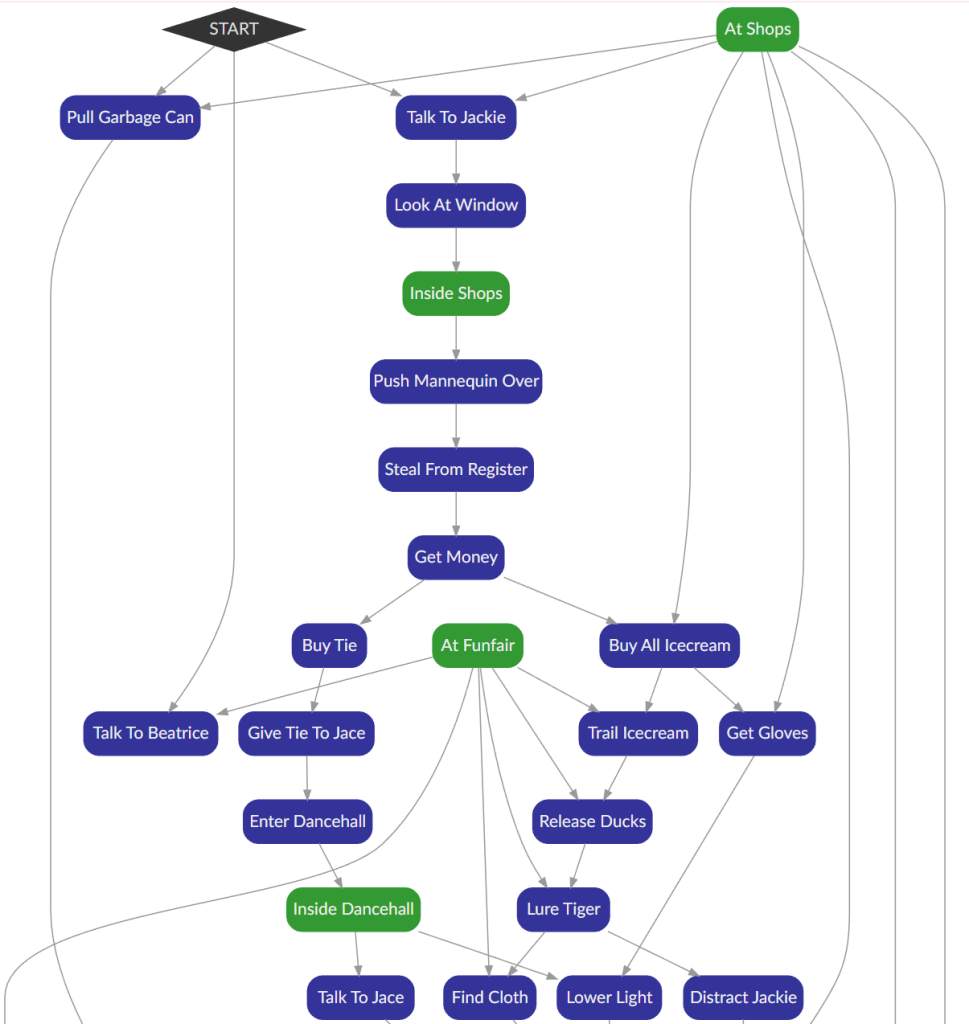
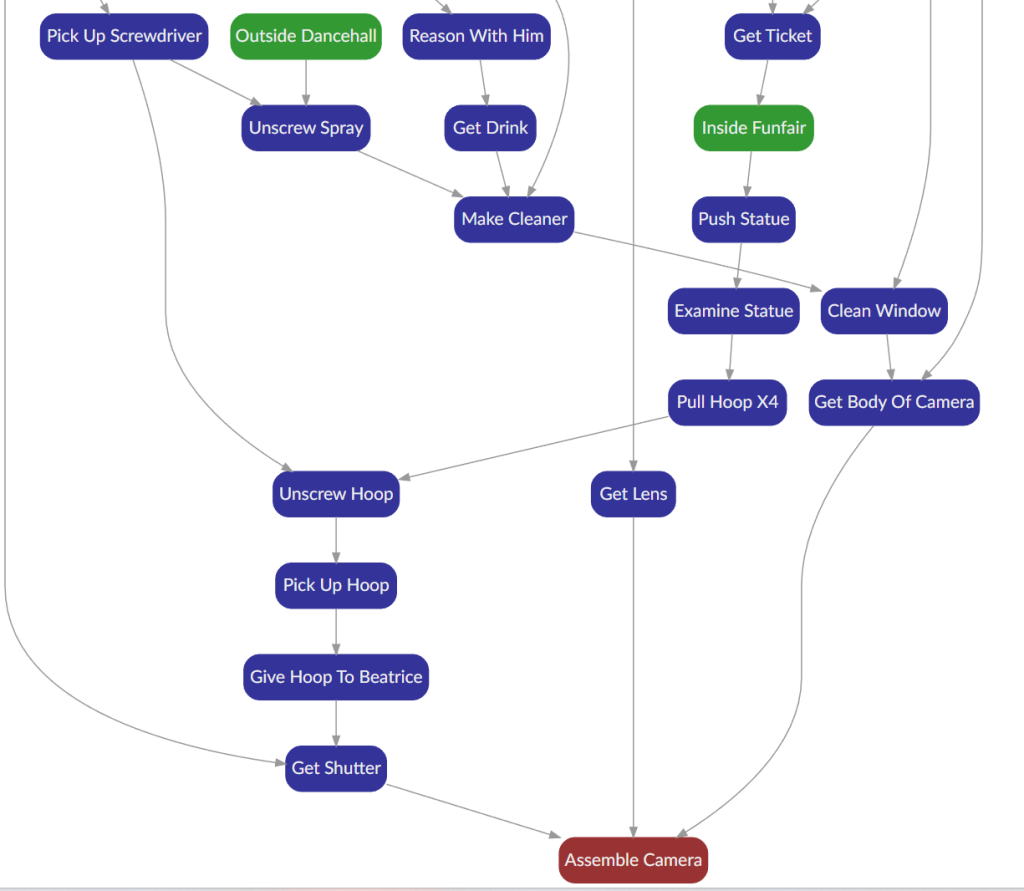
The puzzle graph the story relates to. This story and puzzle graph is only one of many options, once more characters are created the puzzle graph can be expanded or completely changed, the only constant is the end goal of finding the camera pieces and evry characters motivations and story do not change.
-
Core Gameplay
Point and Click Mechanics
Use – use items, either on NPC’s or on the environment
Talk To – start conversations with NPCs
Give –give NPC’s items
Push – push items in the environment
Pull – pull items in the environments
Combine Items – This makes a new item from two items
Skill Based Minigames
These rely on the players reflexes and accuracy instead of luck. They can be frustrating but should never be so hard they are impossible.
The minigames required for the photo development ending.
Point and Click Game Flow
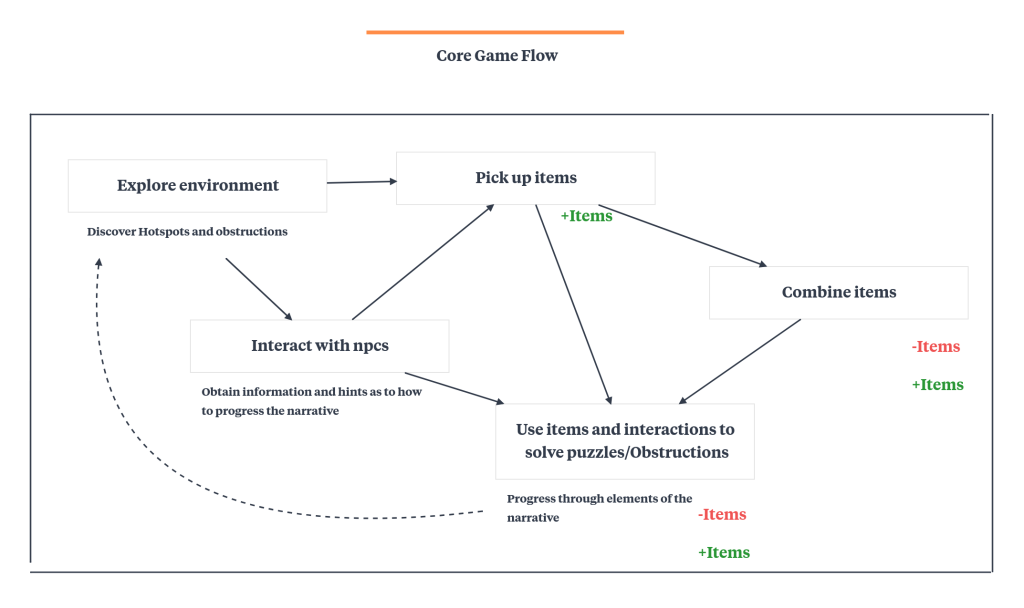
A good point and click adventure game branches out to give the player options of what to do next and what obstacles they want to tackle. This makes it hard to create a core game loop that accurately describes it so I created this core game flow chart. I have tried to show all of the options that players have and that the puzzles/obstacles are many that are constantly being solved leading to new ones.
There is of course the basic “loop” that players perform
Explore Interact Overcome obstacle Click around the environment Interact with NPC’s and hotspots Either gain knowledge of what to do, or overcome an obstacle, this could be as simple as learning to choose the right dialogue options
-
Player Experience
Player Journey
The player should not have a large learning curve. Tutorials will be delivered via the offscreen charactrs in the form of text boxes.
Once players have started the point-and-click part a lot of the actions you can perform a synonymous with other point-and-click games.
For the final part the tutorial minigames, there are three photographs to develop so the player wil complete one with the “grandma” telling them what to do and the other two by themselves. This should be enough for them to understand what to do.
Player Agency –
Player choices matter specifically in setting up the game, they get to choose what NPC’s they want in their playthrough. Making it so that every subsequent time they play the game they can continue with this customisation, making it a bit different everytime.
Player Motivation
What makes people want to play this game?
The nostalgic look and feel of it will encourage older players (40-50) and fans of the point-and-click genre. The bright colours and fun looking characters will appeal to younger players and the overall lack of difficulty will make parents want to introduce their children to it.
The most appealing part of the game will be the point-and-click adventure section, the feeling of accomplishment once they have overcome the obstacles in the section will be the biggest reason why people want to play. The fun story and characters will amuse people and make them feel happy. The final section with the precision minigames will bring some frustration but, if implemented well, they will get those feelings of accomplishment back.
-
Overview
Game Title: Developing Memories
Genre: Point-and-click adventure game
Platform: PC
Concept –
Developing Memories is a 2D point-and-click adventure game revolving around a single child’s imagination. Players will be transported to their childhoods by creating their own story using a series of photographs they have found amongst their grandmothers belongings. Be whisked away to a whimsical boardwalk and meet colourful NPC’s inspired by the LucasArts games of old. Solve creative puzzles using out of the box thinking, find items and combine them, talk to NPC’s and be absorbed into your imagination.
Essential Experience –
To encourage nostalgia through an old-fashioned adventure
Game Design Pillars
Exploration Based Puzzles Quirky Characters and World Accessible Gameplay To progress the player must explore anddiscover what they can do. The world is populated with quirky, memorable characters and locations. The gameplay is highly accessible, only requiring a mouse as it is a point and click interface. Unique Selling Point –
Every time you replay the game it can be a different experience as depending on what pictures you choose to use the puzzle and story will change to incorporate these decisions.
Target Audience –
The main goal of this game is to make the player feel nostalgic when playing, due to the old-fashioned point-and-click interface and the concept of making memories with your grandma when you were young.
So, the target demographic will be adults that grew up playing point-and-click adventure games + their children that they introduced to the genre. There will not be any adult content so any age can play.
As of 2024 63% of people playing video games in the UK are aged 35 to 44 the perfect age demographic to have played the old-style point-and-click games.