I was been designated the Environment Artist of our group project. I decided to also take on the role of Level Designer too.
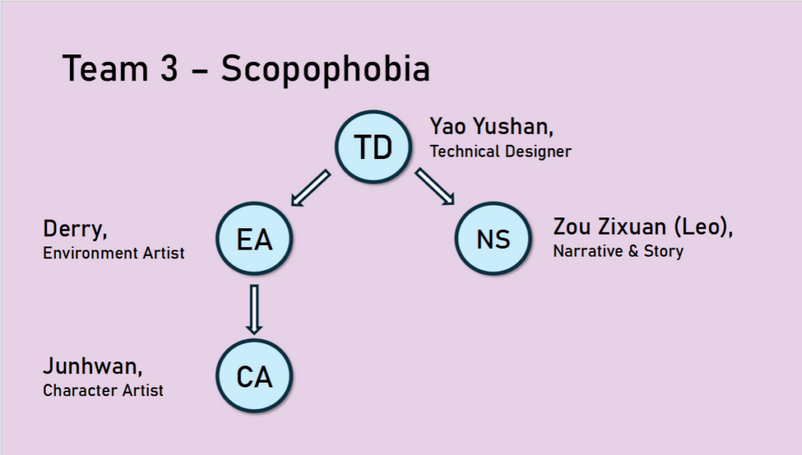
In my research on level design & environment art, I have procured the following findings
From Year 2 Semester 1 Week 4 Level Design Workshop
- Core principles of Level Design
- Flow of the experience
- Guidance Cues (visual, spacial)
- Procedures of level design
- Spacial Layout
- Blockmeshing
- Environment Art
- Separation between the positions of Level Designer, Environment Artist and ‘level design’ as a blanket term in the industry
- Level Designers (capitalised)focuses more on the layouts of maps/levels
- Environment Artists focuses on graphics and artistic elements
- level design (lowercase) describes the general design of levels/maps and includes both positions
- Iteration & experience may be the best way to design levels/maps
- Consider the wider experience, don’t get tunnel visioned
From 5 Tips for Great Level Design Youtube video:
- Have a clear goal, achieved through
- Sensory cues (visual, auditory etc.)
- Good incentives
- Avoid repetition, strive for variety, aided by
- Dynamic gameplay mechanics
- Gradual progression to maximise available content
- Avoid waste of space, leading to waste of time
- Be intentional with design & layout
- Ensure good flow
- Players have been conditioned to go from left to right
- Utilise psychology & behaviour to lead players
- Maintain good game language by
- Following a cohesive vision
- Maintaining harmony in a game’s design
This was very influential in my 4th ‘final’ iteration of the level layout, although it also serves as a good critique of it despite me attempting to follow its guidance.
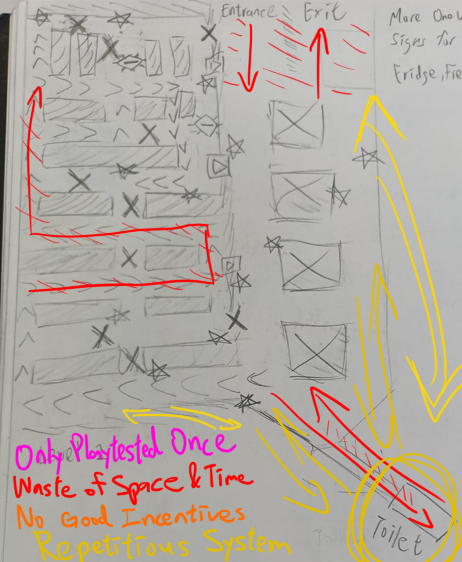
Overall in retrospect, the advice & guidance given by my role research on Level Desgin specifically proved very useful, and specifically helped a lot in elevating my Level Design from the 3rd to 4th iteration, like my intent with Sightlines being inspired by “Having a clear goal”.
Citations
Leave a Reply