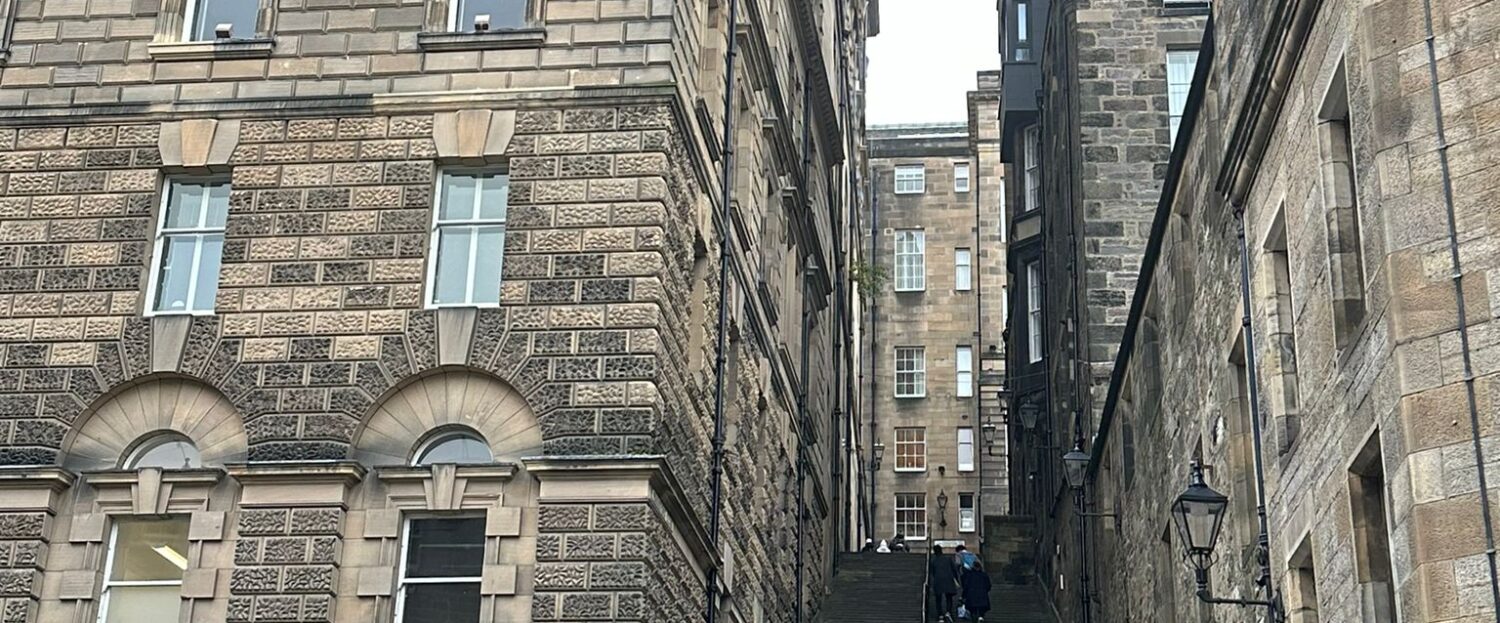


As part of my gameplay research, I played Assassin’s Creed Syndicate to critically examine how stealth mechanics, traversal systems, and player agency are integrated within a historically grounded urban environment. The game’s interpretation of Victorian London was particularly relevant to my project, as it demonstrates how a real-world setting can be transformed into a playable space that actively supports design intentions. Rather than functioning purely as visual dressing, the city becomes an interactive system that encourages players to think spatially, observe enemy patterns, and use the environment as a strategic resource.
One of the most influential aspects of Syndicate was its emphasis on verticality and layered navigation. Rooftops, alleyways, crowds, and interiors offer multiple routes through the same space, allowing players to approach objectives in ways that suit their preferred playstyle. This reinforced my understanding that effective stealth gameplay is less about limiting the player and more about empowering them with meaningful choices. Through gameplay, I observed how subtle environmental cues guide players toward optimal stealth routes without explicitly instructing them, an approach that strongly informed my own level design thinking within the GDD.
Stealth in Assassin’s Creed Syndicate is further supported by mechanics such as crowd blending, line-of-sight management, and silent takedowns, all of which reward patience, timing, and situational awareness. While combat remains an option, the game consistently incentivises avoidance and precision over confrontation. This directly influenced my design philosophy, framing stealth as a deliberate and expressive choice rather than a mandatory rule. In my own project, this translated into a gameplay loop that prioritises hiding, observation, and calculated movement, encouraging players to remain unseen and in control of the encounter’s pacing.
Rather than attempting to replicate Syndicate’s large-scale systems, I focused on extracting and adapting its core principles into a more contained experience. This included simplifying traversal mechanics while maintaining the feeling of flow, and using shadows and environmental cover as primary stealth tools. Through this research, I gained a deeper understanding of how complex AAA design ideas can be distilled into focused mechanics suitable for smaller prototypes, while still preserving depth, tension, and player agency within the GDD.
Overall, playing Assassin’s Creed Syndicate allowed me to critically analyse how stealth gameplay, traversal systems, and environmental design work together to support player agency. The game demonstrates how a historically inspired setting can be transformed into an interactive space that encourages observation, vertical movement, and strategic planning rather than linear progression. This research reinforced the importance of designing environments that communicate gameplay possibilities naturally through layout, scale, and visual language.
The insights gained from Syndicate directly informed my GDD, particularly in shaping the core gameplay loop and stealth mechanics. By prioritising concealment, shadows, and environmental awareness, I aimed to adapt the underlying design principles of large-scale stealth systems into a more focused and atmospheric experience. This research helped me refine my design intentions and strengthened my understanding of how player choice and immersion can be supported through thoughtful level design.
Bibliography:
Ubisoft Quebec (2015) Assassin’s Creed Syndicate. [Video game]. Ubisoft.
Nitsche, M. (2008). Video Game Spaces: Image, Play, and Structure in 3D Game Worlds. Cambridge, MA: MIT Press.
Sweetser, P. and Wyeth, P. (2005) ‘GameFlow: A model for evaluating player enjoyment in games’, Computers in Entertainment, 3(3), pp. 1–24.
