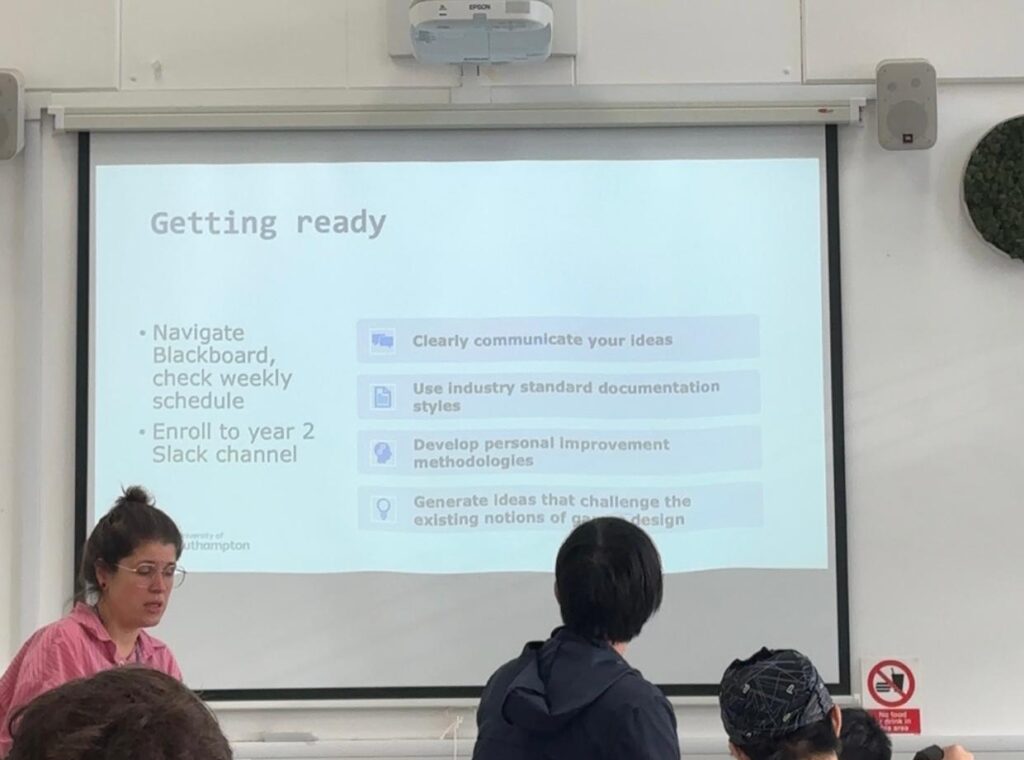
Week 1 introduced the module’s structure, expectations, and working methods, with a clear emphasis on process-led design rather than immediate production. The focus was placed on exploration, experimentation, and reflection as foundational tools for creative development. Rather than beginning with a fixed game idea, the week encouraged openness and uncertainty as productive states within the design process.
This approach established that the portfolio would function as a record of thinking and development over time, highlighting how ideas evolve through research, testing, and critical reflection
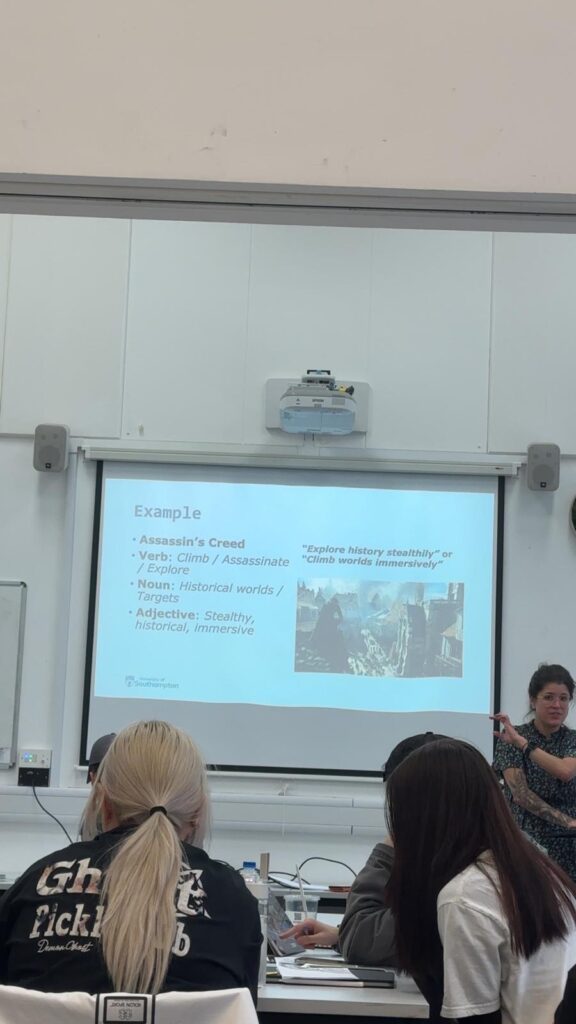
The central theme introduced during this week was movement. Initially, movement may appear to relate primarily to physical action or mechanics; however, early discussion reframed the theme as something far broader. Movement was explored as change, transition, progression, and adaptation, extending into emotional, social, and conceptual spaces.
This shift in perspective allowed me to engage with the theme more personally and reflectively. Movement became less about speed or motion and more about navigating unfamiliar situations, overcoming resistance, and progressing through uncertainty.
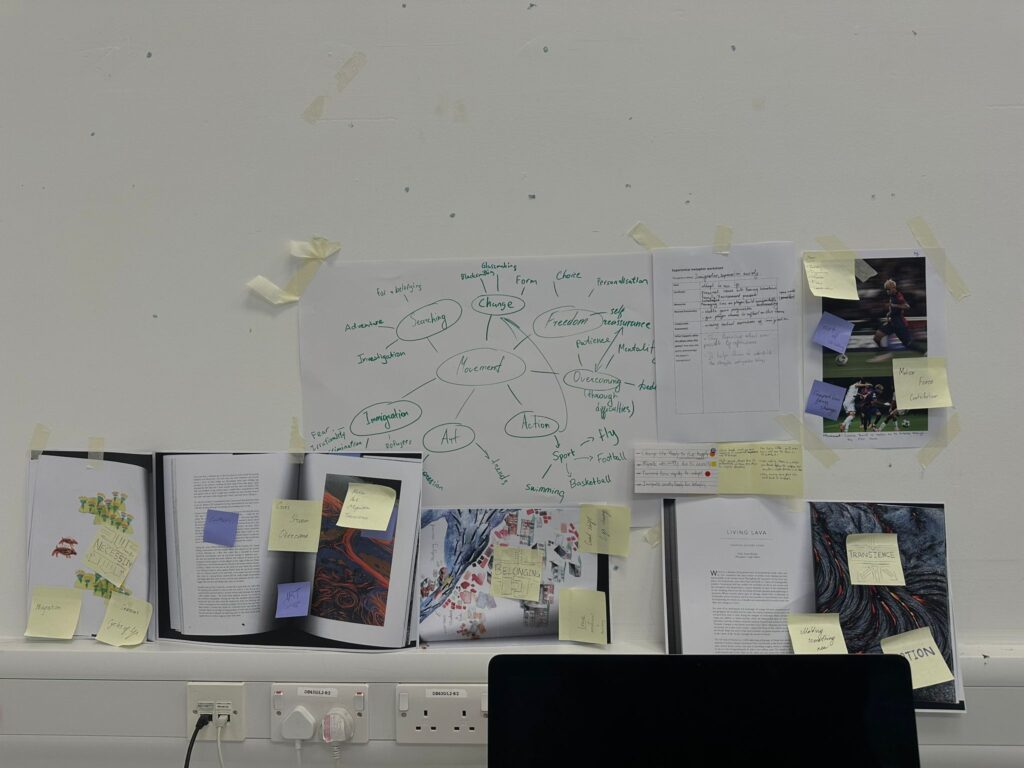
To develop my understanding of movement, I created a concept map that explored multiple interpretations of the theme. Ideas such as searching, freedom, immigration, patience, struggle, and personal growth emerged through this process. Mapping these ideas visually helped reveal connections between physical movement and emotional or psychological change.
Rather than narrowing the concept too early, this exercise encouraged divergence. It highlighted the value of allowing ideas to remain fluid during the early stages of development, creating space for more meaningful, experience-driven outcomes later in the project.
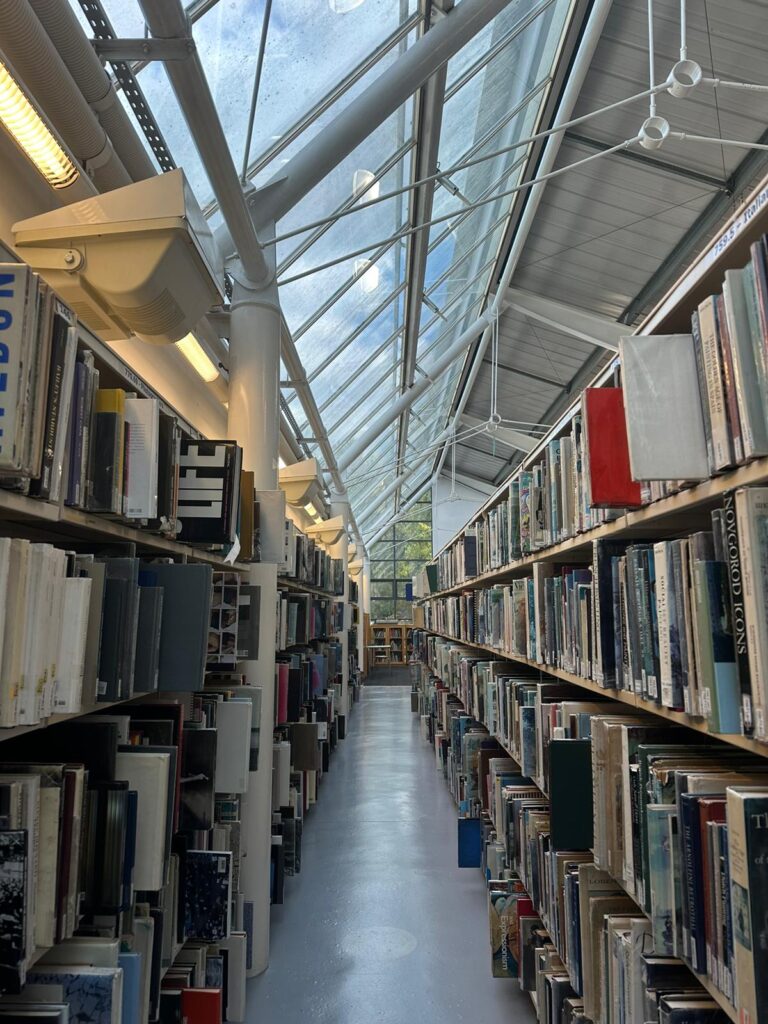
Visual research played an important role in grounding abstract ideas. One key reference involved photographing a library environment, which I interpreted as a space of quiet movement through knowledge, curiosity, and belonging. The long aisles and structured layout suggest progression and direction, communicating movement through repetition and depth rather than speed.
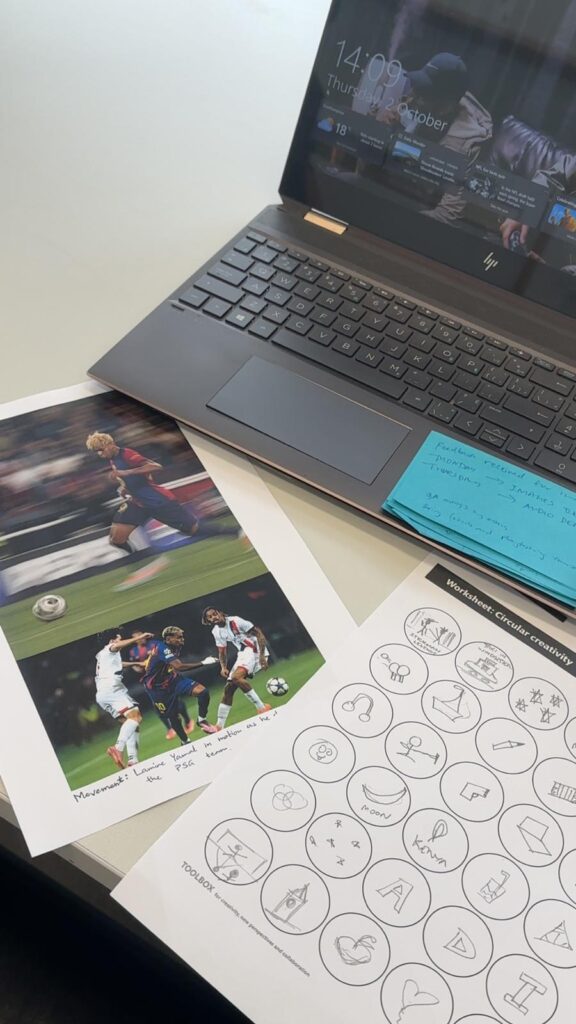
In contrast, football imagery was used to explore movement as force, momentum, and physical effort. These images represent struggle, resistance, and collective motion, highlighting how movement can be shaped by pressure and interaction. This contrast between slow, controlled movement and dynamic, high-energy motion helped broaden my understanding of how movement can be communicated visually.
Additional references drawn from printed art and abstract imagery explored themes of transience and transformation, presenting movement as something continuous and evolving rather than goal-oriented or linear.
To translate movement into an experiential framework, I completed an experiential metaphor worksheet. I explored movement through the metaphor of immigration and separation anxiety, framing movement as a process of adapting to a new environment rather than a single action.
Within this metaphor, the goal was stability and adjustment, while conflict emerged through emotional pressure, unfamiliar surroundings, and external challenges. Progression occurred gradually, reinforcing the idea that meaningful movement often involves discomfort, uncertainty, and time. This exercise helped demonstrate how abstract themes can inform interactive experiences without relying on literal representation.
Week 1 highlighted the importance of designing around experience rather than surface-level ideas. Movement does not need to be explicitly shown to be felt; it can be communicated through pacing, structure, and emotional context. This understanding has influenced how I approach early-stage design, prioritising intention and feeling over immediate mechanics or genre decisions.
The exploratory work completed this week established a strong conceptual foundation for the project. These early reflections will inform future design choices, particularly in shaping how movement, flow, and progression are expressed through the player experience as the project develops.