Gameplay Development and Core Loop
After working on the concept more thoroughly, I decided to ensure that gameplay would remain easy and enjoyable. I do not want the restoration process to become a technically difficult activity because, in my opinion, the most intriguing aspect of such an experience is seeing damaged art return to its pristine state.
Main Interaction
The player looks at a damaged painting and selects areas of concern. Then the player can interact with those areas to gradually remove the damaged or covered layers and restore the original artwork.
I want the restoration process itself to bring joy to the player. Instead of using numerous complex instruments or controls, the player can concentrate solely on watching each painting change as it is restored.
Core Game Loop
Examine → Restore → Reveal → Display → Discover
The player examines the painting, restores damaged parts and gradually reveals the whole picture. Once it is completely restored, the painting is placed in the museum exhibition, and the player goes to restore another piece. More and more paintings will be restored until the whole exhibition starts to fill up and the player discovers various details and connections between some of the pieces.
Progression
I want the first paintings to be simple so that the player can understand the mechanic naturally. As the game progresses, the complexity of paintings increases without overly complicating the controls for the player.
The variety will come from different paintings, their styles, and the details the player discovers in each.
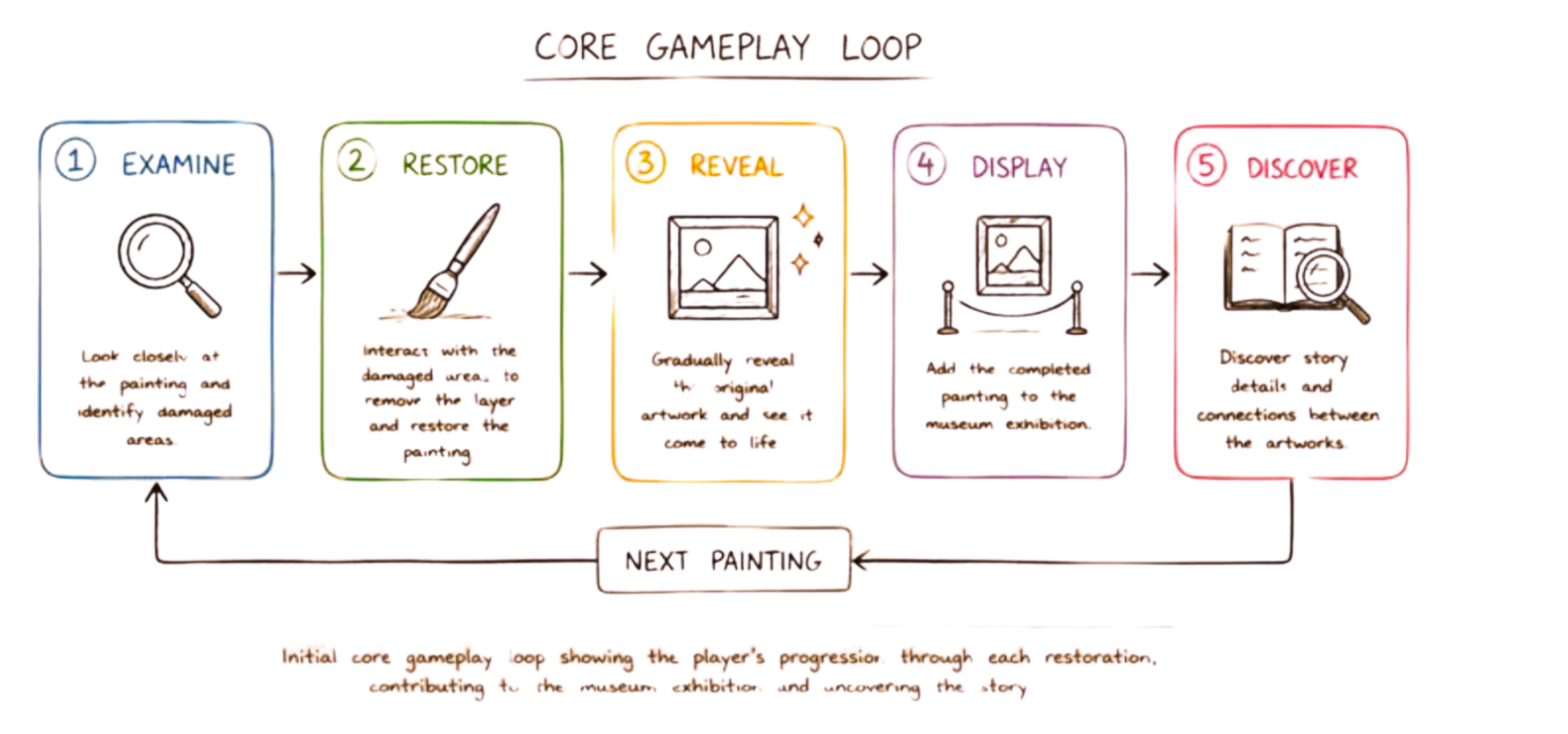
Core gameplay loop that shows progression through each restoration process.
This segment contains an audio file^