Week 5 felt like a major turning point for me creatively because it was the first time I could properly see my environmental ideas becoming part of an actual playable experience. Up until this stage, most of my work had involved experimentation, visual research, rough concepts, and learning new software. However, this week I finally began transforming those early ideas into more complete, believable environments that could exist in gameplay. Alongside preparing for our first official playtest, I focused heavily on improving my environmental design work while continuing to learn through feedback, communication, and constant experimentation.
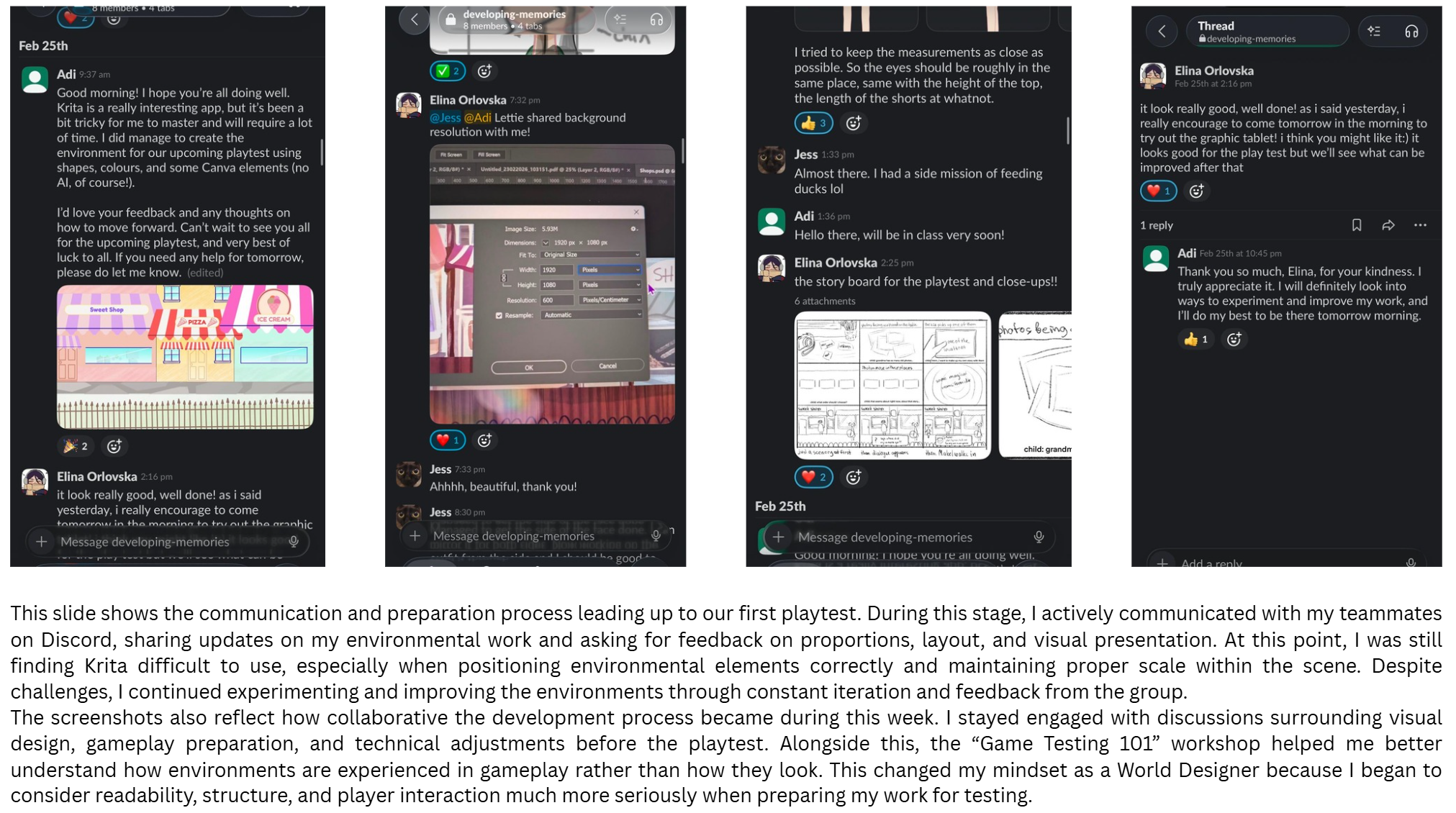
A large part of this week involved preparing visual environments for the first playtest while staying actively involved with my team throughout the development process. The Discord screenshots in this blog reflect how collaborative the week became, as I regularly shared progress updates, discussed environmental ideas, and asked for feedback on composition, proportions, and visual presentation. At this stage, I was still struggling with Krita, particularly with positioning environmental objects correctly and maintaining proper scale within scenes. Some aspects of the software felt difficult and unfamiliar, especially when creating environments that looked visually balanced and natural. Despite this, I continued experimenting with layouts, colours, and structure while improving through repetition and feedback from the team.
Before the playtest itself, we also attended the “Game Testing 101” workshop, which helped change the way I thought about environmental design. Before this session, I was mainly focused on creating visually appealing scenes. However, the workshop helped me realise that environments also need to function effectively within gameplay. It made me think more carefully about readability, spacing, player guidance, and how environments influence the player’s emotional experience while interacting with the game. This helped me approach my work more thoughtfully and made me consider environmental design from both a visual and gameplay perspective rather than purely an artistic one.
One of my biggest achievements this week was completing my first exterior environment for Developing Memories. I wanted the scene to feel colourful, nostalgic, soft, and emotionally comforting to match the project’s overall atmosphere. Using mainly Canva, alongside inspiration and techniques explored in Krita, I experimented with pastel colour palettes, stylised storefronts, fences, signage, windows, and playful environmental details to create a welcoming, childlike visual style. I wanted the environment to feel warm and slightly dreamlike, almost like a memory being viewed through a softer lens.
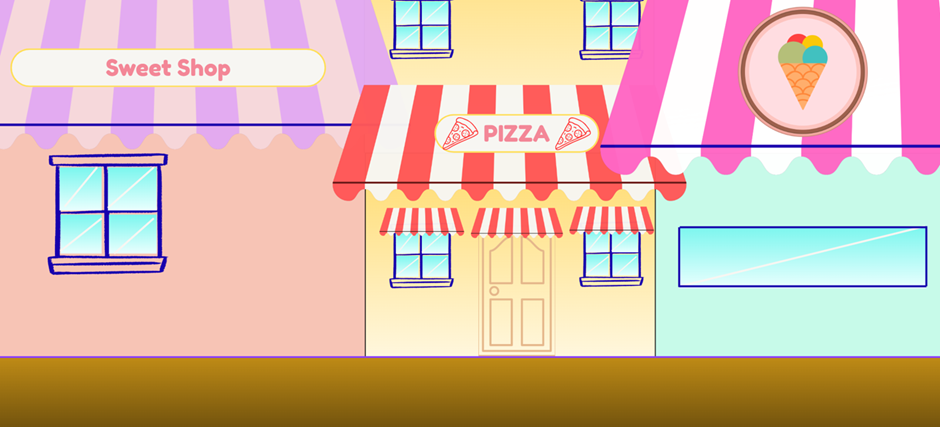
Initial developments and planning for the background.
Creating this environment was far more difficult than I originally expected because balancing proportions, composition, colours, and spacing required a lot of trial and error. I continuously adjusted the placement of buildings, fences, windows, and decorative elements to create a visually balanced scene while maintaining a soft, stylised appearance. Although the process became frustrating at times, I slowly began to understand how important environmental structure and composition are in creating believable spaces in games. This environment was designed specifically for the Week 5 playtest, making it an important milestone within both my technical development and my confidence as a World Designer.
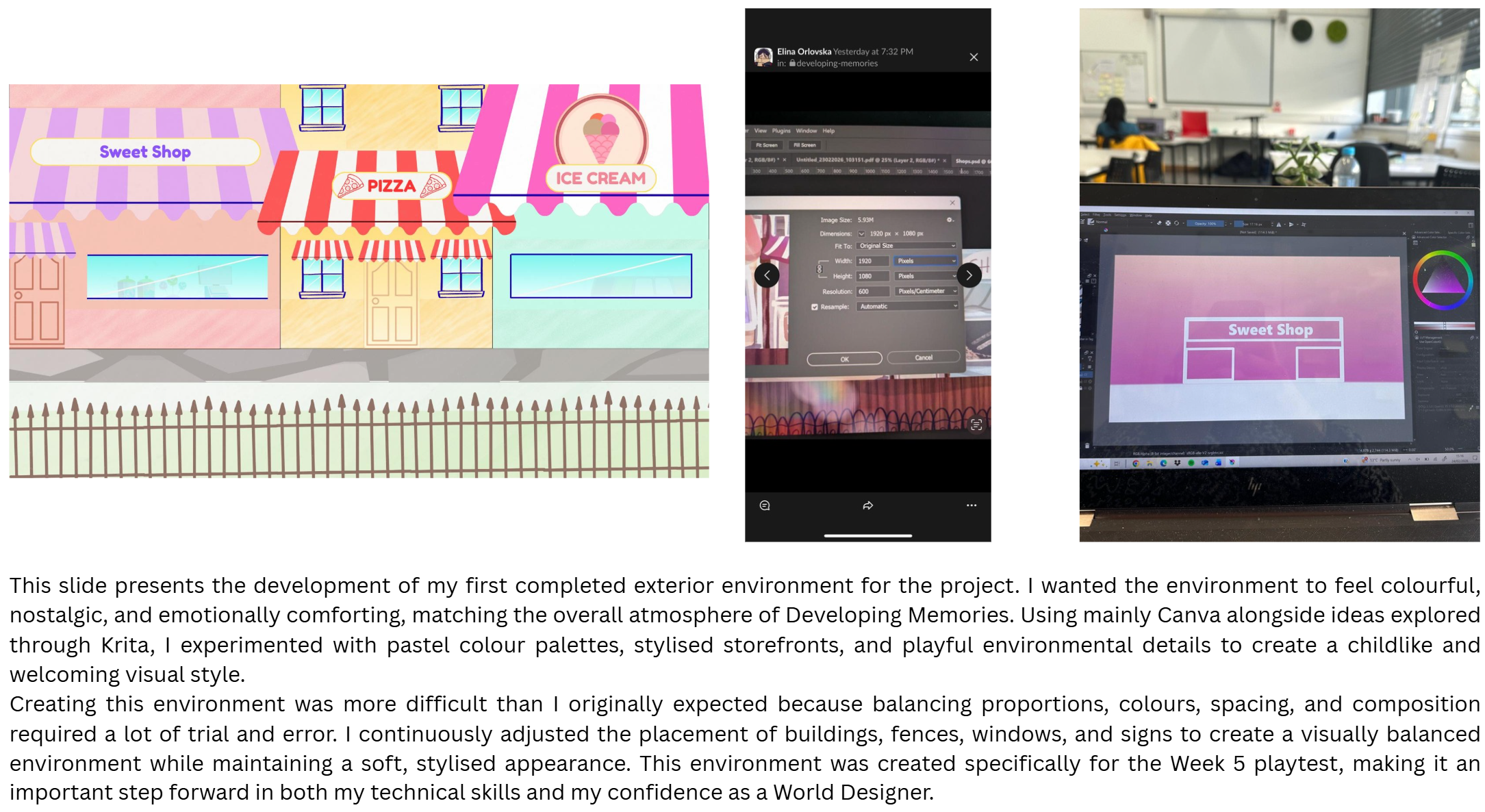
The process slides included throughout this blog demonstrate the full creative progression behind the sweet-shop environment, from the earliest rough concepts to the final refined version. I began by focusing on basic shapes, environmental structure, and rough layout placement before gradually introducing more detailed elements such as shadows, fences, windows, signs, colours, and decorative objects. The arrows shown within the slides help visualise how the environment slowly evolved through experimentation, iteration, and refinement over time.
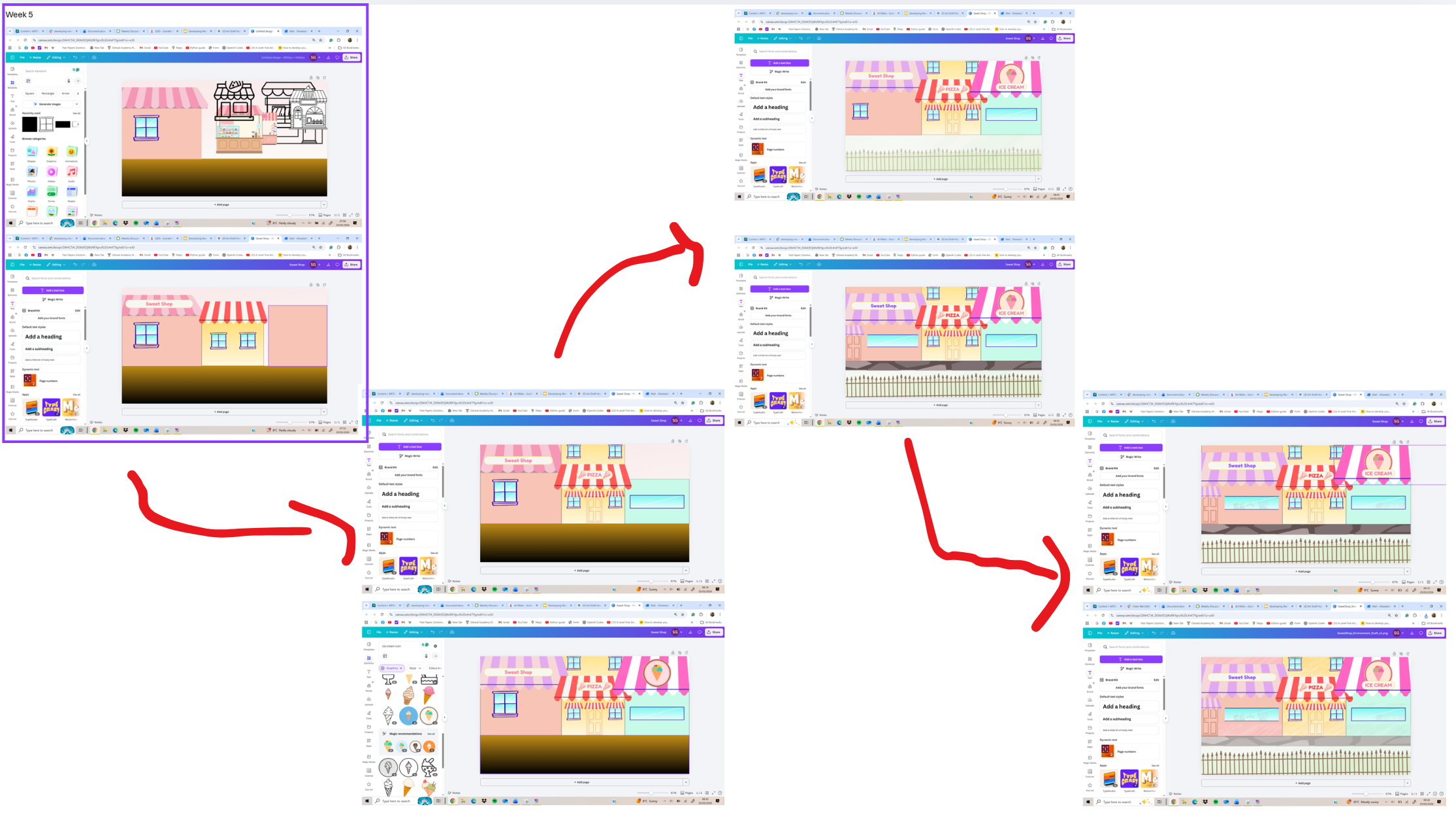
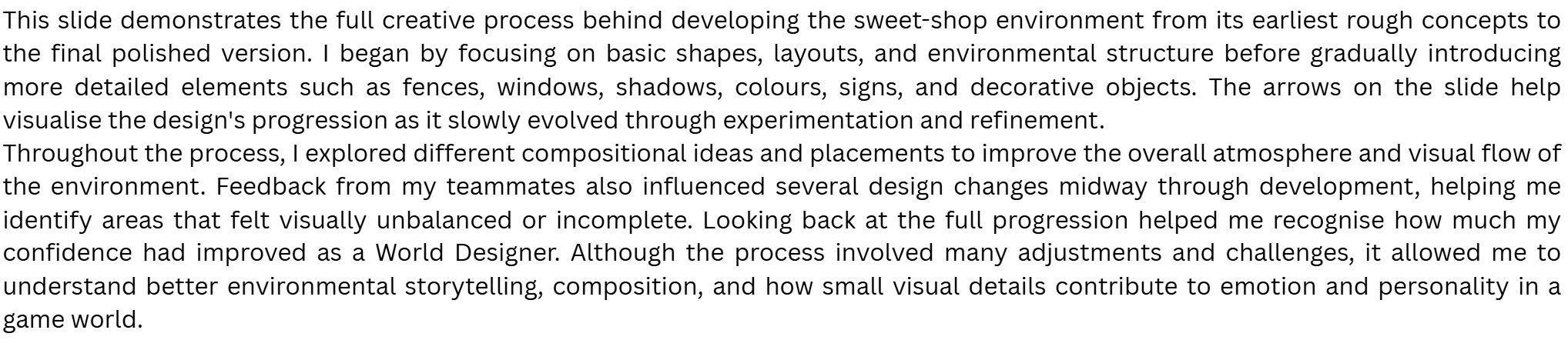
Throughout the process, I explored multiple compositional ideas and placements to improve the scene’s atmosphere and visual flow. Feedback from teammates also influenced several design changes midway through development, helping me identify areas that felt visually unbalanced or incomplete. Looking back at the progression helped me recognise how much my confidence had improved as a World Designer. Even though the process involved many adjustments and challenges, it helped me better understand environmental storytelling, composition, and how small visual details contribute towards emotion, atmosphere, and personality within a game world.
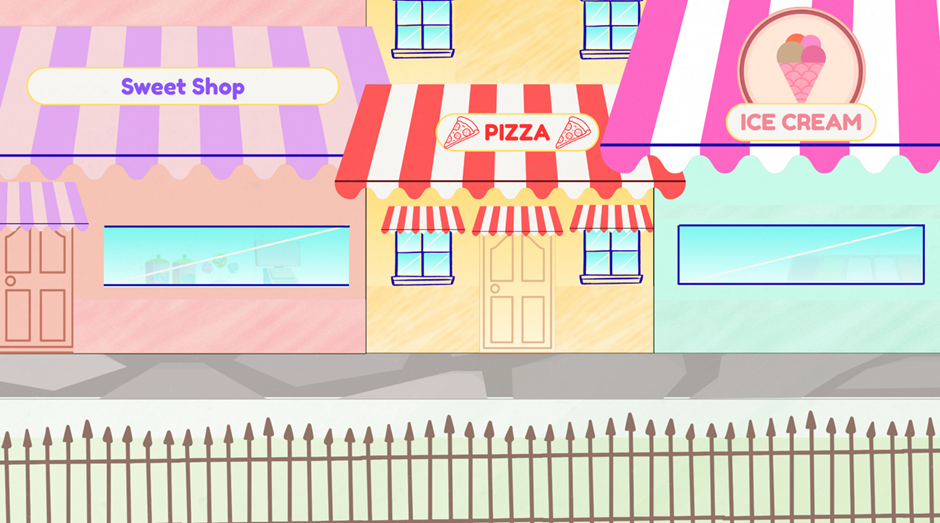
Final design of the background for our 1st playtest.
Overall, Week 5 was one of the most important weeks for me so far because it pushed me outside my comfort zone creatively and technically. Although I still struggled with certain aspects of software and environmental proportions, I became much more confident in experimenting visually and communicating ideas with my team. Seeing my work evolve from rough concepts into environments ready for an actual playtest made me realise how much progress I had made on the project, both as an artist and as a collaborative designer.