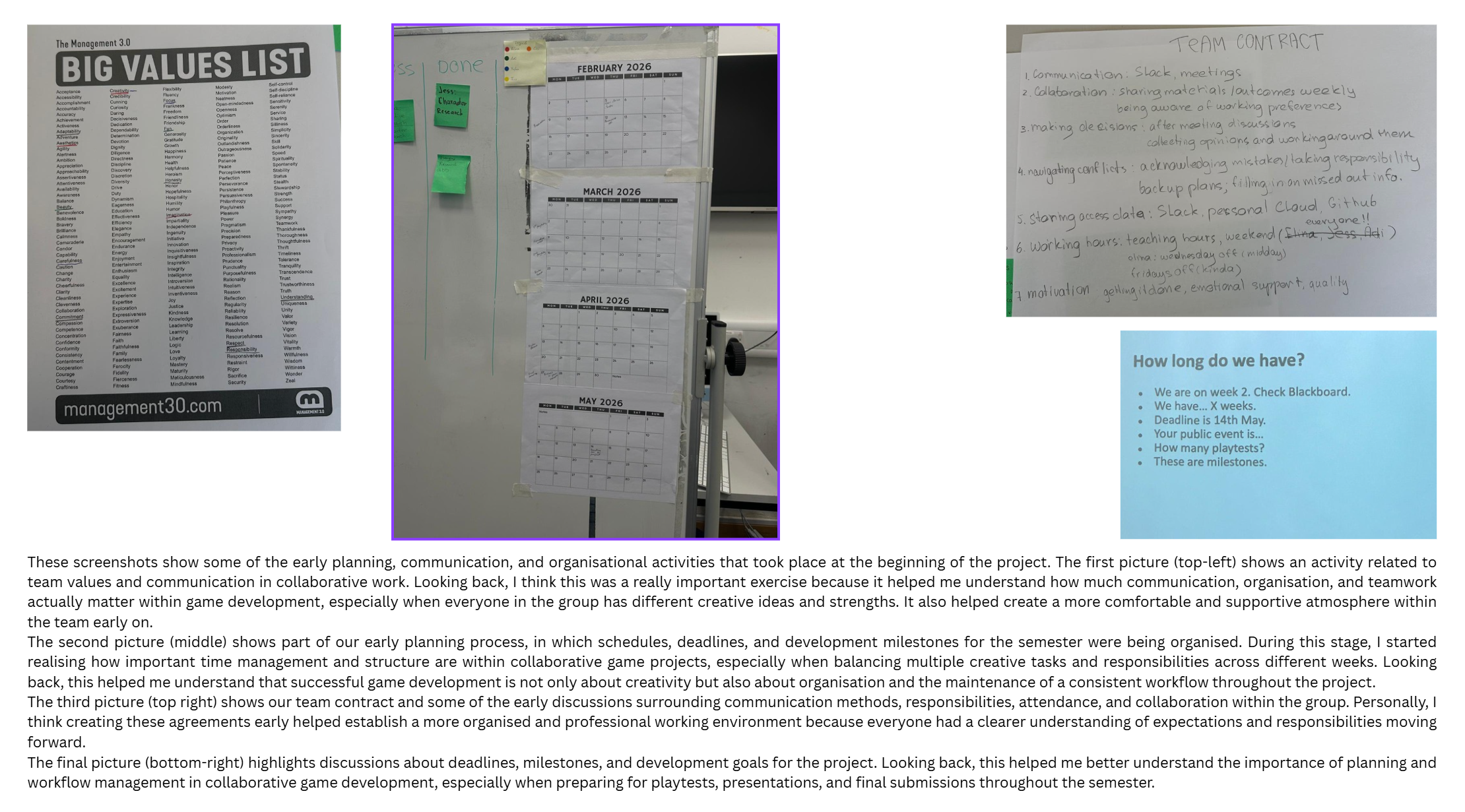
During Week 2, our group became more organised and more serious about the project’s direction. We began creating team contracts, discussing responsibilities, planning milestones, and developing ideas that could eventually be implemented into the game. Looking back, I think this week was important because it helped us move from simply discussing ideas to building a proper workflow and collaborative environment as a team.
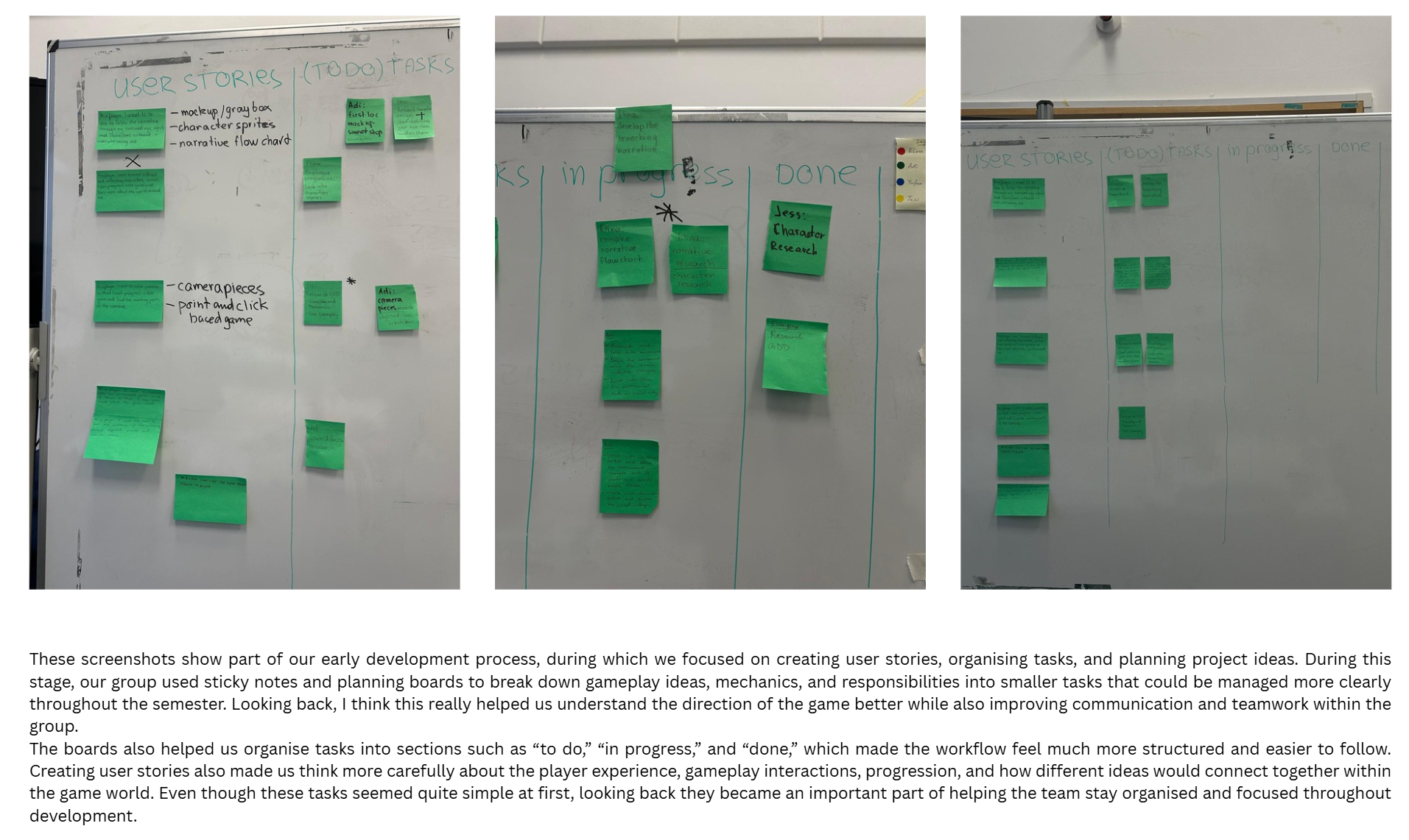
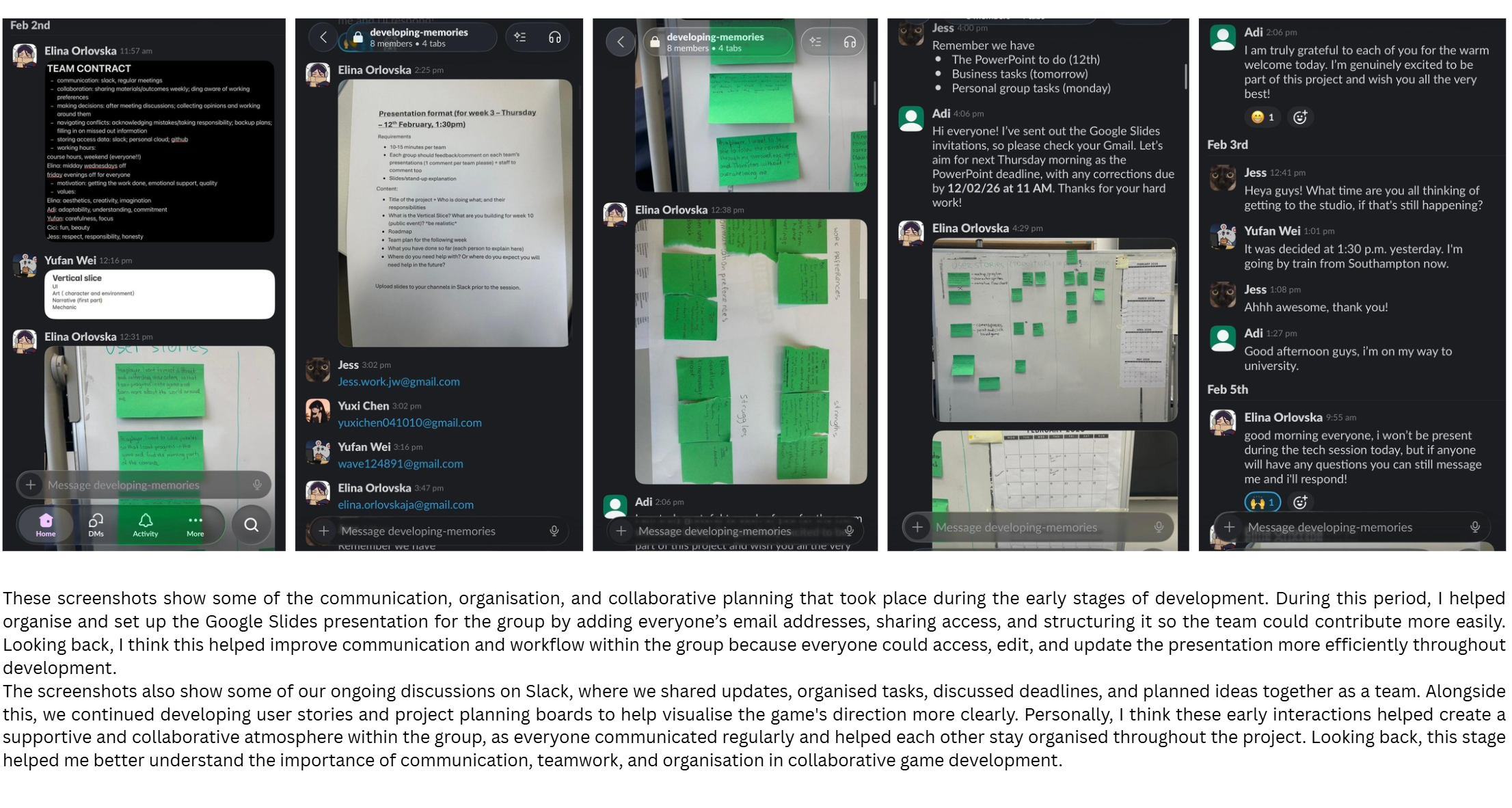
During workshops, we worked on planning boards, semester schedules, communication activities, and user stories using sticky notes and collaborative exercises to break gameplay ideas, mechanics, and responsibilities into smaller, manageable tasks. The planning boards were divided into sections such as “to do,” “in progress,” and “done,” which made the workflow easier to visualise and helped the group stay more organised throughout development. Looking back, I realised how important organisation and communication are in collaborative game projects, as even small planning activities were crucial to keeping the team focused and productive.
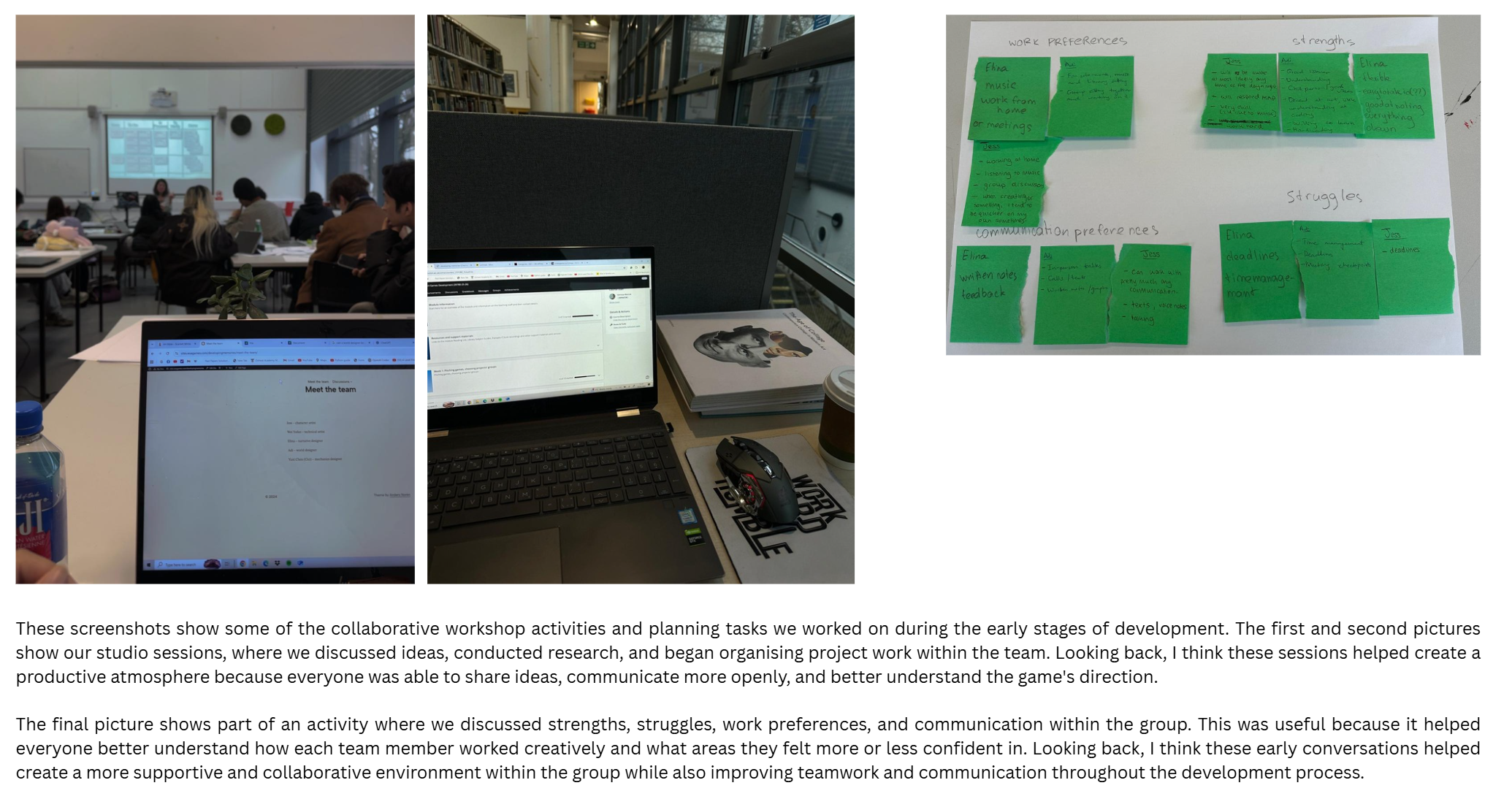
Alongside this, our group constantly communicated through Slack, workshop discussions, and collaborative planning sessions where we shared updates, organised tasks, discussed deadlines, and helped each other throughout development. Personally, I think this constant communication helped improve teamwork because everyone stayed up to date and contributed more effectively throughout the week. During this period, I also helped organise and structure the collaborative Google Slides presentation for our upcoming Week 3 presentation by adding everyone’s email addresses, sharing permissions, formatting slides, and helping structure the overall presentation layout so the team could contribute more efficiently. Looking back, I think this improved workflow within the group because everyone could access, edit, and update the presentation more easily throughout development.
We also completed activities related to communication styles, strengths, struggles, and work preferences within the team. I think these discussions were really useful because they helped everyone better understand how each team member worked creatively and what areas they felt more or less confident in. Looking back, I think these early conversations helped create a more supportive and collaborative environment within the group and improved communication throughout the development process.
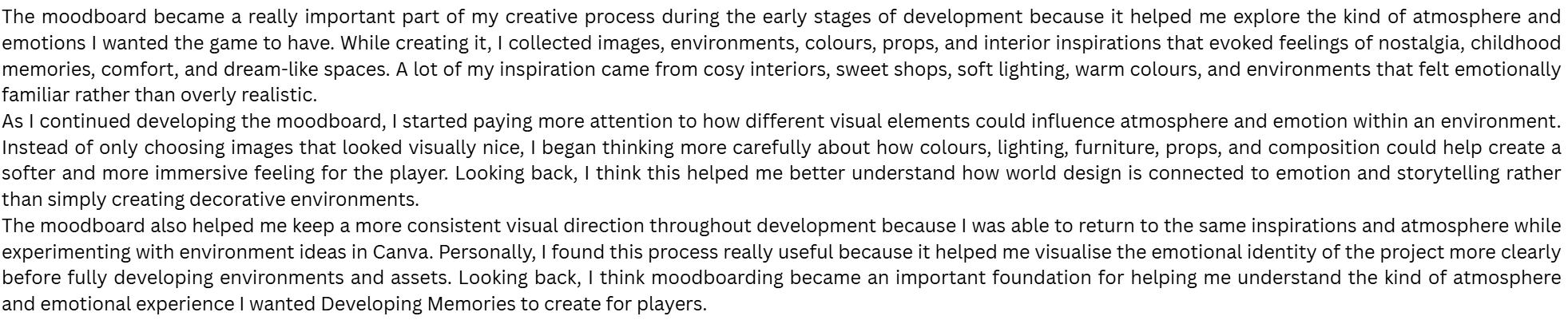
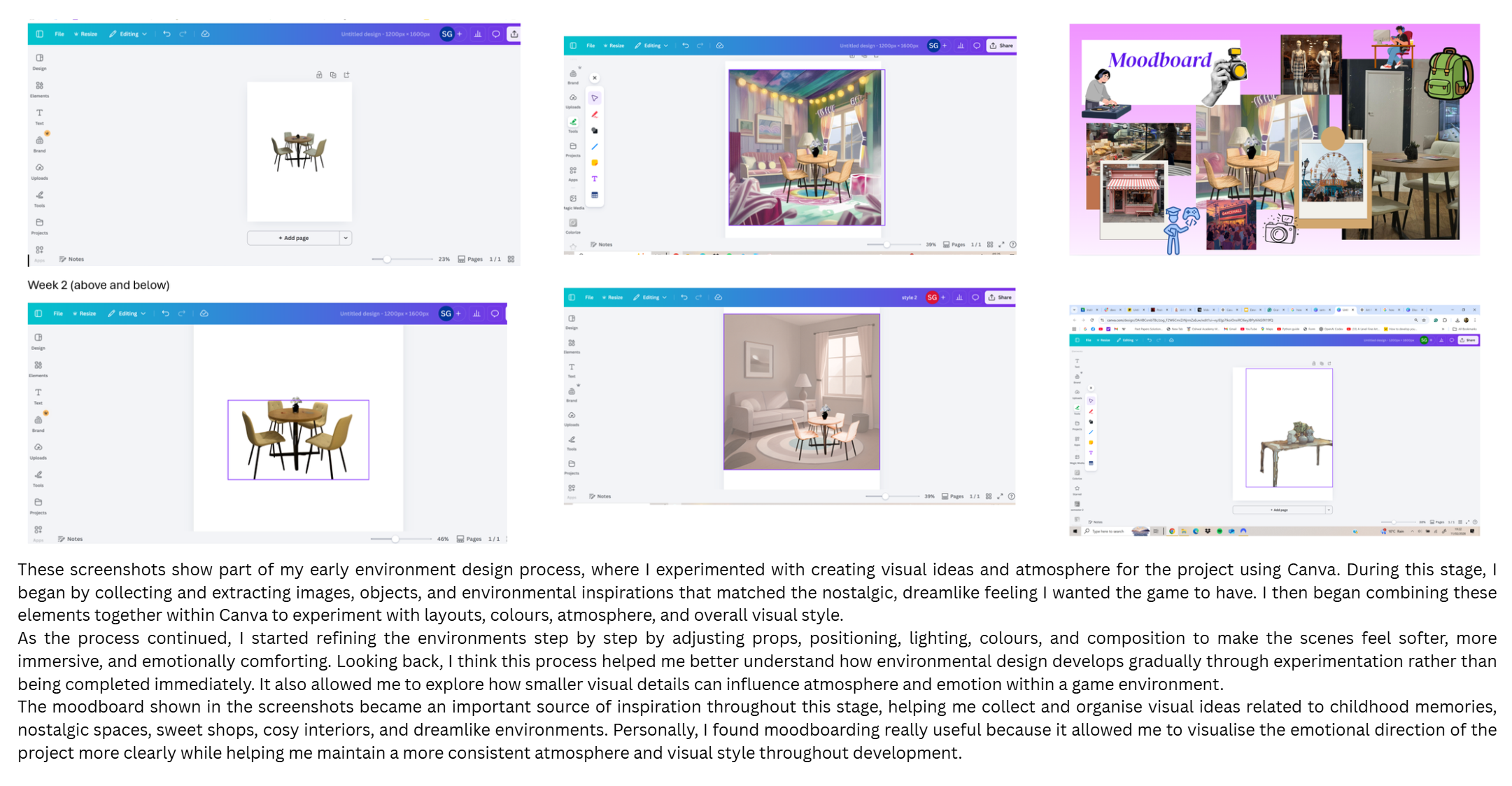
Alongside the planning and communication work, I began developing visual concepts for my role as World Designer. During this stage, I began collecting photographic references and inspiration from Southampton and Winchester, focusing on nostalgic locations, cosy interiors, sweet shops, dreamlike environments, warm lighting, and emotionally comforting spaces that matched the atmosphere we wanted the game to have. I then experimented with these ideas in Canva by extracting images, combining visual elements, testing layouts, and trying different compositions to explore how certain colours, props, lighting, and environmental details could influence atmosphere and emotion. Personally, I found this process really useful because it allowed me to experiment freely with ideas before moving further into full environment development.
The moodboard became a very important part of my creative process this week because it helped me visualise the project’s emotional direction more clearly. While creating it, I focused heavily on childhood memories, nostalgic spaces, cosy interiors, sweet shops, dancehall environments, and dreamlike atmospheres. I wanted the environments to feel emotionally immersive rather than simply visually attractive. As I continued experimenting in Canva, I refined the environments step by step, adjusting colours, positioning, props, lighting, and composition to make the scenes feel softer, warmer, and more immersive. Looking back, I think this process helped me better understand that world design is closely connected to atmosphere, storytelling, and player emotion, rather than simply creating decorative backgrounds.
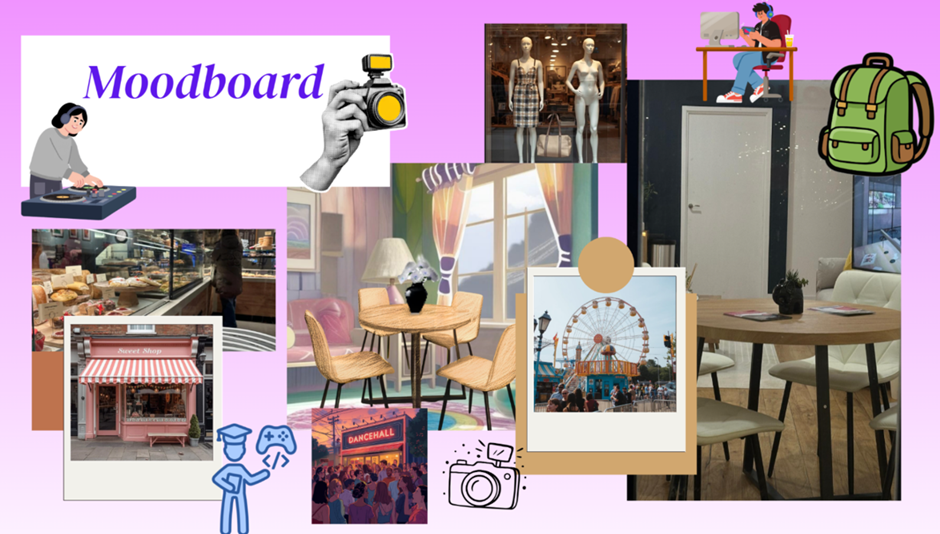
The moodboard also helped me maintain a more consistent visual direction throughout development by allowing me to return to the same inspirations and atmosphere while experimenting with new environment ideas. Personally, I think this became one of the most useful parts of my early design process because it helped me understand the emotional identity I wanted Developing Memories to create for players.
https://docs.google.com/presentation/d/1D3XFqnEh8JaLosx9vS7pRjICAN_Nb1G4vE97oh_UpOk/edit?usp=sharing
(Click the file below to open the collaborative Google Slides presentation created during the early stages of development)^
Overall, Week 2 helped me develop a much stronger understanding of collaboration, communication, planning, atmosphere, workflow management, and early visual development within game production. Looking back, I think this week marked the point at which I became more actively involved in both the creative and organisational aspects of the project. The combination of communication activities, collaborative planning, user stories, presentation organisation, moodboarding, and experimenting with ideas in Canva helped me better understand the importance of teamwork, atmosphere, and visual storytelling within world design.
(Click on the audio file to hear my reflection for this section)^