Week 8 was one of the most important weeks of this project for me because it was our second major playtest before the Easter break. By this stage, the project had progressed much further than our earlier prototypes, and I could finally start to see how the environments, atmosphere, and overall experience were coming together naturally. Alongside preparing for the playtest itself, I continued improving my visual work, reflecting on feedback from previous weeks, and updating my blog posts to document my progress throughout the semester properly.
A large part of this week focused on preparation, communication, and teamwork leading up to the playtest. The Slack conversations included within this blog show how active the team became during this stage of development, with constant discussions surrounding playthroughs, updates, feedback, fixes, and preparation before testing the game with players. Compared to earlier weeks, the workflow felt much more organised and collaborative, as everyone was contributing ideas and helping improve different areas of the project together.
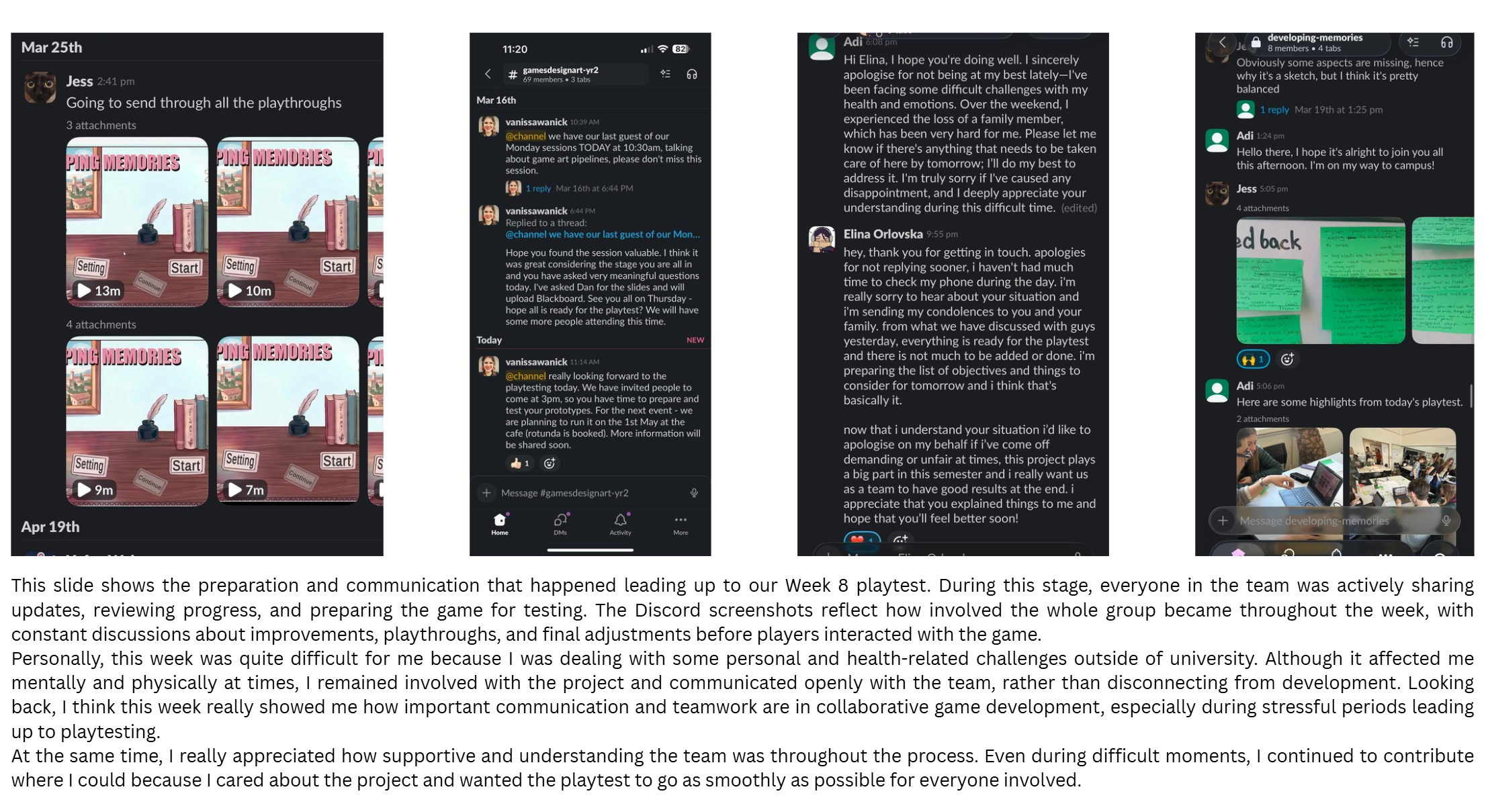
Personally, this week was also quite difficult for me outside of university because I was dealing with personal and health-related challenges at the time. Despite this, I still wanted to remain as involved in the project as possible and continue communicating with the group, rather than completely stepping away from development. Looking back, I think this period taught me a lot about responsibility, communication, and teamwork within collaborative game development. Even during stressful moments, I wanted to continue supporting the project because I genuinely cared about the outcome and wanted the playtest to go smoothly for everyone involved.
The actual playtest itself became one of the most valuable learning experiences for me throughout the semester. Watching players interact with the game in real time completely changed the way I viewed environmental design. Earlier in the project, I was mainly focused on creating environments that looked visually appealing and matched the nostalgic atmosphere of Developing Memories. However, observing players during the playtest helped me realise that environments also need to guide players naturally, communicate information clearly, and support the overall gameplay experience.
The photographs included within this week capture different moments from the playtest session, including players interacting with the game, reviewing environments, discussing feedback, sketching ideas, and analysing different aspects of the experience together. Seeing people actively move through spaces I had helped design made the project feel much more real to me. It was rewarding but also eye-opening because I could immediately notice which parts of the environment felt successful and which areas still needed improvement.
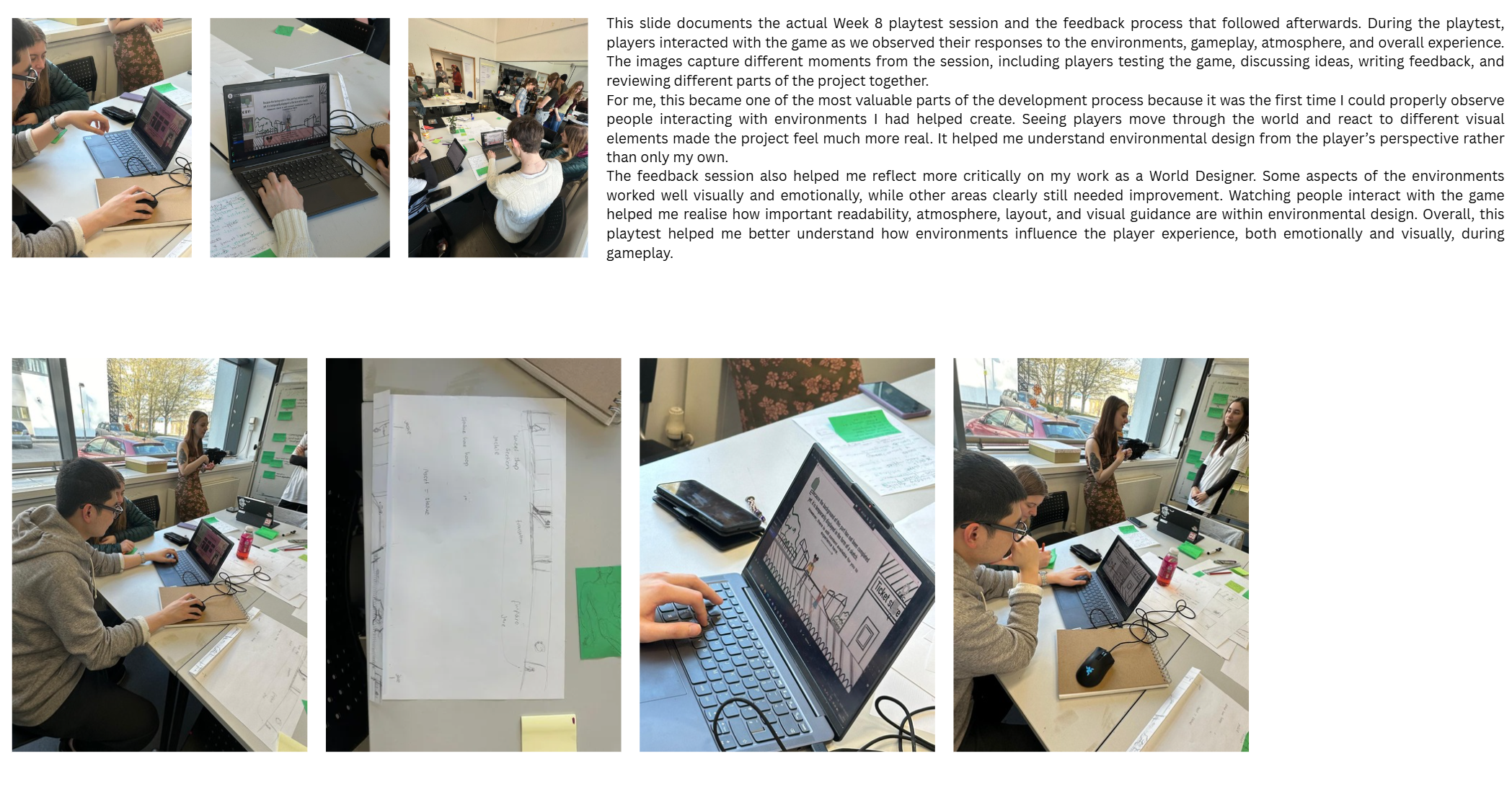
During the feedback process, I paid close attention to how players emotionally reacted to the environments and visual atmosphere. Some elements worked well in creating the soft, nostalgic feeling we wanted, while other aspects highlighted areas where readability, structure, or visual communication could still be improved. This encouraged me to reflect much more critically on my role as a World Designer and helped me better understand how environmental storytelling can influence the player experience, both emotionally and visually.
Alongside the playtest itself, I also continued updating and improving my blogs throughout the week so they accurately reflected my development process, experimentation, challenges, and learning over time. Revisiting earlier work made me realise how much my confidence had grown over the semester, especially when comparing my first environmental experiments with the more refined environments and workflows I had begun producing by Week 8.
Overall, Week 8 became an important period of reflection, collaboration, and creative growth for me. Although the week brought personal challenges and the pressure of the playtest, it also helped me better understand how environmental design functions in real gameplay. Watching players interact with the world we had created gave me a much stronger understanding of atmosphere, player engagement, readability, and emotional storytelling within games. More importantly, it made me feel far more connected to the project and much more confident in my development as a World Designer.