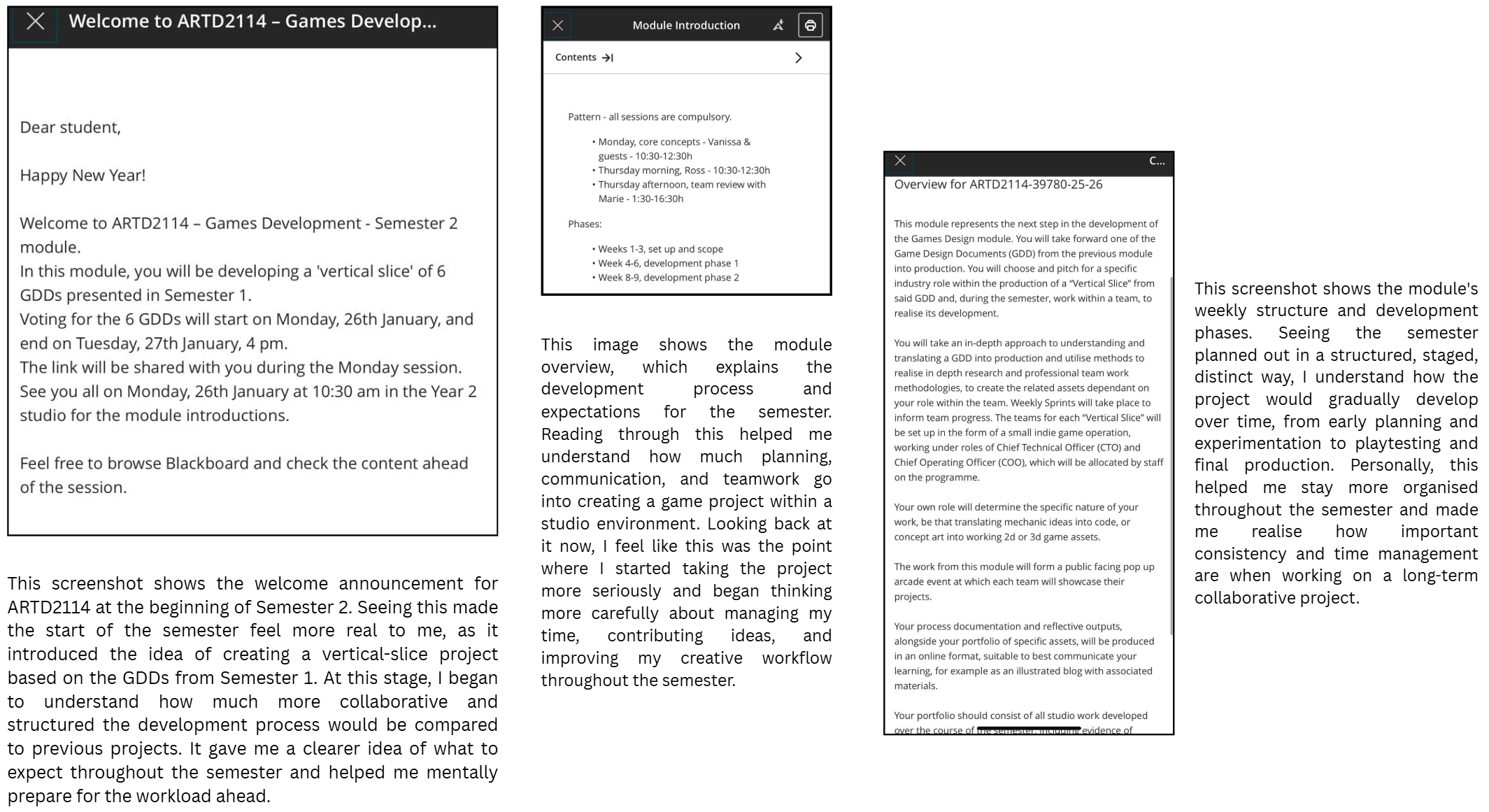
During the first week of the Games Development module, we were introduced to the structure, expectations, and overall goals for the semester. The lecturers explained that we would be working in teams to develop a vertical slice project based on selected GDDs from Semester 1. From the beginning, this semester already felt much more collaborative and structured than previous individual work, especially because everyone on the team would eventually contribute different creative skills to the same project.
The main idea behind the vertical slice was to create a polished section of a game that clearly demonstrates the core gameplay, atmosphere, mechanics, and overall player experience rather than simply creating an unfinished prototype. In our first session, we discussed the concept of a vertical slice in more detail and how it differs from early prototypes or proofs of concept. Looking back, this helped me better understand the importance of atmosphere, immersion, and presentation in game development, even in the early stages of production.
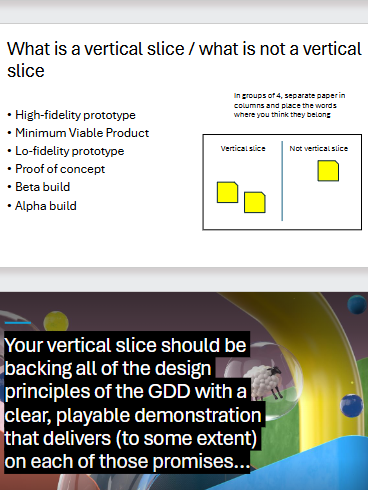
Lecture slide explaining the concept of a vertical slice and how it differs from early prototypes.
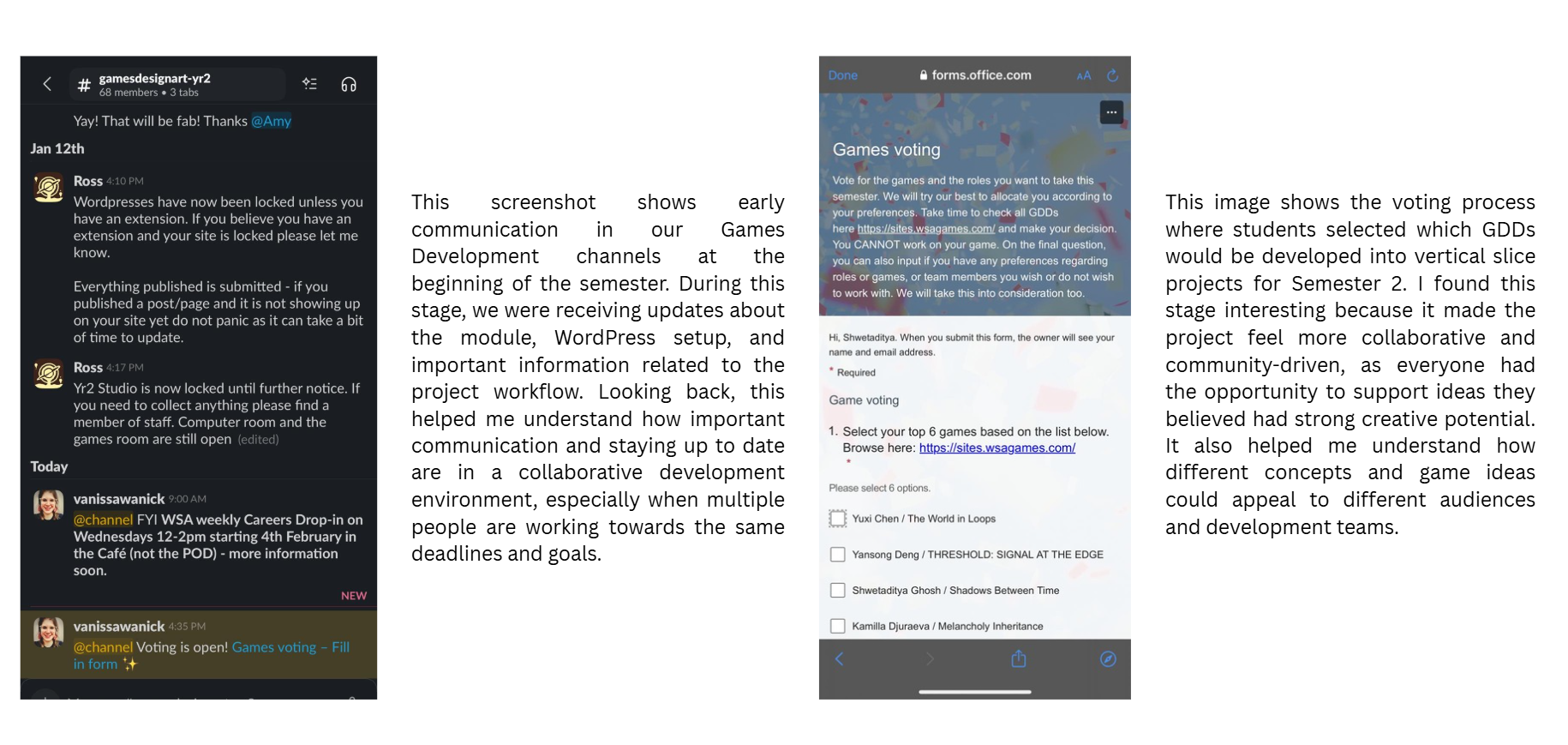
Later in the week, we went through the voting process before being assigned to our development teams. After the voting stage, I was placed into Team 2 – Developing Memories alongside other students with different creative roles and responsibilities. Personally, this was one of the first moments when the project started to feel genuinely collaborative for me because everyone in the group brought different ideas, perspectives, and creative strengths to the development process. It felt less like individual university work and more like working with a small creative studio.
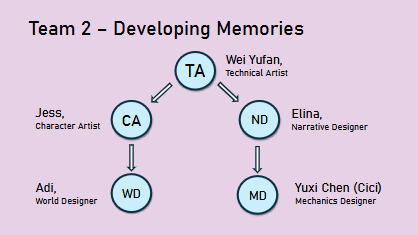
Team structure for our project outlining the roles and responsibilities within our development team.
One of the main focuses at this stage was establishing communication channels and organising how we would work together throughout the semester. We created Slack groups, introduced ourselves, discussed responsibilities, and began planning the project’s direction. Looking back, I think this early communication was extremely important because it helped create a supportive and welcoming atmosphere within the team from the beginning. Having open discussions early on made later collaboration, idea sharing, and feedback feel much more comfortable and natural throughout development. Throughout the workshop sessions, we also started discussing our responsibilities within the project and understanding how different creative roles contribute towards the overall development process. At this stage, I began thinking more carefully about atmosphere, environmental storytelling, and how visual design can influence players’ emotions and immersion in games. Although development had not yet fully started, these early conversations helped me understand that collaborative game development relies heavily on communication, planning, and organisation before moving into production.
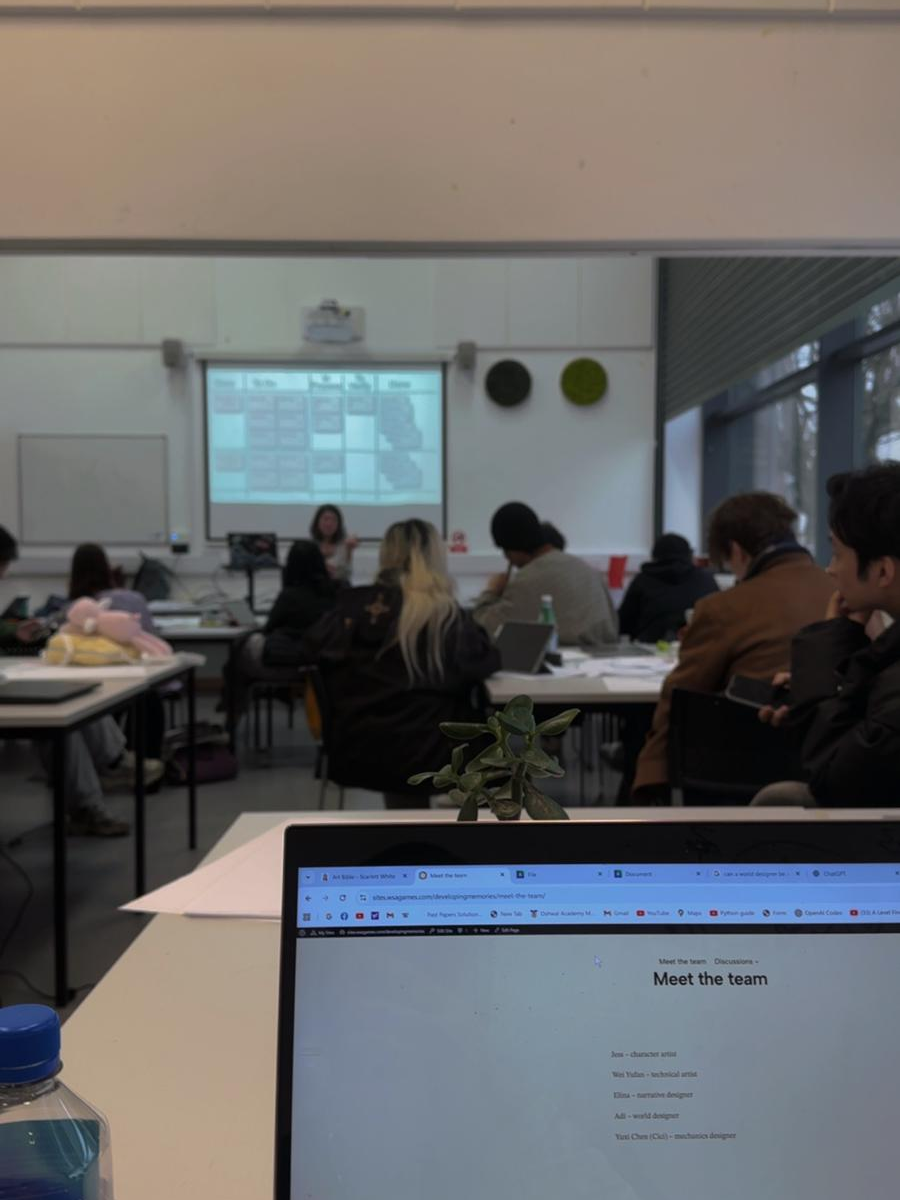
Studio session in which teams were introduced, and project planning began.
Another important part of Week 1 was beginning to understand how collaborative creative projects evolve through communication and flexibility. Since everyone in the group had different ideas and creative strengths, communication quickly became one of the most important aspects of the group’s development. Through early discussions, I began to understand how closely gameplay, narrative, mechanics, and visual design connect to support the overall player experience. Although the first week focused heavily on introductions, organisation, communication, and planning rather than final production, I still found it creatively valuable because it helped establish the foundations for everything that would follow later in the semester. It gave me a clearer understanding of the project, helped me feel more comfortable within the team environment, and allowed me to begin exploring the emotional and visual direction I wanted to develop moving forward.
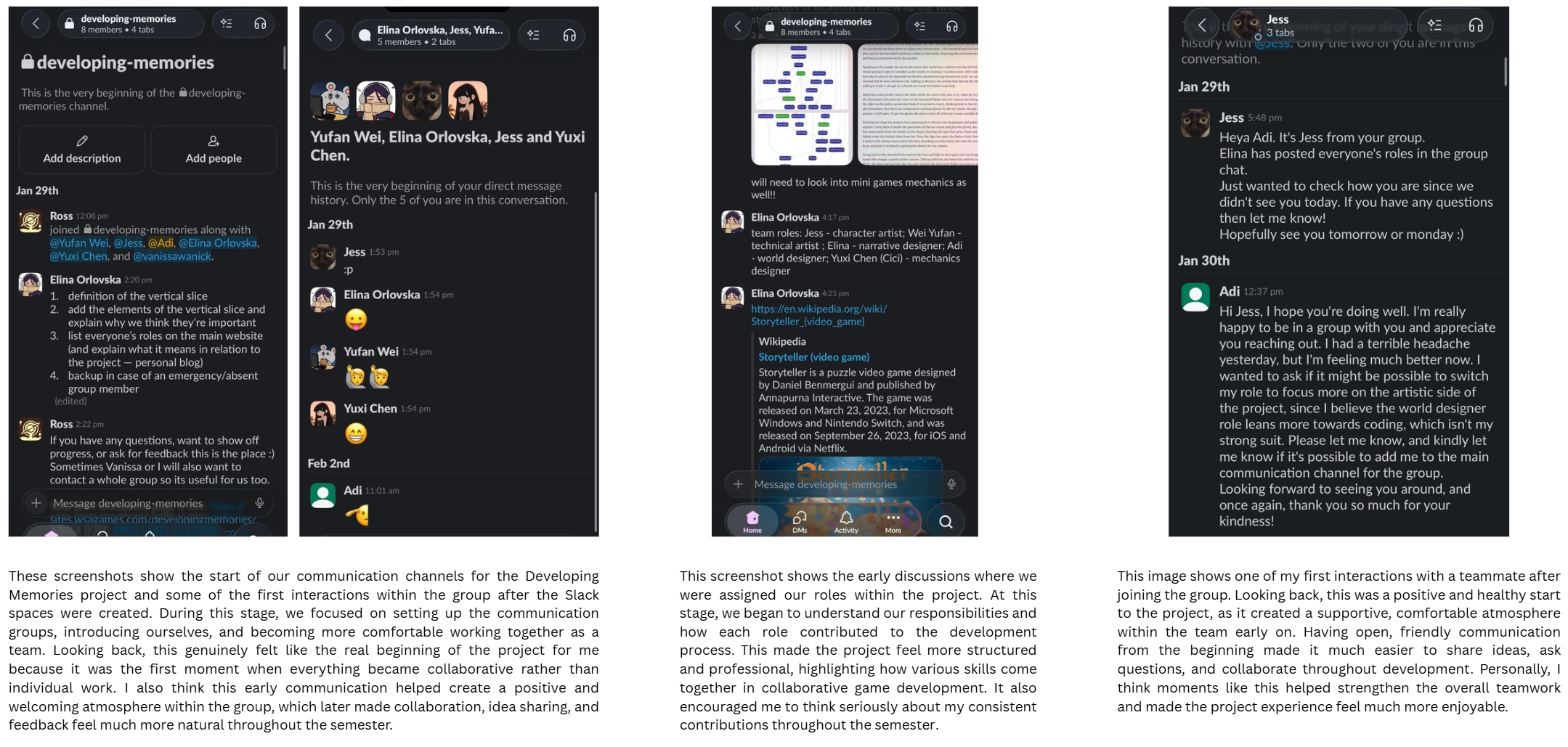
Reflecting on Week 1 overall, I believe this stage was extremely important because it introduced me to the collaborative side of game development and helped me begin to develop a stronger understanding of atmosphere, visual storytelling, and player immersion in games. Even though the project was still in its early stages, Week 1 helped establish the communication, planning, teamwork, and creative foundations that continued influencing my work throughout the rest of the project.
(Click on the audio file to hear my reflection for this section)^
(This blog highlights my research into the role I was assigned in the project)^
(Click on the audio file to hear my reflection for this section)^