This page presents an overview of the research, iterations, and experiments I conducted throughout the Yr2 game collaboration project. It also includes my personal changes in role and reflections during the project, along with a link button to the relevant Week Blog content.
More detailed documentation and evidence can be found in the linked weekly Blog.
Project Development
Although at the beginning of the project I was assigned the role of world designer, I did not strictly adhere to this responsibility. Throughout the entire project, I continuously adjusted my work content based on my own strengths and the needs of the team, and gradually made more contributions in areas such as level design, white-box development, project iteration, testing, and implementation.
[Week 1–2: Early Role & Concept Development]:
During this stage, my main responsibility was to provide the creative documents of the game for the team members to refer to, such as listing different gameplay mechanisms, references for the game’s artistic style, references for the game’s narrative structure, etc. Also, I would discuss with the team what kind of game we needed to make.
[Week 3–6: Level Design & White-box Development]:
After roughly establishing the general concept of our game, I began to focus more on level design and white-box development. Since some team members were less familiar with the game engine, I took on more responsibility for designing the levels based on my previous gaming experience and building the corresponding white boxes in the engine. I also collaborated with the mechanics designer to integrate the game mechanics into the white-box levels.
During this stage, my design direction gradually deviated from the team’s original intention. Fortunately, we later identified this issue through discussion and adjusted the direction of the level design, bringing the project back in line with our shared goals.
During this period, the level white box went through three major iterations, with substantial changes to the layout and structure each time.
[Week 7–10: Testing, Iteration & Final Development]
After clarifying the direction of level design, my role gradually shifted from large-scale white-box construction to testing, iteration, and final implementation. Based on discussions with team members and feedback from playtests, I continuously optimized the level content.
During this stage, I collaborated with other team members to integrate the latest game mechanics and environmental resources into the levels. Additionally, based on playtest feedback, I improved player guidance by adjusting the level layout and adding clearer visual and textual instructions. Some early design ideas were simplified or deleted due to exceeding available time or technical capabilities.
In the final stage of the project, my responsibilities shifted from primarily creating white-box levels to refining and integrating various parts of the game to create a more complete and playable experience. I also assisted in preparing the final version and packaged the project materials for the final playtest.
Personal Development
Throughout the entire project process, I not only enhanced my design skills, but also deepened my understanding of teamwork, technical implementation, and iterative development. In the early stages of the project, I mainly focused from the perspective of a designer, concentrating on conceiving ideas and drawing level layouts. However, as the project progressed, I gradually delved into the actual implementation, testing, optimization, and integration phases.
The most important lesson I learned is that a good design idea alone is not sufficient; it also needs to consider technical feasibility, production time, communication with team members, and player feedback. Some of my early designs relied too heavily on personal understanding and game experience, resulting in multiple major revisions. Through these experiences, I learned to express design intentions more clearly and support my decisions with research, playtesting, and team feedback.
Overall, this project helped me become more flexible in terms of roles. I gradually adjusted my responsibilities according to project requirements, no longer merely remaining at the level of a world designer, but rather more deeply understanding the entire project workflow.
Research
Throughout the entire project, I utilized a variety of research materials to support my design and development work, including books, existing games, screenshots, online tutorials, and gameplay videos. I not only used these materials as visual references, but also gradually began to analyze what inspirations they could bring to me and how this knowledge would affect my actual creation.
My research mainly focused on three areas: level and space design, game play, and technical implementation. These reference materials had a significant impact on my white-box level development, the structure of the pool area, player paths, climbing and sliding areas, and some technical solutions adopted in Unreal Engine.
“An Architectural Approach to Level Design”
Resident Evil 9, Elden Ring – Hub / Spatial Structure
Honkai: Star Rail – Climbing Mechanic
CrossFire – Jumping / Platform Challenge Reference
Sliding Mechanic Research & Tutorial
Unity’s white-box building process
Iteration
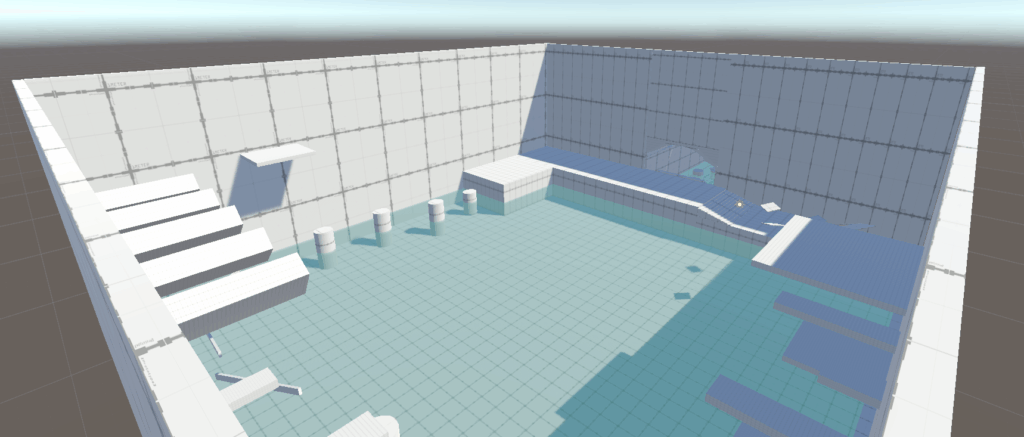

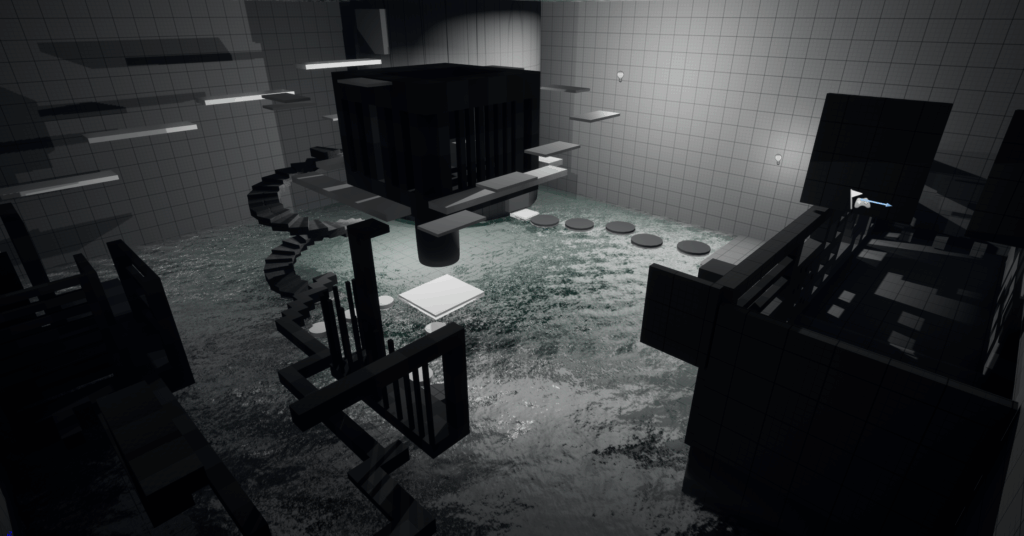
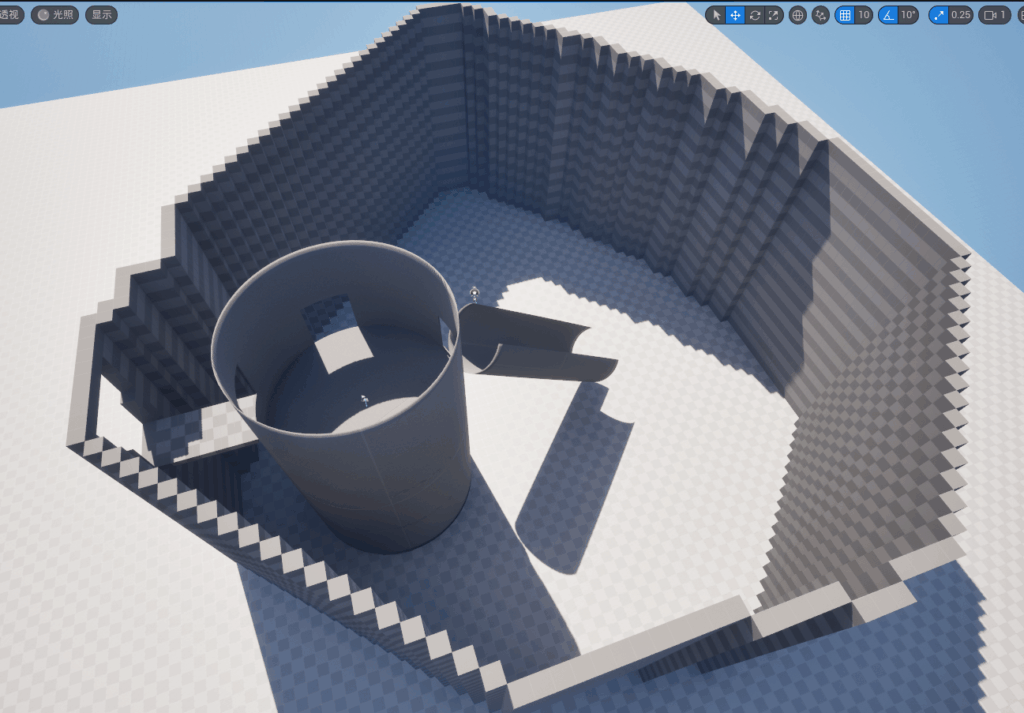
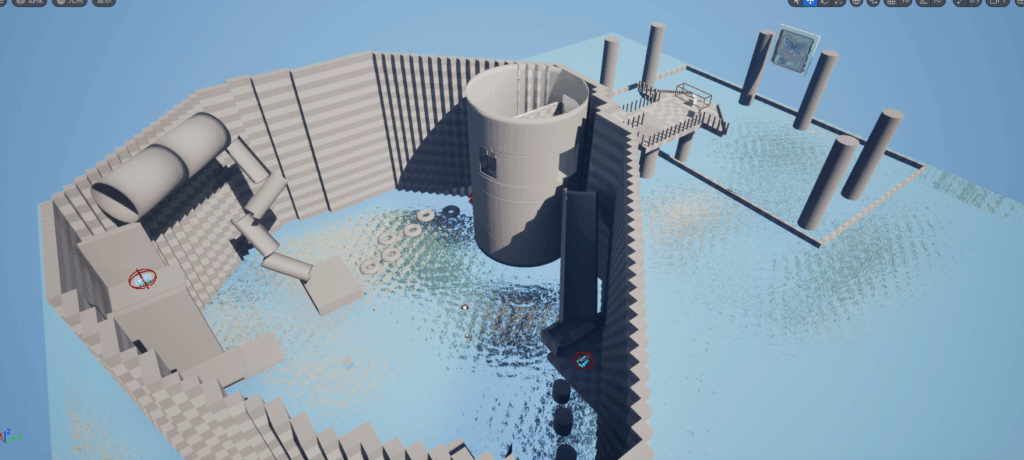
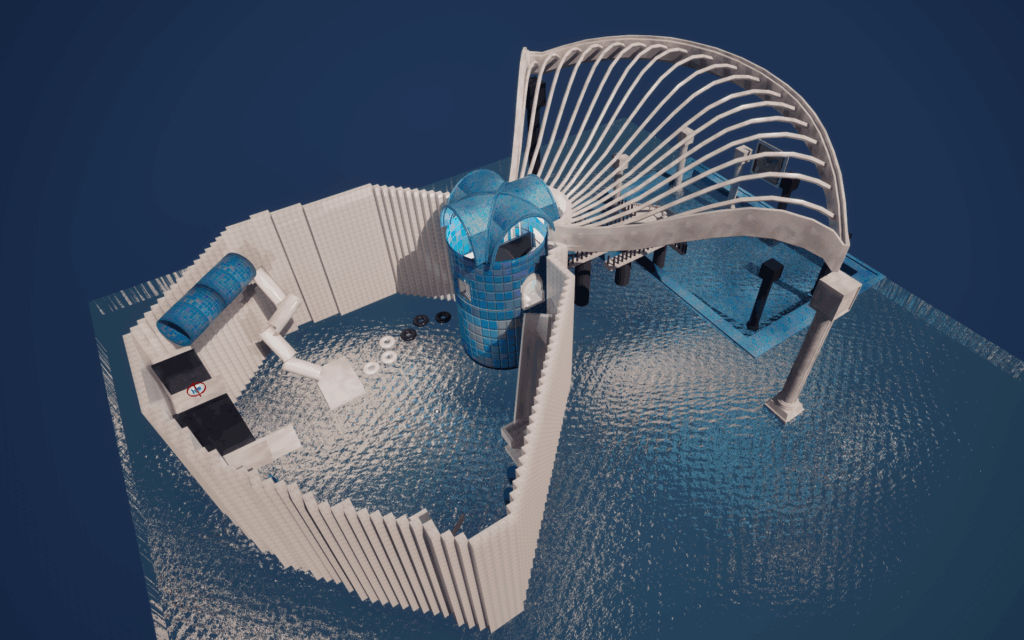
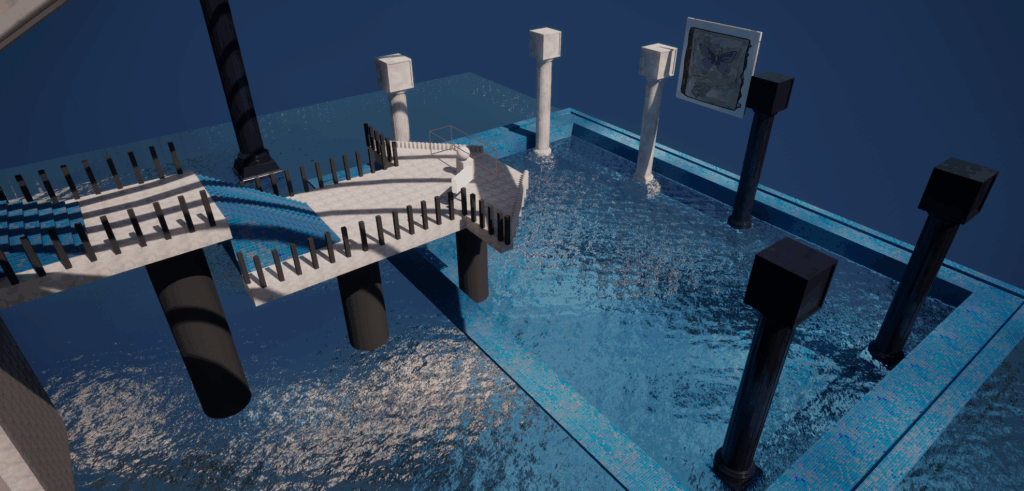
Throughout the project, the level went through several major iterations. The images above show the development from the early white-box prototype to the final playable level. Each iteration was influenced by playtesting feedback, team discussions, research, and technical limitations. The detailed development process, design decisions, and reflections for each stage can be found by clicking the corresponding images above.