After the game testing and until Thursday of the sixth week, I also conducted preliminary reflection and further discussions with the team members. I realized that the previous version of the level white box was overly dependent on jump challenges in terms of level space. Although this made the prototype functional, the overall spatial logic and puzzle design were still weak.
So, I quickly made changes to our game levels. This time, I referred to the level design experience of games like “Resident Evil 9, Elden Ring” and other sandbox games that I had recently played. I carried out a large-scale modification of our original game levels. At the same time, based on the feedback from the game testing day, I fixed many erroneous coordinate axis blocks in the project and adjusted the movement speed of the characters, etc.
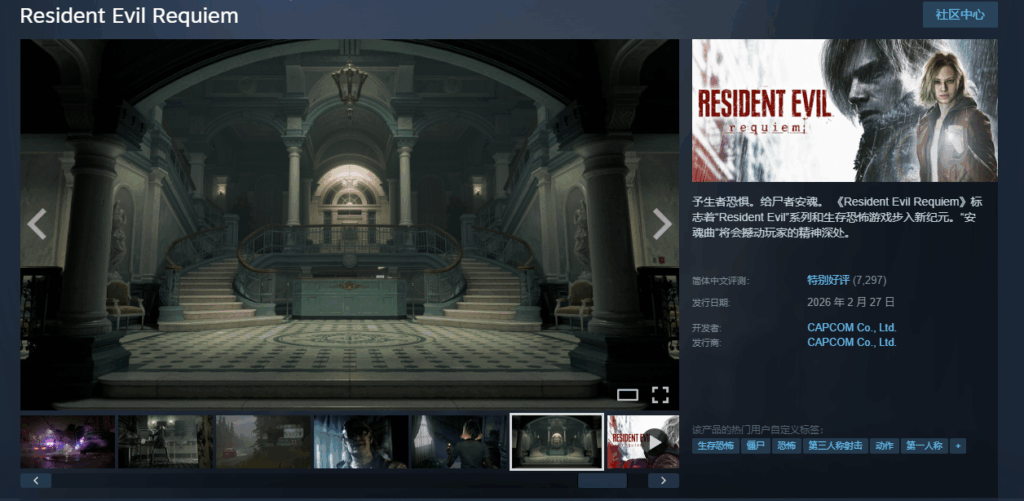
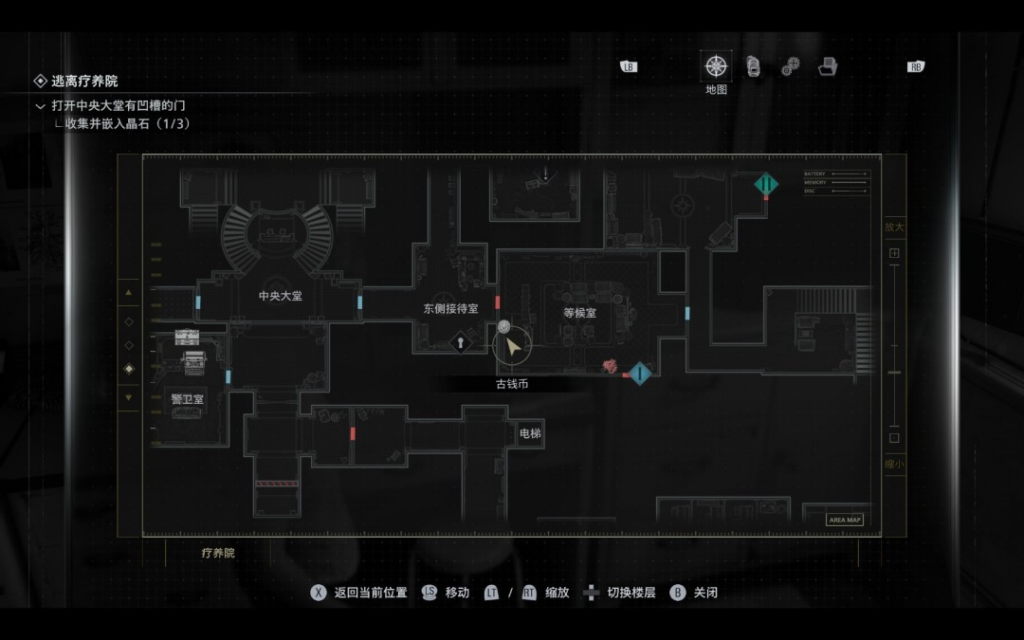
Resident Evil 9 Game Map
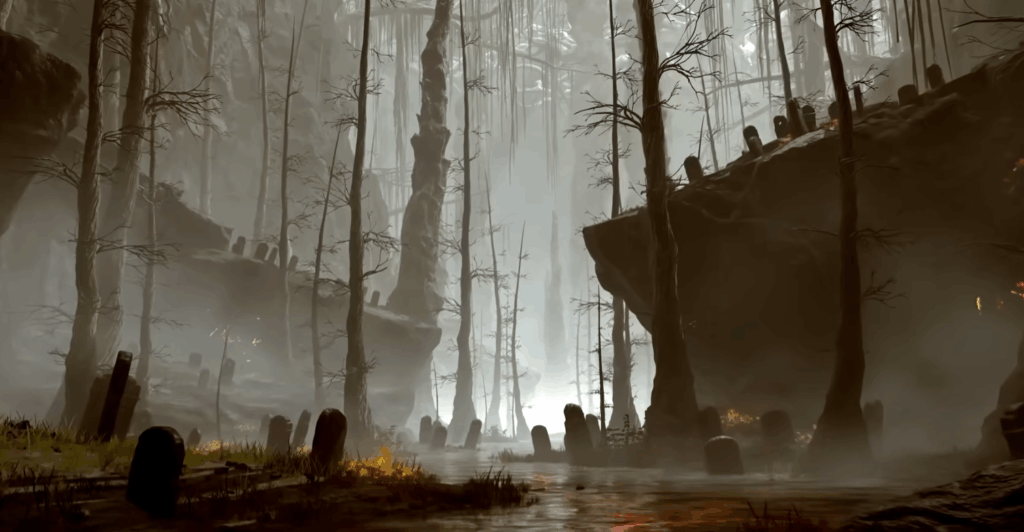
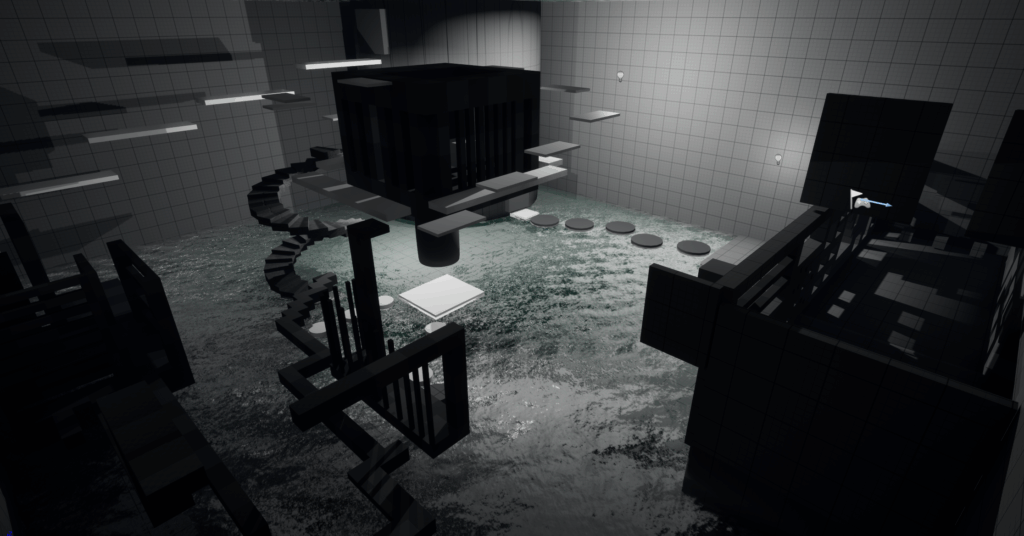
In the design of this second version of the levels, I focused on the box-like map design of the game “Resident Evil”. The relationship and connection methods between the core room and other rooms were the main points I paid attention to. This helped me think that perhaps I could also use the swimming pool as the core hub of our game. Therefore, most of the in-game buildings in the second version were centered around the swimming pool.
From “Elden Ring”, I mainly learned how to guide players in a relatively large space through means such as lighting, items, etc., rather than relying solely on textual descriptions. This influenced the guiding design in my second version of the levels. I attempted to make the player’s path clearer and more readable through spatial layout, height differences, ramps, and visible destinations.
After discussing with Erik on Monday, he created a simple clay model and a concept document for this level. This helped me better understand his visual design intentions and the overall atmosphere of the space. At the same time, I also gained a deeper understanding of the modeling mode in Unreal Engine and how to adjust the rotation points and coordinate axes of objects between different engines.
After multiple discussions within the team, we decided to use the shared concept document to more clearly guide the main direction, while I focused on advancing the detailed white-box implementation within that direction. This helped to more clearly define my responsibilities.
Reflection on Team Communication
Since some of the concept diagrams were presented from a limited perspective, I misunderstood some of the originally designed layouts. More importantly, I did not promptly express my concerns to Erik. Therefore, based on my own understanding, I added several design elements, such as a cage-like structure, but these elements failed to provide sufficient guidance for the players, causing the level to deviate from the common design plan.
Looking back, I realized that I should have clarified things earlier instead of relying too much on my own understanding and ideas. This was an important lesson for me: in team collaboration, when there are doubts about certain requirements, one should discuss with other members to figure out exactly what the team wants, rather than relying solely on one’s own understanding and making assumptions. This can easily lead to deviations in the plan.
The main ones were as follows:
Cognitive bias in division of labor: The environment art (Kamilla) and world design (Jeremy) had a blurry boundary for their responsibilities, and the disconnection of work led to a very low matching degree between concept art and level design.
Disagreement in GDD execution: I was worried that deviating from the GDD would affect the score, while another part of the members proposed that personalized modifications could be made based on the GDD. Both sides did not communicate fully due to concerns.
Information transmission barrier: The single-angle concept diagrams provided by Erik and the PDF reference documents still failed to enable Jeremy to accurately understand the layout of the level, resulting in the white box of the level not matching the expectation. And there were also language differences, as the four members of the team included three non-native English speakers, professional vocabulary barriers, etc., which exacerbated the information deviation.
Anxiety over time pressure: All members experienced anxiety due to communication consumption and unclear tasks.
Fortunately, we quickly reached a consensus. At the same time, Professor Marrie also addressed many of our concerns regarding GDD. I hope that our subsequent work will not repeat such a mistake.
Reflection
This week has made me realize that successful level design not only depends on design skills, but also on clear communication and shared understanding within the team. In future iterations, I will clarify the design intentions earlier and communicate uncertainties promptly before implementing major changes.