This week, Erik’s clay model served as the main reference for the reconstruction of the white box. I did not directly follow my first and second versions; instead, I regarded them as early experiments and rebuilt the level structure more closely around the agreed physical model. In essence, I reviewed the strengths and problems of the two previous whitebox versions, and then built a new white box using UE5.
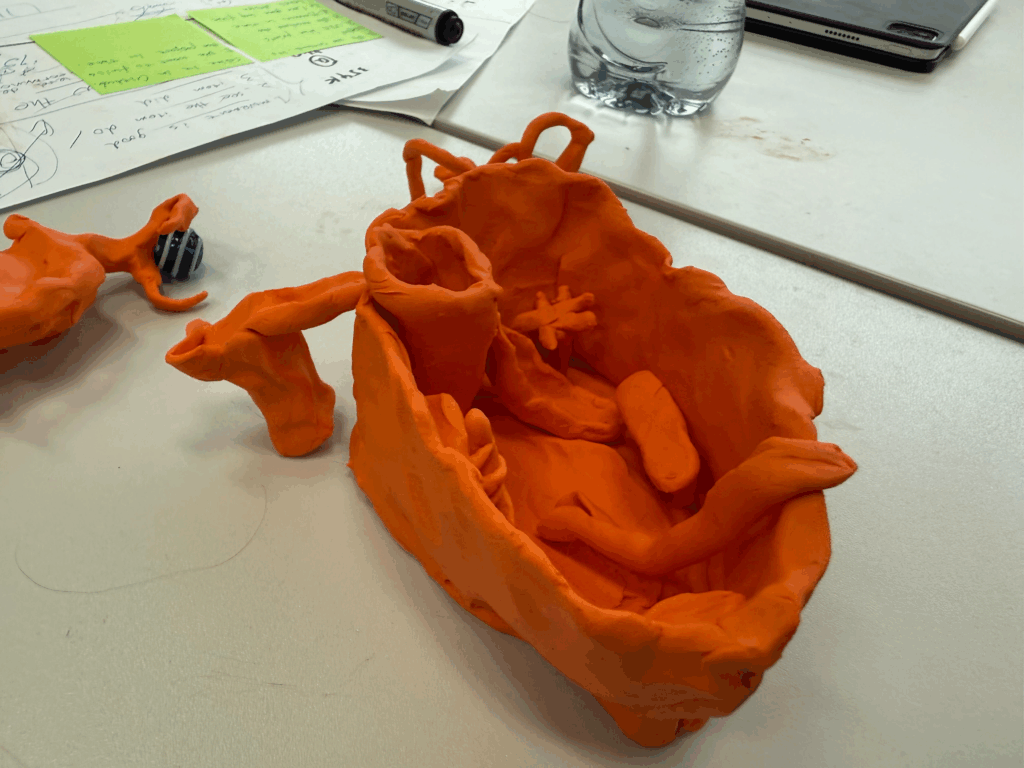

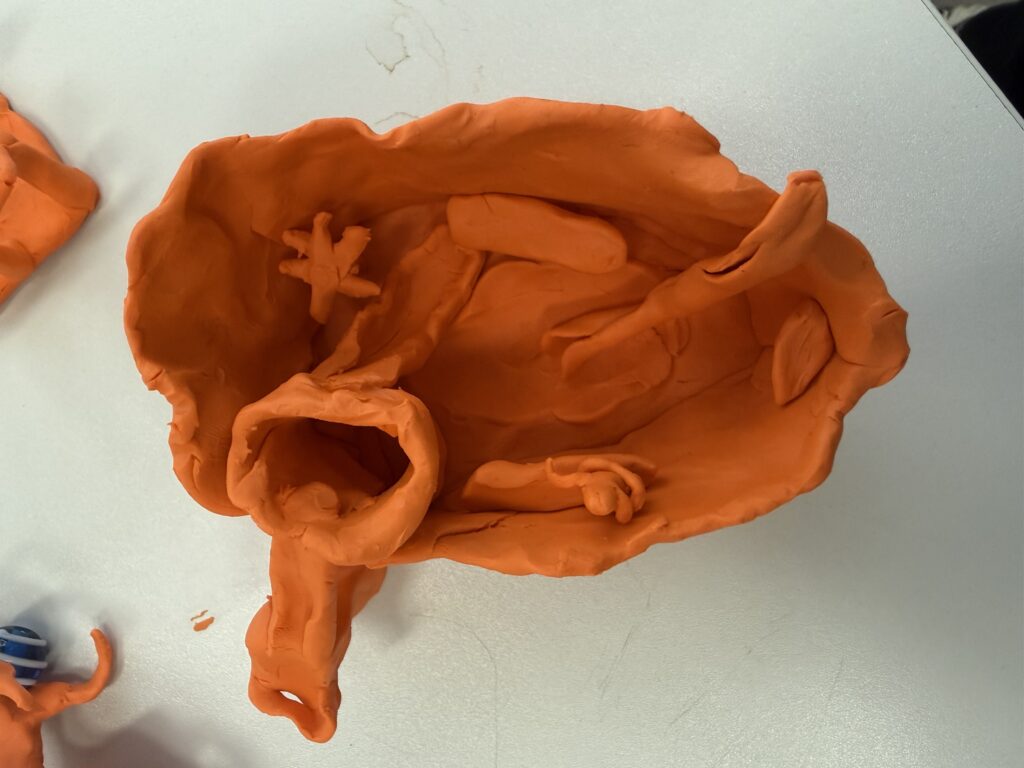
The clay model of the level created by Erik
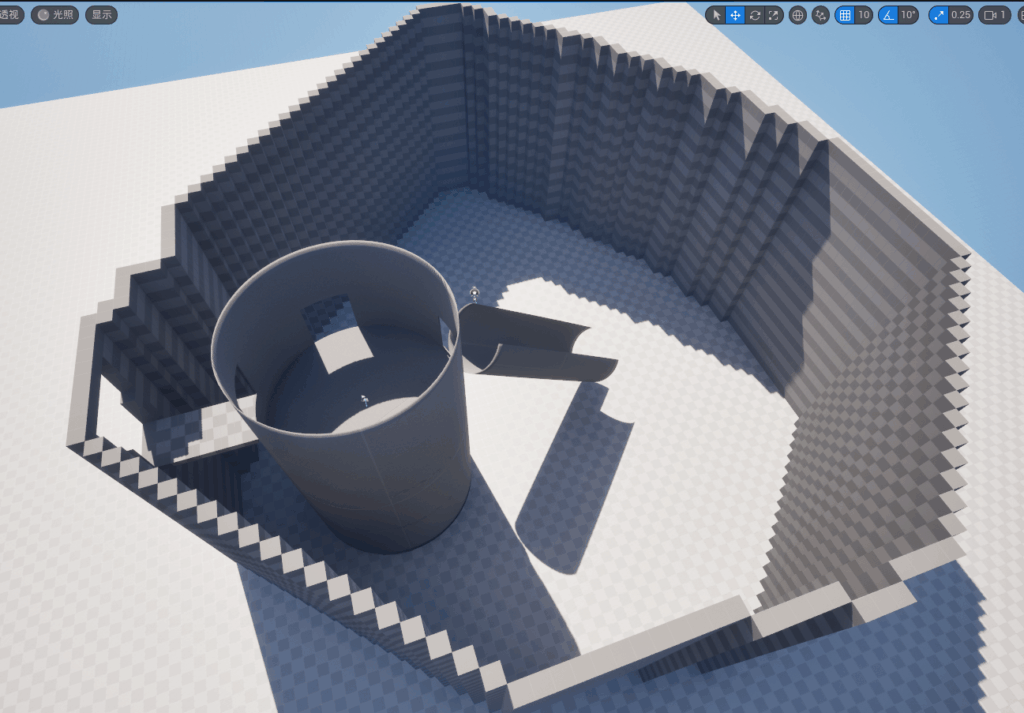
The new version of the model white box is in the UE5 engine.
This new level is divided into two parts: the visible main area and the passage on the left leading to the next level. I didn’t do much because I learned from the previous two attempts. So, I first showed Erik the appearance of the white box, and after getting his confirmation that my current direction was correct, I continued with my construction work.
During this week’s discussion, the group members proposed adding a slide mechanism to our game. I also presented two options, one being more challenging and the other being relatively simpler.
Challenge: It is necessary to search for relevant tutorials to learn how to create a sliding mechanism, and to also design the corresponding terrain. This will provide players with a more unique gaming experience. However, the drawback is that it might be difficult to complete, and it will be necessary to consult with the mechanism designer to see if it can be achieved.
Simple: Utilize the built-in gravity in the game engine to create some steep slopes. Let players achieve the “slide” effect by relying on gravity. The downside is that it might look a bit crude.
Finally, The mechanism designer stated that it is impossible to learn and create a complete sliding system within a limited time. So, in the subsequent level design process, I created large-angle slopes to simulate the effect of a slide.
Slide demonstration
This video mainly helped me understand all the various functions required for custom sliding mechanisms. For example, in the game engine, we need to perform motion detection, slope response, character speed adjustment, and collision handling. We also need to add character sliding animations for our characters. Although these technologies are beyond our current capabilities, they gave us some ideas. We can achieve similar effects with simpler methods. Therefore, I ultimately chose a simplified slope-based solution for the white box instead of designing a level that relies on a system that cannot be completed on time.
Reflection
This week has made me realize that rebuilding from a common reference point is more important than relying solely on individual understanding. By basing it on Erik’s clay model and keeping in constant contact with the team, I made the new level white box more in line with the expectations and desires of the team. We also decided to add a new sliding mechanism to our game, although we wanted this mechanism to perform better. However, considering our technical capabilities and time constraints, we ultimately made a trade-off and used a simpler alternative to achieve our idea.