Art bible and lots of art stuff
What is an art bible?
They align expectations, communicate aesthetic intent and ensure consistency
Intent – All the visual rule and guidance that fit the design vision
Action – Technical documentation and best practices
Results – Experiments
- They evolve over time
- Clarifies thinking and vision
- Builds up for the team, with more depth
What is a reference board?
- It is an annotated collage of images, textures, etc, all for the artists to use and understand the visual rules of the game
- Moodboards just give a tone for the game, whereas reference boards are specific. You should have a refence board for every aspect of the game.
Principles of art direction
- You need to know your audience
- As well as game design pillars, there should be visual pillars.
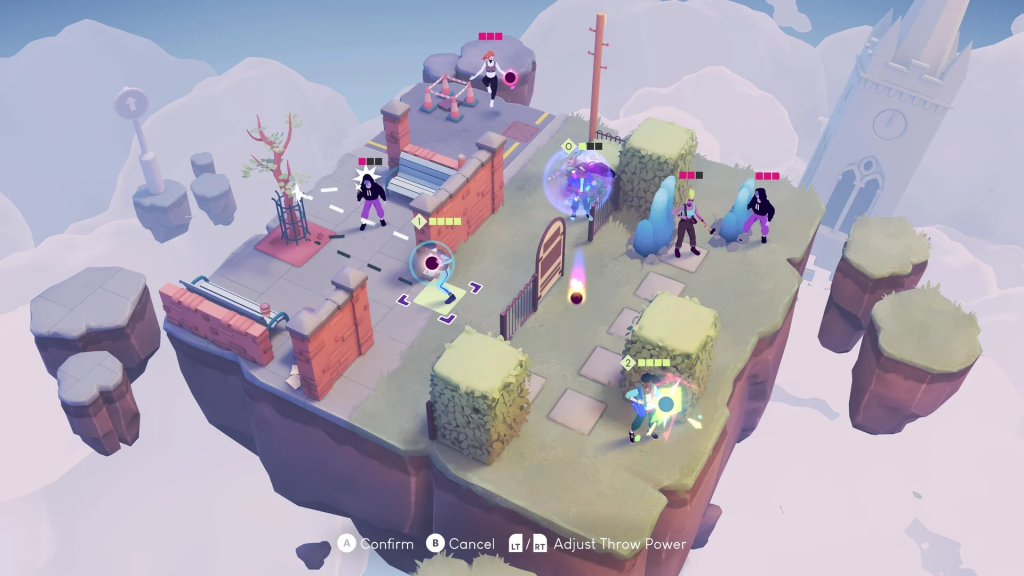
e.g. Desta: The Memories Between’s design pillars:
- Dreamlike: pastel colours, floating islands, camera angle
- Simplicity: clear UI, serif typography
- Boardgame like: grids, space, low-poly, sharp shapes/edges
Considerations
• 1. Have you used specific software?
• 2. Have you created custom brushes?
• 3. What is your colour palette for
characters/environment /etc.?
• 4. What are the HEX/RGB values of those colours?
• 5. Is the line-art consistent throughout the design?
• 6. What scale is your character to your environment?
• 7. What scale is your character to other characters?
• 8. Have you created the turnarounds needed for the
animators/3D modellers?
• 9. Are there specific technical limitations you need to
impose on your designs?
• 10. Do your final assets require any pre- or
postprocessing?
• 11. Do you require a proportions guide for your game
world?
• 12. How smooth will your animations be?
• 13. What will be the frames-per-second rate?
• 14. Will animations be consistent throughout all
characters/environments?
• 15. Have you considered the different camera positions of
your game for your designs?
• 16. Will detail be needed or lost based on those positions?
• 17. Are your designs appropriate for the historical setting?
• 18. Are your designs appropriate for the geographical
setting?
• 19. Are your designs appropriate for the activities of the
character?
• 20. Does your protagonist need to be the most beautiful
and attractive person in all existence?
• 21. Are the emotional responses of your characters
represented effectively?
• 22. Are all elements of your design in keeping with the tone
of your game?
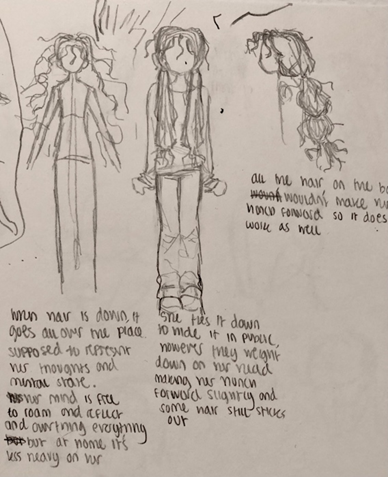
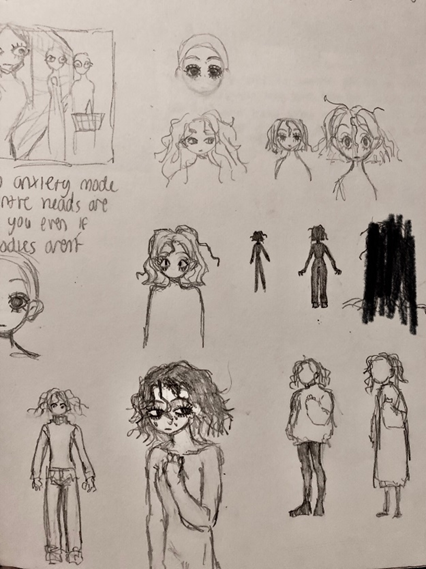
I then began trying to design a character for my game, but her anxious alert face and messy hair were the only design features I could come up with since my character is just a human trying to assimilate. Her hair is supposed to symbolise her overthinking and raging thoughts, however the design just wasn’t convincing me at all, and her hair was the only interesting part of her design.
The principles of character design
On the Thursday we had a guest talk on the principles of character design.
What is character design
- Visually defining a character appearance, personality and behaviour
- Can reflect or further develop the themes of your project
- Can create iconography that will help your game stand out. For example, you must think about whether people would want to cosplay this character.
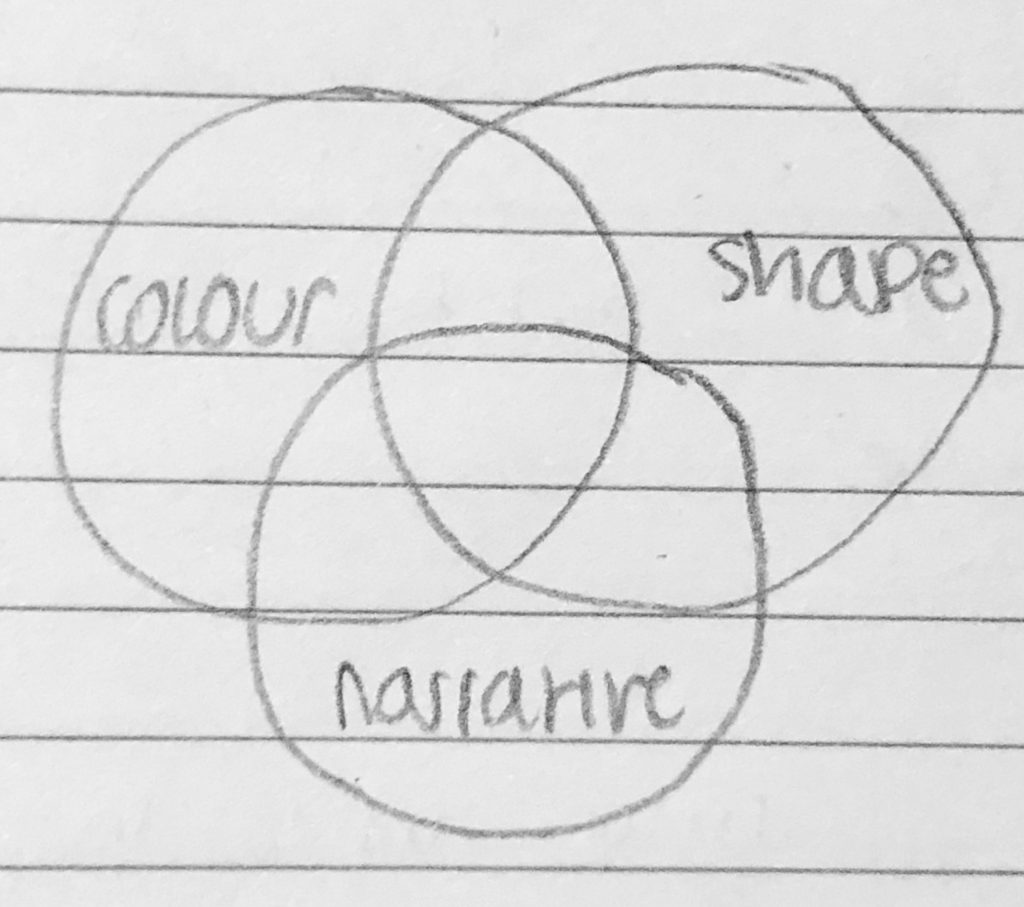
Colour
- Do they have any associations to different colours
- Think about colour theory. How do the colour work with each other
- Do the colours change according to story progression and change? For example, when levelling up or narrative development.
Shape
- What associations to different shapes do they have, and do they accentuate the characters personality? E.g. square – solid, heavy
- If the character was reduced to a solid silhouette, would they still be recognisable.
Narrative
- Do they carry an object of importance? They would be relevant to their current objective or backstory.
- Can their appearance be justified? E.g. is there a reason the character is always drenched in blood?
- If they have scars or tattoos, how did they get them or what do they symbolise.
Or you can flip it on its head and subvert expectations, but only with good reason.
I then revised the design I started on Monday and realised there’s many more things I could add to the design; I realised short hair could be changed to long thick, messy hair. At first I drew her hair down and notices that the hair looked like it was going all over the place, even stronger than with the short hair, so I thought that perhaps the girl ties her hair down to hide how crazy and almost alive her hair is. For shape design I was envisioning a dumbbell, so I tried to make her hair look like two weights weighting down on both sides of her head in pigtails, however they didn’t look like dumbbells at all, it was still a start though.