Level design
This week we looked into level design, which I the creation of spaces, missions, stages or scenarios, along with structuring the game flow, moment to moment challenges and the path through.
The role of a level designer is to plan navigable spaces, game mechanics and dynamics, challenge and guidance. Planning the space includes grey boxing the environment, and then the environment artist works with that.
Core Principles
Flow: Designing player’s journey
This is about creating a guideline for narrative arcs, skill development, special design, etc. achieved utilising structure play through rhythm and pacing.
You have to understand what the player learns in each segment, where the tension rises and falls, and how each space might reward the player’s curiosity or skill.
A structural example we were given to implement these was:
introduce -> develop -> twist -> conclusion
Affordances
The environment teaches interaction, such as textures, proportion, objects, shape & form, and layout which should communicate what can be done without the use of text.
What can the player infer by just looking? Is a material visibly climbable or is it just decoration? Can you use shape, light or motion to signal possibility?
Ex. A wall that can be broken down will stand out as a pile of rocks into a mountain wall, or something like in this picture.
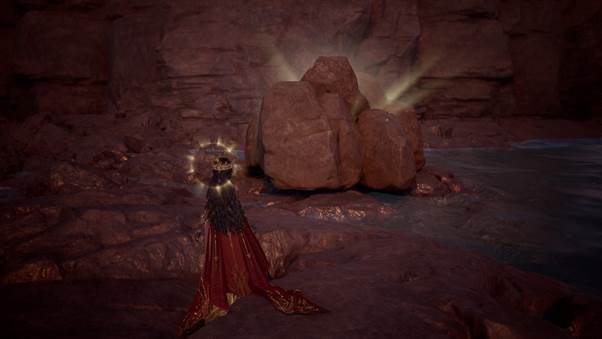
Figure 1 Infinity Nikki, 2024
It is clear that this pile of rocks has something inside it
Guidance: Visual & Spatial Cues
Direct the player subtly through composition, helping to lead exploration while preserving freedom
Ex. Colour & contract, lighting and shadow, motion, size and scale
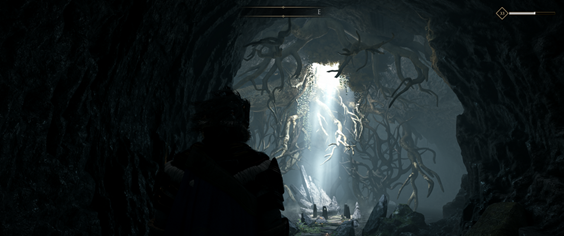
Figure 2 Greedfall, 2019
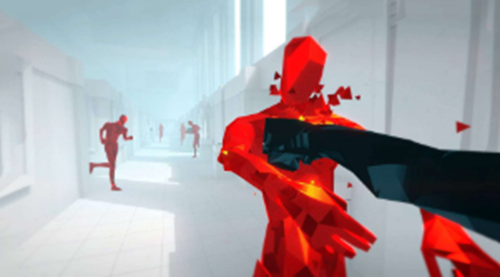
Figure 3 Supershot VR, 2016
Spatial orientation can manifest as Spatial Composition such as Pathways and leading lines, Landmarks, Arenas, Framing and perspective, Cognitive Mapping such as cognitive load, Familiarity, and intuition.
Level design procedures
• Spatial Layout & Narrative Action Bubbles
• Blockmesh
• Environment Art
• Scripting
• Lighting
• Optimisation
• Playtest
We looked at how games take on a phenomenological approach, which is the concept of experiencing a thing through a lens of experience that connects them to the human experience, not by simply viewing the thing as it is. For example, a mug through the view of Empirical Realism is its material, volume, weight, hardness, thermal conductivity, etc. whereas by Phenomenology, the concept of holding or containing is not drawn solely from empirical experience, but from past experience, so the jug isn’t just an object, but a thing that connects matter and human experience.
This is the baseline of immersive experience in game spaces. In the presentation two quotes were used to illustrate. “Players want to engage not with the screen but with a
fictional world these images bring to mind.” (Nitsche, 2008)
“Nothing is experienced by itself, but always in relation to its
surroundings, the sequence of events leading up to it, the
memory of past experiences.” (Lynch, 1960)
Spatial Layout & Narrative Action Bubbles
Game Flow Breakdown: Narrative Action Bubbles
Segments of a game level where specific actions or gameplay mechanics are concentrated, its’ point is to break down levels into manageable and focused experiences, it also helps with variety in pacing.
Blockmesh (greyboxing)
This is used to mapout the game environment just using geometric shapes during early development. It helps establish scale, layout and flow and test mechanics and gameplay before the details are added on top.
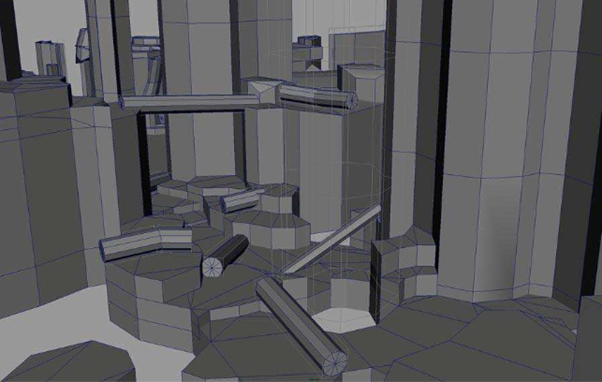
Figure 4 image credit | Erick Pangilinan, Art Direction for Uncharted 2: Among Thieves – GDC 2010 & Naughty Dog, Uncharted 2 (2009)
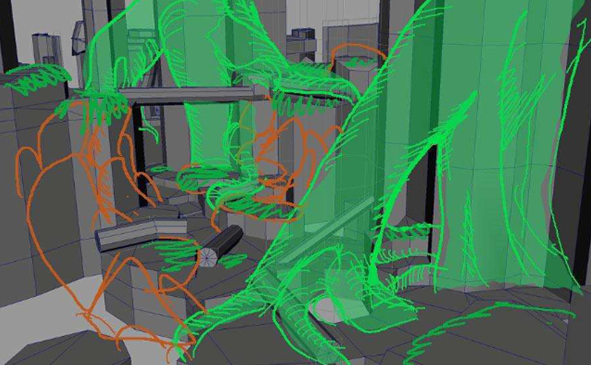
Figure 5 image credit | Erick Pangilinan, Art Direction for Uncharted 2: Among Thieves – GDC 2010 & Naughty Dog, Uncharted 2 (2009)
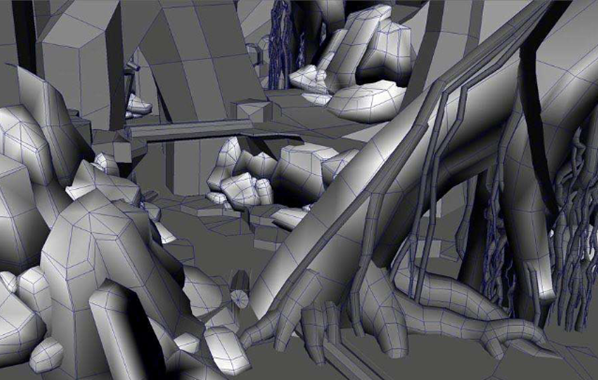
Figure 6 image credit | Erick Pangilinan, Art Direction for Uncharted 2: Among Thieves – GDC 2010 & Naughty Dog, Uncharted 2 (2009)
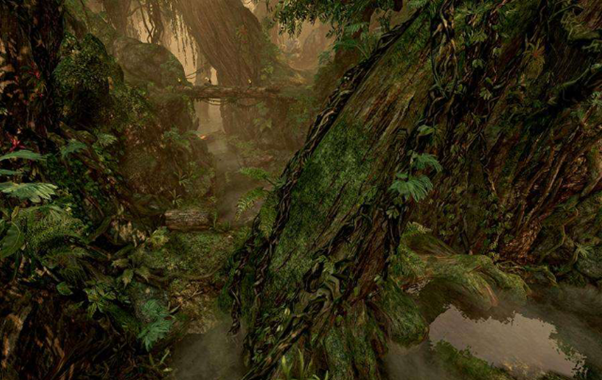
Figure 7 image credit | Erick Pangilinan, Art Direction for Uncharted 2: Among Thieves – GDC 2010 & Naughty Dog, Uncharted 2 (2009)