Monday, we had CANTEEN visit us for a guest talk to explain to us the process of game production and tips for making games. CANTEEN is game dev duo focused on making short sci-fi games.
Production is about getting the best out of what you’ve got and communication is really important.
Iteration is extremely important and you should always aim to get a basic playable prototype as fast as possible to spend most of the time iterating and improving upon it. This means that at the beginning the game may look very simple or even ugly because all the matters at this stage is that there’s something to play. It is not a good idea to just keep working towards a finished product, you must iterate and playtest a lot. Playtests help you understand what it is that needs to be created, they also give you feedback which is includes how people feel when playing and not just what they say.
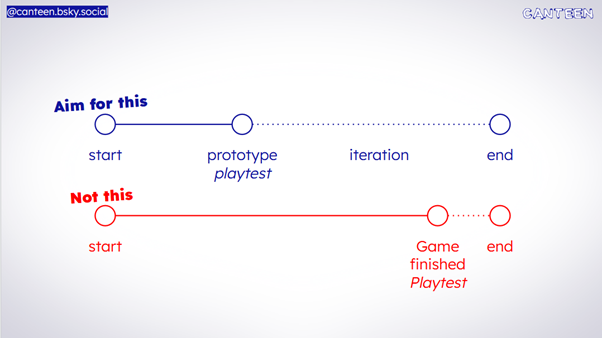
Bad days are inevitable as well; however, it is important that the time lost is made up for or the protect may fall behind.
Set goals which the whole team stays on top of. Keep trac of your progress, which helps for motivation.
Watch out for dependencies, they can cause issues. If the entire rest of the team can only start working if another member does their part in time, it may set the whole project back if they don’t deliver.
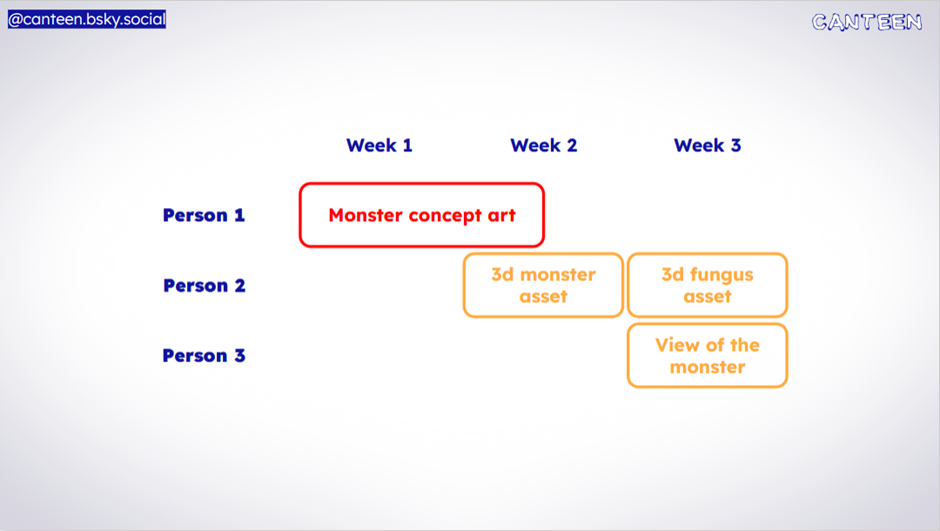
Aim for less at a higher quality, so get rid of anything that isn’t absolutely necessary to focus on more important things.
And do not leave things till the end. Everything should be added onto bit by bit throughout iteration and development.
That’s what I took note of. It was definately grounding to see that all gaves start off boring looking and simply improve through iteration.
This week we began putting stuff into the prototype, such as my drawing of Tyler, the puzzle mechanic, and the leaf mechanic so we could have something to put into the presentation.
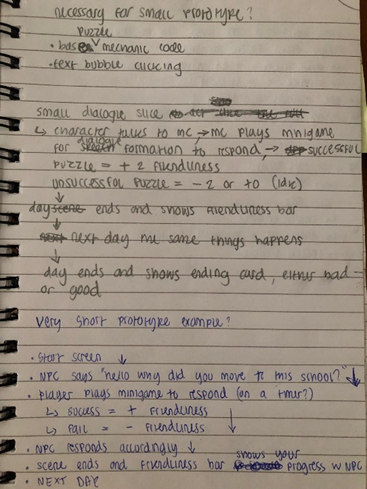
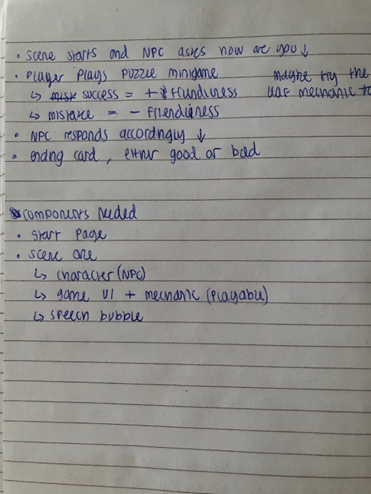
Met up Tuesday with Nam and we talked about the mechanics again. We talked about whether the mechanics were too repetitive and tried coming up with a timeline for our work. We decided to focus on building a simple prototype of one day first utilising the puzzle mechanic and the tone one as well throughout to see if it’s too repetitive or not.
From there we would be able to experiment with different mechanics and see if we need to add progression over the 5 days if possible. And also check whether or not we should lean more or less into narrative by lengthening or shortening dialogue. To do this we would need some dialogue to put into the game, the UI and the art.
I took note of all possible components we may need for the game.
On Thursday we had a presentation which was made by Cindy, I gave her an overview of what Nam, and I talked about on Tuesday, then I asked for access so I could insert my character art, etc.
The presentation went fine; Cindy read the whole thing out loud and for questions mostly Cindy and Nam answered because I was too anxious to. Nam ended up saying a lot of stuff that we discussed that Tuesday, I had more details to add but I didn’t, even though I have a lot to say during discussions, which is sad and definitely made me look like all I did was genuinely just the character designs, which isn’t the case.
This week I also began experimenting slightly with the UI.
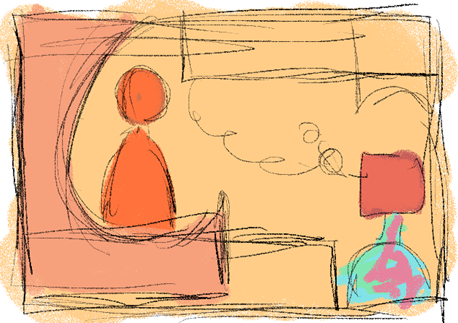
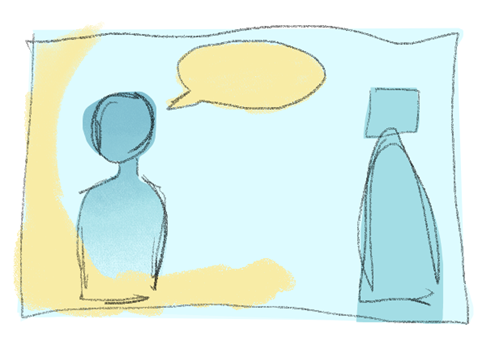
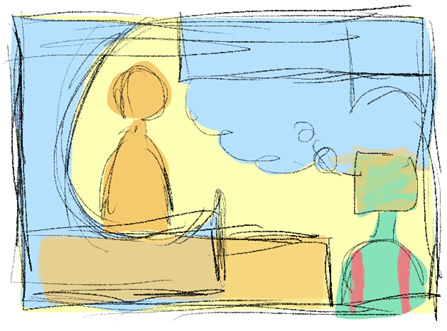
The idea is that the NPCs all change colour accordingly to the background colour. The MC’s cube head is outlined in the GDD to be teal because he’s trying to blend in, but parts of him that make him different still come through. What I had in mind is that that when the colours change depending on mood or time of day, the NPCs always seamlessly blend in or complement the background, whereas the MC keeps trying to change colour to match them too. This would affect the colours of the UI as well.
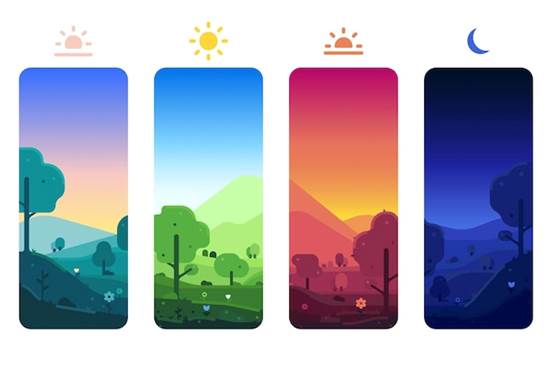
It’s an intresting idea, however its really hard to come up with so many different details t a colourscheme, so I might keep experimenting on this another time.