Category: Development


  • Animations

    Written by Lettie

    Development Process For:

    Character

    Animals

    Cutscene

    Personal Website

    Character

    Specifications

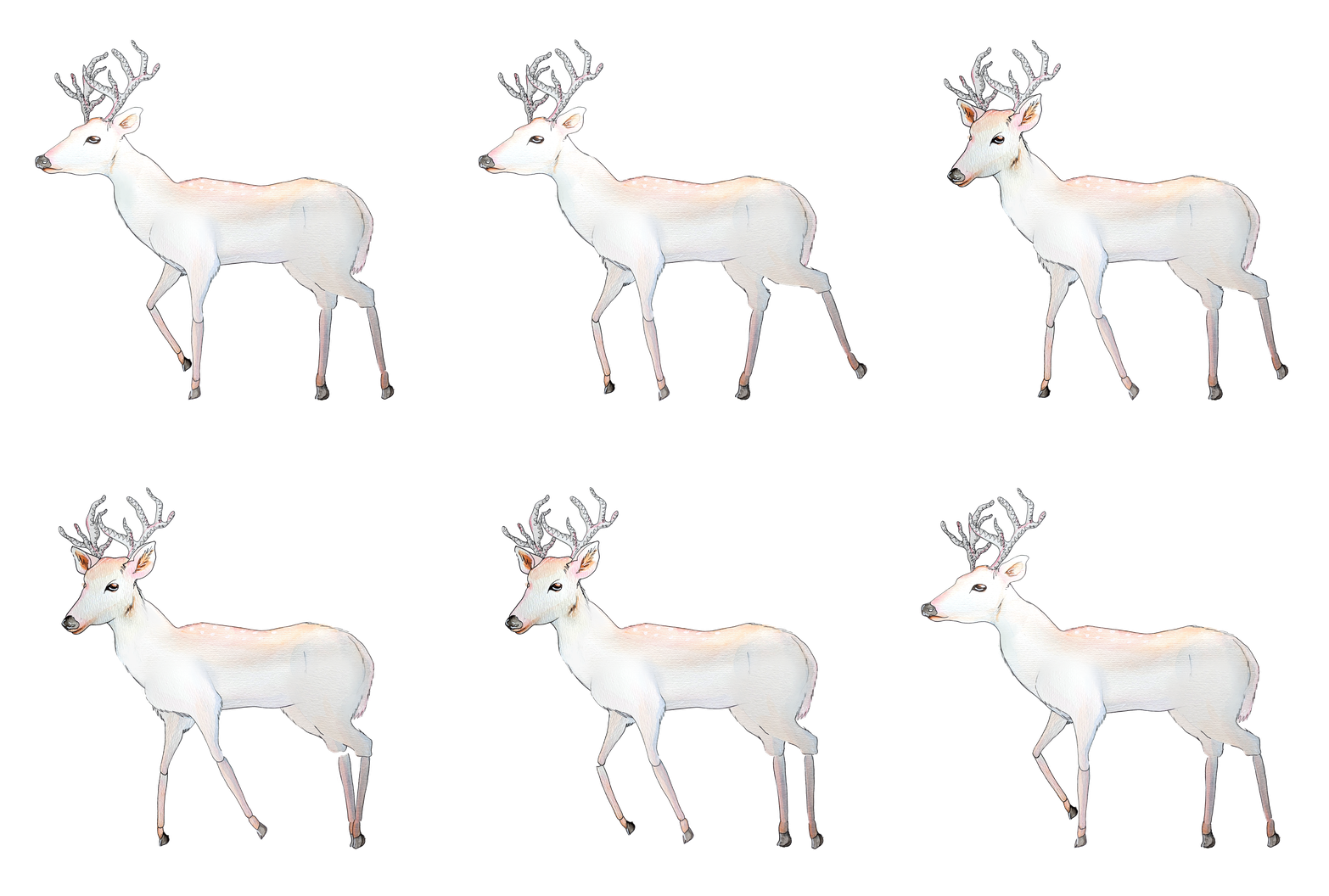
    Animals

    Specifications

    A3 sixed Photoshop document 300ppi

    8 Frames

    14 Frames

    Cutscene

    Specifications

    1920 x 1080 Canvas size, 300ppi.

    50 frames at 10 frames a second


  • Art assets

    Written by Swan

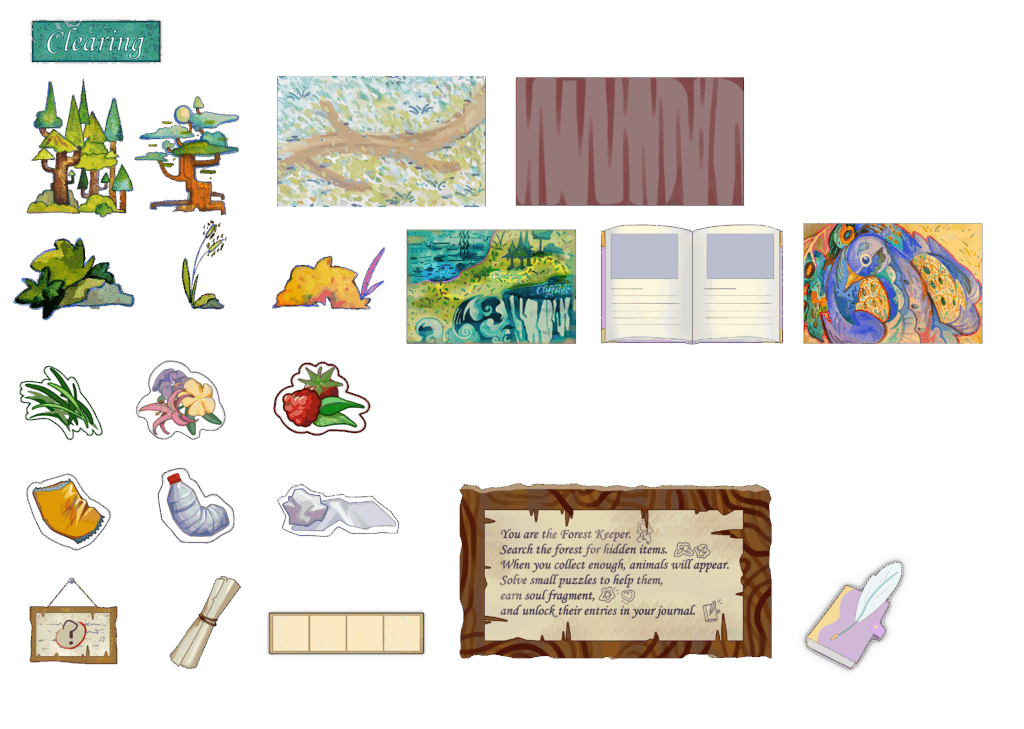
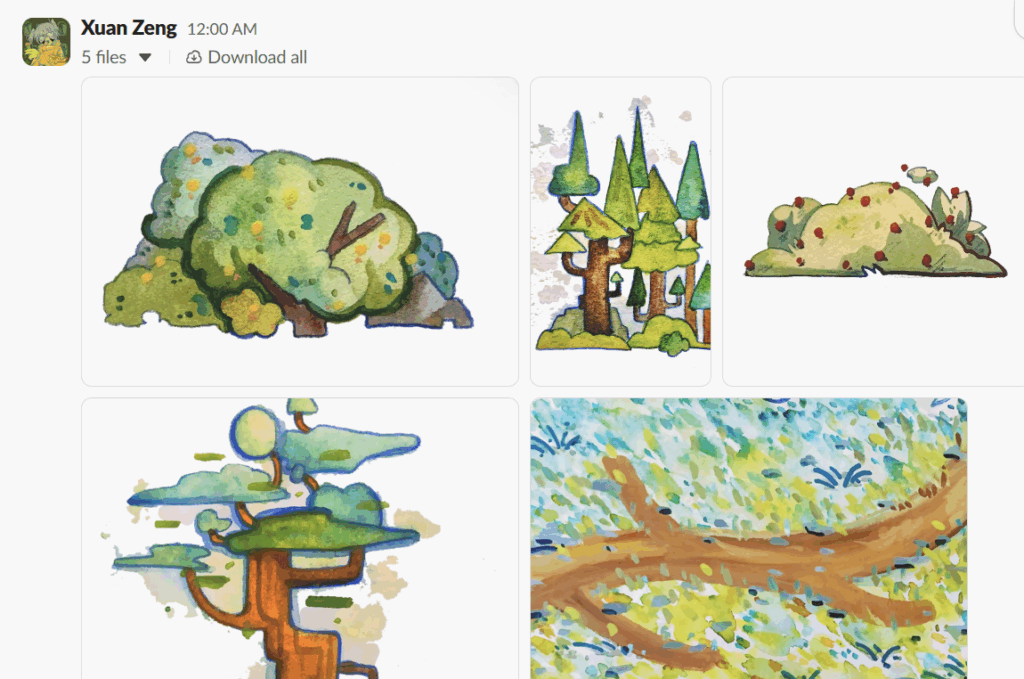
    Here are all the environmental art assets I’ve prepared for clearing.

    ↑ Frames of the animation


  • World Narrative

    Written by Yulia

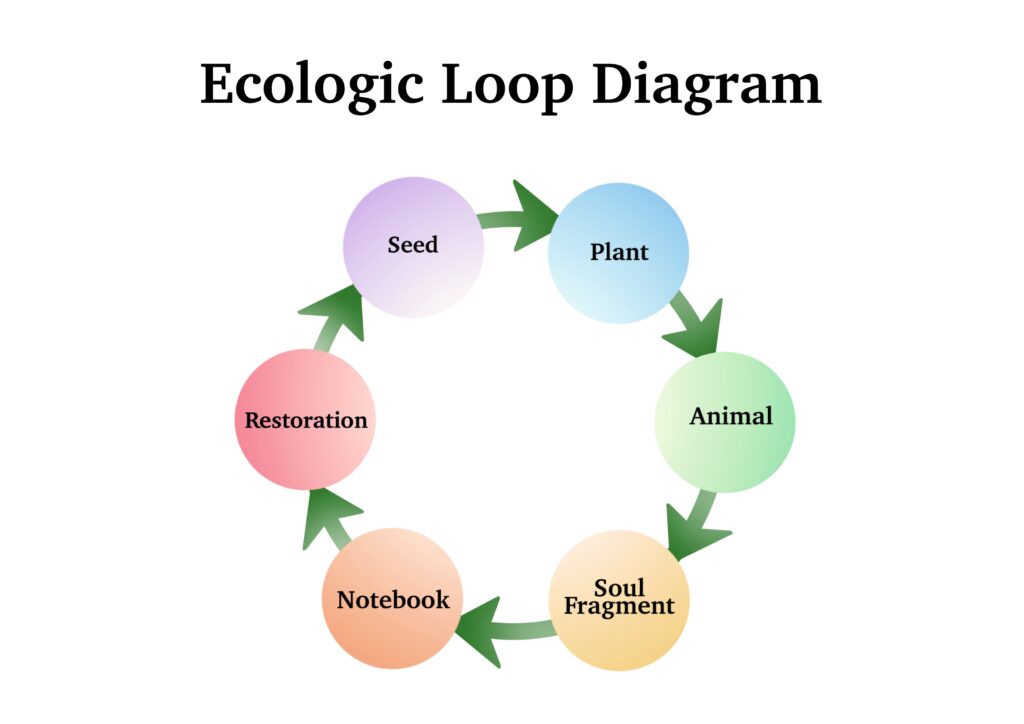
    This narrative iteration builds on the initial story foundation of Soul Keeper and introduces two additional conceptual layers:
    1. Ecological fading as a process of forgetting rather than destruction
    2. The Keeper’s conditional existence, sustained by relational trust

    These refinements align the emotional arc of the story with the game’s ecological systems, strengthening thematic cohesion between worldbuilding and gameplay.

    There is no evidence of destruction in the forest, everything appears to be all right. The quiet bloom of woods and the sound of streams still light up the quiet wilderness. However, subtle changes are taking place. Plants drift further from familiar pathways, animals take refuge far from home, and winds carry strange scents from afar.

    This did not happen overnight but has been gradual. The strength of connections within the forest is declining, as bonds between places slowly break. The world is not going to end but instead is forgetting how to function.

    The Origin of the Forest Keeper

    A new being called the Forest Keeper emerged from the forest. She was not a hero from beyond; she was the forest itself. Her form was built of bark, blades of grass, and petals, as if the world was falling apart because of chaos. When she woke up, she didn’t know this world, but she knew why she was here. The Forest Keeper will not last forever. She will exist only as long as the forest exists. If the creatures stop believing in her, if the relationship continues to break, she will die too. For that reason, the Forest Keeper is not nature’s king but just proof that the forest still knows itself.

    The Call of the Players
    When players enter the game, the following words will appear on the screen:

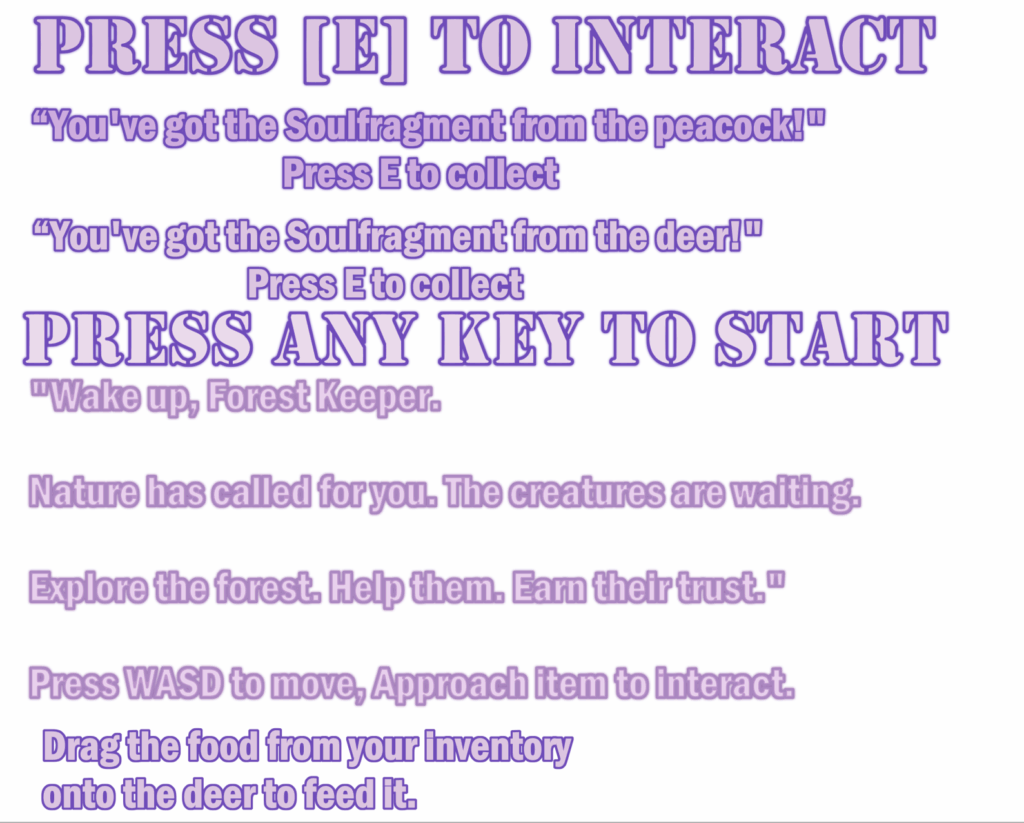
    ‘Wake up, Forest Keeper.
    Nature has called for you. The creatures are waiting.
    Explore the forest. Help them. Earn their trust’

    This is not the hero’s call. Players don’t go to fight enemies but are invited here to rekindle the bonds between nature and its inhabitants. They have to roam through the forest, help the animals, and slowly win their trust in this game.

    Creating a Stress-Free Game Environment

    In this dimension, the Keeper’s path is free of slaughter or battle; it is about rebuilding bonds. As players traverse different zones, observe their surroundings, and assist forest creatures, some natural relationships will be re-established in the ecosystem. With every exchange, animals trust you more and the forest connects again. As the nourishment of these connections begins to occur, the Keeper herself becomes clearer and steadier.

    A World that Responds to the Player

    The world of Soul Keeper has a sleepy dream-like quality to it, though the action is slow to get underway. The forest can be neglected, but it does not just collapse suddenly.

    The equilibrium of the world will be determined by the actions of the player. The Keeper helps nurture this world’s memory of life by tending to animals, exploring the forest, and restoring connections between areas.


  • Mechanics Design & Coding Development

    Written by Misty

    GameLoop

    Start Menu
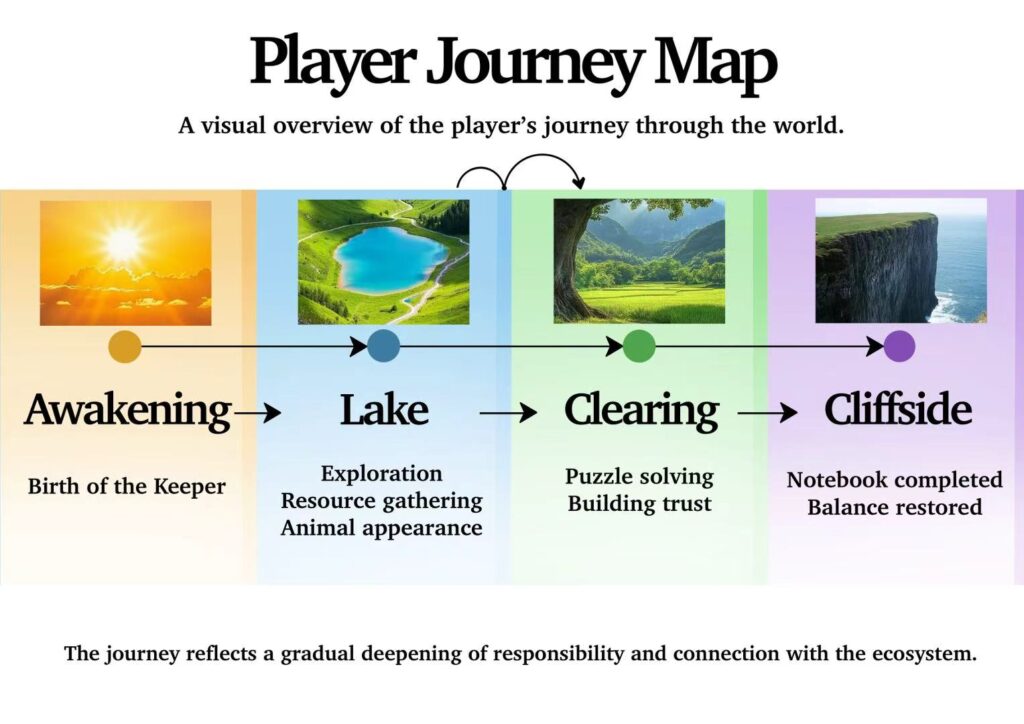
    The player begins at the Start Menu and selects Start to begin the game.

    Opening
    An Opening sequence introduces the background and provides basic gameplay instructions to guide the player.

    Clearing Scene
    The player enters the first playable area: the Clearing.
    Here, the player encounters a Peacock and can interact with it to trigger the first task.

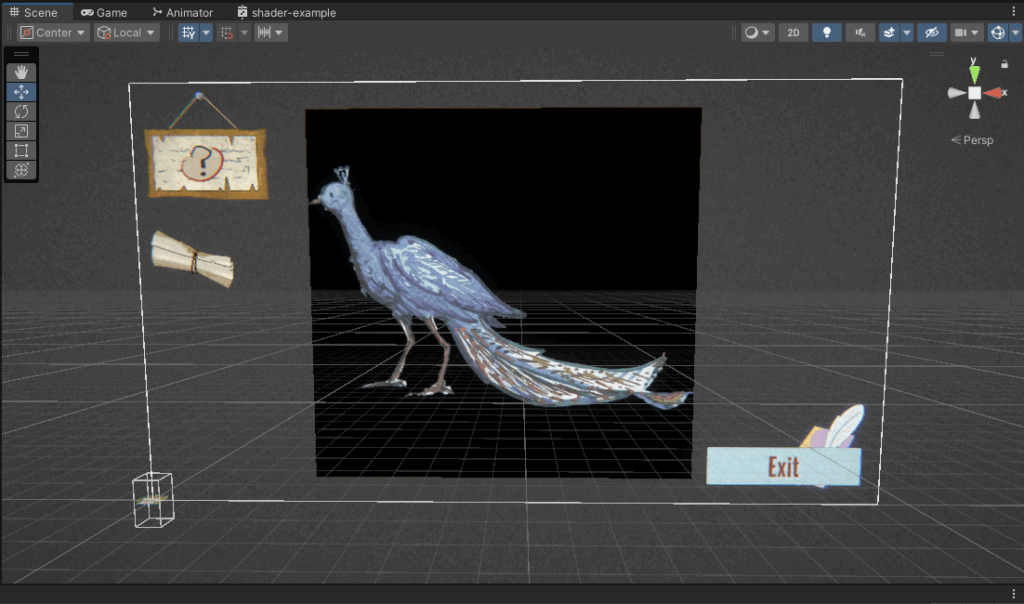
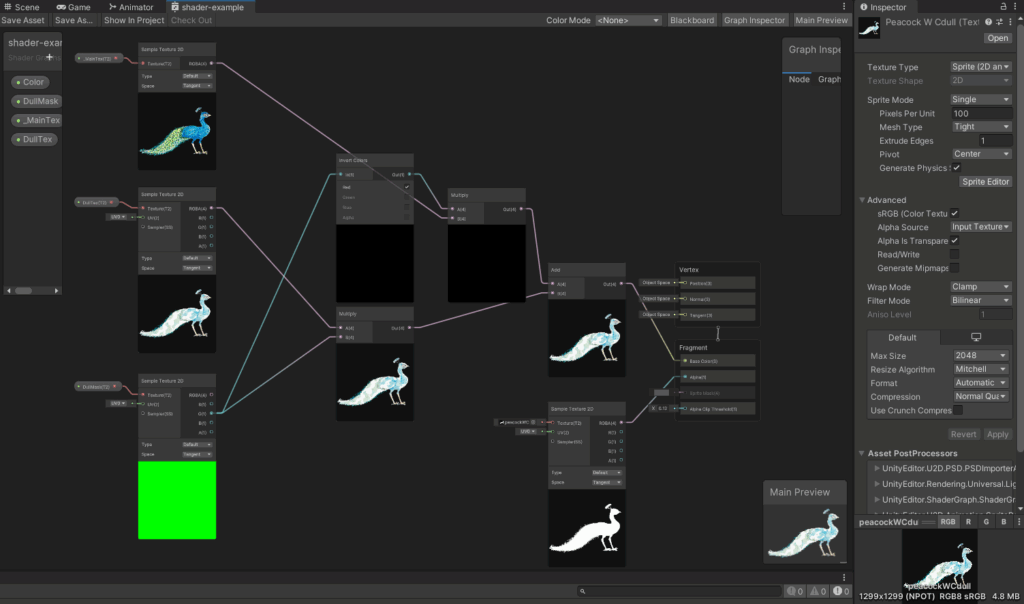
    Peacock Minigame
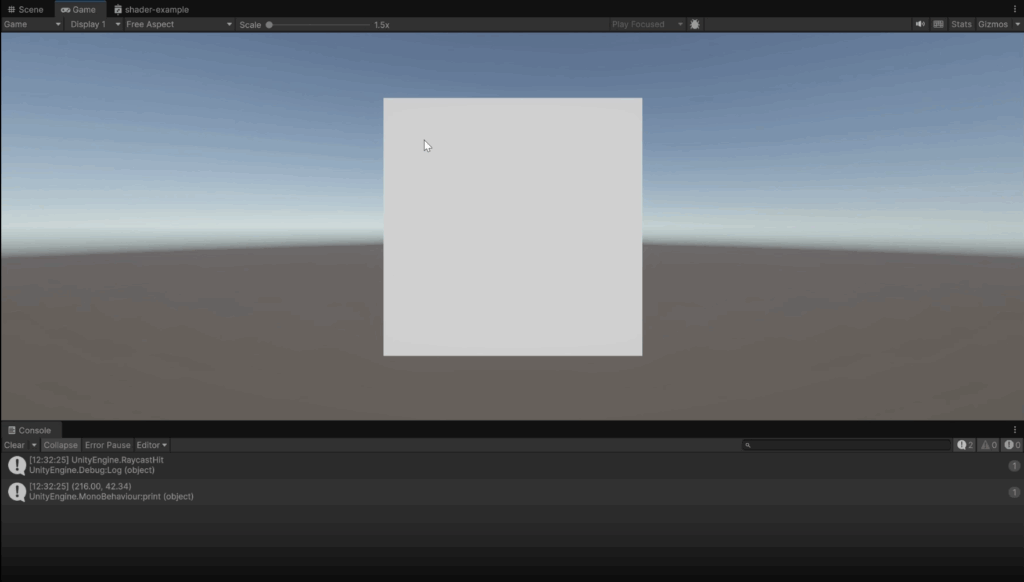
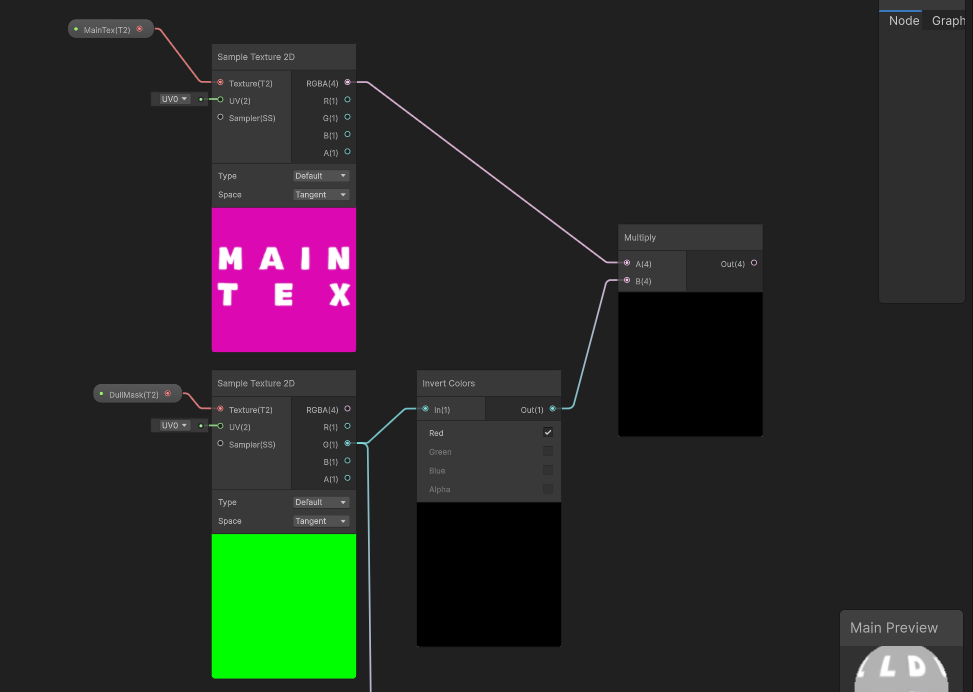
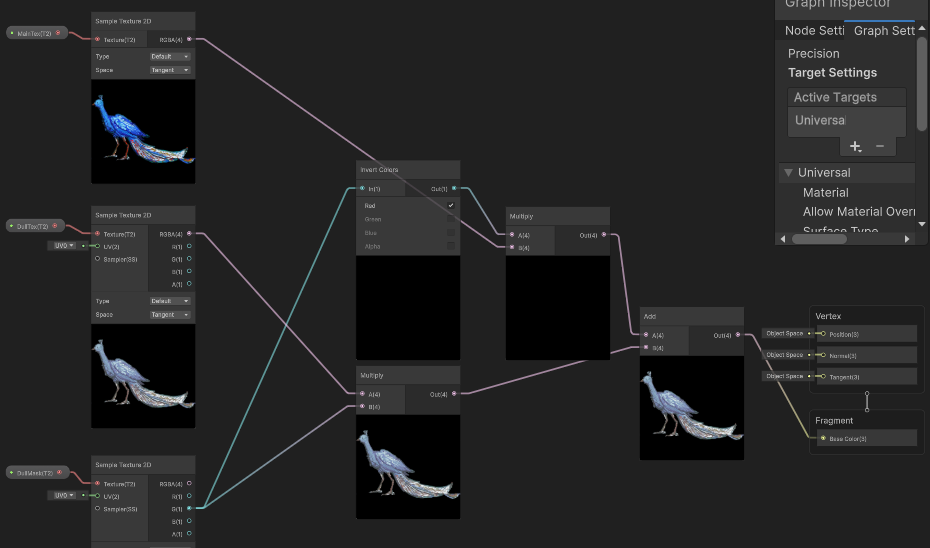
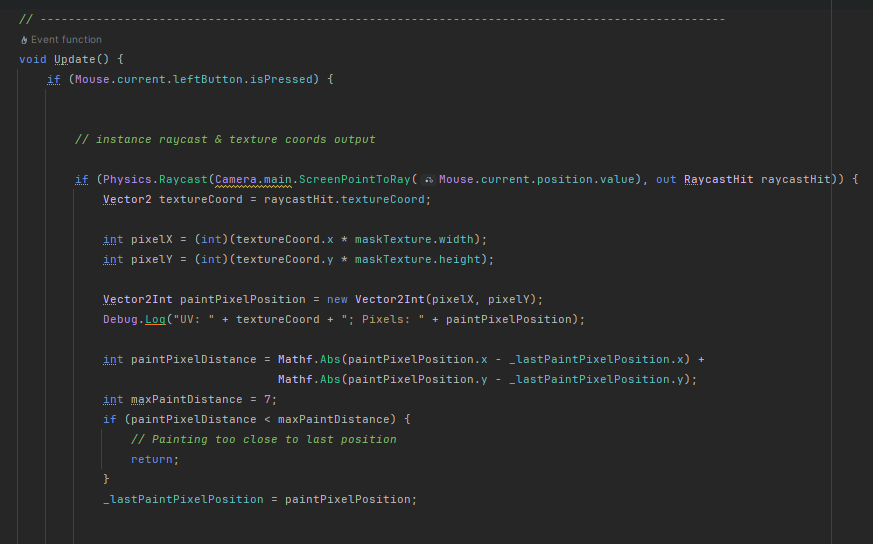
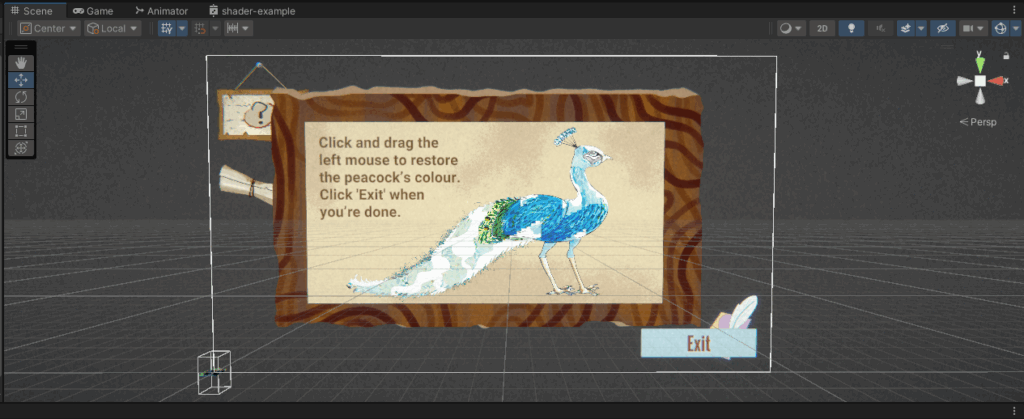
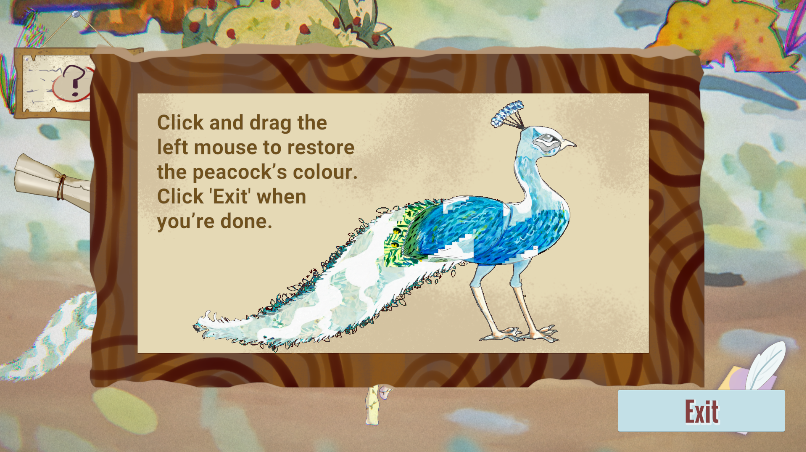
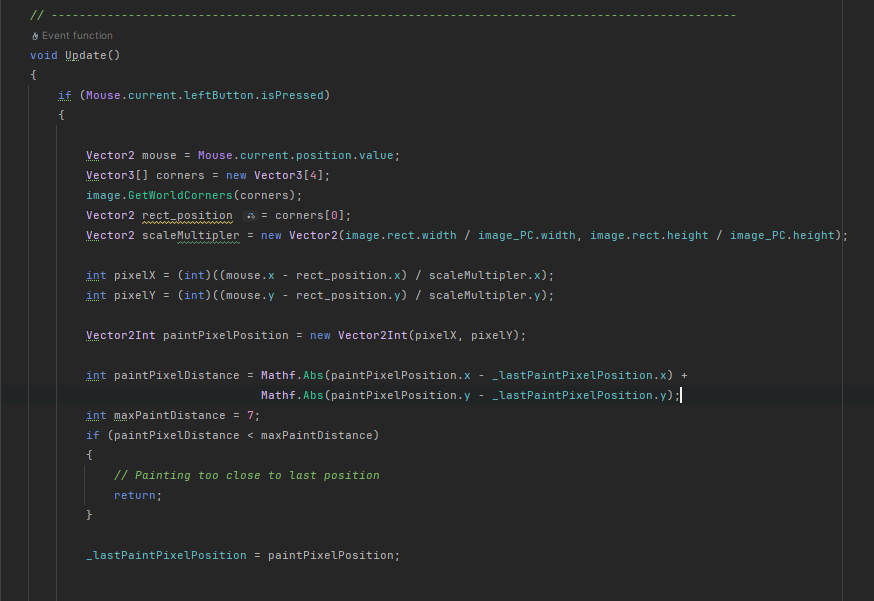
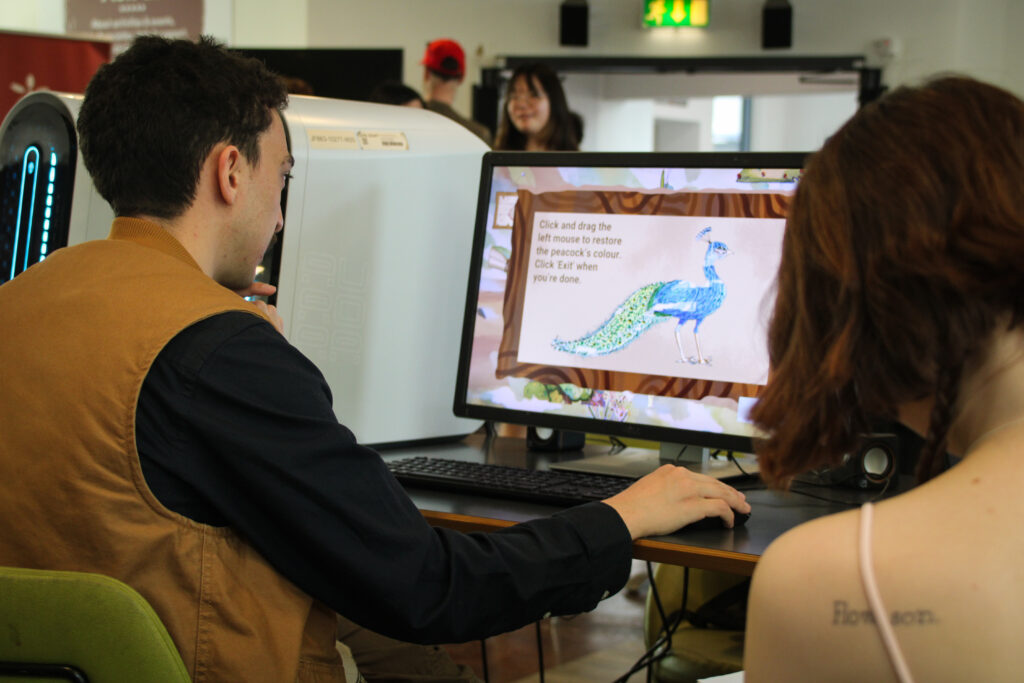
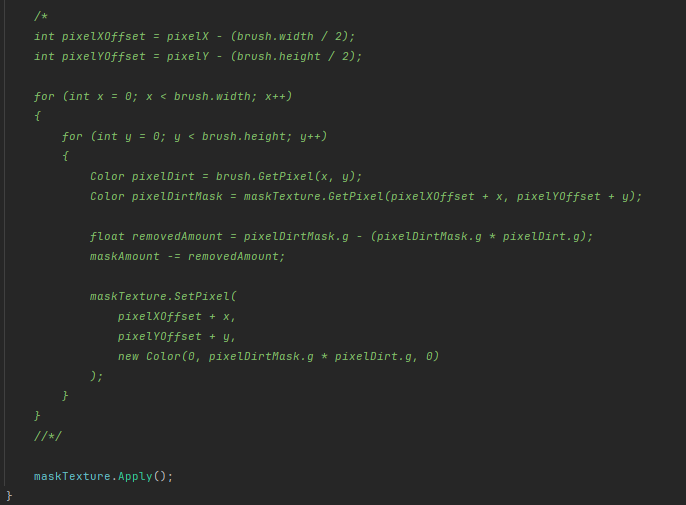
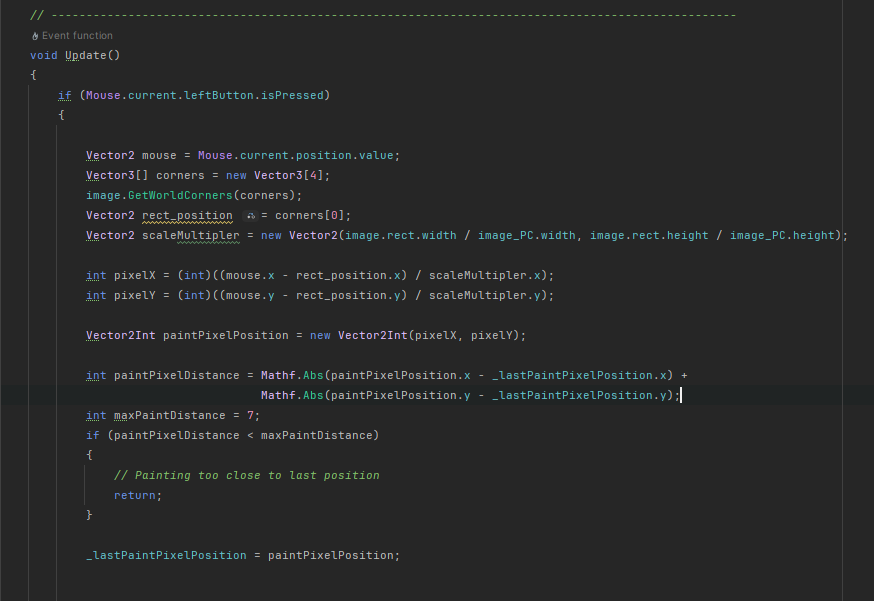
    The player must hold down the mouse button to wipe away the dust on the peacock, revealing its original vibrant colours.

    Return to the Clearing
    After completing the minigame, the player returns to the Clearing scene.
    A Peacock Soul Fragment appears. Interacting with it will:

    • Unlock the Peacock entry in the Notebook
    • Unlock the next area

    Lake Scene
    The player travels to the Lake. In this area, the player:

    1. Collect resources
    2. Feed the deer
    3. Interact with the deer after feeding it
    4. Get the Deer Soul Fragment
    5. Unlock the Deer entry in the Notebook.

    Ending

    Game over, exit or back to the start menu.

    Task Allocation

    Here are the expected playable core mechanics in two scenes of this game.

    Clearing SceneLake Scene
    Start Menu & InstructionMisty developedNA
    Item CollectionNAMisty developed
    Animal InteractionMisty developedMisty developed
    Animal PuzzleOllie developedNA
    Get SoulfragementMisty developedMisty developed
    Unlock Notebook PageMisty developedMisty developed
    EndingNAMisty developed

    Meanwhile, I’m also in charge of adjusting art assets, animation, the UI system, and character movement. etc

    Collaboration with Team members

    All team members and I update each other on our progress during our weekly group discussions and communicate in real time via the Slack channel.

    with Technical Designer Ollie

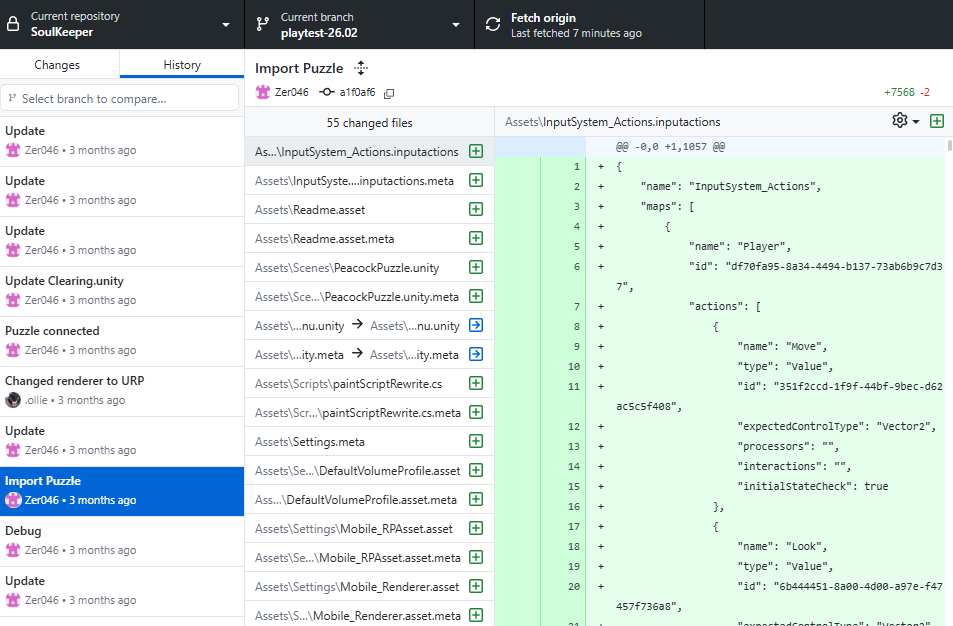
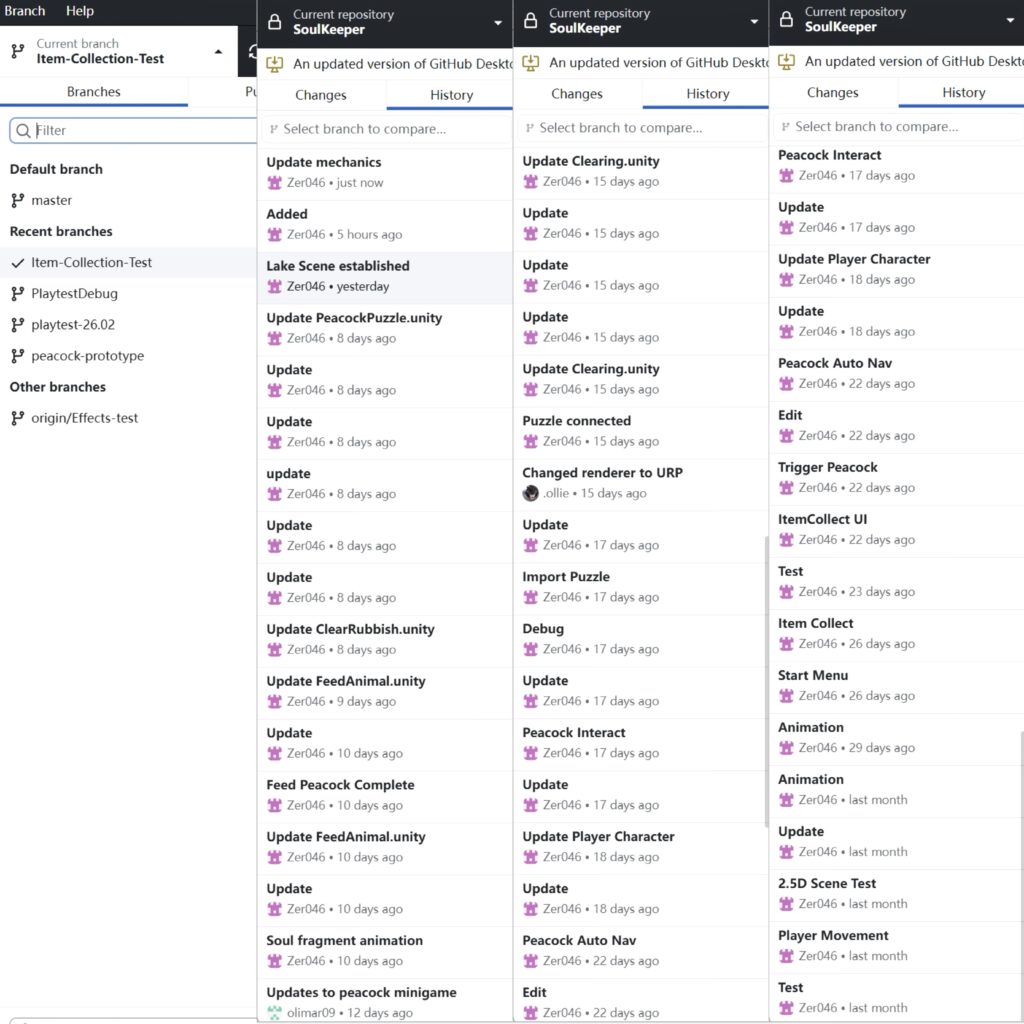
    I created a GitHub repository and invited Ollie to join.
    I was responsible for developing the main game, and he was in charge of the peacock minigame.
    We initially worked on separate branches. Once he had fully developed the minigame, he merged it into my branch, and we coordinated the integration.

    “Zer046” is my account.

    with Artists, Swan and Lettie

    Initially, I helped allocate art tasks to Swan and Lettie and suggested they coordinate their art styles by searching for references together.
    Once they had completed the art assets they were responsible for, they would send me the original PNG files via email or the Slack channel.
    After downloading them, I imported them into the engine and refined the scenes and animations. I then send them screenshots or videos of the refined work in the engine to seek their feedback on visual improvements.
    I would also raise feedback to their work, such as ‘the map colours are too dark’, ‘this asset doesn’t blend well with the others’ or ‘the animation transitions aren’t smooth’, and discuss potential solutions with them.

    with World Designer Yulia

    At first, Yulia wasn’t entirely clear about her responsibilities and wasn’t used to communicating with the team via Slack. So I started by chatting with her in Chinese on WeChat to explain what she needed to do for the group.

    This included researching the world-building, developing the character profiles, and crafting the opening narrative.

    After that, we also discussed the sound effect:

    Sound, Light and Effects – Misty Zhang

    As other team members mentioned that she only messaged me privately, meaning the rest of us couldn’t keep track of her progress, I suggested she post all questions and updates to the Slack channel.

    First Playtest Development

    The first playtesting session was scheduled for Week 5 of development. During the preparation phase in the first four weeks, my main goal was to implement all core gameplay mechanics in the first scene (Clearing) that we intended to evaluate in this initial test.

    My development blog for the first playtest are in the following links:

    Coding Development: Scene & Camera

    Coding Development: Player Character

    Coding Development: UI

    Coding Development: Animal Auto Navigation

    Coding Development: Animation

    Coding Development: Item System

    This stage prioritised creating a playable vertical slice that could demonstrate the complete gameplay loop.

    First Playtest Outcome

    I was able to include a complete game loop of the core mechanics in this playtest. However, there were some tech issues still existing which disturbed the player’s experience.

    Here is the feedback we collected during the playtest and the form I organised later, to help myself clarify the issue, the way to improve, and the expected outcome:

    First Playtest – 26.02.2026 – Soul Keeper

    Based on this, I started to refine mechanics and interaction logic in Week 6:

    First Playtest Refinement – Misty Zhang

    Coding Development: Draggable Item – Misty Zhang

    Second Playtest Development

    Second Playtest Preparation – Misty Zhang

    Sound, Light and Effects – Misty Zhang

    Second Playtest Refinement

    Second Playtest Refinement – Misty Zhang

    Second Playtest – 19.03.2026 – Soul Keeper


  • Soul Keeper Vertical Slice Outline

    By Scarlett White

    Our 2.5D vertical slice will consist of an opening cutscene, two interactive environments with an animal in each that you must gain the trust of by picking up items. ​

    Once the animals trust you, they will give you part of their souls. You will also be able to add them to your notebook whereupon you will have completed your soul keeper training and will become the new soul keeper​

    Mechanics​

    • Walking​
    • Sprinting​
    • Inventory system​
    • Notebook system​
    • Peacock minigame​

    Art Assets​

    • Main menu cutscene​
    • Character idle/walking/sprinting​
    • Deer idle/interaction​
    • Peacock idle/interaction​
    • World map​
    • Lake area​
    • Clearing area​
    • Notebook menu UI​

  • World Design & Ecological Structure

    Written by Yulia

    This page explores the evolving world behind our project.
    It presents the narrative foundation, ecological relationships, and character context that define the Forest Keeper’s journey.

    Together, these elements shape a unified and intentional fantasy setting.

    Solid arrows — water flow
    Dashed arrows — seed dispersal
    Lines — elevation
    Icons — animals

    Ecosystem Logic

    1. Regional Ecological Roles

    The three explorable locations exist as interconnected ecological layers rather than isolated visual spaces.
    Lake functions as a hydration and biodiversity hub supporting plant growth and aquatic-dependent species.
    Clearing acts as a transitional ecosystem where diverse flora spreads and animals interact across territories.
    Cliffside represents an environmental boundary linking the forest to the oceanic system and supporting species adapted to elevation and exposure.

    These areas provide natural habitats for the six key animal species and establish ecological credibility within the world.

    2.Material Circulation Between Regions

    Ecological connectivity is expressed through:
    Seed dispersal
    Shared plant species such as grasses may propagate across all regions
    Water flow
    Possible movement from inland environments toward the ocean beneath the cliff
    Animal migration logic (design-supported)
    Even if not explicitly simulated, environmental storytelling can suggest movement patterns through tracks, plant disturbance, or nesting remains

    Resource Integration

    1.Resource Origin

    Most resources are naturally generated ecosystem materials, such as:
    plants
    • branches
    • fruits

    These are consistent with environmental ecology rather than artificial sources.

    2.Regeneration

    Plant-based resources are implicitly renewable, reinforcing the theme of natural continuity and sustainability.

    3.Environmental Impact of Collection

    Resource gathering does not degrade the environment.

    Instead:
    • reinforces the Keeper’s nurturing role
    • supports animal wellbeing
    • maintains ecological balance

    This aligns with the game’s non-punitive exploration philosophy.

    Spatial Narrative

    1.Intended Player Emotion

    Upon entering each region, the player should experience:
    • curiosity driven by the unknown
    • emotional safety
    • companionship through animal presence
    • a sense of purpose and responsibility

    The world communicates guidance rather than danger.

    2.Visual Navigation Cues

    Player direction is subtly supported through:
    • water flow
    • vegetation density variation
    • elevation shifts
    • plant species differentiation

    These form diegetic pathfinding structures.

    Animal Placement Logic

    Animals inhabit regions based on ecological suitability rather than arbitrary placement.

    Their presence reinforces:
    • environmental authenticity
    • biome identity
    • gameplay diversity

    Each species’ location reflects habitat compatibility and supports interaction design.

    World Expansion Potential

    1.Expansion Zones

    Future regions could include:
    • desert ecosystems
    • introducing new survival-adapted fauna

    This maintains ecological diversity scaling.

    2.Escalating Ecological Risk

    Narrative stakes may increase through:
    • resource scarcity
    • species endangerment
    • environmental imbalance

    3.Player Impact

    The Keeper’s actions can evolve from:
    • local care
    → ecosystem stabilisation
    → structural world restoration

    Creating progression in environmental agency.