06/11/25
Rhys Shepherd – https://www.linkedin.com/in/rhys-shepherd-988a40150
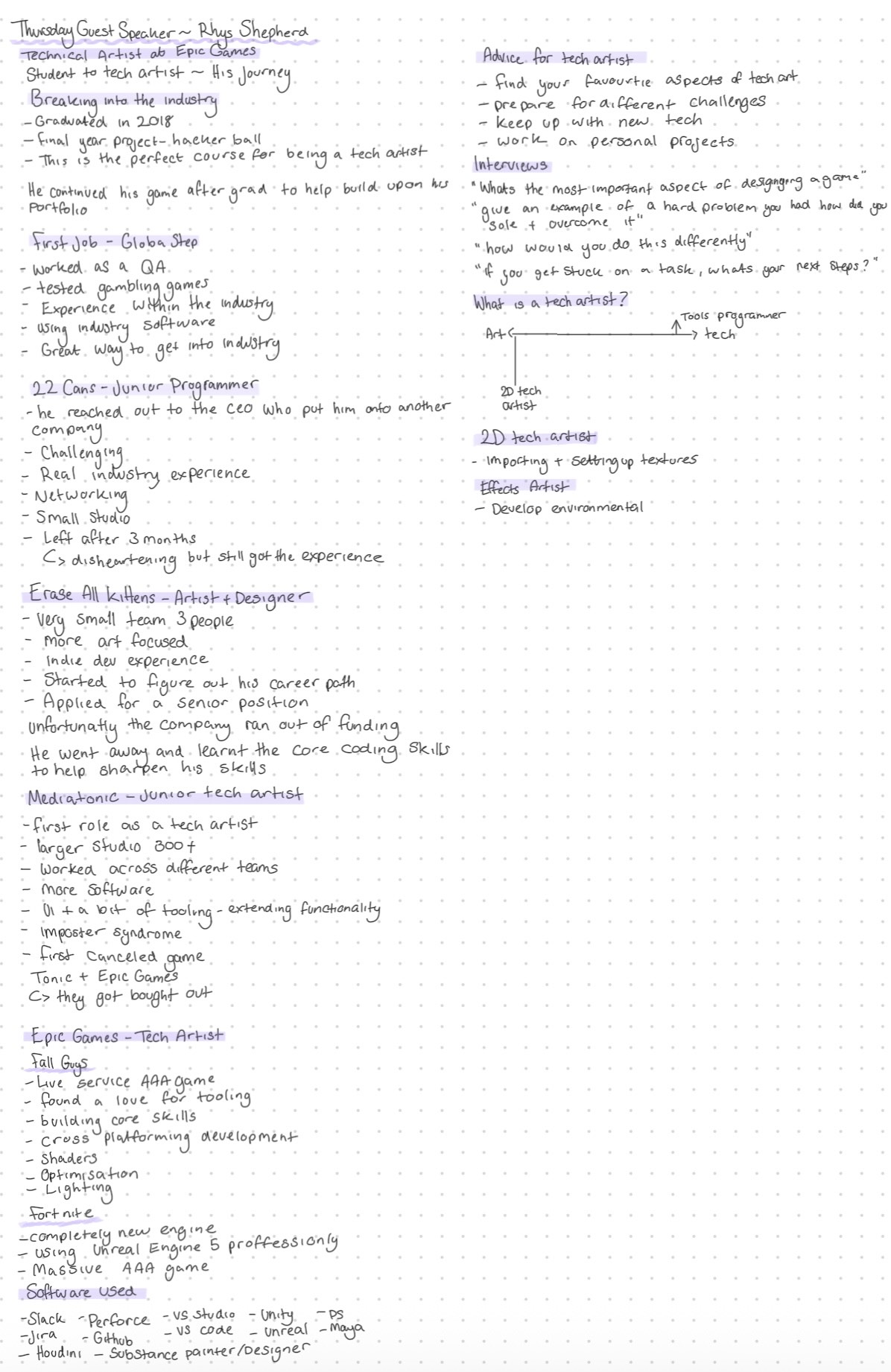
This week, we had Rhys Shepherd as our guest speaker, a technical artist at Epic Games. Rhys structured his talk into two main sections: his personal journey from being a student to a tech artist, and advice for trying to break into the games industry. Rhys graduated in 2018, with his final project being Hacker Ball, which became an important part of his portfolio because, even after university, he continued improving it rather than abandoning it. His first role in the industry was as a QA tester at GlobalStep, where he tested gambling games. Although this was not his long-term goal, the role allowed him to gain valuable industry experience and become familiar with professional tools and workflows.
After two years in QA, Rhys took a chance and reached out directly to a company CEO to ask about role openings. While that studio didn’t have any available roles, they referred him to 22cans, where he became a junior programmer. This job was challenging, and even though he did not pass his probation period, the experience helped him understand small-studio environments, expand his network, and continue growing as a person.
Rhys applied to Erase All Kittens, intentionally submitting his work for a senior position just to get his work noticed. He didn’t receive that specific role, but the studio still offered him a position as an artist and designer. This was where he began discovering the career path he truly wanted to follow. When the studio eventually ran out of funding and had to let him go, Rhys used this opportunity to strengthen his core coding and technical skills.
Later, Rhys joined Mediatonic as a junior technical artist, making this his first time working in a large studio with over three hundred employees. He worked across different teams, learned new software, contributed to UI and tooling, and experienced moments of imposter syndrome. Eventually, Rhys moved to Epic Games, where he still works today. At Epic, he developed a passion for tooling and expanded his skill set in shading, optimisation, lighting, and using Unreal Engine 5 professionally.
From Rhys’s presentation, I took away several key lessons about breaking into the industry. The most important thing was to put yourself out there, apply for roles even if you feel unsure, and reach out to people, making sure to make connections whenever you can. The worst outcome is simply a rejection or no response. It was also reassuring to hear that Rhys didn’t immediately know what role he wanted and only discovered his passion around 2019. Moving forward, I plan to start reaching out to more people, staying polite and respectful, but building confidence in networking. I believe this approach will genuinely support my future development.


━━━∙⋆⋅⋆∙━━━━━━━━━━∙⋆⋅⋆∙━━━━━━━━━━∙⋆⋅⋆∙━━━━━━━━━━∙⋆⋅⋆∙━━━
Notes from Rhys’s Presentation