Week 3 – Game Design Pillars
This week we had to solidify a game idea and have game design pillars by the end of the week.
First, we had to figure out the Essential Experience as it feeds the design intention on which the pillars are built off of.
We were told that the game could be centred around an experience or an emotion and then determine what feelings we wanted the players to feel. Because I decided that I wanted to make something simple and easy to gamify, I chose the experience of doing the groceries with social anxiety.
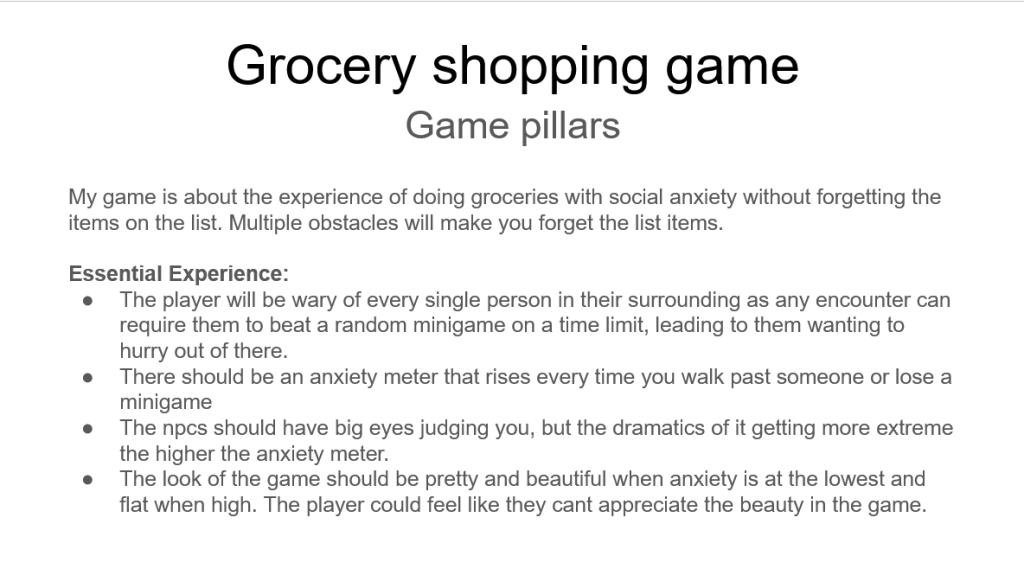
The core experience was for the player to feel so anxious in their environment that they rush to get out and forget what they even went for. This is something I often do, I don’t actively get so anxious that I rush out, it’s kind of subconscious, if someone is where I want to go I tell myself I’ll just come back later, but then I forget to go back because of the way I go about grocery shopping, once I reach a certain point in the store I don’t go back because I want to leave and feel anxious about loitering around the store.
I want players to familiarise themselves with social anxiety and how it can affect people, even when doing something as simple and mundane as grocery shopping. I would like them to feel overwhelmed and stupid by making them so overly aware of the people in their surroundings that they want to quickly finish the round forgetting their list.
What is the experience?
Remember all the items in your grocery list to do your shopping while maintaining a “balance” to avoid attacked” by the NPCs, checkout and go home. The player should also feel like they can’t appreciate the beauty around them since they can’t relax.
What is essential for that experience?
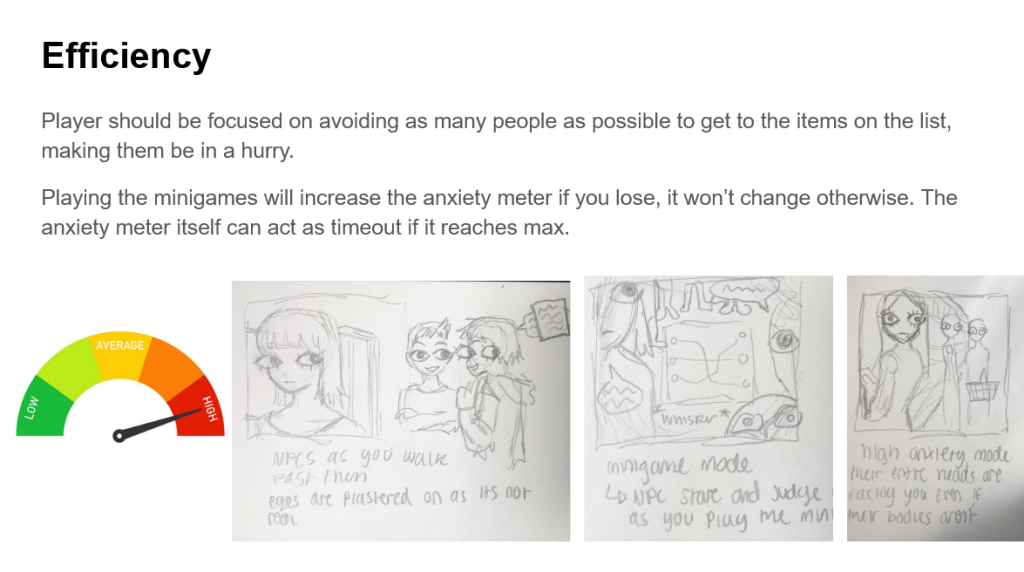
Players don’t get to keep a list and therefore will have to remember it. The players should feel overly aware and scared of the NPCs that are everywhere around them. Players need to feel like they’re being watched, observed and judged on their performance. Players should focus on maintaining composure at all times. All this combined should make the player want to hurry up to avoid as many interactions as possible, in turn making them forget their grocery list items. The build up of anxiety makes the game look dull and confusing with the NPCs standing out the most.
How can my game capture these?
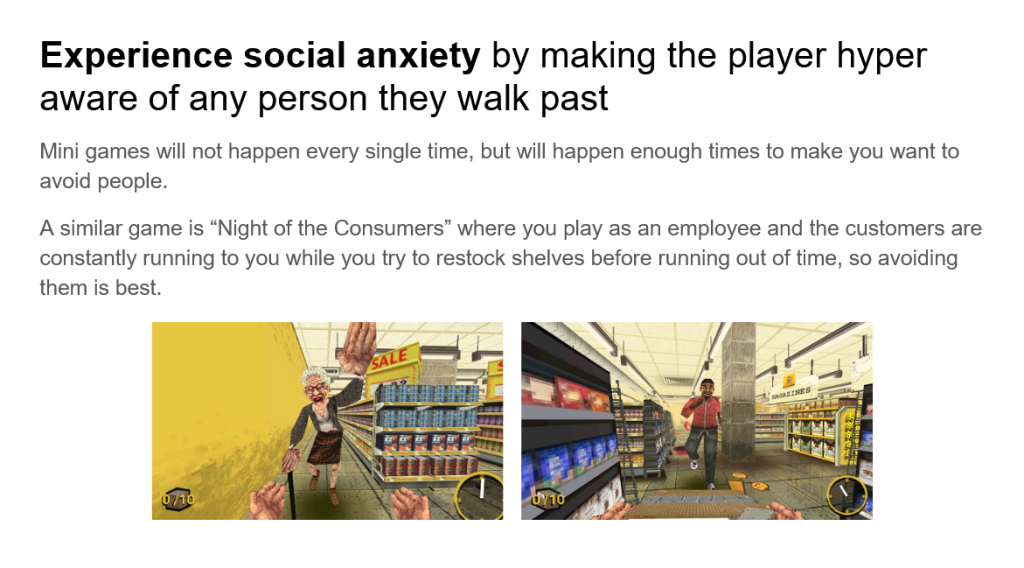
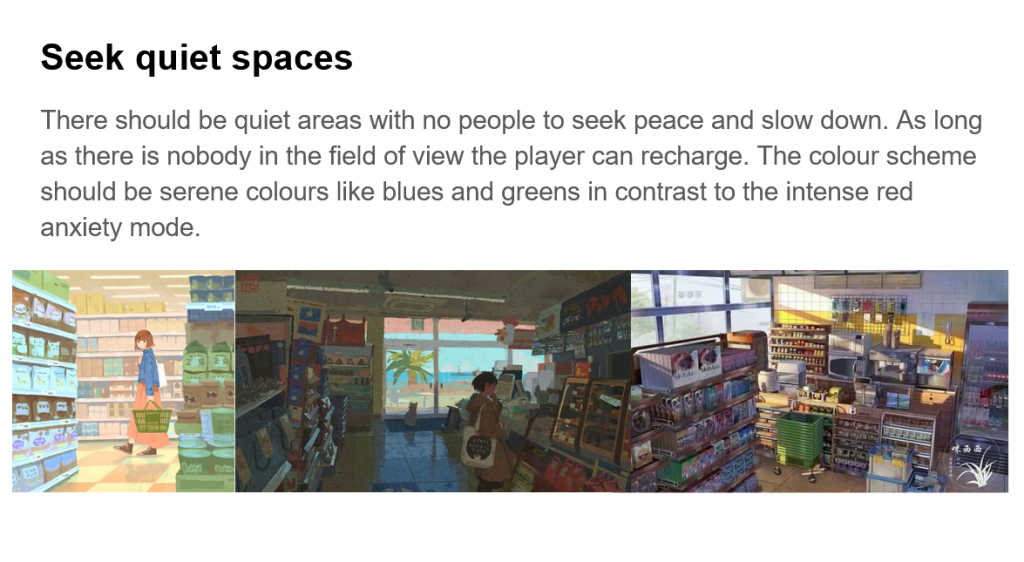
During the entire time the player is outside their home, they should be forced to play random timed minigames with an audience watching and judging them. The NPCs should appear to always be on the lookout for the player and initiating these challenges when walking past. To avoid these interactions the player needs to maintain some sort of balance. The more balance is lost overtime, the more discombobulated and confusing the game looks. The player would need to find a spot to relax to restore balance and have the game go back to normal.
Define the emotional state
During the lesson I put the emotional state into annoyance. My game would fit more between annoyance and fear, but when picking between one, it fit best just in terms of gameplay as you’d be annoyed at yourself for losing a minigame or when realising you forgot an item once reaching home. Looking at it now, I think vigilance would also fit well.

Five whys
I want players to feel anxious and overly aware of their surroundings >Why?> To show the effects of social anxiety while doing simple tasks like grocery shopping >Why?> I feel like social anxiety isn’t taken seriously even though it affects every aspect of life >Why?> It’s considered a loser trait and something you should be able to just get over >Why?> They think it’s nonsensical to think everyone cares so much about what you’re doing, (but don’t keep in consideration we have no control over it as it is a social phobia and an anxiety disorder.) >Why?> because it is true that people you walk past really do not care about you at all, we are aware of that, but it’s never about what they’re actually thinking, it’s about the “what if” that there is no real way to dispute.
We then had to work the game design pillars on top of the design vision/intention/core emotion. All this information was to go on the presentation we would do on Thursday. (I had no clue at this point in time)
We looked at Desta: The Memories Between, a game developed by South London studio UsTwo as an example of clear design intention and pillars.

The design vision:
In this game, players explore reconciliation through dreams. The game should evoke a sense of connection and forgiveness via emotional repair and reflection.
The pillars:
- Dream sequences
- Board game like feel – it is turn based
- Playful interaction – characters pass the ball at each other’s; there’s no levelling up
We then did another short activity where we decided the driver for our game by drawing a triangle, I put mine to a pretty equal amount on mechanics and aesthetics since they should directly influence each other, and I also put it a bit on story as well since the person you play as has social anxiety. Mine was the purple pen.
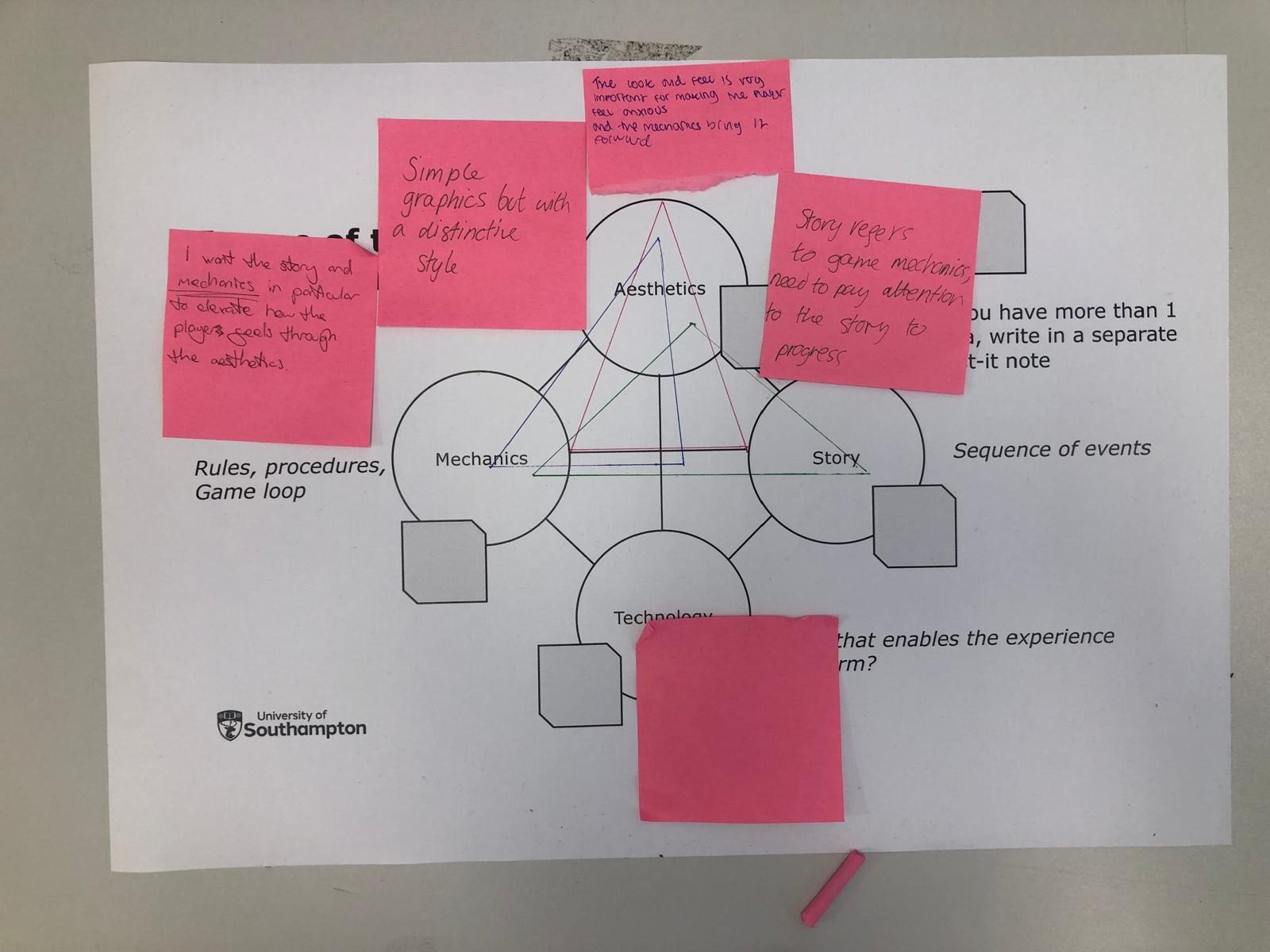
When working on the presentation, I reflected on what the pillars could be, and I set for:
- Experience social anxiety by making the player hyper aware of any person they walk past
- Efficiency – be strategic about where you go and when, to prevent as many interactions as possible
- Seek quiet spaces – As long as there is nobody in the field of view the player can restore their mental state and the appearance of the game.
- Aesthetics