Game art style reference
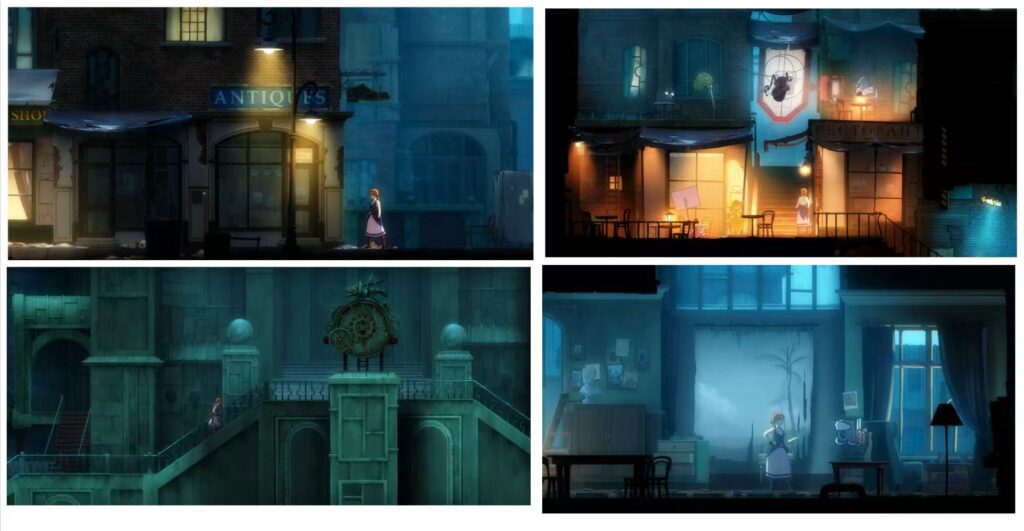
《Forgotton Anne》
It adopts a 2D horizontal perspective. At the same time, it has a very beautiful large city background. There are many architectural layers, but it will not steal the player’s attention and the characters account for a small proportion in the scene, emphasising the environment.
The horizontal version of the scene and the huge silhouette of the city, the distant buildings as the background, and the player’s movement on the ground below are what I think is suitable for Echos of Luma, which not only maintains the sense of exploration, but also facilitates the production of horizontal level.
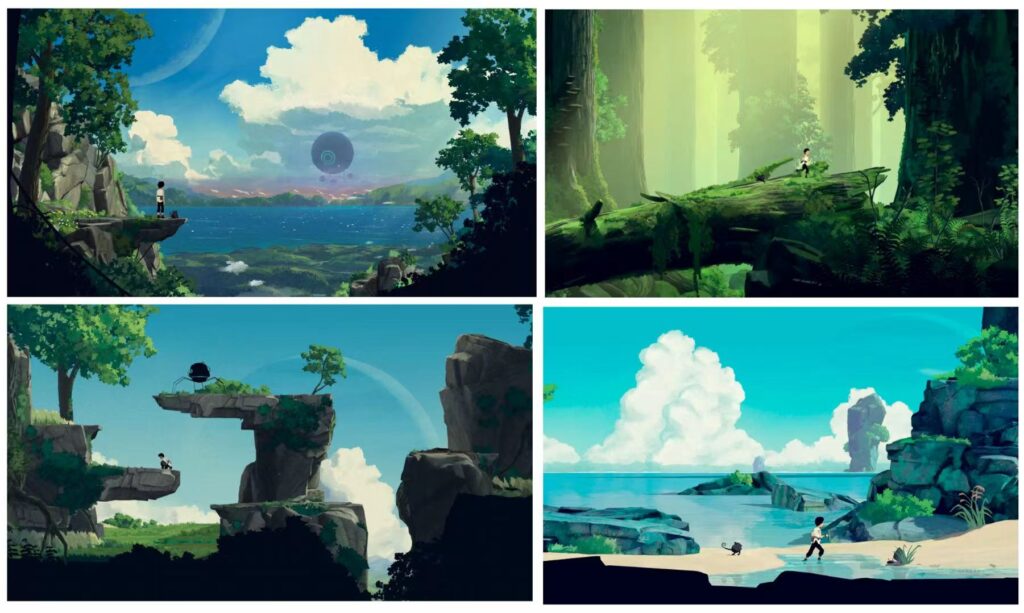
《Planet of Lana》
Planet of Lana taught me that “less is more”. It does not put a lot of content in one picture, but makes several important elements form the visual centre. For example, a tree, a building or a grassland can make the whole picture very rich. I hope every level of Echoes of Luma maintains this visual rhythm.
For example: the first level of fountain + dead tree, the second level of street lamp + clock tower, the third level of energy bridge
Each level only highlights two core elements, so that players can know where the focus of the scene is at first sight, instead of being distracted by a lot of decorations.
The ultimate desired effect is:
- Soft, low-saturation colour matching, mainly blue-purple or warm yellow.
- 2D horizontal scene, players always move on the ground, which is convenient for observing the environment and solving puzzles.
- A large number of whites and long-term city silhouettes create a quiet and emotional atmosphere.
- Use light, architectural contours and landmarks to guide players to explore instead of relying on UI prompts.
- Each level revolves around a small number of core elements, fountains, trees, street lights, clock towers and energy bridges, so that players can quickly understand the key points of the scene and highlight the theme of “repairing urban memory”.
Character design
The player will play Steve. Steve is the only person in the city who still retains his memory. When other residents gradually forget the past, only Steve still remembers what the city used to be, so he decided to find the important facilities in the city that had stopped operating and try to repair them, hoping to revive Luma. Steve was inspired by a friend of mine in real life, who is a person who likes to observe life. Every time he travels, he will pay special attention to the beautiful things around him, such as beautiful scenery, cute little animals or an inconspicuous shop. He is also used to bringing back some souvenirs, but these souvenirs are not decorations for him, but a way to preserve a memory and an experience.
As for the character style, I also want to design it to be simpler, similar to the style of games such as journey and gris, but I can’t just refer to these two games, so I searched for some other similar games to see if they can give me new inspiration.
First of all, my favourite is the style of “GRIS“. The protagonist has almost no dialogue and no complicated character background introduction, but players can still quickly understand her emotional changes. I think this is a place worth learning, because my game Echos of Luma also wants to tell stories through the environment and character actions, instead of relying on a lot of words.
Character design analysis
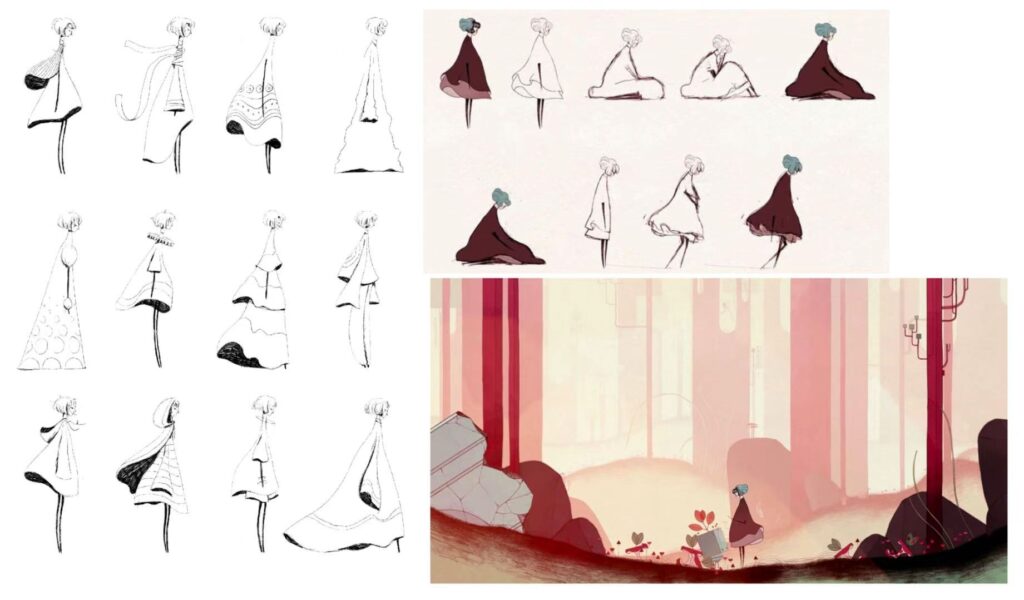
The overall shape of Gris is very simple. The clothing is mainly composed of long skirts and cloaks, without too many complicated decorations. The designer uses a large area of white space and smooth outline to make the character easy to identify even if it is reduced to a very small size.
Colour is also one of the most important design elements of this character. At the beginning of the game, the colour of Gris’s body was greyish-blue, which was consistent with the whole world that had lost its vitality. As the plot progresses, the colour on her body gradually enriches, and the colour is restored with the world. This design of roles and environment changes synchronously makes the growth process more intuitive without additional explanation.
In terms of action, Gris’s movement speed is relatively slow. There is a little delay in walking, stopping and jumping, which gives people a quiet and gentle feeling, which is also in line with the rhythm of the overall slow exploration of the game.
I hope Steve will also adopt this concise design idea.
His costumes will not be designed too complicated, but with simple long coats and scarves as the main features, so that players can recognise the characters at a glance. At the same time, I will not express my emotions through rich expressions, but keep his movements stable and restrained, and pay more attention to environmental changes.
In addition, I also hope to learn from the colour design of GRIS. At the beginning of the game, Steve’s overall colour will be darker and consistent with the city; as the player continues to repair the city, the colour on his body will also become warmer, allowing the character to change with the world.
“Journey“
Reference role: The Traveller
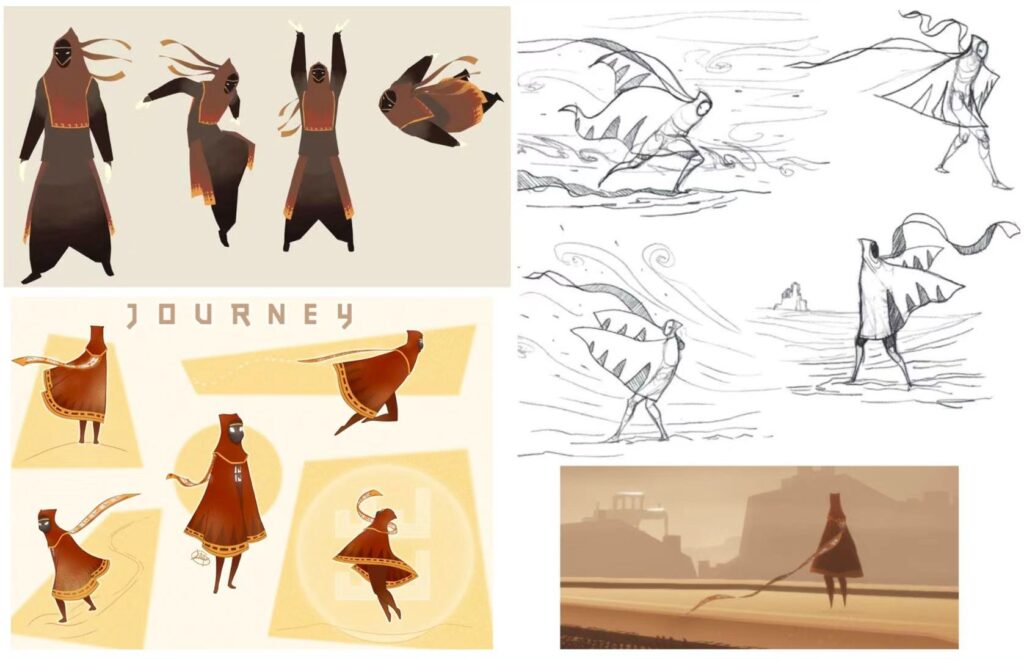
The protagonist of Journey has almost no character setting and no dialogue, but players can still substitute themselves into the role. I think this design is very suitable for Echos of Luma, because Steve is more like a window for players to observe the world than a character with a particularly complex plot.
Character design analysis
The character design of Journey is very minimalist. The whole body is almost covered by a robe, revealing only a small piece of glowing face. There are no complicated facial features, and there are not many details.
The colour matching is also very uniform, with a warm red robe as the visual centre, which contrasts sharply with the yellow desert, so even if the character stands in a large scene, it will not be overwhelmed by the background.
The action design is also worth referring to. When the character moves, the cloak will sway gently with the wind, and when it stops, the body will have a slight breathing animation. These small movements make the character look more vital. Even if there is no complex animation, it will not look stiff.
My harvest
I hope Steve can also maintain this simple and quiet role positioning.
He will not have many exaggerated movements, but will add some subtle animations when walking, stopping and observing objects, such as gently swinging the hem of his clothes, breathing slightly when stopping, and slowly reaching out when repairing objects. These small actions can increase the realism of the character without interrupting the rhythm of the player’s exploration environment.
In addition, Journey made me realise that a good character does not need many design elements. It only needs to have a distinct outline to be remembered by players. Therefore, I will keep Steve a unified and recognisable appearance.
Season: A Letter to the Future
Reference role: Estelle
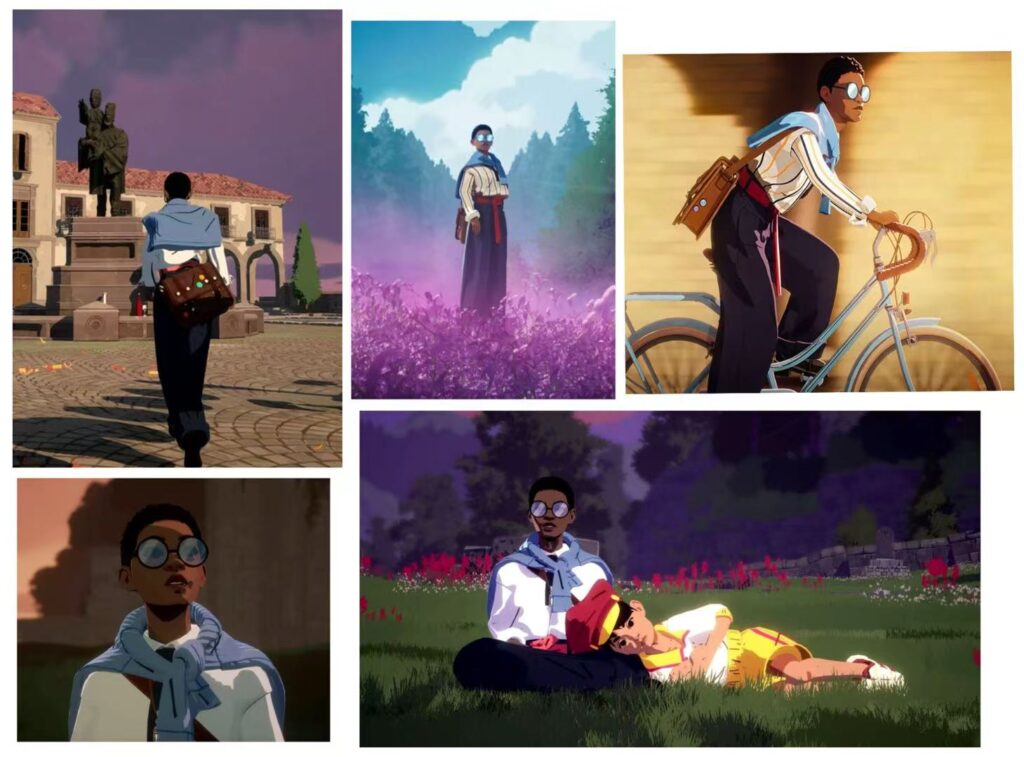
The protagonist of Season is a traveller who observes, records and preserves the memory of the world all the way, which is very close to the theme of Echoes of Luma. Although Steve is not a photographer, his task is also to find the memories left by the city, so I think there are many similarities between the two characters in terms of positioning.
Character design analysis
Estelle’s clothing is made of soft blue, white and beige, without particularly bright colours. The overall feeling is very comfortable, and it is also in line with the quiet and healing atmosphere of the game.
There are many props on the character that can reflect the identity, such as cameras, notebooks and backpacks. These objects not only enrich the character design, but also let the player know at first sight that she is a traveller.
In terms of animation, Estelle often stops to observe the environment, take photos or record content, which makes it easier for players to slow down and focus on the world itself instead of constantly rushing.
My harvest
I hope Steve can have similar design ideas.
Although he won’t carry many tools, I plan to let him always carry a small memory lamp (or memory device) as an important tool for repairing the city. This can not only strengthen the identity of the character, but also become a visual symbol in the game.
In addition, I also hope that Steve’s standing posture and movement are relatively calm, often stopping to observe the surrounding environment, instead of running fast, so that players can naturally enter the state of slow-paced exploration.
Little Nightmares
Reference role: Six
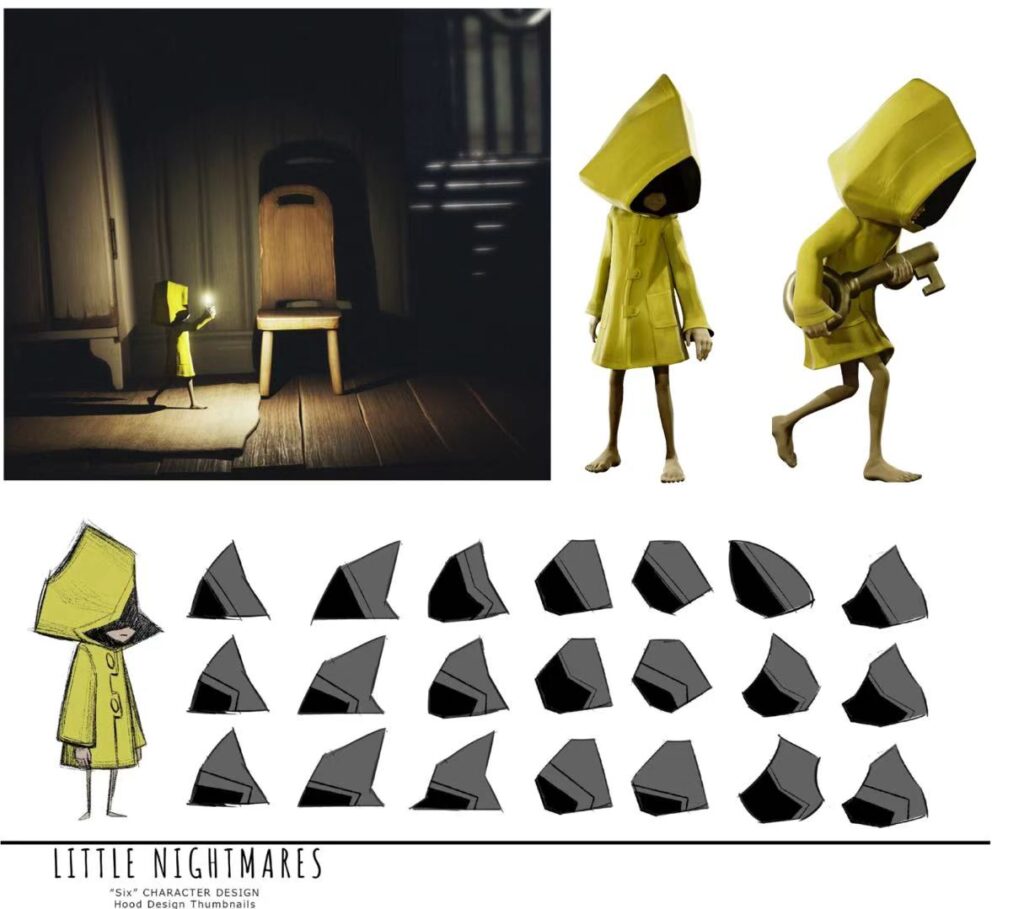
Six, the protagonist of Little Nightmares, has almost no dialogue, and will not take the initiative to tell players who she is and what she has experienced. Players can only understand the character through her movements, environment and the whole world.
Character design analysis
The design of Six is very simple, but it is highly recognisable. She is wearing a yellow raincoat, and the overall outline is very clear. Even if the character is reduced to a very small size, the player can still recognise her at a glance. This shows that a character does not need many complicated details. As long as it has a unique silhouette and a uniform shape, it can leave a deep impression.
The proportional design of the character is also very distinctive. Six’s body is small and the proportion of the head is slightly larger, which makes her look more vulnerable and makes the huge scene around her more oppressive. Although Echoes of Luma will not use this exaggerated proportion, I think this way of using the proportion of characters and environment to strengthen the atmosphere of the world is worth learning.
In addition, the animation design of Little Nightmares is very delicate. Six will show the weight and inertia of the body when walking, stopping, climbing and pushing objects. Every action is very natural, so even without complicated expressions, players can still feel the emotions and state of the characters.
In terms of colour, the yellow raincoat is almost the visual focus of Six’s whole body, while the surrounding environment is mostly gray, blue-gray and dark. This colour matching not only improves the recognition of the character, but also allows the player’s attention to naturally focus on the character.
My harvest
I hope Steve’s design can also maintain this simple but recognisable principle.
His costume will not add too many complicated decorations, but uses robes as the main feature, so that the character has a clear outline and can be recognised by players even at a long distance.
I found some pictures of robes on Pinterest:
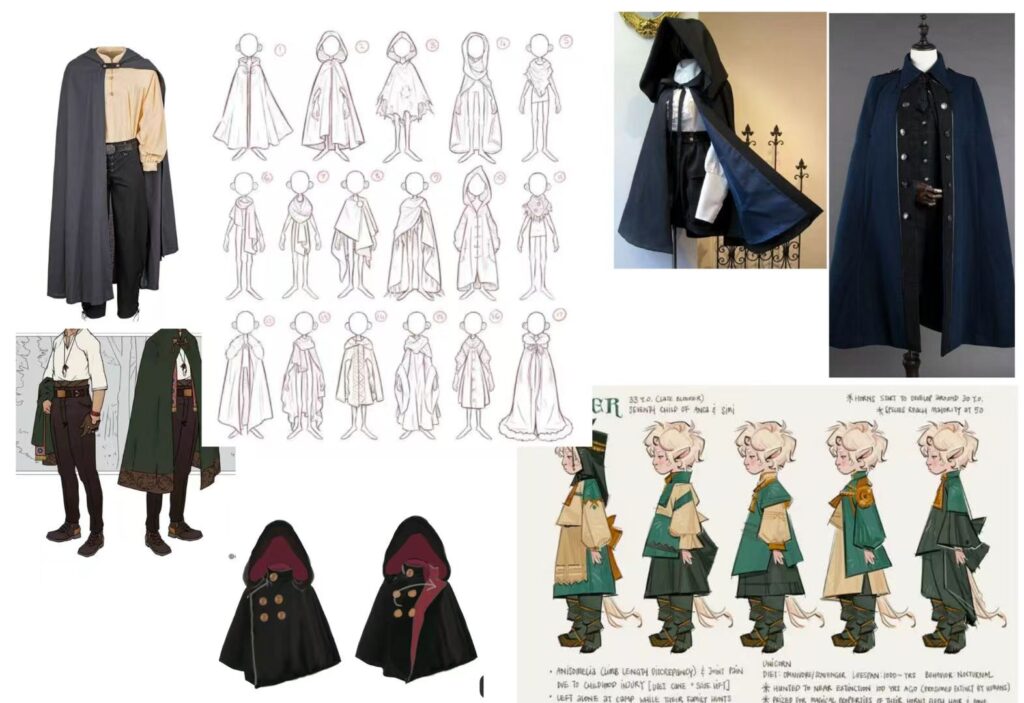
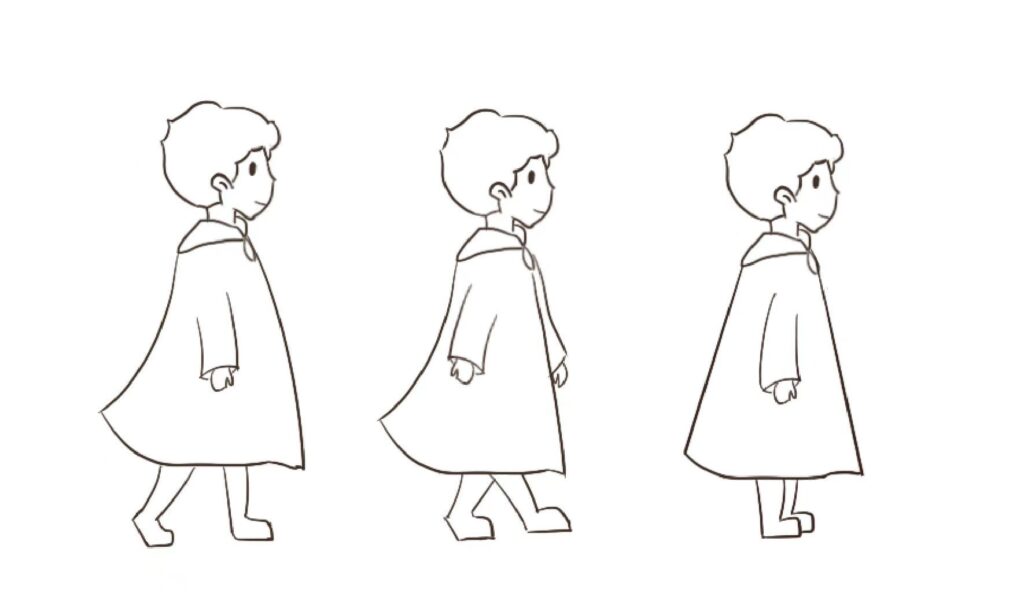
In terms of animation, I also hope that Steve’s movements can be simpler. I will draw two movements of his walking.
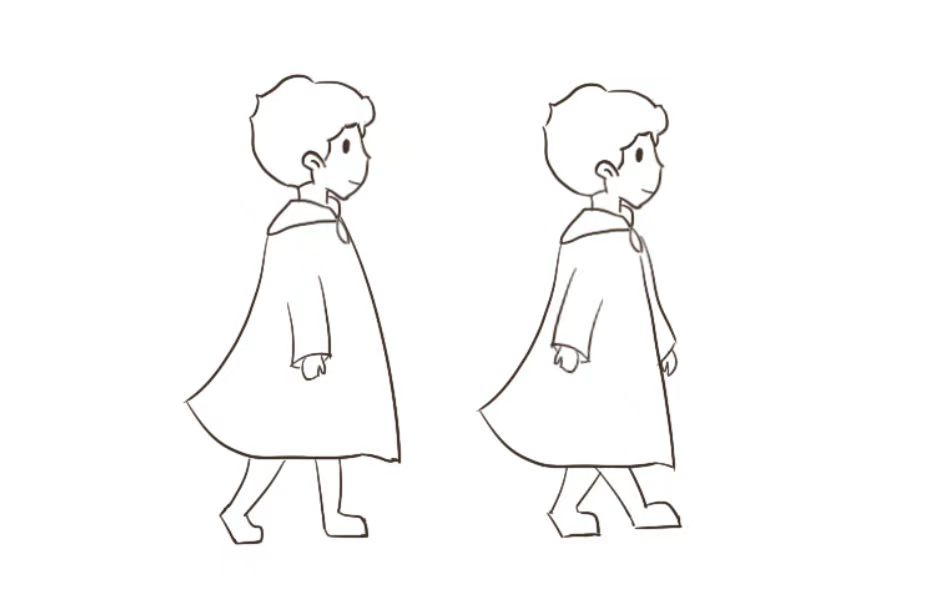
These are the two states of Steve I drew. After showing it to my friend, he suggested that I add a Steve standby state, so I drew a draft of his standby state: