Class notes:
1. Framings
Framings provide the conceptual background or thematic direction for a project.
Purpose of framing:
* Establishes meaning and context
* Guides visual and material decisions
* Helps unify concept and form
2. Elements of Art & Principles of Design
A. Elements of Art
The basic components that make up an artwork.
* Line – direction, movement, boundaries
* Shape – two-dimensional forms
* Form – three-dimensional structures
* Space – positive and negative space
* Texture – surface quality (visual or tactile)
* Colour – hue, value, saturation
* Value – lightness and darkness
B. Principles of Design
How visual elements are organized within a composition.
* Balance – symmetrical or asymmetrical stability
* Emphasis – focal point or area of importance
* Movement – guides the viewer’s eye
* Pattern – decorative repetition
* Repetition – consistency of elements
* Proportion – size relationships
* Rhythm – visual flow and timing
* Variety – visual interest through difference
* Unity – sense of cohesion and completeness
3. Colour Theory
Core Properties of Colour
* Hue – the name of a colour (red, blue, green, etc.)
* Value – lightness or darkness of a colour
* Saturation – intensity or purity of a colour
* Contrast – degree of difference between colours
Types of contrast:
* Light vs dark
* Warm vs cool
* Complementary colours
* High contrast vs low contrast
Role of colour:
* Creates mood and atmosphere
* Directs attention
* Enhances clarity and readability
4. Key Summary
* Framing → Why the work exists
* Elements → What the work is made of
* Principles → How the work is organized
* Colour → Emotional and visual impact
Activity 1:
My game art style:
Gentle, reflective, emotionally healing with a soft futuristic feel
2D Game
Activity 2:
The teacher asked five people to work together for a group of three game art pillars based on the story provided.
Story:
In the future, cities lie submerged beneath the sea, forcing humanity to dwell beneath the waves. Oxygen reserves are rapidly depleting, while the surroundings teem with various bioluminescent sea creatures. Humankind must contend with the struggle for oxygen while also bearing the risk of venturing out to explore.
I was responsible for writing pillar3, and other students in our group were responsible for finding relevant images
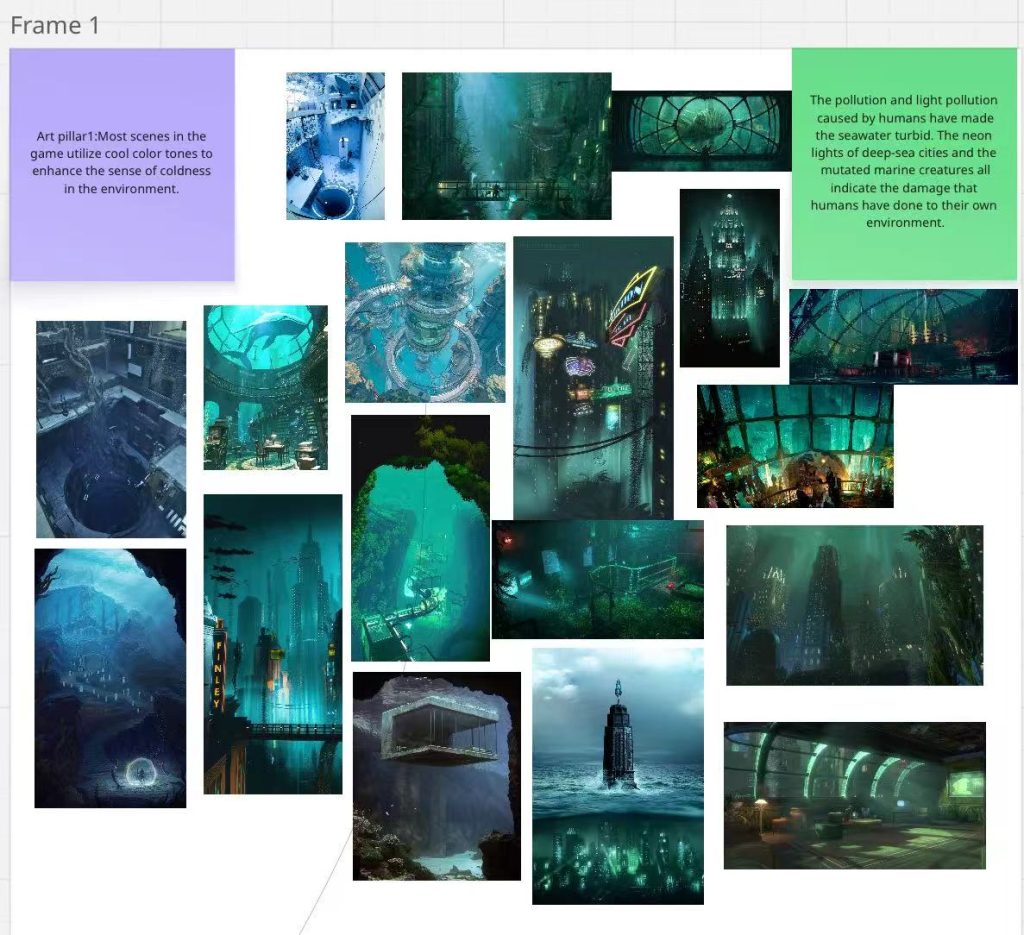

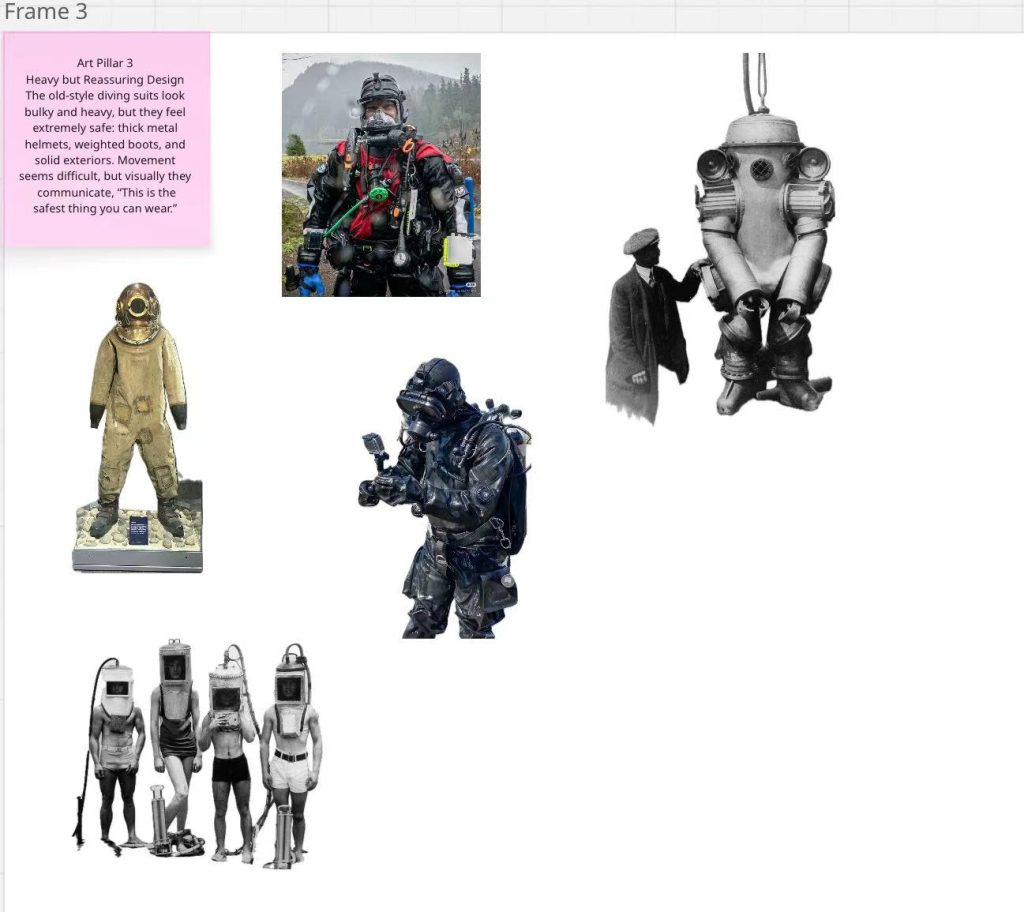
Based on the background information provided by the story, the narrative takes place in a futuristic city engulfed in seawater. Therefore, the team focused on a large number of visual data of underwater cities and underwater buildings in the preliminary research. Considering that the overall tone of the story tends to be depressing and sad, I think the ambient color should be dominated by blue and other cool tones.
In this story, sunlight no longer symbolizes hope, and the future of mankind is also shrouded in uncertainty and despair. Therefore, the overall scene is designed with weak light, dim environments, and limited light sources swallowed up by seawater, creating an oppressive and closed deep-sea atmosphere. To enhance the realism of the narrative, we referenced real-life deep-sea creatures in our visual design. These creatures are mostly cool-toned blue light, supplemented by a small amount of yellow glow, which can blend naturally into the environment and provide visual guidance in low visibility. At the same time, humans wear bulky old-fashioned diving protective clothing when they go out to explore, to strengthen the sense of security, and also hint at the high risks associated with underwater exploration from the side.