The submarine sound is silent once the character has disembarked; it only becomes audible after the player has entered the submarine. In FPS games, footsteps are used to identify enemy sounds, with different characters using different sounds.These two examples from the course brilliantly demonstrate the pure application of the three core design logics in game audio design: spatial permissions, information substitution, and information density.
The submarine sound case explores the spatial permissions of sound and player focus management. Sound here is not a fixed attribute of the scene, but rather a conditionally triggered piece of information based on the player’s relative position. The inability to hear sounds from above the water is a physically intuitive information masking; only when the player enters a specific space are the relevant audio layers activated and given the highest priority. Essentially, this dynamically defines the boundaries of auditory attention through the presence and disappearance of sound, preventing information overload and reinforcing the unique acoustic identity and immersion of each space. It designs the rules of sound entry.
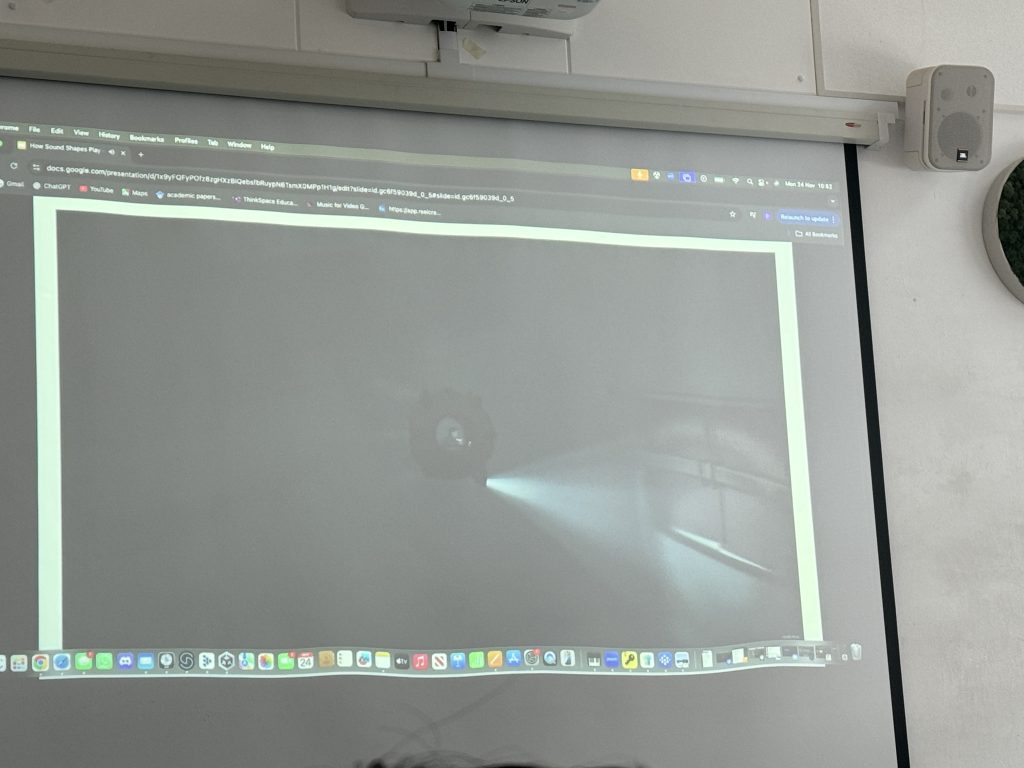
Daydream thinking
When players are in open areas like pools or lobbies, they can only hear ambient sounds (water, wind, and indistinct background music). At this time, specific sounds from other rooms (such as conversations or television sounds) are completely inaudible, maintaining a sense of mystery and preventing excessive noise. Players will never lose track of the main spatial sound information due to a cacophony of sounds. Essentially, the sound follows the player’s movements; wherever the player goes, background music that matches the environment plays.
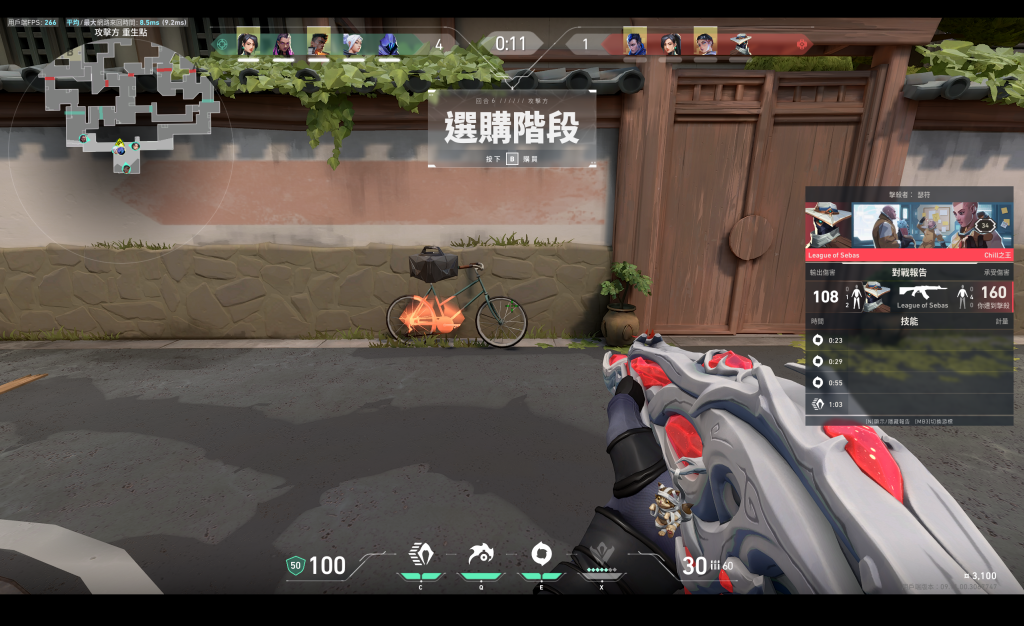
(Screenshot In Valorant)
The footsteps sound in FPS case delves deeper into the information density and tactical semantics of audio. In highly tense combat environments, sound is compressed into high-value tactical data packets. Different ground textures, character sizes and equipment, and movement states (walking, running, crouching) are all encoded into unique sound signatures. By analyzing these subtle differences, players can not only determine location and distance, but also identify enemy types and infer their intentions and states. This transcends basic spatial perception, rising to the level of sound-based identity recognition and behavior prediction, greatly increasing the game’s strategic depth and tension.
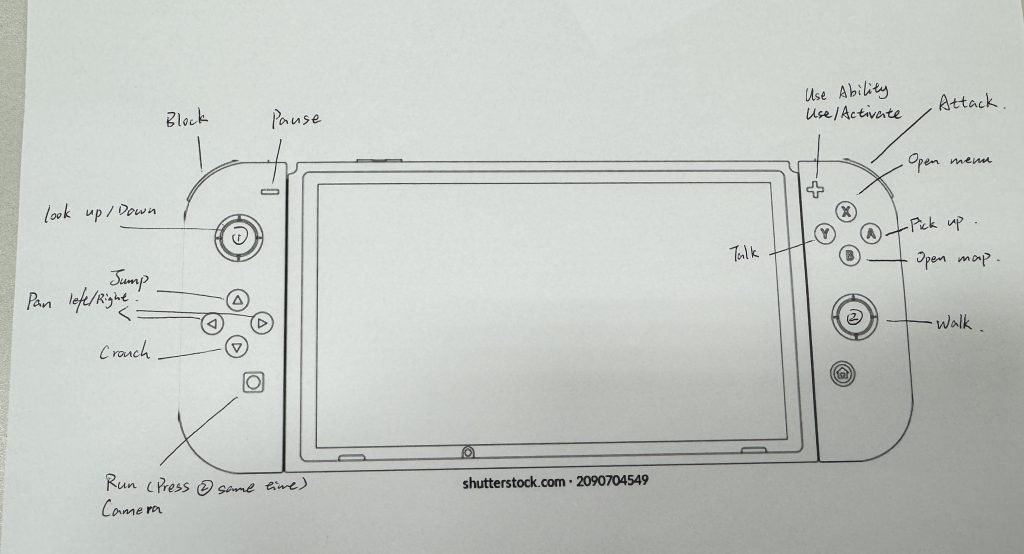
Regarding the choice of tools for gamers, my thoughts are as follows:
For games seeking precision and immersion, such as first-person narratives or complex strategy games, keyboards and mouse/gamepads are the preferred choice, offering low-latency, precise controls suitable for extended play sessions.
If the goal is to enhance the player’s physical experience, such as fitness or party games, games like ‘Ring Fit Adventure’ extend gameplay into the physical space, while ‘Ring Fit Adventure’ transforms player movements into input commands, creating a unique connection between mind and body and a social atmosphere.
For games that prioritize portability and are suitable for short, fragmented gameplay, hybrid devices like the Switch and mobile phones can serve flexible gaming scenarios.
I finally chose to design the Switch’s button layout during a class activity because my game would require the Switch for control. I’m quite familiar with the Switch’s control scheme, and it’s relatively easier to develop motion-sensing games this way, especially if I plan to add other specialized devices to enhance the motion-sensing experience in the future.