
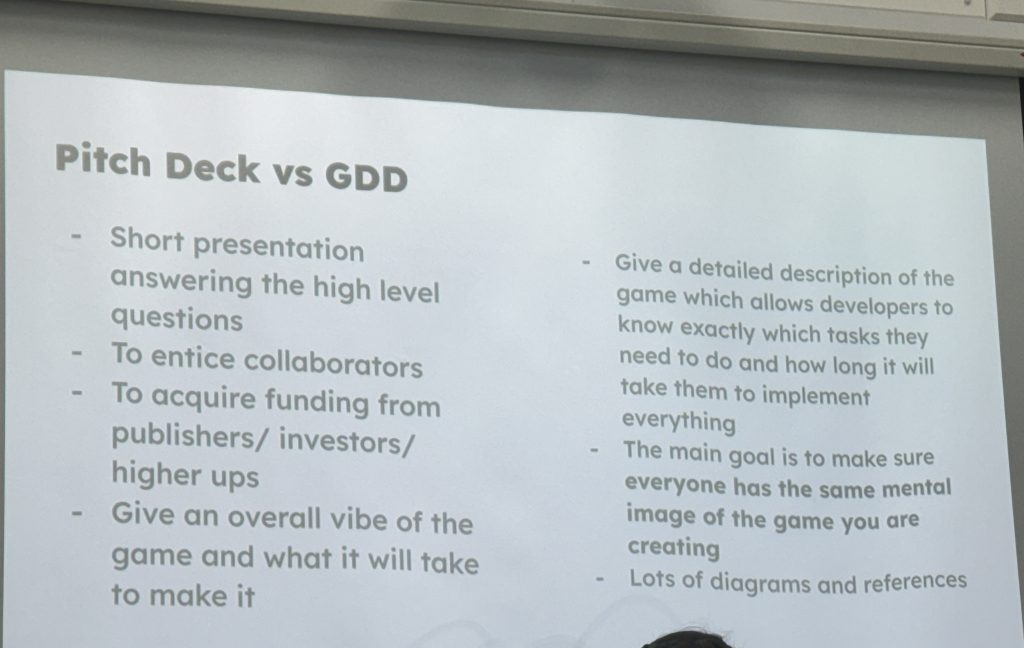
The purpose of a pitch is to throw out a hook, using the most concise art style, the most impactful core loop demo, and that signature tagline to attract investors, collaborators, and even future players. It must be captivating because it’s essentially selling a dream. This reminds me of the observation about the high percentage of people with ADHD in the gaming community—doesn’t this require our pitch deck to be like a brilliant game opening? It needs strong sensory stimulation, a clear and immediate sense of purpose, and surprising pacing to quickly capture those eager, novel-seeking minds.
GDD, on the other hand, is a ‘blueprint’. Once the dream is sold, the blueprint must ensure that all builders have a completely consistent ‘mental portrait’ of the final building. It doesn’t need to be eloquent, but it must be meticulous and logically rigorous. It uses diagrams, flowcharts, parameter tables, and detailed descriptions to transform inspiration into actionable, verifiable, and schedulable tasks. Its beauty lies not in flowery language, but in absolute clarity and consensus, eliminating any ambiguity that could lead to rework.
A great game, with its level design, feedback system, and progression curve, can act like an invisible learning tool, unconsciously guiding players to ‘download’ and practice these skills. Our design challenge lies in making this learning process as engaging and responsive as the game itself, ultimately allowing players not only to complete the game but also to subtly upgrade their gameplay techniques.
I’m trying to write my own game pitch at the weekend:
This is a first-person exploration game played on the Switch. Players will dive into a girl’s digital dream, navigating a surreal world constructed with pool nuclear aesthetics and vaporwave visuals. They will solve puzzles based on visual illusions and interact with “misplaced” old objects to piece together her fragmented memories.
The core innovation of the game lies in using visual illusions as the core gameplay and narrative tool, deeply exploring the theme of “the unreliability of memory”. Players gain insight into the truth of the world by changing perspectives, experiencing a unique digital nostalgia in a serene and introspective exploration.
The entire experience is driven by a highly recognizable audio-visual aesthetic – lo-fi music, glitch art, and a serene swimming pool scene, collectively crafting an approximately 2-3 hour interactive poem that is emotionally profound and immersive, making one reluctant to wake up from it.
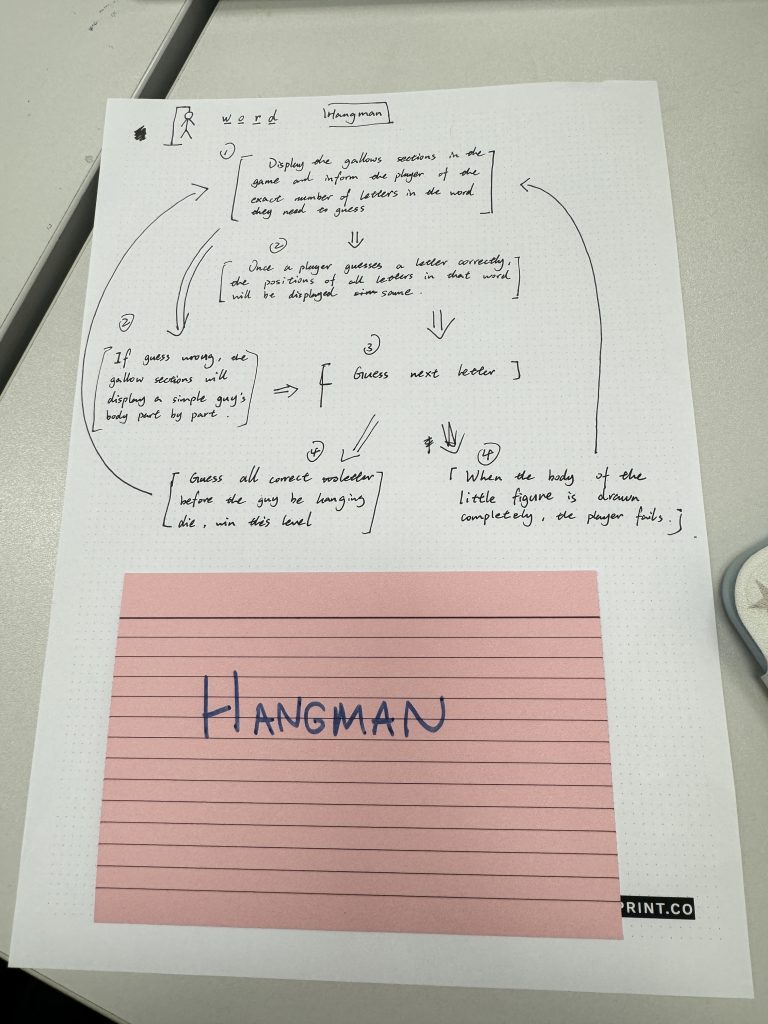
This is the activity to write a core loop about the game ‘Hangman’, I worked with Leo. This is already a very simple game, but it is still difficult to accurately summarize each step of the game. However, a method was eventually found: simply summarize what the player should do at each step, and what impact their correct or incorrect guesses will have on the course of the game. Use this method to distinguish the steps and summarize them with the most concise words.
A great game, with its level design, feedback system, and progression curve, can act like an invisible learning tool, unconsciously guiding players to ‘download’ and practice these skills. Our design challenge lies in making this learning process as engaging and responsive as the game itself, ultimately allowing players not only to complete the game but also to subtly upgrade their gameplay techniques.
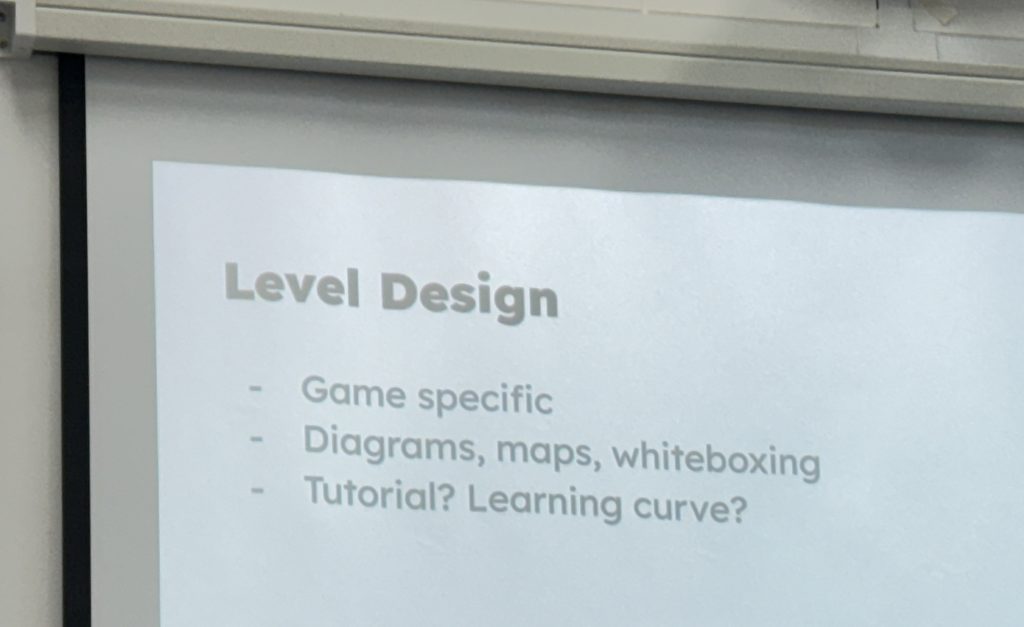
Because ‘Daydream’ is a first-person exploration and puzzle game with six levels, I plan to have players gradually learn all the puzzle-solving skills and become proficient in using items in the first two or three levels. This design ensures that players solidly master several independent skills in the first three tutorial levels, and in the latter three levels, these skills will be transformed from mere tools for solving puzzles into part of the game’s emotional interaction experience (such as playing collected CDs to piece together the main story), ultimately completing the transformation from puzzle solver to empathizer, which should bring a better sense of immersion to the player.