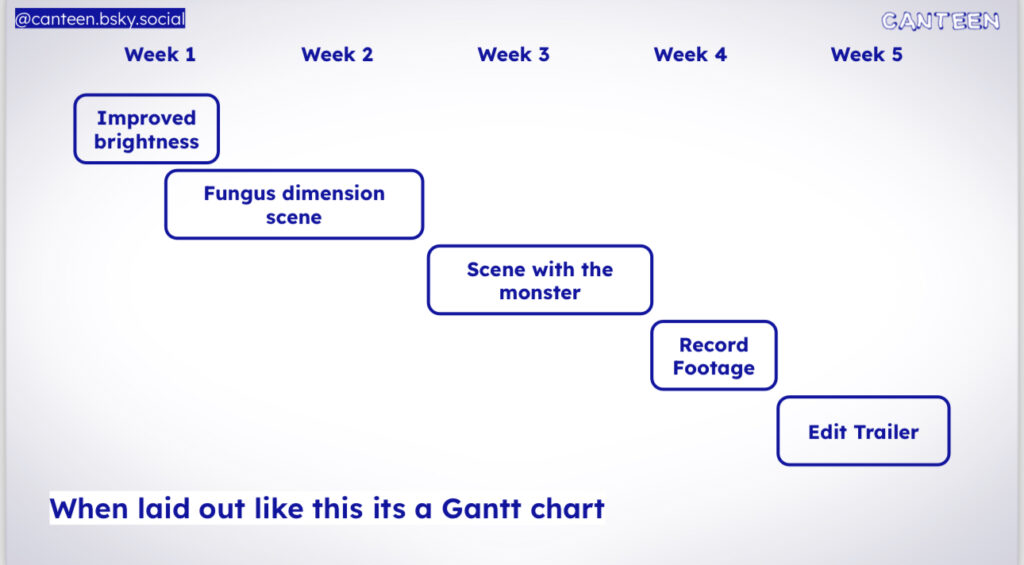
This Monday, we continued our discussion and examples from last week regarding the user story, and used sticky notes on the whiteboard to create a table. At the same time, we also listened to a lecture given by the game development team CANTEEN. The helpful point I got was to do as many playtests as possible, because game production is a marathon, not a sprint, and completing it all in one go is impossible. Also, set goals for each time period and break down tasks to make the time planning clearer. Always record the progress. Don’t leave everything until the end. UI, title screens, and art work can all be done as early as possible and carried out simultaneously. Playtests are very important because players and developers are on different perspectives. Players may not know all the details about the game, so this is a good opportunity for the developers to see how players understand the plot and mechanics of the game.
During the time before
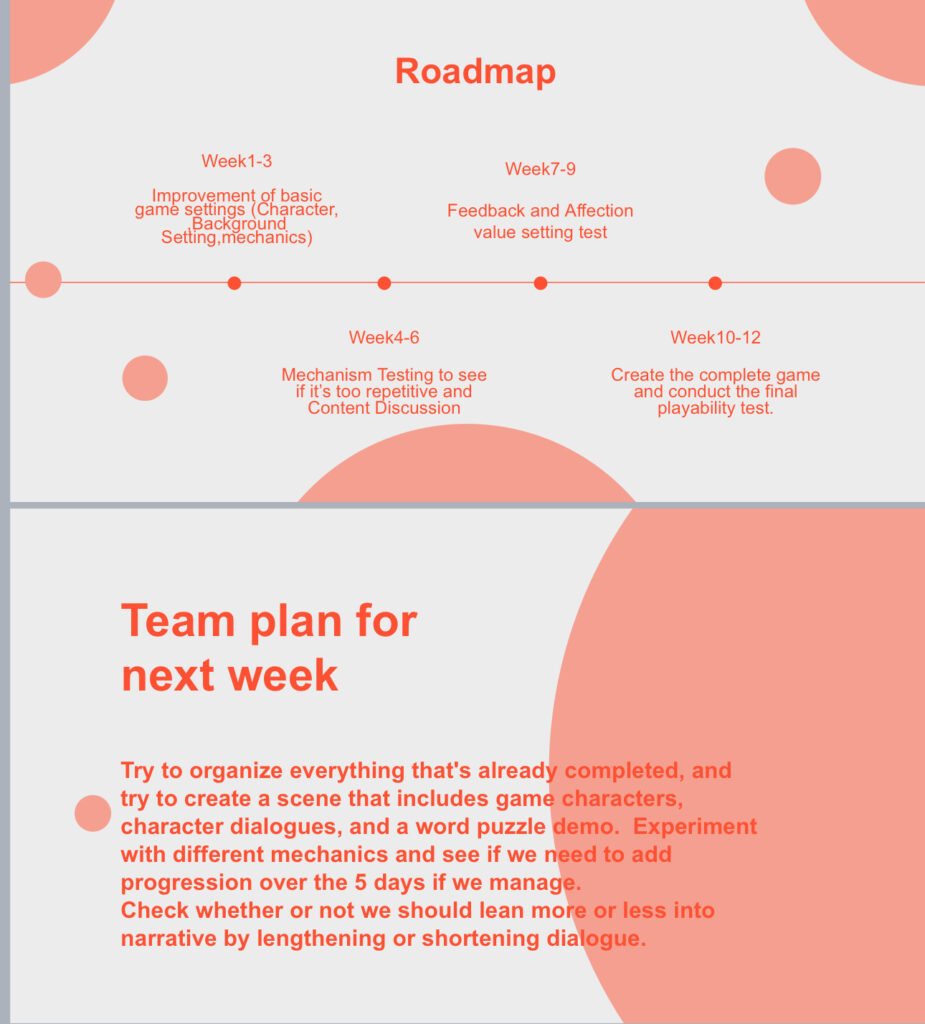
Thursday, we were discussing ‘Vertical Slice’ and preparing the PowerPoint presentation for Thursday’s report. We needed to determine the minimum playable scope and core mechanics of our game. I asked for suggestions and thoughts from others in the group and created a PowerPoint presentation, explaining our division of labor, the projects we have completed at this stage, our vertical slice, the problems we encountered, and the core mechanics of the game. Regarding the problem I faced, it was that my communication skills were limited and I couldn’t combine the mechanics with the story outline I wrote. This has been very frustrating for me. I have been continuously playing other text-based games and researching their GDDs in an attempt to solve this problem.