Monday’s lesson taught us how to create a game loop for our own game. What impressed me most was the instructor’s use of the item system in *League of Legends* to show how these systems act like an “invisible hand,” setting long-term goals for players, providing sustained motivation and deep strategic space—key to player retention. While writing this, I realized that a good game is like a sophisticated machine, where every player action is closely linked to resource acquisition and consumption, driving the game forward.
Game designers need to learn how to think about design using the “user story” format, which means asking yourself from the player’s perspective: “Why do I use this feature? What enjoyment will it ultimately bring me?” This made me realize that good design is not only logically rigorous but also accurately responds to the player’s emotional needs.
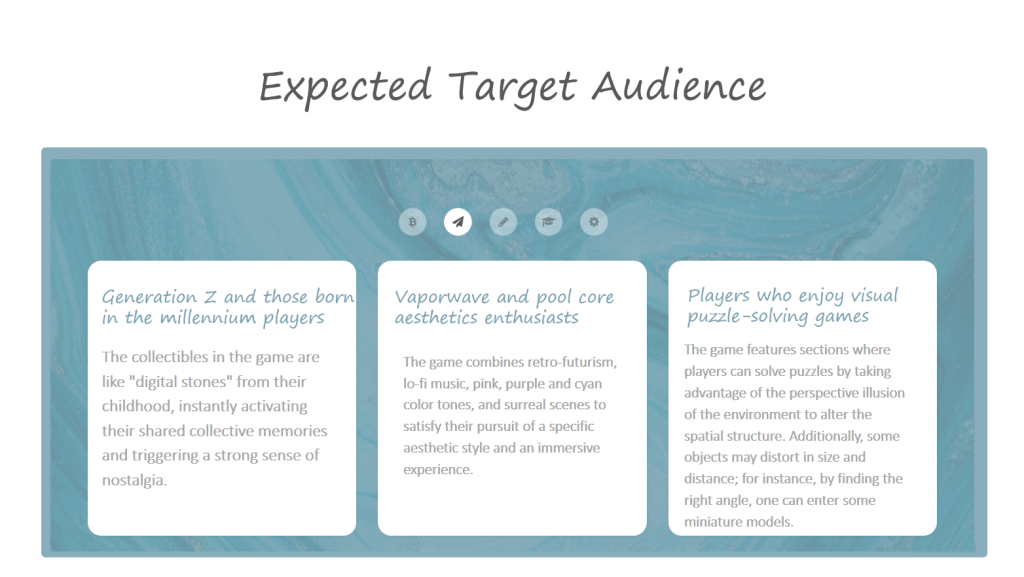
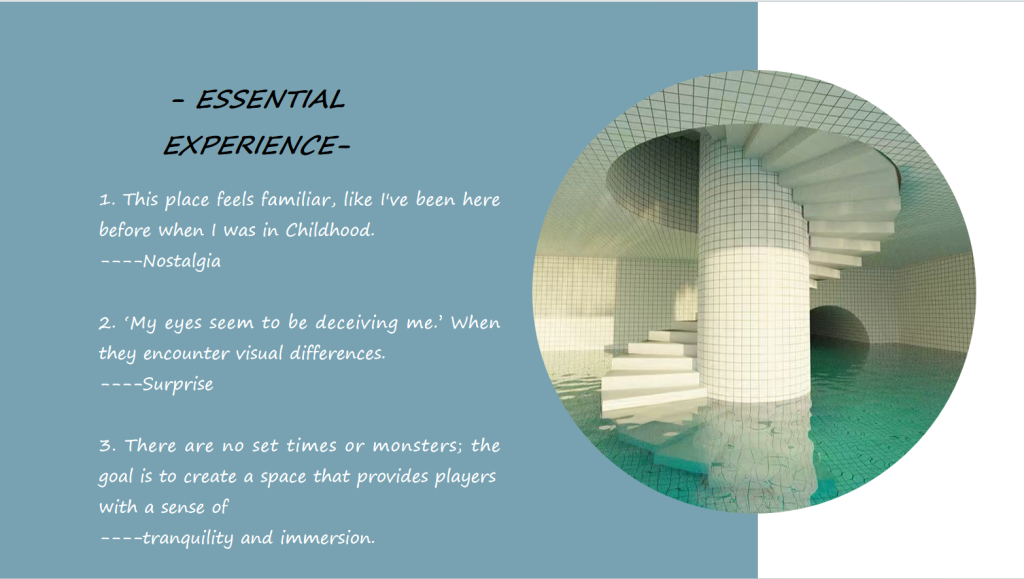
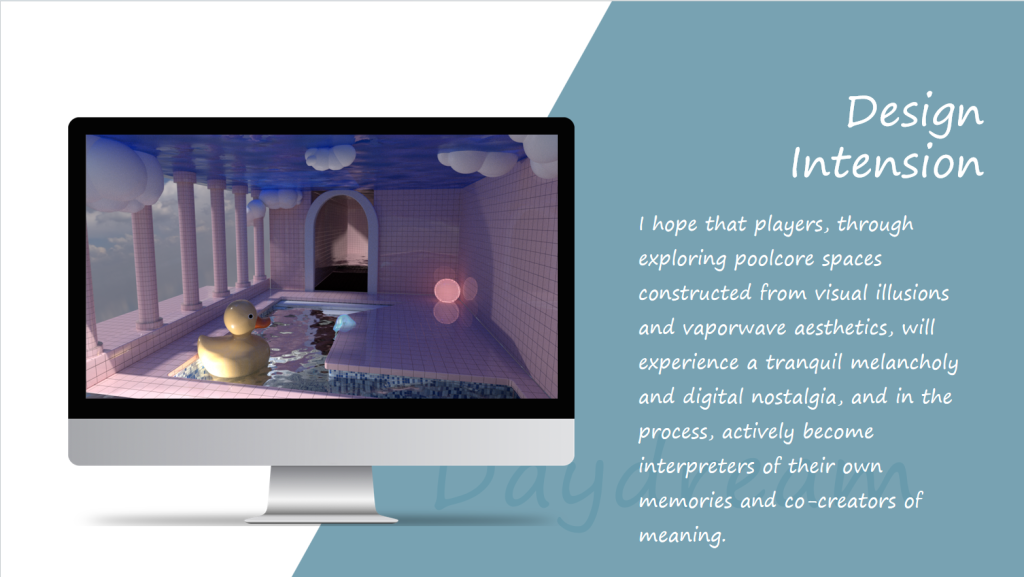
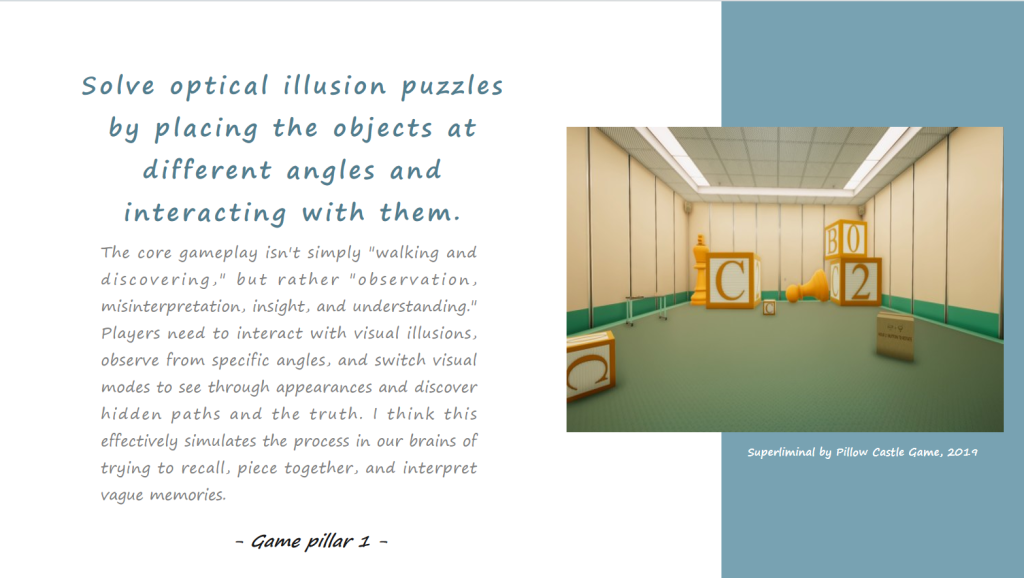
My second presentation is on Thursday, adding some information about my game to the previous three pillars. My game’s target audience is players who experienced the era of rapid technological advancement, those who appreciate vaporwave aesthetics, and those who enjoy visual illusions. I want players to experience nostalgia, surprise, and a touch of sadness. My design intension is that I hope players, through exploring poolcore spaces constructed from visual illusions and vaporwave aesthetics, will experience a tranquil melancholy and digital nostalgia, and in the process, actively become interpreters of their own memories and co-creators of meaning. I showcased my core game loop and a different game pillar.
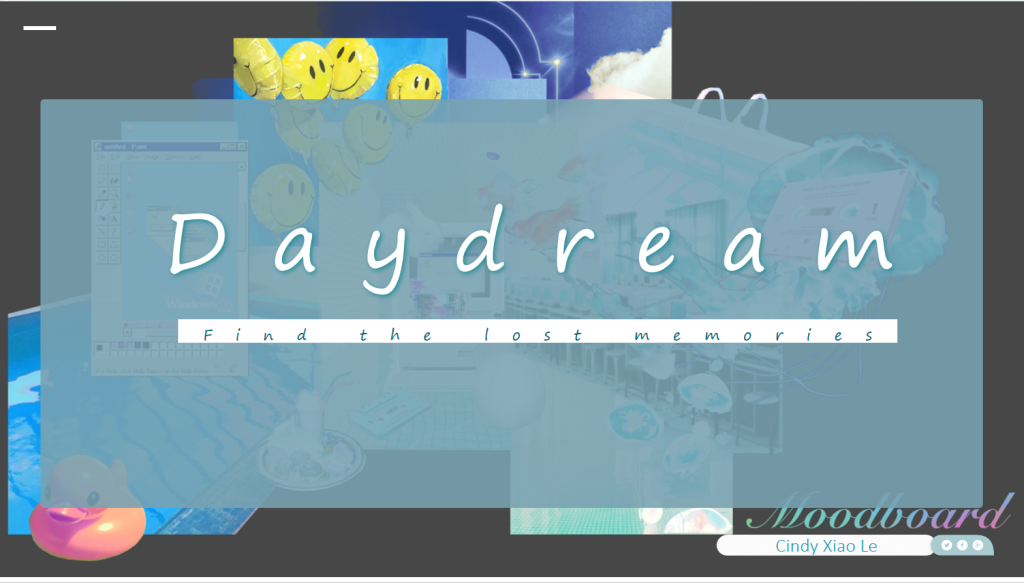
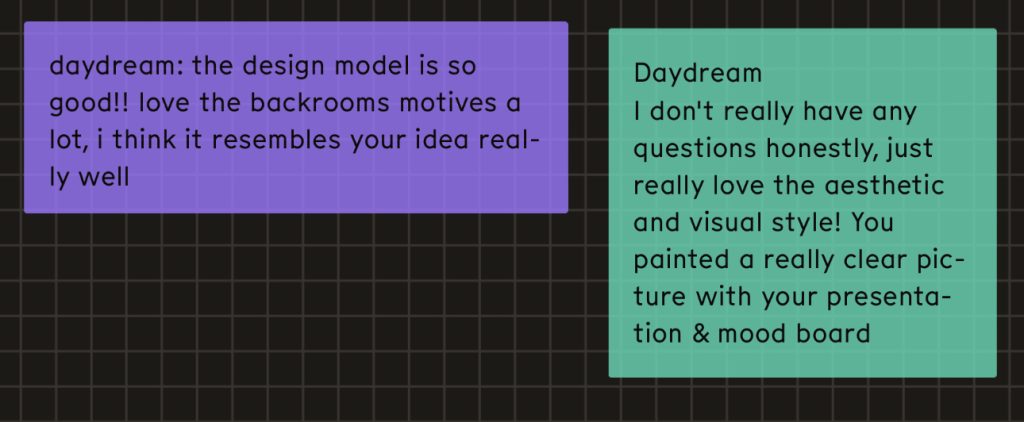
I was very appreciated to receive positive feedback regarding my game’s art style. I also looked at the suggestions I received from artist Lisa Frank, whose artwork’s color schemes and ideas were very helpful. Christian Riese Lassen’s work is very vibrant, and his creative intentions are also excellent, both showing us the colorful underwater world and revealing the risks that humans pose to marine life.