

Week 4 felt like a major development week for me, both creatively and technically. This week, I continued refining my environmental ideas while also pushing myself to learn new software and to improve the overall visual quality of my work. A large part of the week focused on experimentation, reflection, communication with my teammates, and understanding how environmental storytelling could emotionally support the themes of Developing Memories.
At the beginning of the week, I started experimenting more seriously with Krita while designing ideas for the sweet shop environment. Since it was my first time properly using the software, the process honestly felt quite difficult at first because I was learning completely new tools while trying to create visuals that matched our game’s atmosphere. Instead of immediately planning every detail, I approached the environment in a much freer, more experimental way. I spent time researching tutorials and testing brushes, colour gradients, layouts, and various painting techniques to gradually understand how digital environment art could communicate mood and emotion.
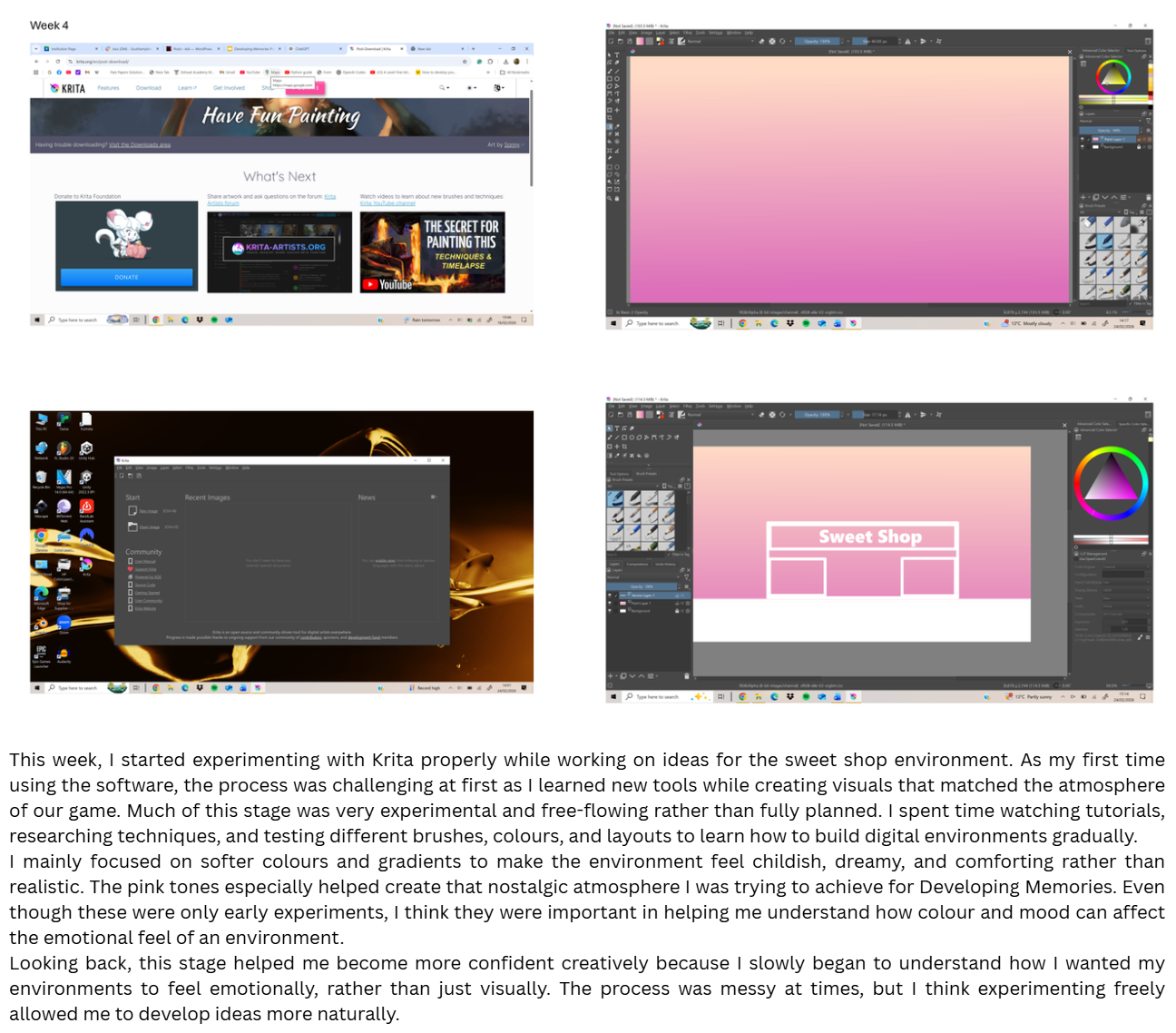
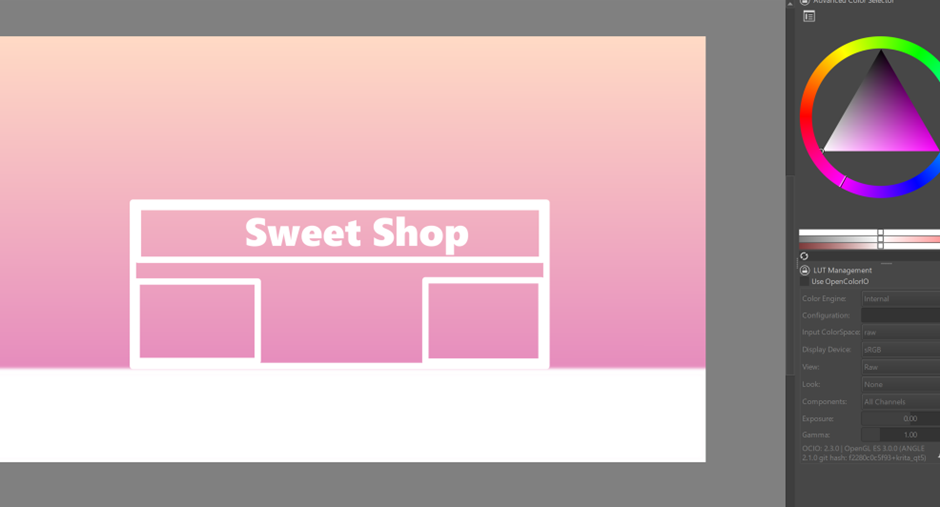
The softer pink colour palette became important during this process because I wanted the environment to feel childish, dreamy, nostalgic, and emotionally comforting rather than realistic. Even though these were still early experiments, I think this stage helped me begin to understand how colour and atmosphere can affect the emotional feel of a space. Looking back, I realised that I was slowly becoming more confident creatively because I started thinking less about simply making environments look visually good and more about how they should feel emotionally for the player.
Alongside my digital experiments, I remained heavily involved in our group communication and collaborative discussions. Throughout the week, our team continued to discuss ideas, update each other on progress, prepare for upcoming playtesting sessions, and refine the project’s overall direction. I stayed engaged in these conversations by regularly sharing my progress, asking questions when I was unsure about specific visual directions, and responding to teammates’ feedback professionally.
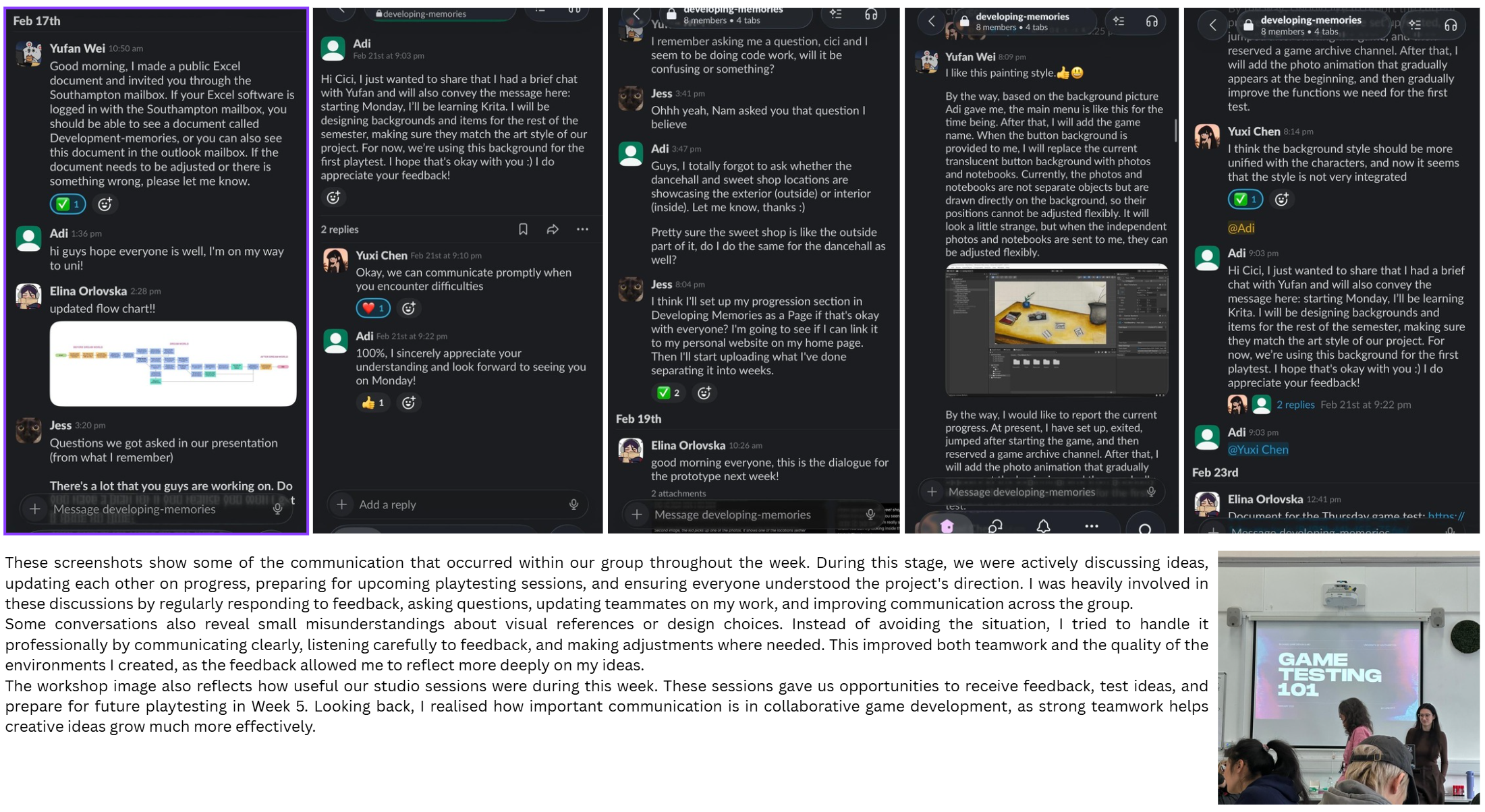
Some of the conversations also reflected small misunderstandings about visual references and design choices. However, instead of ignoring the situation, I tried to handle it maturely by listening carefully to feedback, communicating openly, and making changes where necessary. I think this helped improve both the quality of my work and the overall teamwork within the group because everyone became more aligned creatively after discussing our ideas further. The workshop and classroom sessions this week were also extremely useful, as they gave us opportunities to receive feedback, test ideas, and better prepare for future playtesting sessions.
Another major part of this week involved environmental research through real-world observation and photography. Most of the photographs shown throughout this blog were taken by me while exploring cafés, sweet shops, interiors, lighting, textures, and different environmental spaces. Since Developing Memories focuses heavily on nostalgia and childhood emotions, I wanted to gather references that felt warm, peaceful, cosy, and emotionally comforting. The cafés and sweet shops especially inspired me because they evoked comforting childhood memories and emotional spaces people naturally connect with.
I also became interested in objects such as cameras, photographs, notebooks, and small decorative items because they subtly connected to the idea of preserving memories, which links naturally with the themes of our game. Even though some of these objects were symbolic rather than direct gameplay mechanics, I think they still helped strengthen the emotional atmosphere I wanted my environments to communicate. This research process helped me realise how important real-world observation is within world design because strong environments often come from studying real spaces and transforming them into something emotionally meaningful for players.
(Click on the video for it to play)^
Towards the latter part of the week, I also continued developing my traditional painting and sketching process for environmental concepts. Before creating the final pieces, I first created rough sketches to plan the composition, object placement, and overall structure of the environments. Starting traditionally helped me visualise the scenes more naturally before refining them further through colour and detail.
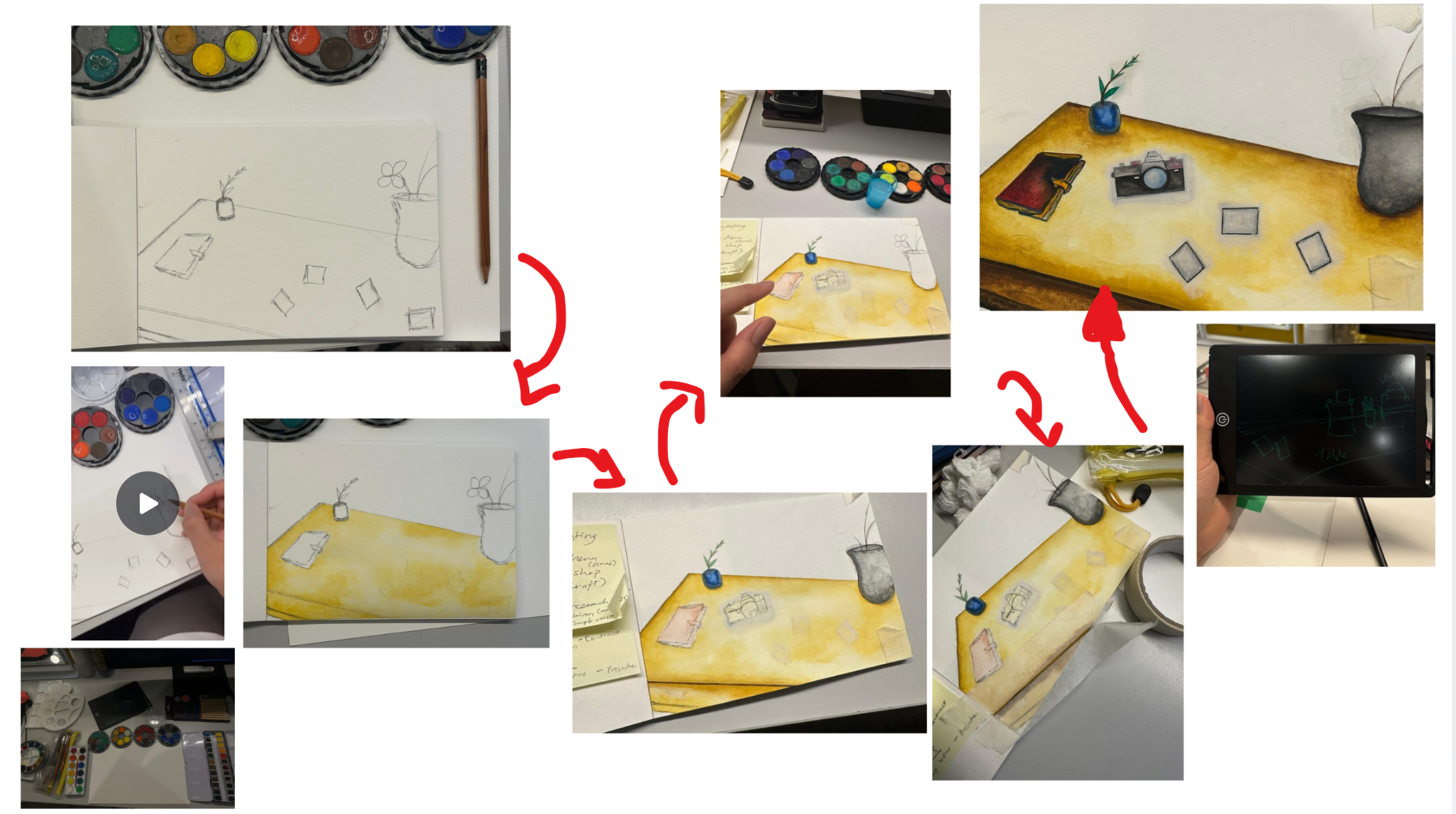

I experimented with watercolour painting because I wanted the environments to feel softer, calmer, and emotionally warm. The blending of colours helped create a dreamlike atmosphere that matched the nostalgic tone of Developing Memories. Throughout the process, I gradually refined smaller details such as photographs, notebooks, cameras, plants, and lighting to make the environments feel more personal and emotionally connected. I began to understand how environmental storytelling works more deeply during this stage, as even simple objects can convey emotion, personality, and narrative without directly explaining anything to the player.

Overall, Week 4 was a very important stage in my creative development because it pushed me beyond my technical comfort zone and helped me clarify my artistic direction. Through experimentation, collaboration, environmental research, and visual storytelling, I began to develop a much stronger understanding of how world design can create emotional experiences for players rather than simply serving as background visuals.