Week 10 honestly felt like one of the most important and rewarding weeks throughout the entire Developing Memories project. By this stage, everything had finally started to come together properly after weeks of experimentation, feedback, stress, collaboration, and development. As we approached the final public playtest, there was a real sense of pressure within the team, but at the same time, it felt exciting to see how much progress we had made throughout the semester. Looking back, this week genuinely made me realise how much I had improved creatively, technically, and professionally during the project.
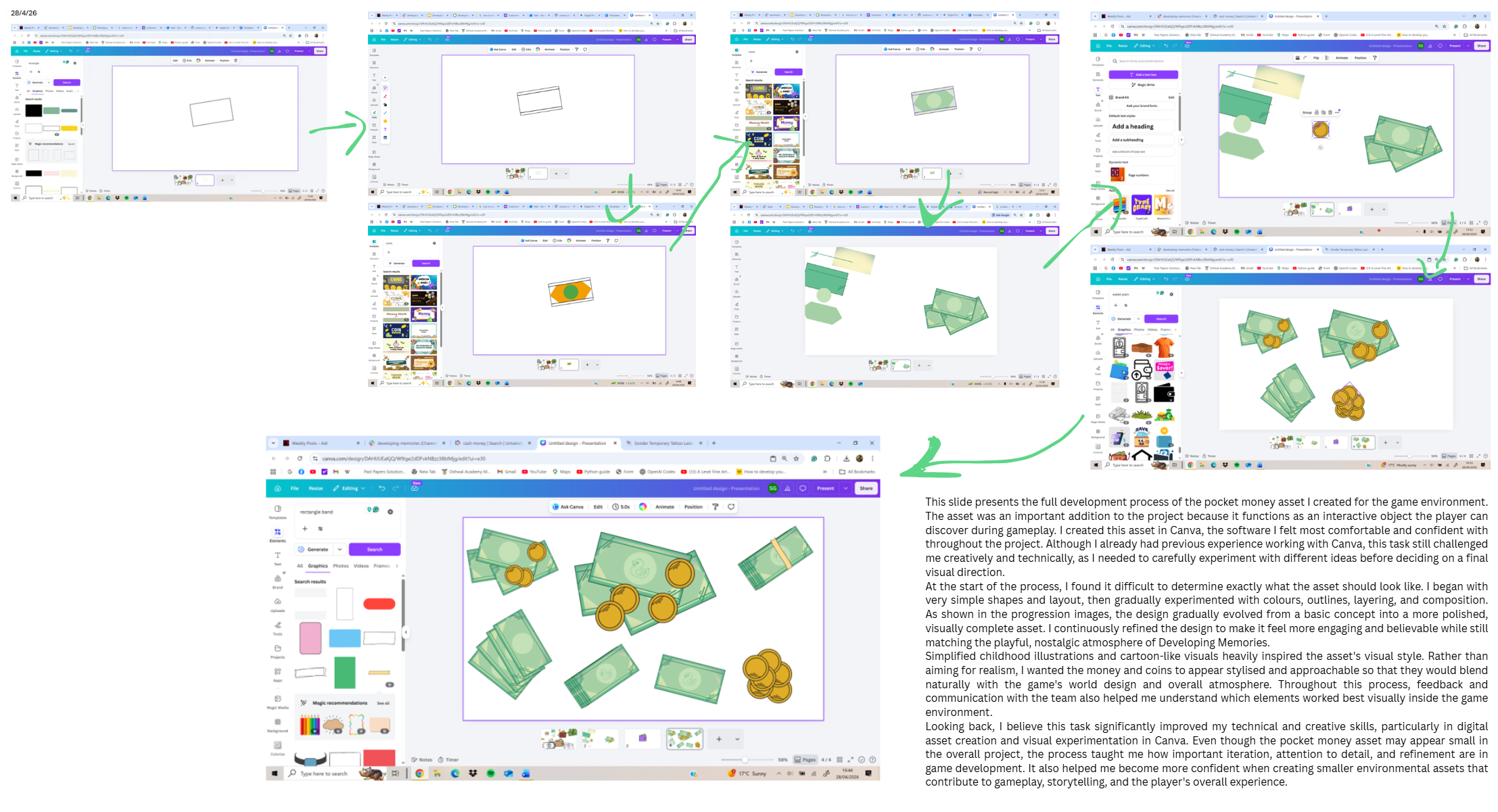
One of the main things I focused on this week was developing the “pocket money” asset for the game using Canva. Since Developing Memories revolves around childhood nostalgia and emotional storytelling, I wanted the asset to feel believable, playful, and naturally connected to the game world. At first, the design was extremely simple, mostly built from basic shapes and colours. Still, over time, I kept experimenting with layouts, layering, note variations, and coin placements until it slowly became something much more visually interesting and polished. Although I already had experience using Canva, this process still challenged me creatively because it took time to figure out what actually worked best visually while matching the soft childhood atmosphere we wanted throughout the game. Looking back at the development screenshots, I can clearly see how the asset evolved from a rough concept into a proper environmental item that genuinely felt like part of Developing Memories.
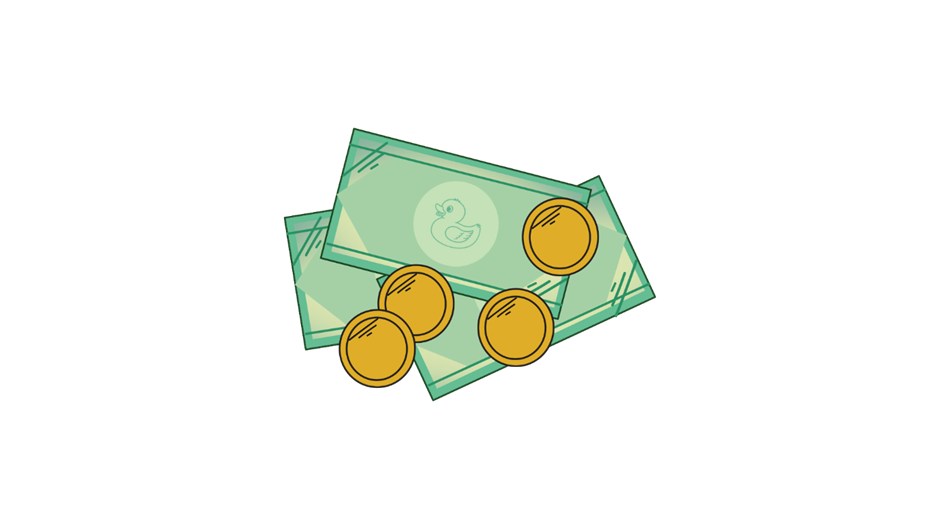
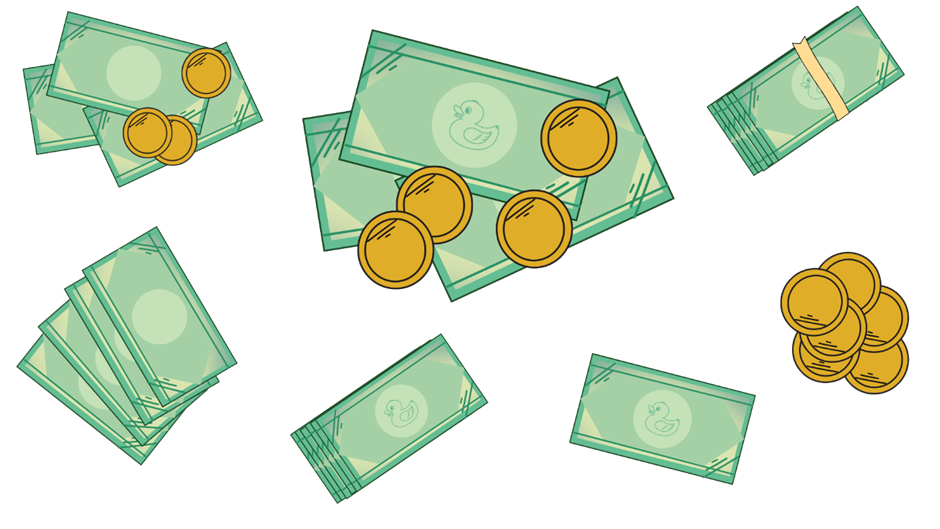
Pocket money assets for the game, along with various styles for them.
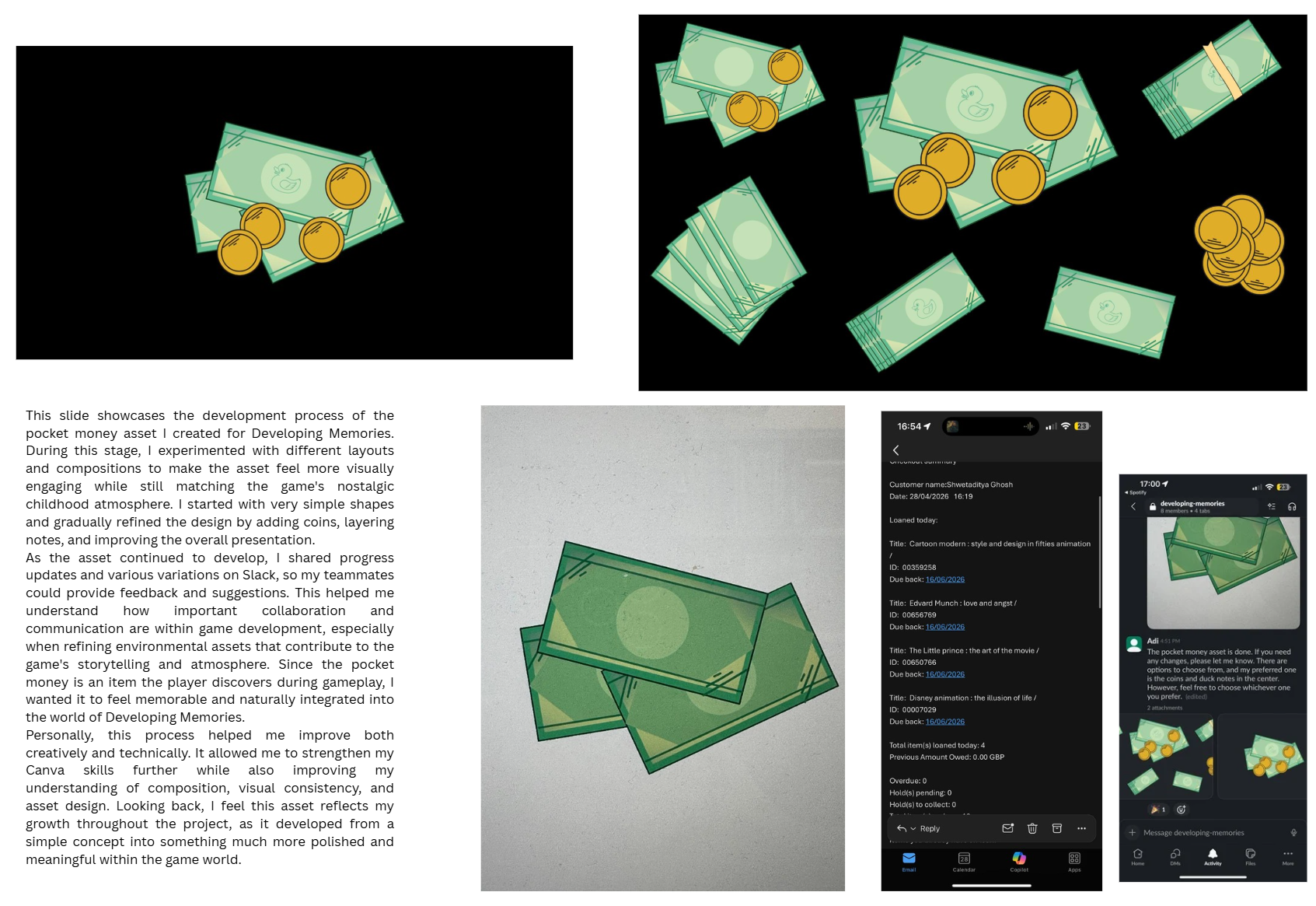
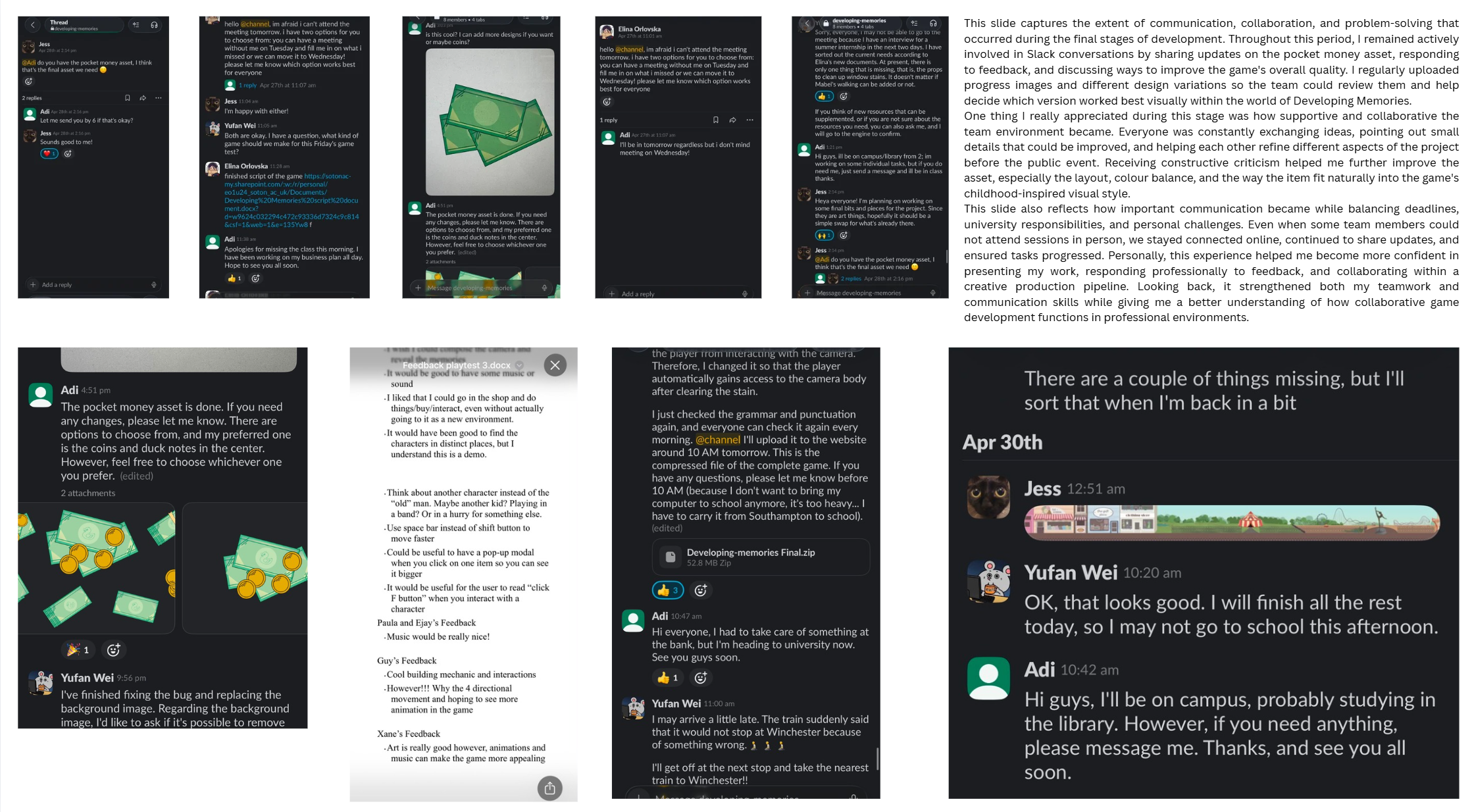
Throughout the process, I stayed active on Slack by sharing updates, screenshots, and different versions of the asset with my teammates so everyone could provide feedback and suggestions. I also supported the team website organisation by sharing the rubric structure and weekly work layout to make it easier for everyone to update progress. I think this demonstrated not only my contribution creatively as a world designer, but also my ability to communicate, collaborate, and support the team during stressful stages of development. Honestly, working closely with everyone throughout the semester made me realise how important teamwork and communication are within game design, especially when multiple people are contributing towards the same overall experience.
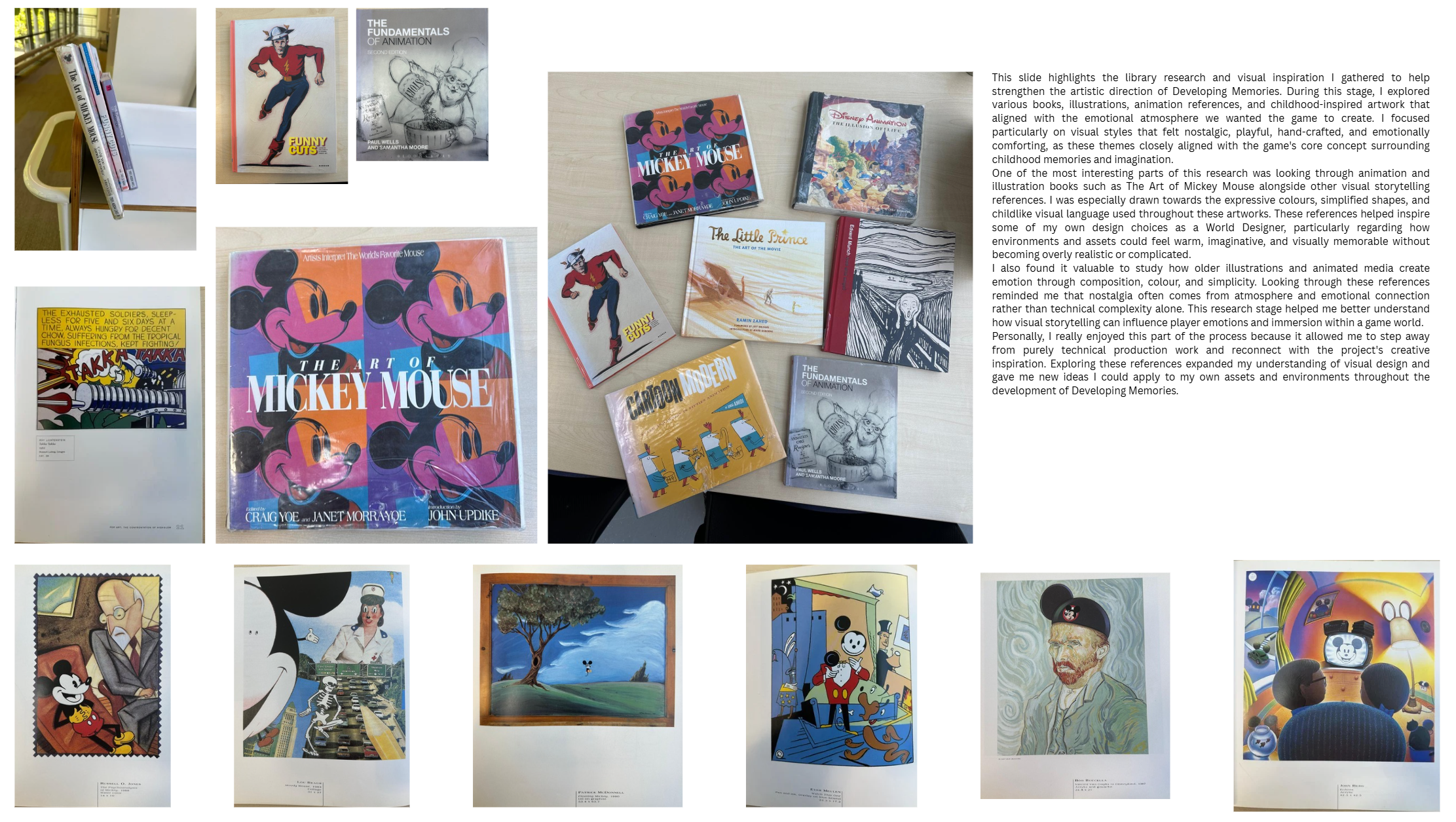
Alongside developing assets, I conducted research at the university library. I explored books on animation, childhood visuals, artistic storytelling, composition, and colour theory to strengthen my understanding of the nostalgic visual direction we wanted for the game. Some of the artwork and animation books genuinely inspired me because they reminded me of how powerful simple visual storytelling can be in creating an emotional connection and atmosphere. Looking through different illustration styles and animation principles helped me think more deeply about environmental storytelling and how visuals alone can communicate emotion, memory, and nostalgia within games.
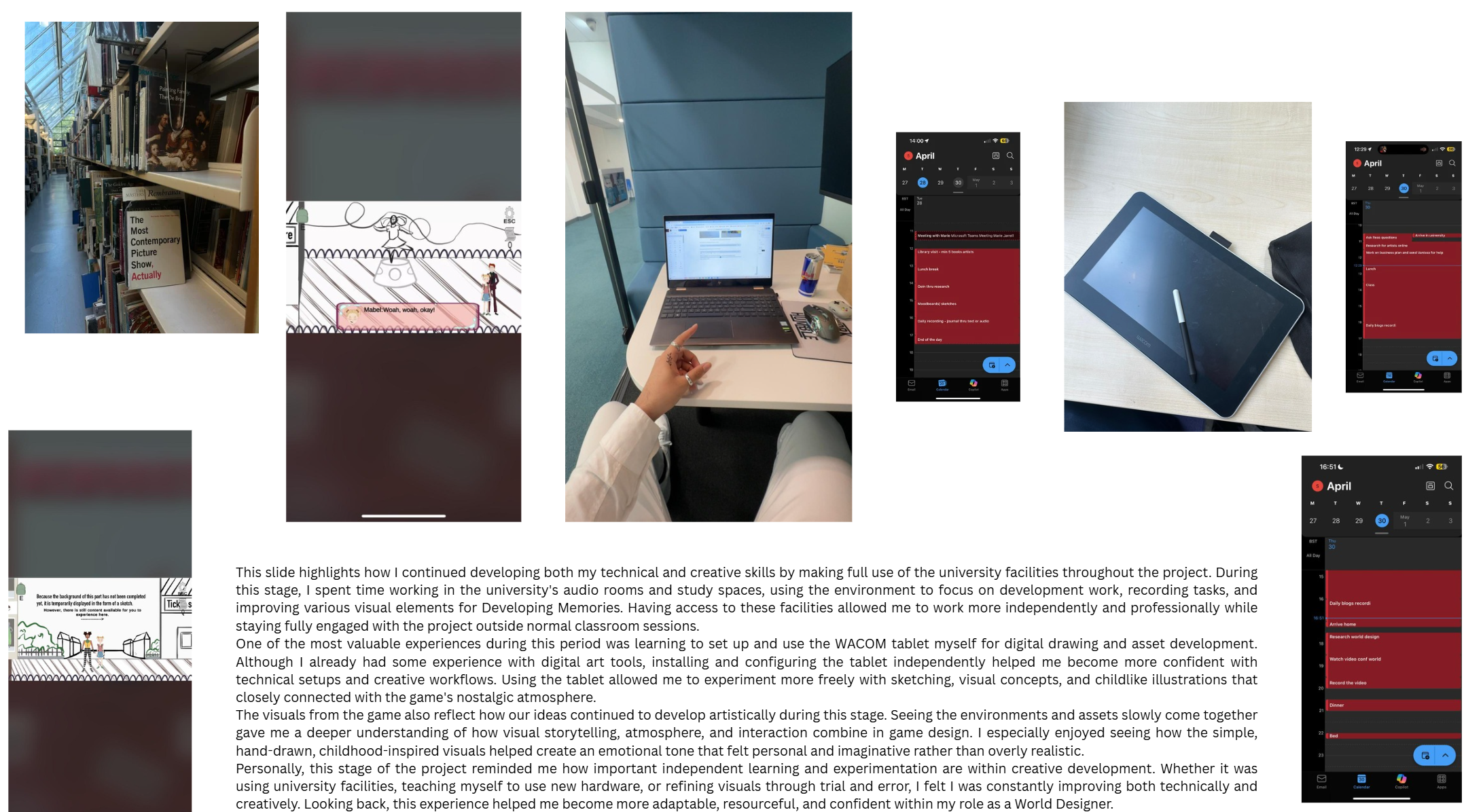
This week also allowed me to make better use of the university’s creative facilities and equipment. I spent time in the audio room and experimented with the WACOM tablet for digital work and drawing, which I installed and set up myself. Even though it took some time to get comfortable with the setup, I actually enjoyed learning to use different tools outside my normal workflow. Being able to work independently with professional equipment helped build my technical confidence and made me feel more comfortable experimenting creatively across different environments.
The biggest moment of the week was definitely the final public playtest event. After spending so many weeks creating assets, researching visuals, refining environments, collaborating with teammates, and continuously improving the project, finally seeing people sit down and play Developing Memories felt surreal in the best possible way. During the event, I helped prepare the setup and supported the team while observing players’ interactions with the game in real time. Watching people experience the visuals, atmosphere, and gameplay we had all worked so hard on honestly made me feel proud because it showed how far the project had come since the beginning of the semester. At the same time, seeing real player reactions reminded me of how important feedback is in game development, because even small comments and reactions highlighted what worked well and where improvements were still needed.
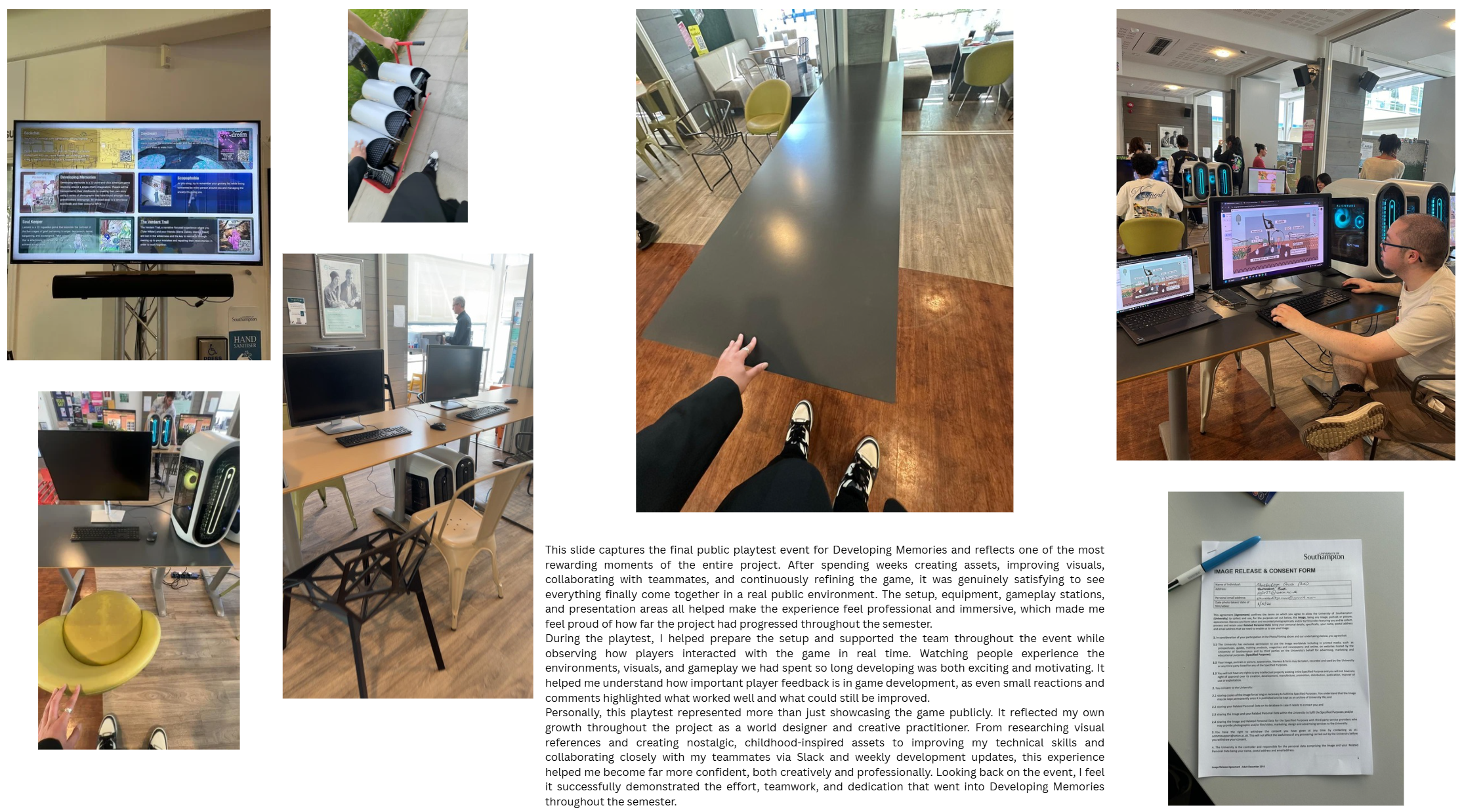
Overall, Week 10 felt like a genuine reflection of my growth throughout the entire project. From improving my technical skills and creating nostalgic environmental assets to researching visual storytelling, collaborating closely with teammates, and participating in a real public playtest, this week made me feel far more confident in myself as both a world designer and creative practitioner. Looking back now, I genuinely feel proud of the amount of effort, experimentation, teamwork, and dedication that went into Developing Memories from start to finish.
(This blog highlights my experience during the final playtest)^