Following the first brainstorming session, I began narrowing down the visuals I was interested in. One of the things I became especially interested in was paintings, artworks, aged materials, and the atmosphere that surrounded physical art. 14I created a mood board to explore the overall feeling, colour scheme, and atmosphere of this direction.
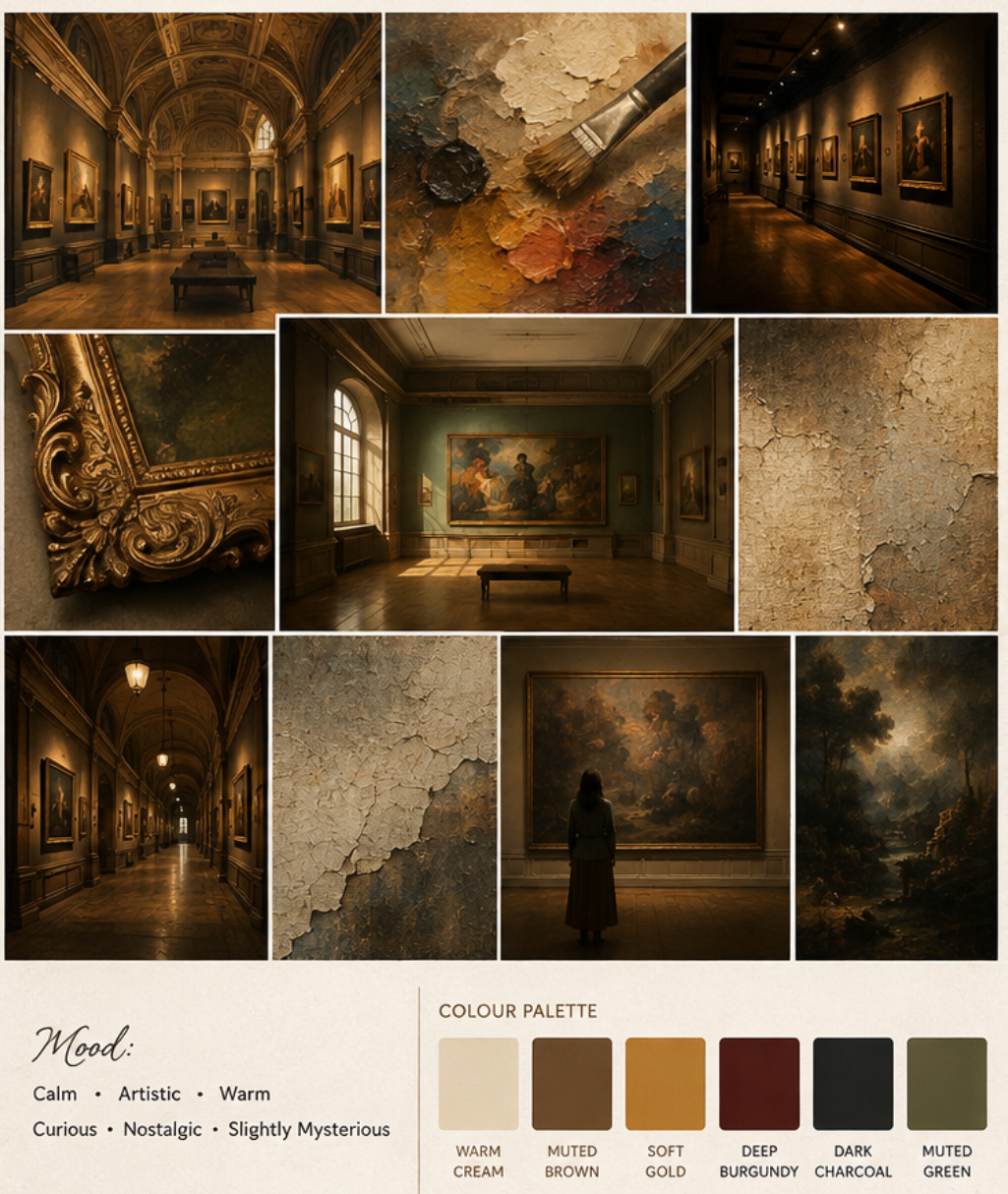
Moodboard examining the atmosphere, colour palette and other visual aspects that caught my interest after the initial research.
Having explored visual techniques for creating imagery, I felt compelled to consider the techniques used by artists approaching their subject matter differently. I chose to investigate Robert Oxley, Fred Abuga and Hannah Höch, as all three apply different techniques of transforming recognisable imagery.
I found it particularly interesting how the manipulation of colour, texture, simplification and fragmentation could make such a difference to the experience of imagery. Both Fred Abuga and Hannah Höch were artists whom I had investigated before during GCSE Art, while I discovered the work of Robert Oxley through my recent primary research. Looking at their work from a fresh perspective has shown me how their techniques can be applied to my visual investigations.
Robert Oxley – Expression, Colour and Texture
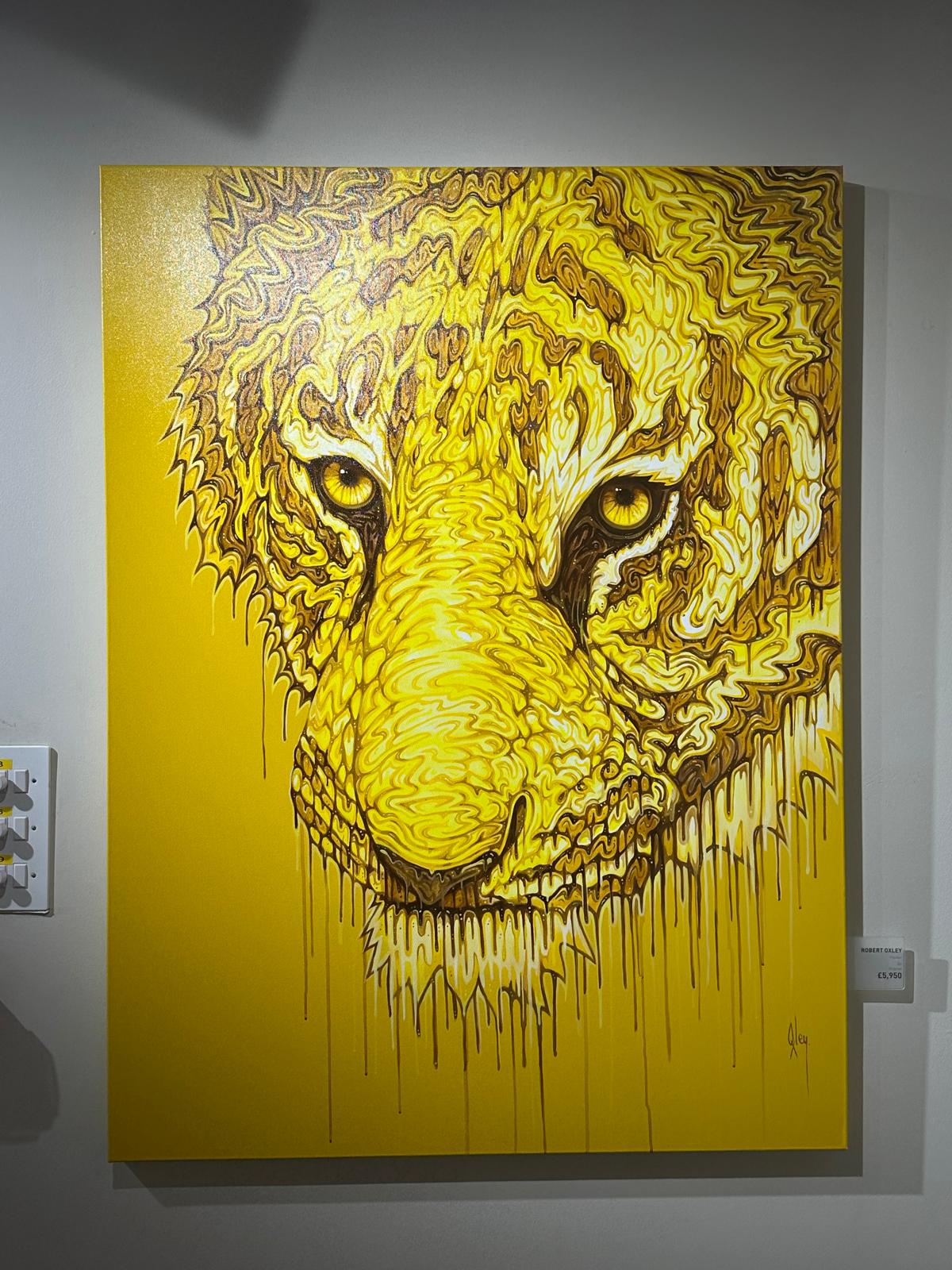
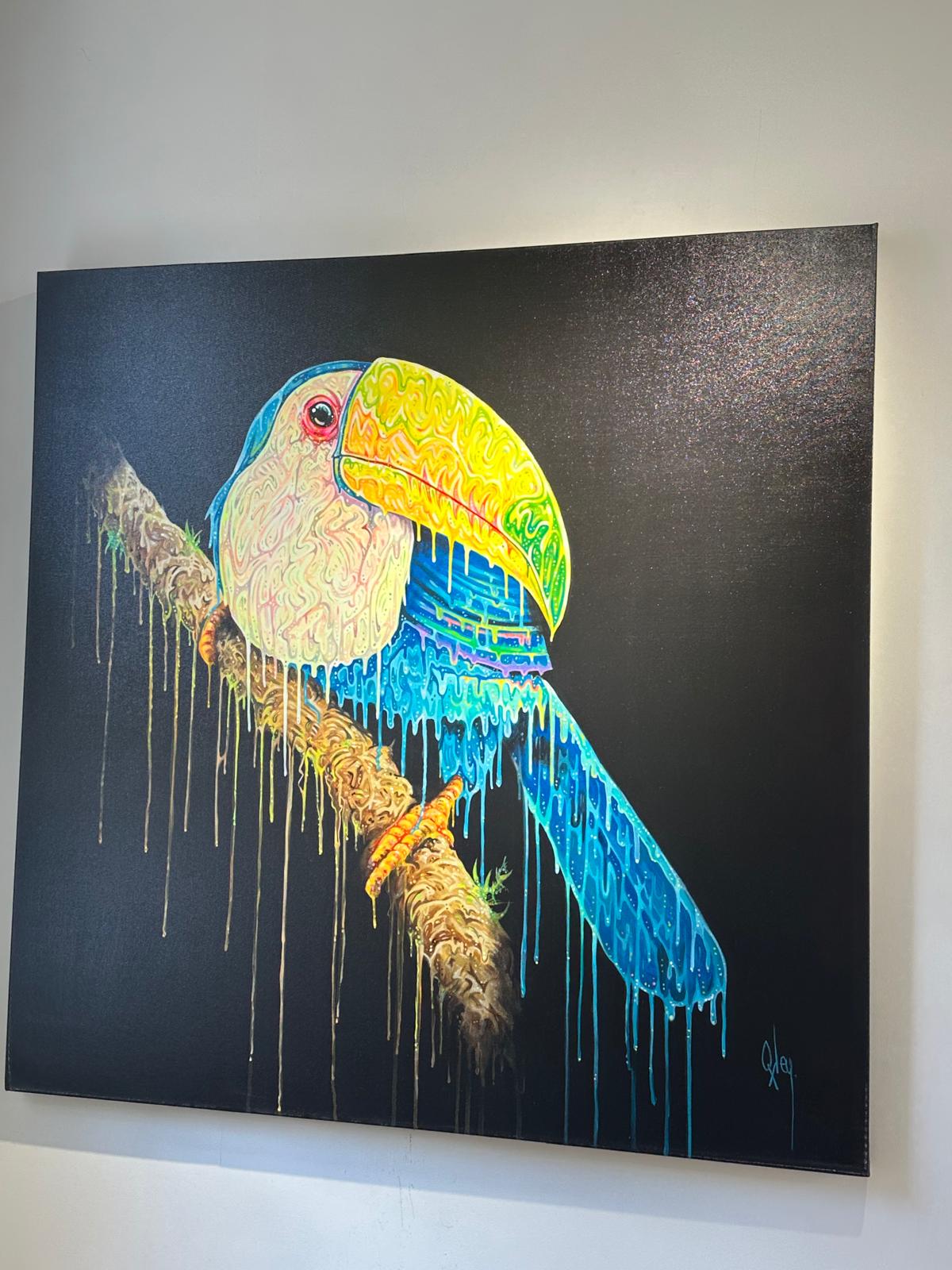
Robert Oxley artwork photographed during my primary research.
Robert Oxley was one of the artists I quickly became interested in due to my recent primary research. In particular, I enjoyed his use of saturated colour, flowing lines, and dripping form, which created a strong sense of movement and energy.
Most importantly, it became apparent how Oxley manages to push the recognisable subject away from realism without losing its recognisability. Being able to see the artwork physically also helped me appreciate its scale and texture. The way Oxley works with colour and texture got me interested in how imagery could be transformed using those aspects.
Fred Abuga – Simplification and Colour
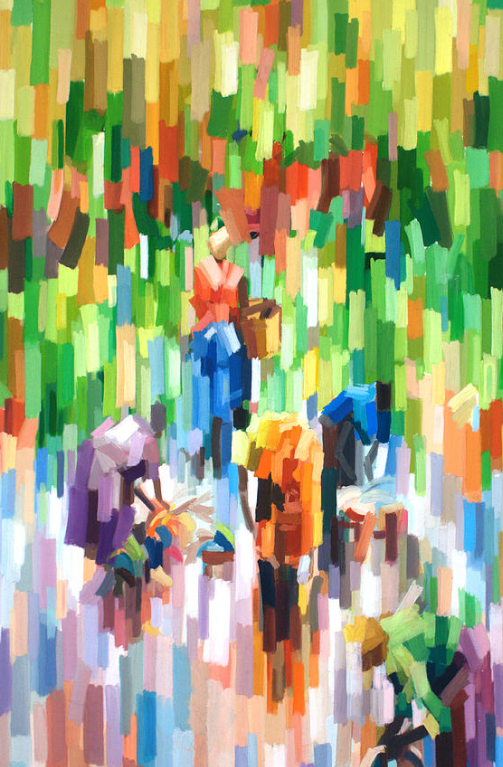
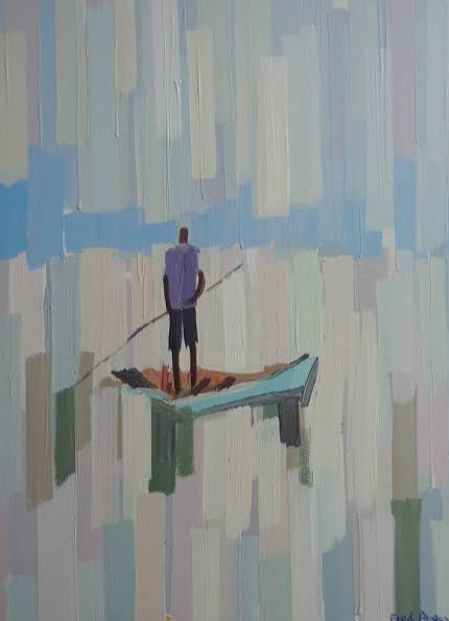
Selected works by Fred Abuga exploring colour, simplification and composition.
The reason I decided to revisit Fred Abuga was that I had previously studied his work during GCSE Art and remembered being interested in his unique use of colour. Upon further consideration of his work, I have become particularly interested in how he reduces the figures and environments into abstract shapes and blocks of colour.
It is intriguing how an environment can remain recognisable even after being reduced to almost nothing but shapes and colours. In contrast to Oxley’s highly detailed approach, Abuga taught me that simplification, composition and colour could be as visually powerful as anything else. It got me thinking about how reducing imagery can sometimes enhance its effect.
Hannah Höch – Fragmentation and Photomontage
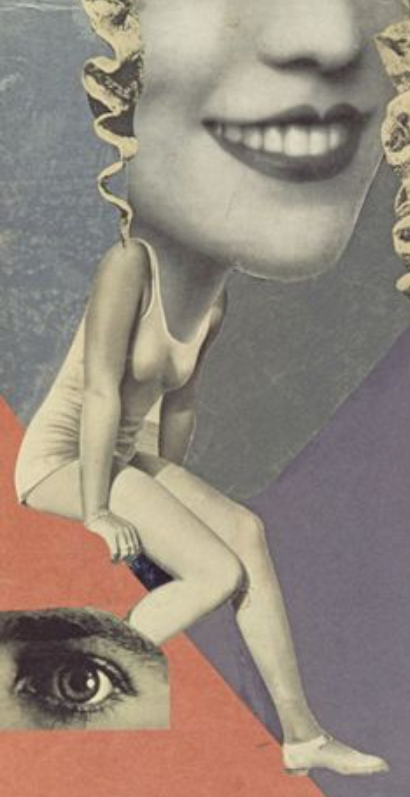
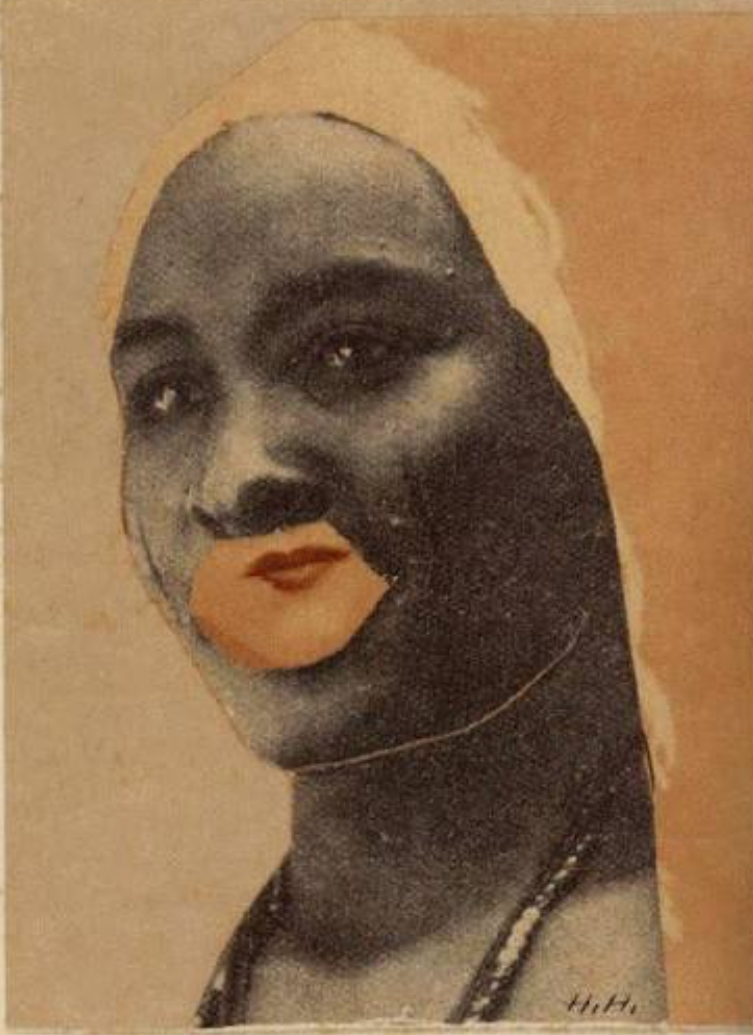
Selected works by Hannah Höch exploring fragmentation, layering and reconstruction.
Hannah Höch was yet another artist I had previously investigated during GCSE Art. I became intrigued to revisit her work after discovering similar approaches to collage and fragmented imagery in contemporary visual culture.
In particular, I find it interesting how she manipulates existing images to create something completely different. The faces, bodies and objects can remain partly recognisable while acquiring an entirely different meaning through their combination. This made me interested in approaches such as fragmentation, layering and reconstruction of imagery.
Looking at those three practitioners, it becomes clear that they transform imagery in their own ways. Oxley makes use of expression and distortion, Abuga employs simplification and colour, while Höch uses fragmentation and reconstruction. It became clear to me that imagery does not have to remain visually fixed, and it gave me several techniques to experiment with.
References:
- Oxley Art (n.d.) About Robert Oxley. Available at: Oxley Art (Accessed: 14 August 2026).
- Abuga, F. (n.d.) About Fred Abuga. Available at: Fred Abuga (Accessed: 14 August 2026).
- Africanah.org (2014) Fred Abuga/Kuona Trust/Kenya. Available at: Africanah.org (Accessed: 14 August 2026).
- The Museum of Modern Art (n.d.) Hannah Höch. Available at: The Museum of Modern Art (Accessed: 14 August 2026).
- National Museum of Women in the Arts (n.d.) Hannah Höch. Available at: National Museum of Women in the Arts (Accessed: 14 August 2026).
This segment contains an audio review^