Core Mechanics:
- Exploration (Walk)
The game is structured around slow, deliberate exploration across interconnected rooms. Movement is simple and readable, encouraging players to observe NPC behaviour, environmental cues, and spatial layout rather than react through combat. Progression is driven by reaching new areas, discovering abilities, and gradually expanding the player’s understanding of how to coexist within the world.
- Jump
Jumping is a fundamental traversal mechanic used to cross gaps, reach elevated platforms, and avoid ground-based threats. In early stages, jump is primarily a tool for maintaining distance from NPCs, allowing players to reposition themselves vertically when horizontal space is limited. As the game progresses, jump becomes more expressive, enabling fluid movement during barrier usage and musical interaction. The mechanic reinforces the idea that movement itself can be a form of agency, even when confrontation is impossible.
- Avoidance
In the early game, NPCs are non-hostile but oppressive. They cannot be attacked or removed. Prolonged proximity to these NPCs drains the player’s energy, forcing players to read movement patterns, maintain distance, and choose safe paths. Avoidance is not framed as weakness, but as a necessary survival strategy when the player lacks tools for expression or protection.
- Barrier Defence
As the player progresses, they unlock a temporary barrier ability. When activated, the barrier blocks the NPC’s draining effect for a short duration. This mechanic is limited by cooldown and duration, requiring careful timing rather than constant use. The barrier represents the act of setting boundaries: it does not eliminate the NPC, but creates controlled space for the player to move, think, and continue forward.
- Play Instrument
In the late game, the player acquires a musical instrument. By repairing it across different regions, the player unlocks the ability to perform music instead of physically interacting with NPCs. Playing the instrument changes how NPCs perceive the player, allowing communication without proximity or defence. This mechanic replaces avoidance and barriers as the primary means of interaction, turning expression into a core form of progression.
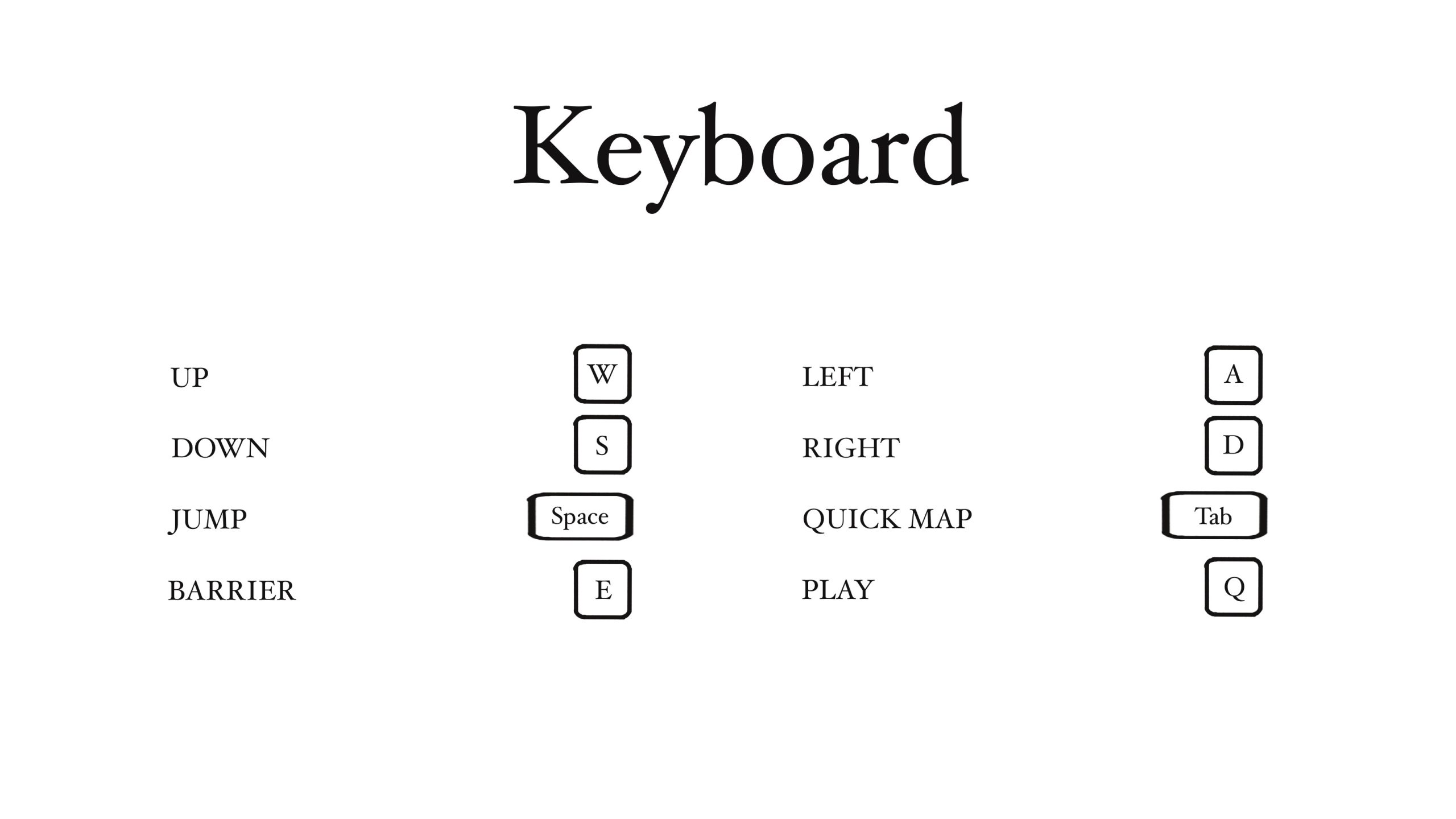
Controllers:

Gameplay Loop:
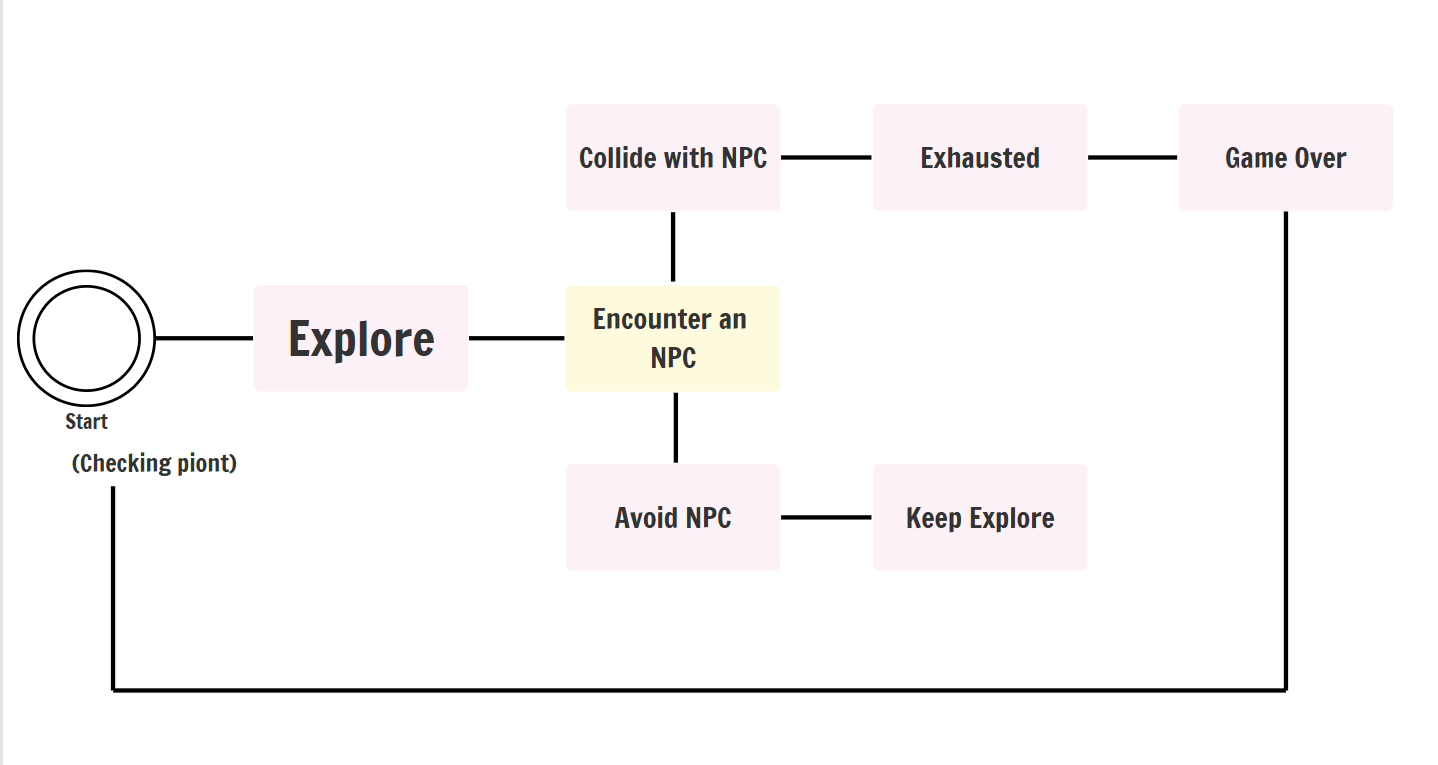
- Stage One: Endurance Through Distance
At the beginning of the game, the player has no means of attack, defence, or expression. NPCs act as constant sources of pressure rather than enemies. The only viable strategy is to avoid them and reach the next room. This stage establishes the emotional tone of isolation and vulnerability, framing loneliness as something overwhelming and difficult to confront directly.
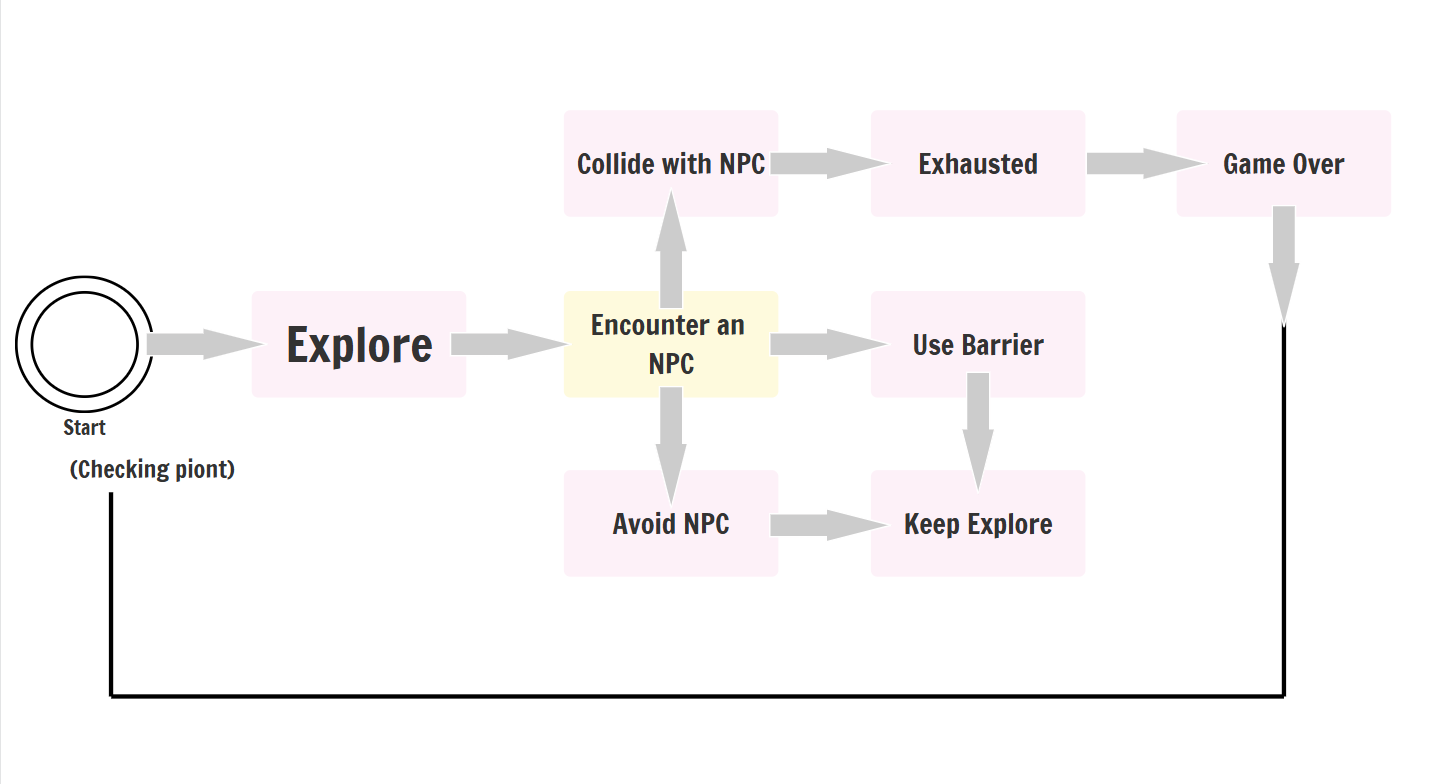
- Stage Two: Learning to Set Boundaries
In the mid-game, exploration rewards the player with a barrier ability. This marks a shift from pure avoidance to controlled engagement. The player is no longer forced to flee at all times, but must still respect limits. The barrier’s short duration reinforces that boundaries are temporary tools, not permanent solutions. This stage reflects the process of learning how to protect oneself while remaining present in the world.
- Stage Three: Expression and Understanding
In the final stage, the player repairs and learns to use a musical instrument. Interaction with NPCs no longer requires physical contact or defensive mechanics. Instead, expression through music becomes the primary form of communication. NPCs begin to change their behaviour, showing understanding and even assisting the player’s journey. This stage represents self-acceptance and the ability to be understood without suppression or avoidance, completing the emotional arc of the game.

Researches:
Academic Research: Asperger’s Syndrome(ASD)
Leave a Reply