1. Adjust the angle of light
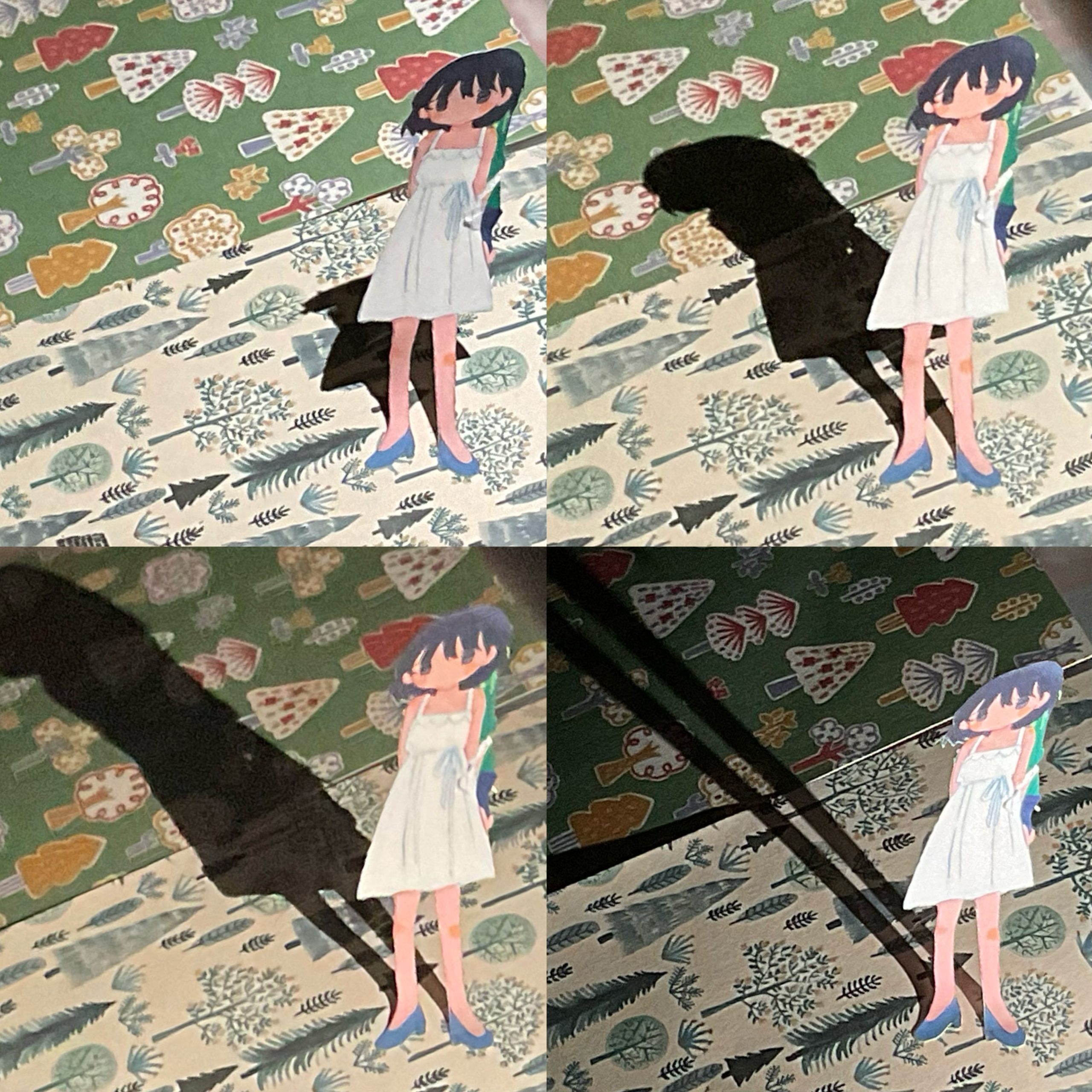 This experiment explores how variations in light angle directly affect the length, scale, and emotional quality of a shadow. By keeping the figure fixed and only adjusting the position and height of the light source, the shadow gradually shifts from a compact form to an elongated, exaggerated silhouette. As the angle lowers, the shadow stretches across the surface, becoming heavier and more dominant than the figure itself; as the angle rises, it shortens and retreats. Through this process, the shadow is revealed as an unstable and malleable image, demonstrating how perception can be altered by minimal changes in illumination rather than changes to the object.
2. Light in front of the mirror
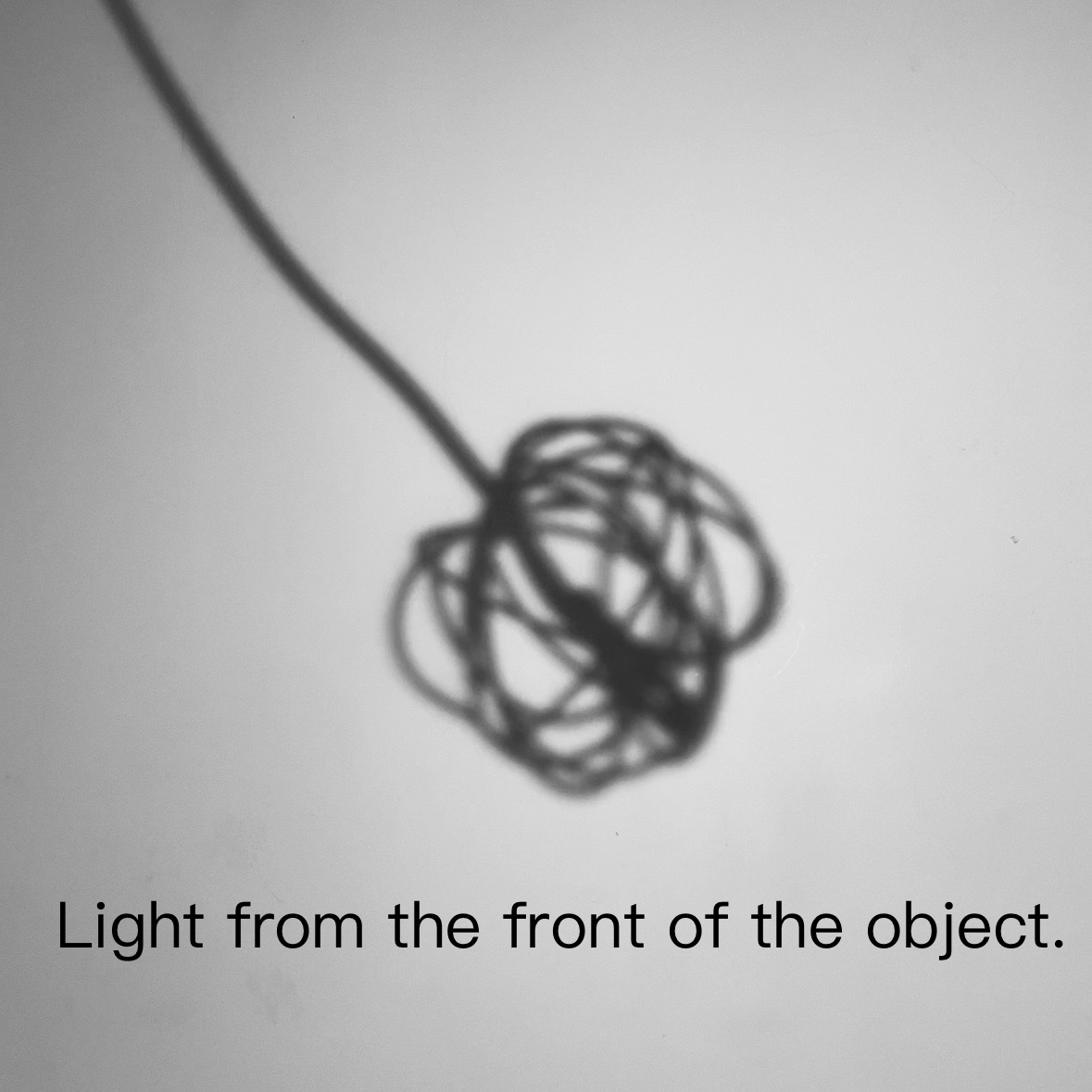

This mirror and shadow experiment is inspired by the artist Rashad Alakbarov’s previous research. It investigates how reflected light alters the perception of a single object by creating multiple shadows. When a light source is placed in front of both the object and a mirror, the mirror reflects the light and effectively produces a second, virtual light source behind the mirror. As a result, the object blocks both the direct light and the reflected light, generating two distinct shadows on the surface. By adjusting the distance between the object and the mirror, the relative position, sharpness, and scale of the shadows change. When the object is closer to the mirror, the shadows appear more compact and aligned; when it is farther away, they separate and become more diffused. This experiment demonstrates how light, reflection, and spatial relationships can transform a simple object into a complex visual outcome.
3. Light reveals the hidden image

This shadow experiment work is inspired by René Magritte’s conceptual approach to painting, particularly his use of concealment, substitution, and visual displacement to challenge the relationship between what is seen and what is understood. Magritte’s practice of placing ordinary objects within carefully constructed yet illogical contexts informs the conceptual foundation of this piece, in which the familiar is rendered strange, and meaning emerges through contradiction.
Building on this, the work draws from my research into shadow-based practices by artists such as Tim Noble & Sue Webster and Rashad Alakbarov, who transform fragmented, everyday objects into coherent and recognisable images through the precise use of light. In their works, the physical materials appear incidental or chaotic, while the shadow becomes the primary site of representation. This reversal of hierarchy between object and image is central to my approach.
The installation is constructed using a water bottle, tape, and an orange: common, utilitarian materials that carry no inherent figurative meaning on their own. In physical space, the assembled objects appear awkward and incomplete, offering no clear reference to the human form. However, when illuminated from a specific angle, they cast a shadow that resolves into a recognisable figure resembling a suited man with his face obscured by a fruit, echoing the visual language of Magritte’s iconic imagery.
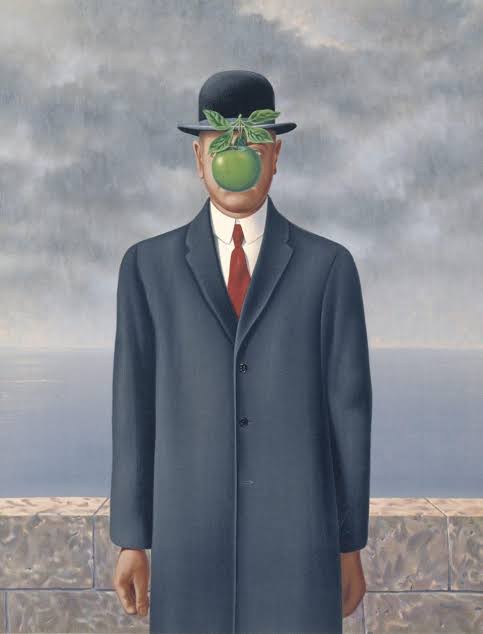
The son of man (1964), René Magritte, Oil on canvas 116 cm × 89 cm
References:
Shadow Research
Leave a Reply