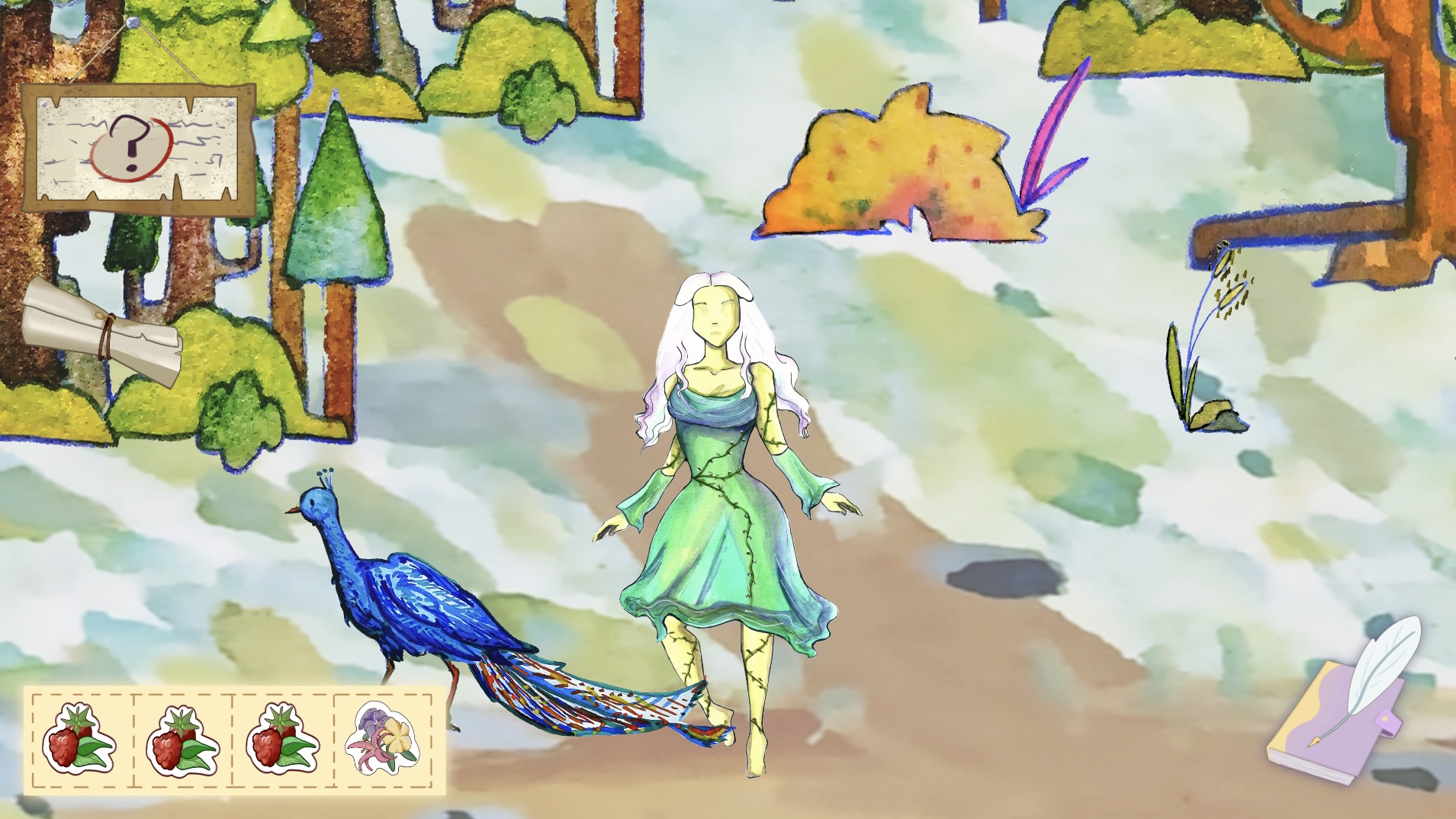
2. Item Collection Instruction
During playtesting, many players reported that they were unsure about the initial objective after entering the game. Although an opening narrative introduction was provided, the first actionable instruction was not clear enough for players to understand what they were expected to do. Since the intended first step of the gameplay loop was resource collection,
I proposed two potential design solutions:
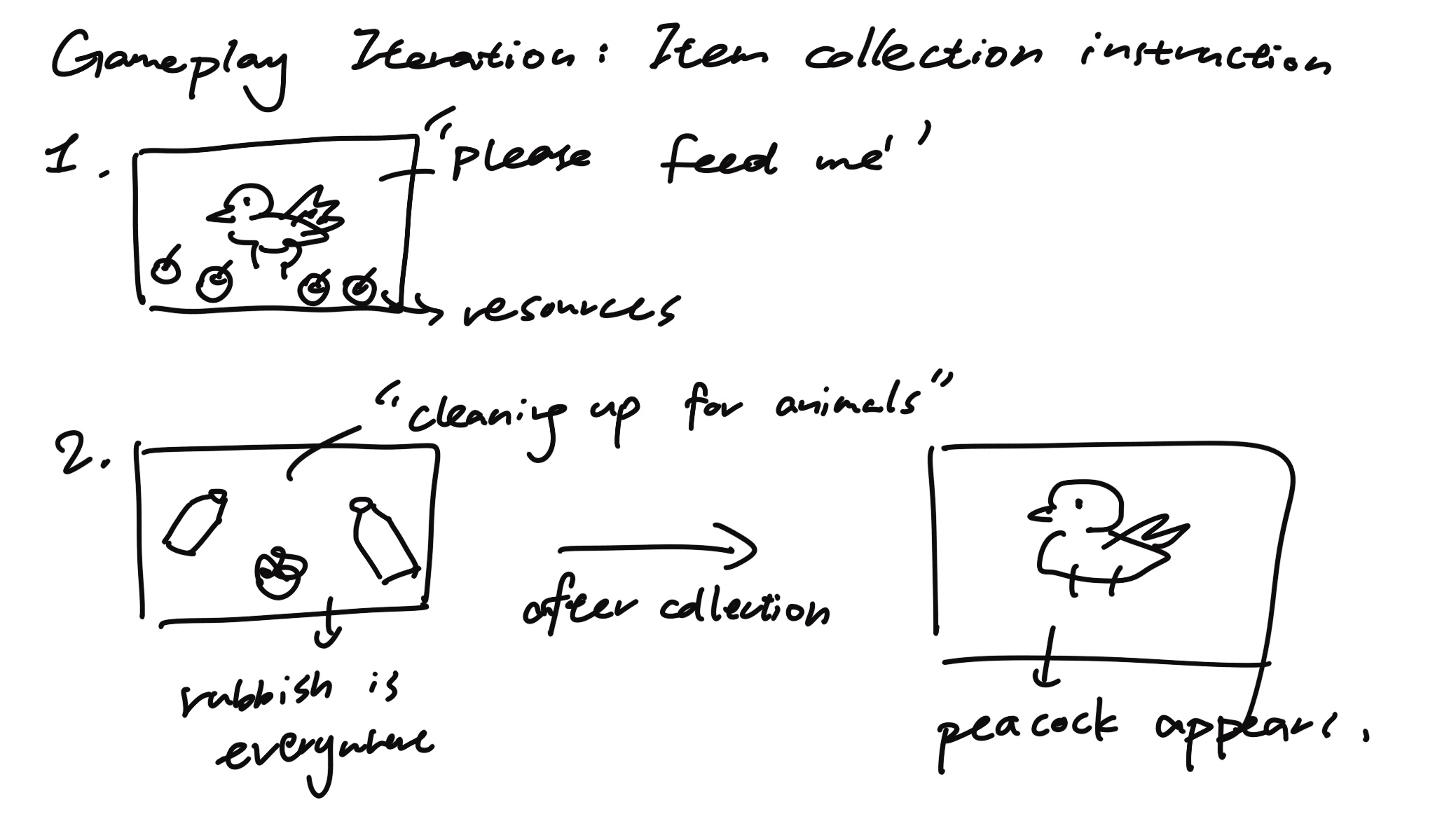
1. Introduce animals at the beginning of the game instead of spawning them only after resources are collected. Animals would wander in the environment from the start, displaying a dialogue UI such as “Please feed me,” subtly guiding players to search for collectable items that could be used to help them.
2. Replace collectable resources with scattered trash. Based on Elina’s GDD worldbuilding, “a world where human activity has increasingly endangered nature”, the game could begin with a UI prompt such as “Clean up the forest for the animals.” With visible trash placed around the environment, players would immediately understand their task: cleaning the forest. Completing this action would then trigger the appearance of animals, reinforcing both gameplay clarity and narrative consistency.
Player Feedback:
After implementing the two interaction prototypes in the scene, I conducted a small playtest with five classmates to understand how players perceived the different interaction mechanics. The main goal of this test was to compare two interaction approaches to see which one is better.
The feedback from all five players was very consistent. They all reported that the feeding mechanic felt significantly more interesting and engaging than the trash-collecting mechanic. It created a stronger sense of interaction with the character. Compared to simply picking up trash, the feeding action felt more intentional and meaningful because players could see a direct response from the animal they were interacting with.
I also asked Elina, the designer of the Game Design Document (GDD), to play both versions of the prototype. Her feedback aligned with the results from the playtest. She also pointed out something important from the original GDD design: the two animals in the game are intended to have different types of core interactions.
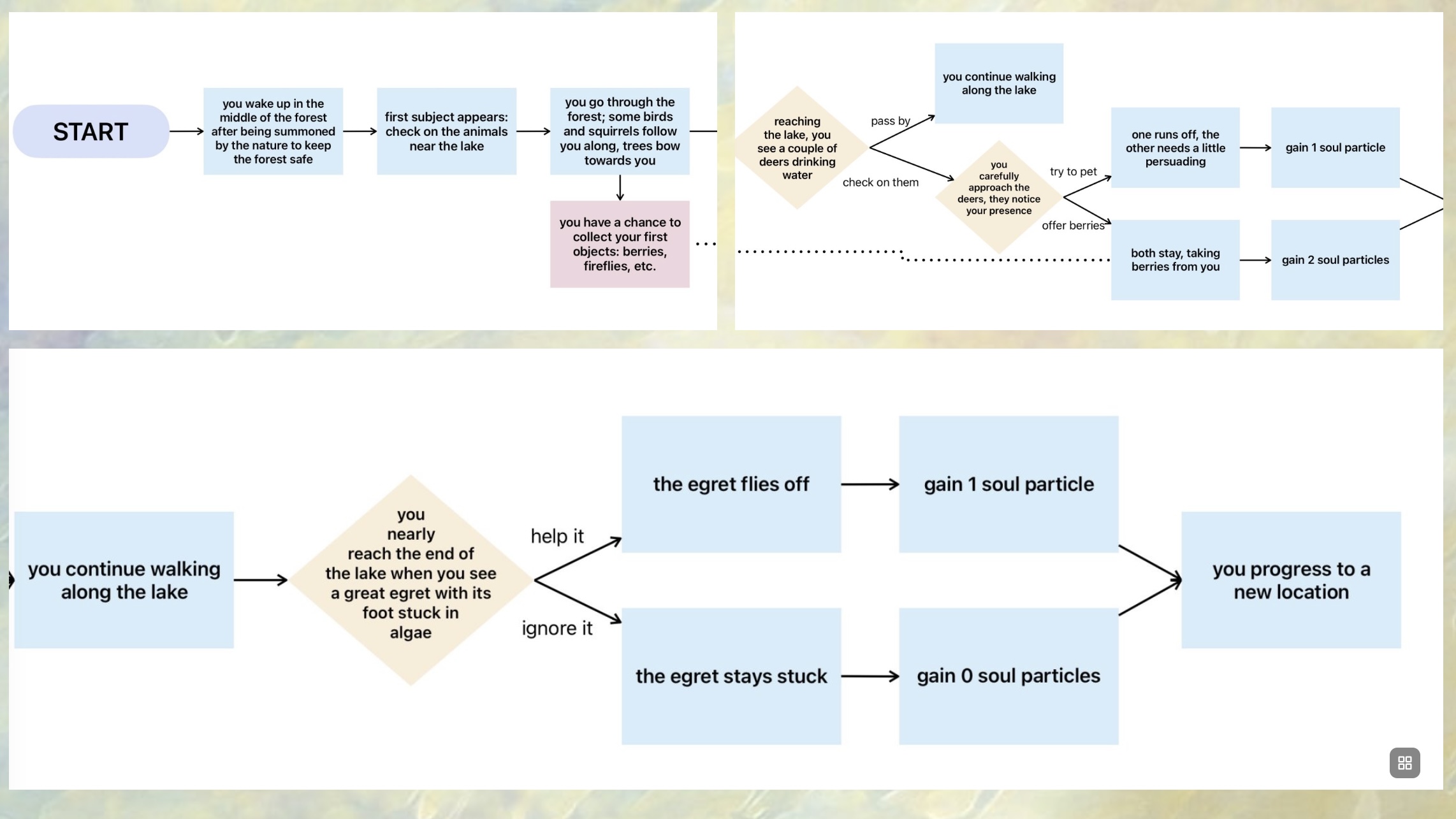
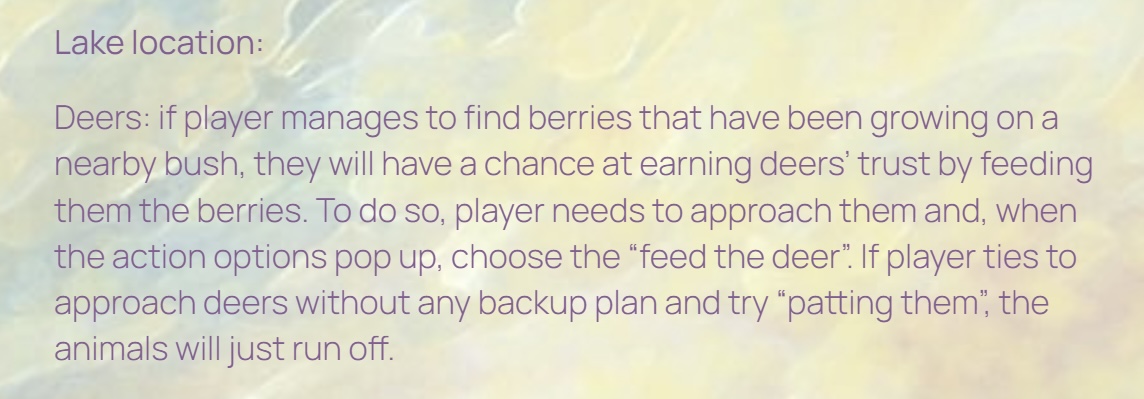

According to the GDD, the peacock’s main interaction should be a mini-game based on colouring. The feeding mechanic, on the other hand, was originally designed for the deer, where players offer collected resources to gain the deer’s trust.
The intended gameloop is:
Encounter the peacock → play the feather colouring mini-game → gain the peacock’s trust.
Encounter the deer → feed the collected items to the deer → gain the deer’s trust.
Leave a Reply